



Did you know bagels are one of the only breads boiled before baking? That simple step gives homemade bagels their signature chewy crust and soft, airy center. If you have ever been disappointed by dense store-bought bagels, this recipe fixes that.
This beginner-friendly homemade bagel recipe shows you exactly how to make authentic bakery-style bagels using simple ingredients and easy techniques. You will learn how to properly activate yeast, shape perfect bagel rings, and achieve that golden chewy exterior every time.
In about two hours, mostly hands-off rising time, you will have fresh warm bagels that taste better than anything from the store. You can also customize them with your favorite toppings.
Ingredients You’ll Need for Homemade Bagels
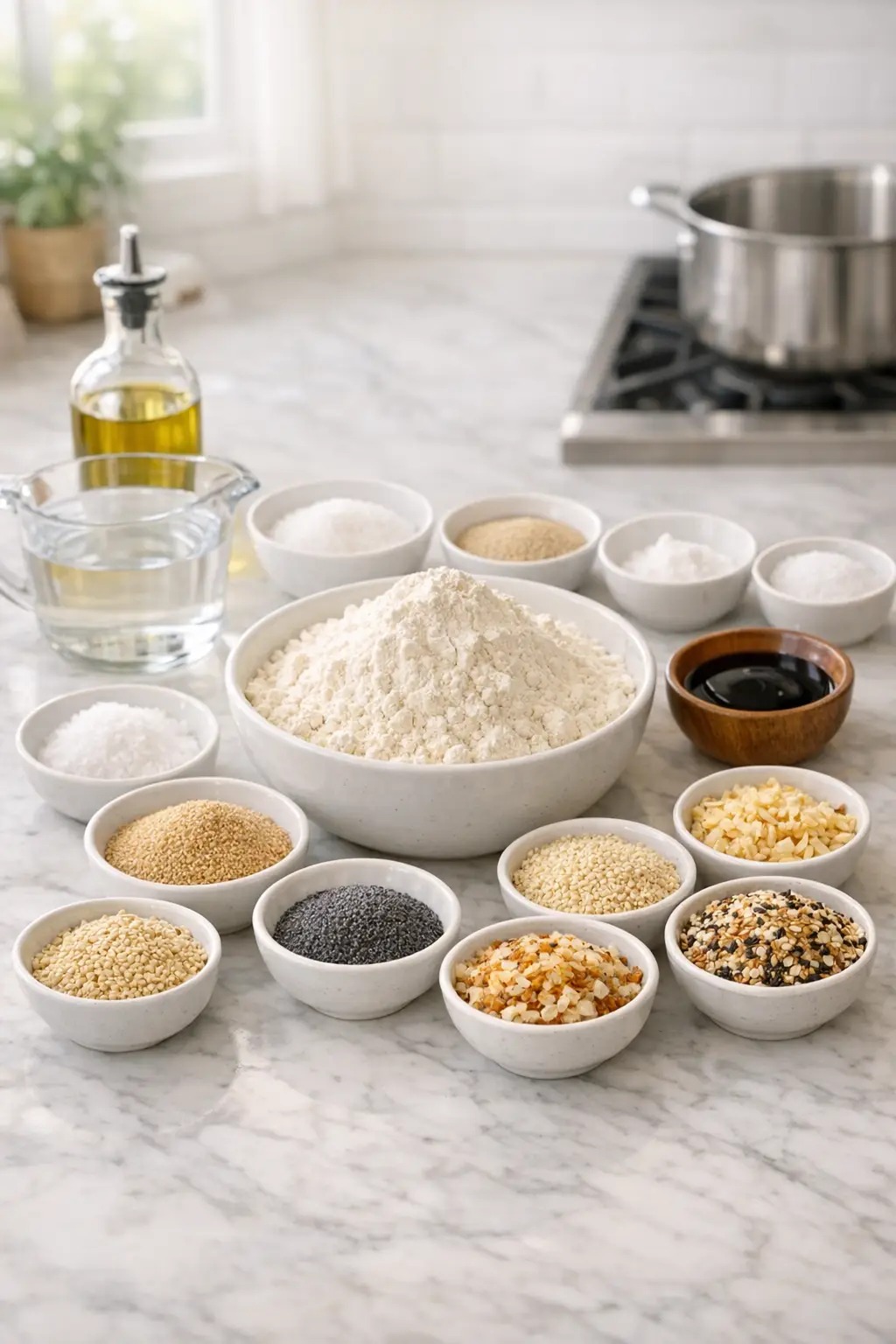
Gathering your ingredients ahead of time makes the process smoother. Here’s everything you need to make eight large, bakery-style bagels:
For the Dough:
- 1½ cups warm water (360ml, 100-110°F): Temperature matters here. Too hot kills the yeast, too cold won’t activate it. Aim for comfortably warm to the touch.
- 1 tablespoon sugar or barley malt syrup: Feeds the yeast and adds subtle sweetness. Brown sugar works perfectly as a substitute if you can’t find barley malt syrup.
- 2¼ teaspoons active dry yeast (one 0.25-ounce packet): Make sure your yeast is fresh. Check the expiration date before starting.
- 4½ cups bread flour (540g): Bread flour has higher protein content than all-purpose, which creates that characteristic bagel chew. Don’t substitute with all-purpose flour.
- 2 teaspoons salt: Essential for flavor development.
For Boiling and Topping:
- 3 quarts water (2.8L): You’ll need a large pot to boil multiple bagels comfortably.
- 3 tablespoons sugar or barley malt syrup: Sweetens the boiling water and helps achieve a golden crust.
- 1 teaspoon baking soda: Creates an alkaline environment that gives bagels their distinctive chewy texture and deep color.
- Toppings of choice: Everything bagel seasoning, sesame seeds, poppy seeds, dried minced onion, or leave them plain.
Substitution Tips: If you can’t find barley malt syrup, brown sugar, granulated sugar, honey, or even maple syrup work well. For a lighter bagel, you can reduce the dough to 12 smaller portions instead of 8 large ones.
Step-by-Step Instructions for Making Bagels
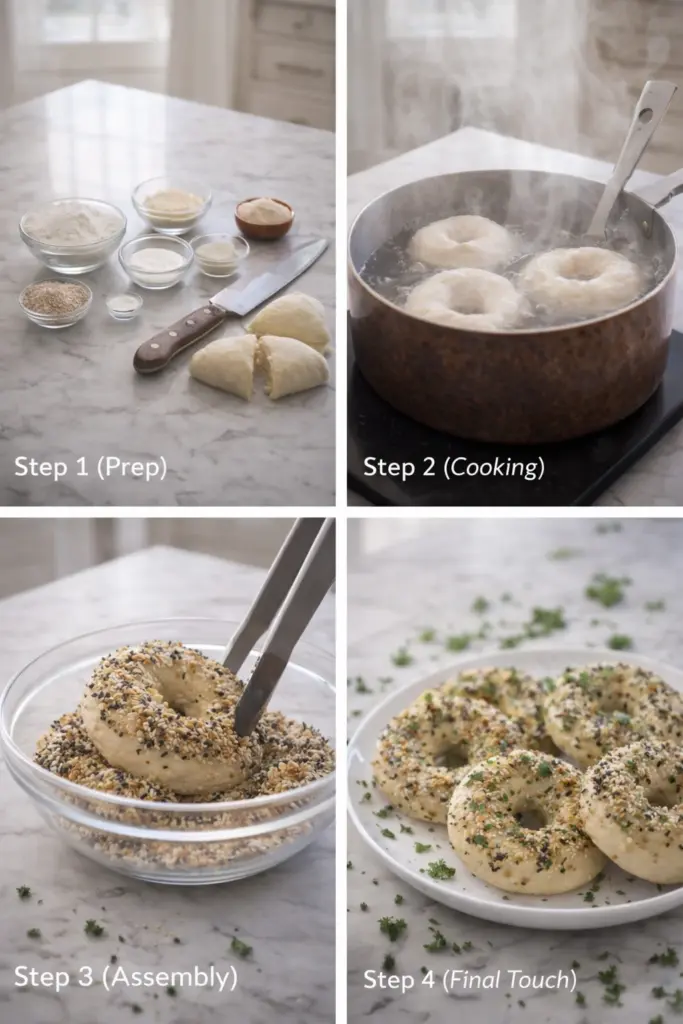
Step 1: Activate the Yeast
In the bowl of a stand mixer or a large mixing bowl, combine the warm water, sugar (or barley malt syrup), and active dry yeast. Stir gently to combine, then let the mixture sit undisturbed for 10 minutes. You’re looking for a thick, foamy layer on top, this proves your yeast is alive and active. If you don’t see foam after 10 minutes, your yeast may be expired or your water was too hot. Start over with fresh yeast and properly tempered water.
Step 2: Mix and Knead the Dough
Add the bread flour and salt to the foamy yeast mixture. If using a stand mixer, stir by hand first with a wooden spoon until a shaggy dough forms. This gives the mixer a head start and prevents flour from flying everywhere. Attach the dough hook and mix on low speed for 10 to 15 minutes. The dough will initially climb up the hook, just push it back down. After about 8 minutes, the dough should become smooth, elastic, and start slapping the sides of the bowl.
If kneading by hand, turn the dough out onto a clean counter (no flour needed) and knead for 10 to 15 minutes until smooth and elastic. You’ll know it’s ready when you can stretch a small piece thin enough to see light through it without tearing, this is called the windowpane test.
Step 3: First Rise
Lightly oil a large bowl and place the dough inside, turning it once to coat. Cover with a clean kitchen towel or plastic wrap and let it rise in a warm spot for about 1 hour, or until doubled in size. A turned-off oven with the light on works perfectly.
Step 4: Shape the Bagels
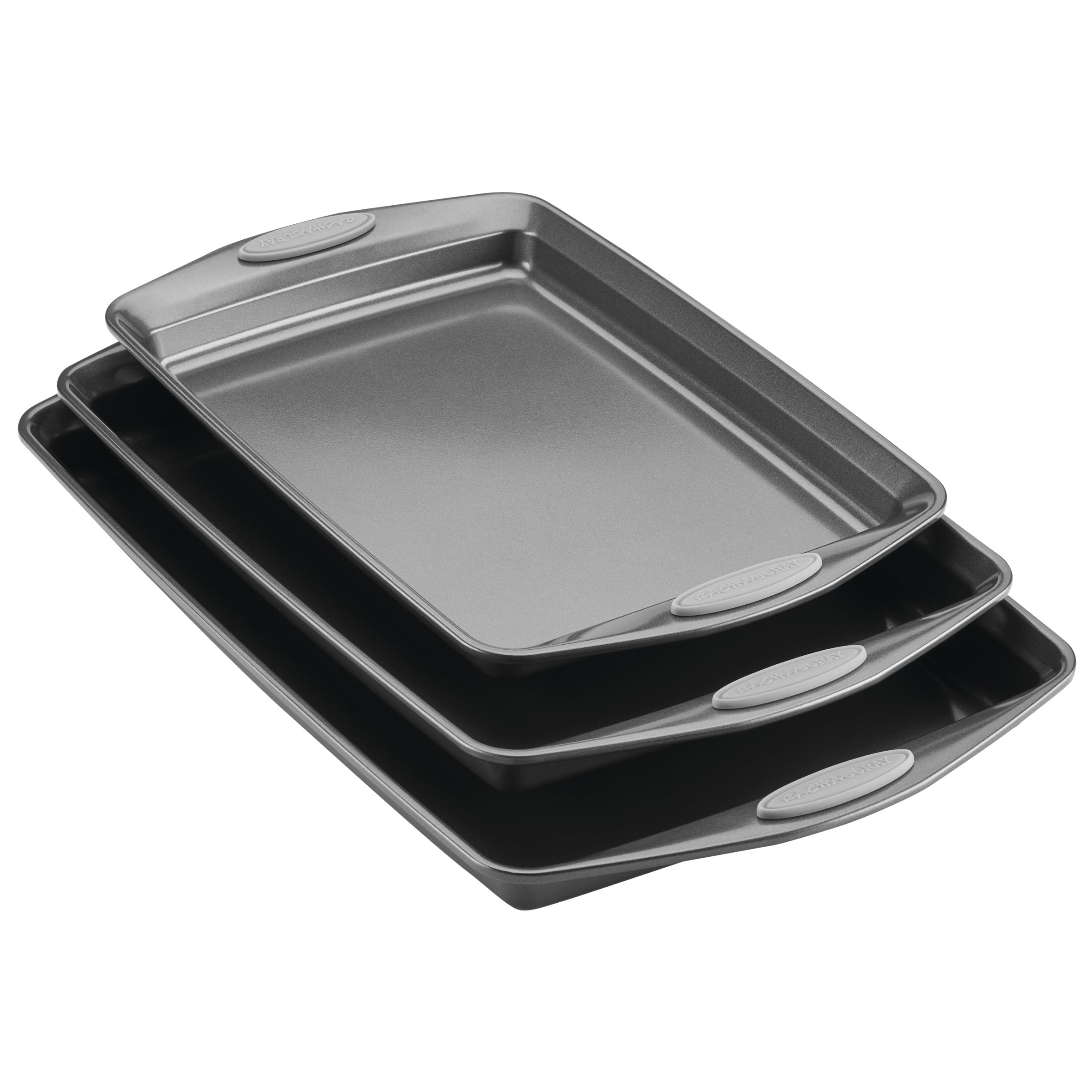
Line two large baking sheets with parchment paper and lightly grease the paper. Punch down the risen dough and turn it out onto a clean work surface. Divide the dough into 8 equal pieces for large bagels, or 12 for smaller ones. Shape each piece into a tight ball by cupping your hand around it and moving in a circular motion.
Gently flatten each ball, then press your finger through the center to create a small hole. Pick up the dough ring and stretch the hole to about 2 inches wide. Remember, the hole will shrink significantly during rising and baking, so err on the side of larger. Place each shaped bagel on the prepared baking sheet, spacing them about 2 inches apart. Cover loosely and let rest for 20 minutes.
Step 5: Boil the Bagels
While the bagels rest, preheat your oven to 425°F. Fill a large, wide pot with 3 quarts of water and bring to a boil over medium-high heat. Reduce to a simmer and stir in 3 tablespoons of sugar (or barley malt syrup) and 1 teaspoon of baking soda. The mixture will foam up briefly.
Working in batches of 2 or 3, carefully lower bagels into the simmering water. Boil for 1 minute, then flip with a spider strainer or slotted spoon and boil for another minute. The bagels should float. Remove and let excess water drain before returning them to the baking sheet.
Step 6: Add Toppings and Bake
Immediately after boiling, while the bagels are still wet, sprinkle on your desired toppings. The moisture helps them stick. Bake for 15 minutes, then flip each bagel over and bake for another 5 to 10 minutes until deep golden brown. Flipping ensures even browning and helps maintain their round shape.
Let the bagels cool on a wire rack for at least 10 minutes before slicing. This allows the interior to set properly.
Healthier Alternatives for the Recipe
You can easily adjust this bagel recipe to fit different dietary preferences without sacrificing flavor or texture:
- Whole wheat bagels: Replace up to half the bread flour with whole wheat flour for added fiber. The bagels will be slightly denser but still delicious.
- Reduce sugar: Cut the sugar in both the dough and boiling water by half if you prefer less sweetness.
- Egg wash alternative: Skip butter and brush with a light egg wash before adding toppings for a shiny finish without added fat.
- Lower sodium: Reduce salt to 1½ teaspoons and choose low-sodium topping options.
- Add seeds to dough: Fold in flax seeds, chia seeds, or sunflower seeds for extra nutrition and crunch.
Serving Suggestions
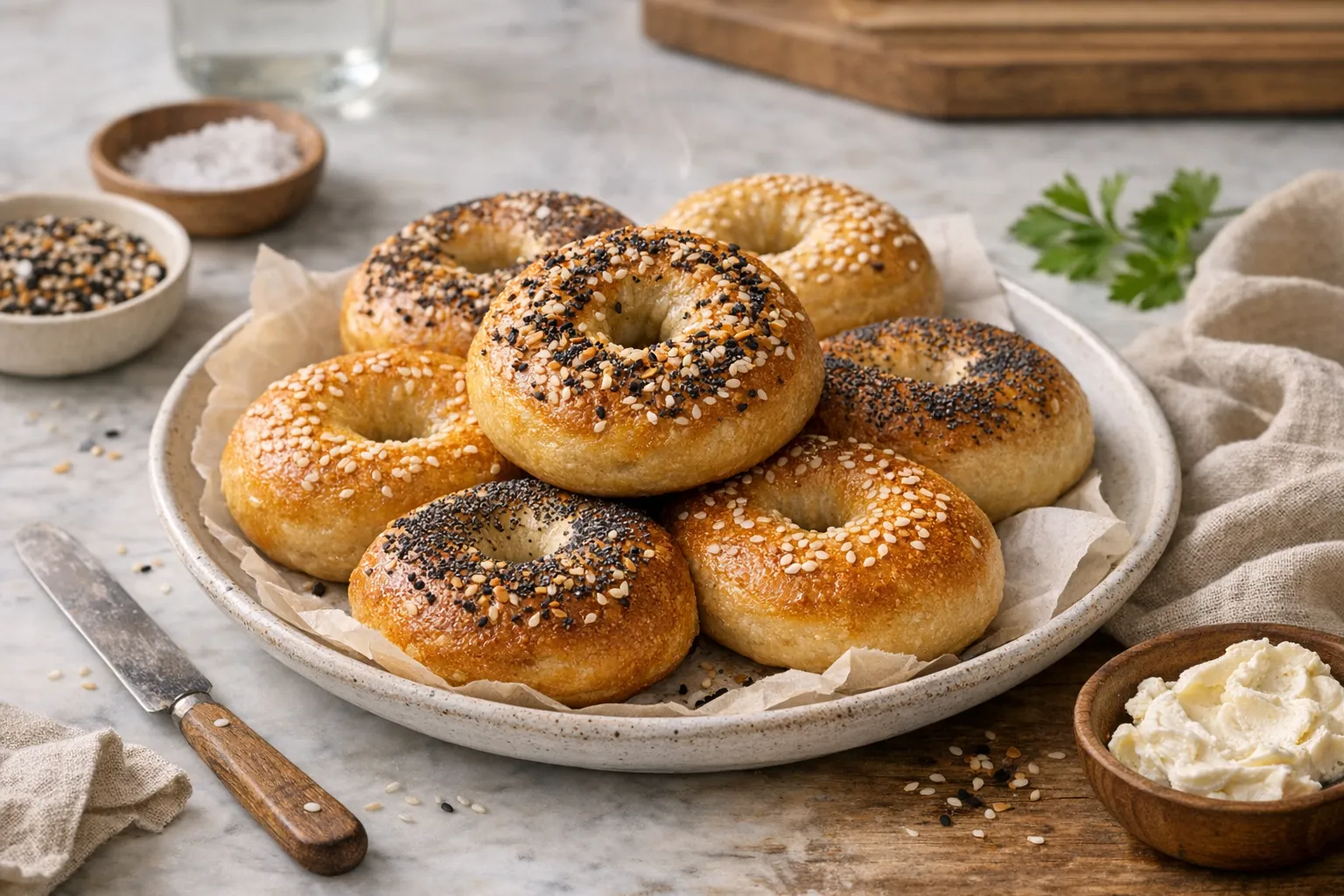
Fresh bagels are incredibly versatile. Here are some favorite ways to enjoy them:
- Classic breakfast: Slice in half, toast lightly, and spread with cream cheese. Add smoked salmon, capers, red onion, and tomato for a traditional lox bagel.
- Egg sandwich: Top with a fried egg, cheese, and crispy bacon or sausage for a hearty breakfast sandwich.
- Lunch option: Layer with deli turkey, lettuce, tomato, and your favorite condiments.
- Sweet treat: Spread with peanut butter and honey, or try cream cheese with fresh berries.
- Bagel chips: Slice leftover bagels thin, brush with olive oil and seasonings, and bake until crispy for homemade bagel chips.
Common Mistakes to Avoid
Even though this recipe is straightforward, a few common pitfalls can affect your results:
- Using old yeast: Always check the expiration date. Dead yeast won’t foam, and your dough won’t rise.
- Water temperature issues: Too hot kills yeast, too cold won’t activate it. Aim for 100-110°F, which feels comfortably warm to your wrist.
- Making holes too small: Bagel holes shrink significantly during rising and baking. Start with a 2-inch hole or larger.
- Skipping the boil: This step isn’t optional. Boiling creates the signature chewy crust that defines a proper bagel.
- Overbaking: Watch closely after the flip. Bagels can go from golden to burnt quickly. Look for a deep golden brown color.
- Cutting too soon: Let bagels cool for at least 10 minutes. Cutting immediately results in a gummy texture.
Storing Tips for the Recipe
Proper storage keeps your homemade bagels fresh and delicious:
Room temperature: Store completely cooled bagels in an airtight container or resealable bag for up to 3 days. They’ll stay soft but lose some of their initial crispness.
Refrigerator: Not recommended. Refrigeration actually speeds up staling in bread products, making bagels tough and dry.
Freezer: Bagels freeze beautifully. Slice them in half first (makes toasting easier), then place in a freezer bag with as much air removed as possible. Freeze for up to 3 months. Toast directly from frozen, no thawing needed.
Refreshing day-old bagels: Lightly dampen the surface with water and toast in a 350°F oven for 5 minutes to restore some crispness.
Why This Bagel Recipe Works
This recipe delivers consistent, bakery-quality results because it respects the traditional bagel-making process. The combination of bread flour and proper kneading develops strong gluten structure, creating that characteristic chew. Boiling in alkaline water (thanks to the baking soda) gelatinizes the surface starches, forming a barrier that keeps moisture in while creating a shiny, crispy crust. The two-rise method (bulk fermentation plus a short rest after shaping) develops flavor while keeping the interior light and airy rather than dense.
Using barley malt syrup or brown sugar adds subtle complexity beyond plain sweetness. The high oven temperature creates rapid oven spring, helping bagels puff up beautifully. Flipping halfway through ensures even browning on both sides. Every step has a purpose, and following them in order guarantees success even for first-time bagel makers.
Frequently Asked Questions
Can I make bagel dough the night before?
Yes. After the first rise, punch down the dough, cover tightly, and refrigerate overnight. The next day, let it come to room temperature for about 30 minutes before shaping. This slow fermentation actually develops more complex flavor.
Why do my bagels come out dense instead of airy?
Dense bagels usually result from under-kneading (gluten didn’t develop enough) or skipping the rise times. Make sure you knead until the dough passes the windowpane test and allow full rising times in a warm environment.
Can I use all-purpose flour instead of bread flour?
Not recommended. Bread flour has higher protein content (around 12-14%) compared to all-purpose flour (10-12%). This extra protein creates more gluten, which gives bagels their essential chewy texture. All-purpose flour results in softer, less authentic bagels.
Do I have to boil bagels, or can I skip that step?
Boiling is essential and non-negotiable for authentic bagels. This step gelatinizes the outer layer of dough, creating that signature shiny, chewy crust. Without boiling, you’re essentially making round bread rolls.
How do I know when my yeast is properly activated?
After 10 minutes, you should see a thick, foamy layer on top of the water mixture, almost like beer foam. If there’s no foam or just a few small bubbles, your yeast is dead or the water temperature was wrong. Start over with fresh yeast.
Can I make smaller or larger bagels?
Absolutely. Divide the dough into 12 pieces for smaller, snack-sized bagels (adjust baking time to 12-15 minutes total). For extra-large bagels, divide into 6 pieces, but note they’ll need a few extra minutes in the oven.
What’s the best way to reheat frozen bagels?
Toast directly from frozen. No need to thaw. If you prefer oven heating, wrap frozen bagel halves in foil and warm at 350°F for about 10 minutes.
Why did my bagel holes close up during baking?
The holes weren’t stretched large enough initially. Bagels puff significantly during the boil and bake. Start with at least a 2-inch hole, which might feel too large but will shrink to the perfect size.
Tools You’ll Need
Essential Kitchen Tools
Everything you need to make cooking easier and more enjoyable


Must Try Recipes
- Lemon Ricotta Pancakes
Light, fluffy pancakes made with ricotta for extra richness – perfect for a weekend brunch. - French Crepes
Master simple crepes with basic ingredients and one pan – great for breakfast or dessert. - Berry Baked Oatmeal
Warm, fruit-packed oatmeal baked to perfection for a hearty breakfast side. - Breadsticks
Soft homemade breadsticks with garlic butter – another simple yeast dough recipe. - Healthy Breakfast
Explore a variety of balanced breakfast recipes to start your day right.

Want to save this recipe?
Want to save this recipe? Enter your email below, and we'll send it straight to your inbox. Plus, receive new recipes every week!

Easy Homemade Bakery-Style Bagels
- Total Time: 1 hour 1 minutes
Description
Learn to make bakery-style bagels at home with simple ingredients and easy steps. Soft, chewy, and infinitely customizable.
Ingredients
- 1½ cups warm water (100-110F (360ml))
- 1 tablespoon sugar or barley malt syrup
- 2¼ teaspoons active dry yeast ((0.25-ounce packet/7g))
- 4½ cups bread flour (plus more for sprinkling (540g))
- 2 teaspoons salt
- 3 quarts water ((2.8L))
- 3 tablespoons sugar or barley malt syrup
- 1 teaspoon baking soda
- Toppings (such as everything bagel seasoning, sesame seeds, poppy seeds, dried minced onion)
Instructions
- In a large mixing bowl or stand mixer, combine warm water, sugar or malt syrup, and yeast. Stir and let stand until foamy, about 10 minutes.
- Add flour and salt, then mix or knead until smooth and elastic, about 10 to 15 minutes. Transfer to a lightly oiled bowl, cover, and let rise until doubled, about 1 hour.
- Line two baking sheets with parchment paper and lightly grease. Punch down dough, divide into 8 pieces, and shape into balls. Flatten each, form a 2-inch hole, and place on prepared sheets. Cover and rest 20 minutes.
- Preheat oven to 425F. In a large pot, bring 3 quarts water to a simmer and stir in sugar or syrup and baking soda.
- Boil bagels in batches for 1 minute per side, then drain and return to baking sheets. Sprinkle with toppings if desired.
- Bake for 15 minutes, flip, and bake another 5 to 10 minutes until deep golden brown. Cool on a rack for at least 10 minutes before serving.
- Store cooled bagels in an airtight container for up to 3 days or freeze for longer storage.
- Prep Time: 45 minutes
- Cook Time: 16 minutes
- Category: Breakfast
- Cuisine: American
Nutrition
- Serving Size: 8 bagels
- Calories: 334 kcal
- Sugar: 6 g
- Sodium: 744 mg
- Fat: 5 g
- Saturated Fat: 1 g
- Unsaturated Fat: 4 g
- Trans Fat: 0 g
- Carbohydrates: 61 g
- Fiber: 4 g
- Protein: 11 g
- Cholesterol: 0 mg


