

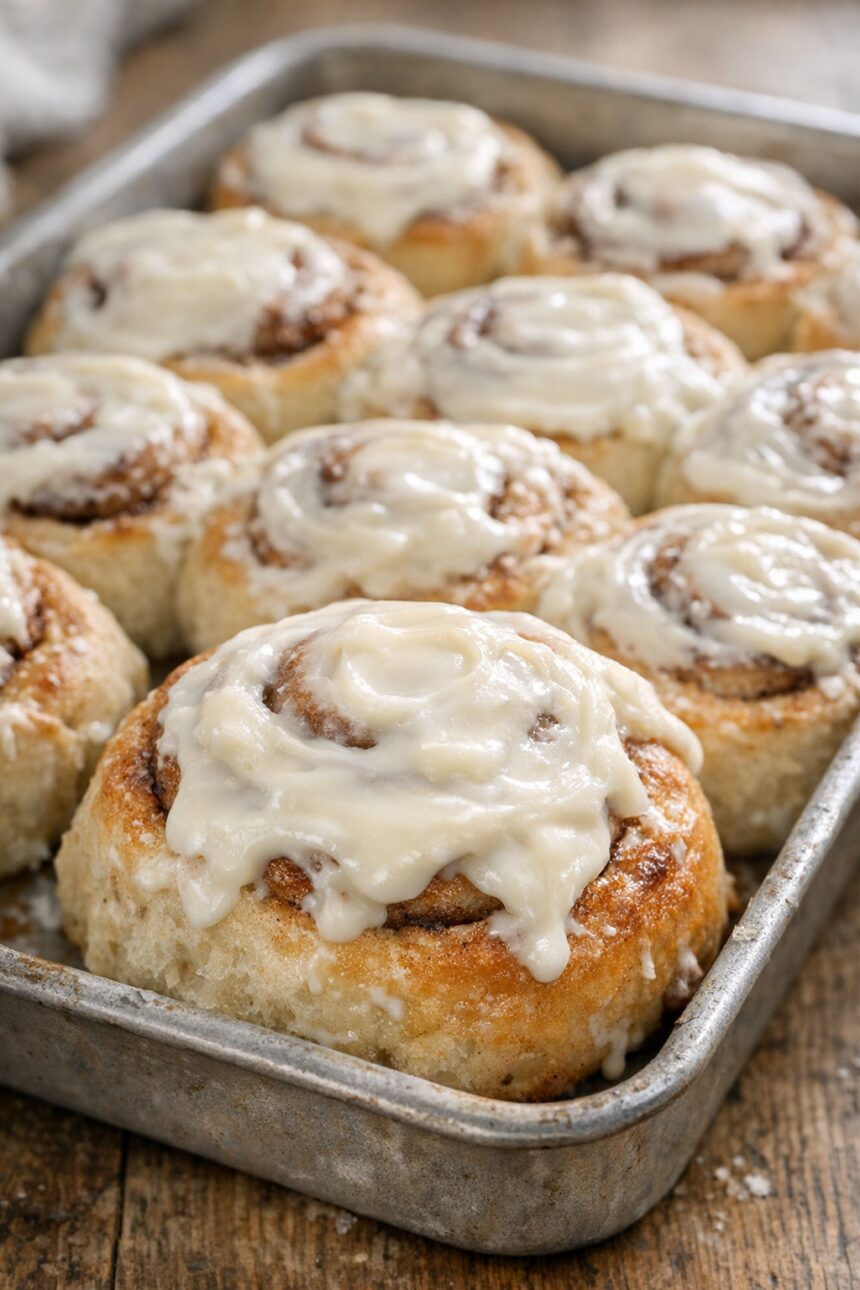
Did you know that sourdough cinnamon rolls can take up to 18 hours from start to finish, yet the result is so incredibly soft and buttery that one taste tester famously devoured five in a single sitting? These sourdough cinnamon rolls are worth every minute of that wait. Imagine pulling apart layers of pillowy dough, revealing ribbons of cinnamon sugar that melt on your tongue, all topped with a luscious cream cheese frosting that seeps into every crevice while the rolls are still warm. The tangy depth from the sourdough starter adds a complexity you simply won’t find in traditional yeast-based cinnamon rolls, creating a flavor profile that’s both comforting and sophisticated.
What makes this recipe truly special is the overnight refrigeration, which not only develops incredible flavor but also makes the dough easier to work with and roll out. The result is a texture that’s impossibly soft and moist inside, with just enough structure to hold those beautiful swirls of cinnamon filling. Whether you’re planning a holiday brunch or simply want to elevate your weekend breakfast routine, these rolls deliver restaurant-quality results right from your home kitchen. Plus, with make-ahead options built into every step, you can enjoy fresh-baked cinnamon rolls without the early morning stress. Let’s dive into how you can create this family favorite that’s guaranteed to become your new holiday tradition.
Ingredients List
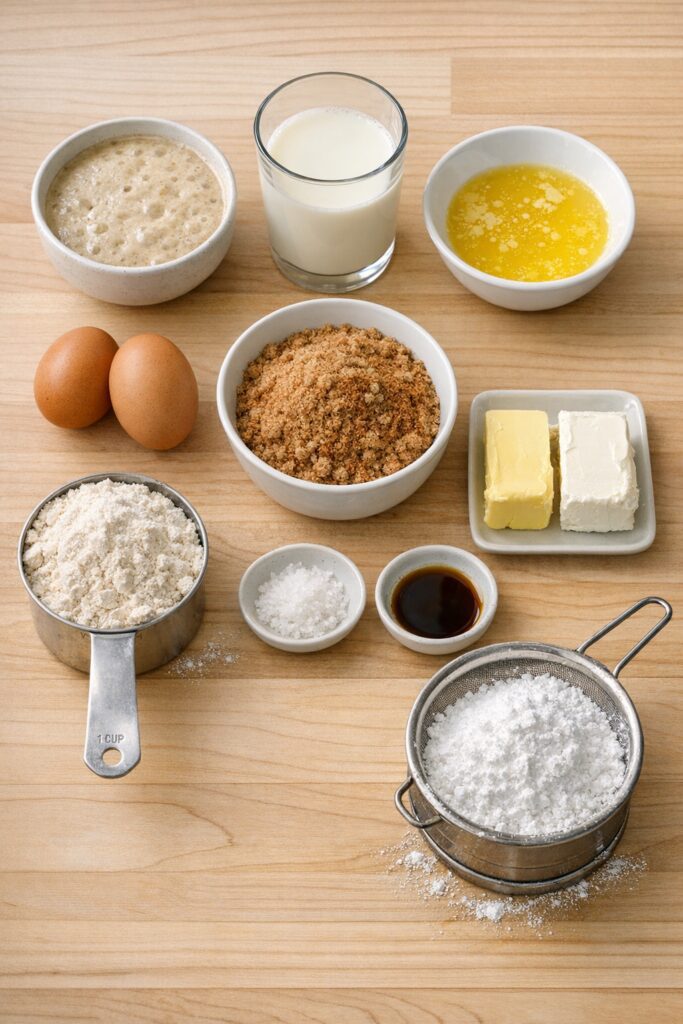
Gathering your ingredients before you begin is the key to smooth baking. For these sourdough cinnamon rolls, you’ll need ingredients organized into three categories: the dough, the filling, and the frosting. Each component plays a crucial role in creating those signature layers and flavors.
For the Dough
- 125 grams active sourdough starter (about 2/3 cup): Make sure your starter is bubbly and active, ideally fed 4-8 hours before using
- 130 grams whole milk (1/2 cup plus 1 tablespoon), room temperature: Cold milk will slow down the fermentation process
- 170 grams unsalted butter (1 1/2 sticks), melted and cooled: Using melted butter creates a more tender crumb
- 1 teaspoon vanilla extract: Homemade vanilla extract adds exceptional depth
- 2 large eggs, room temperature: Room temperature eggs incorporate more easily into the dough
- 500 grams all-purpose flour or bread flour (4 cups): Bread flour creates slightly chewier rolls, while all-purpose yields softer results
- 2 tablespoons granulated sugar: Just enough sweetness in the dough without overpowering
- 1 teaspoon fine sea salt: Enhances all the flavors and strengthens gluten structure
For the Cinnamon Sugar Filling
- 85 grams unsalted butter (6 tablespoons), softened: Softened butter spreads easily without tearing the dough
- 142 grams packed light brown sugar (2/3 cup): Brown sugar adds moisture and a subtle molasses flavor
- 1 1/2 tablespoons ground cinnamon: Use fresh cinnamon for the most aromatic filling
- Extra butter for greasing the pan
For the Cream Cheese Frosting
- 56 grams unsalted butter (4 tablespoons), softened
- 4 ounces cream cheese, softened: Full-fat cream cheese creates the richest, most stable frosting
- 1 1/2 teaspoons vanilla extract
- 120 grams powdered sugar (1 cup): Sifting prevents lumps in your frosting
- Pinch of fine sea salt: Balances the sweetness perfectly
Step-by-Step Instructions
Follow these detailed steps to create sourdough cinnamon rolls that are soft, flavorful, and absolutely irresistible. Each stage is designed to build flavor and texture while remaining approachable for home bakers.
Step 1: Mix the Dough Ingredients
In the bowl of a stand mixer, combine your active sourdough starter with the room temperature milk, whisking them together until smooth. This creates a uniform base that helps distribute the starter evenly throughout the dough. Next, add the melted and cooled butter, vanilla extract, eggs, sugar, and salt. Whisk everything together until fully combined and the mixture looks cohesive. The eggs should be fully incorporated with no streaks remaining. This wet mixture forms the foundation of your dough and ensures even hydration throughout.
Step 2: Add Flour and Knead the Dough
Attach the dough hook to your stand mixer and begin adding the flour gradually while mixing on low to medium speed. Adding flour slowly prevents clumping and allows for better incorporation. Once all the flour is added, increase to speed 2 and knead for 8 to 10 minutes, or until the dough no longer sticks to the sides of the bowl. The finished dough should feel very soft and moist but won’t stick to clean, dry fingertips. If kneading by hand, expect to work the dough for 6 to 8 minutes on a lightly floured surface. The key is not to add too much flour, which is why measuring by weight with a kitchen scale produces the most consistent results.
Step 3: Rest and Refrigerate the Dough
Transfer your kneaded dough to a clean bowl and cover it tightly with plastic wrap. Let it rest at room temperature for 2 hours, allowing the sourdough to begin its fermentation process. After this initial rest, refrigerate the covered dough overnight for 8 to 15 hours. This cold fermentation is what sets these rolls apart, developing complex flavors while making the dough incredibly easy to roll out. The chilled dough also holds its shape better when you’re forming the rolls. If you’re short on time, you can skip the refrigeration, but the overnight rest truly creates the best texture and flavor.
Step 4: Roll Out the Dough
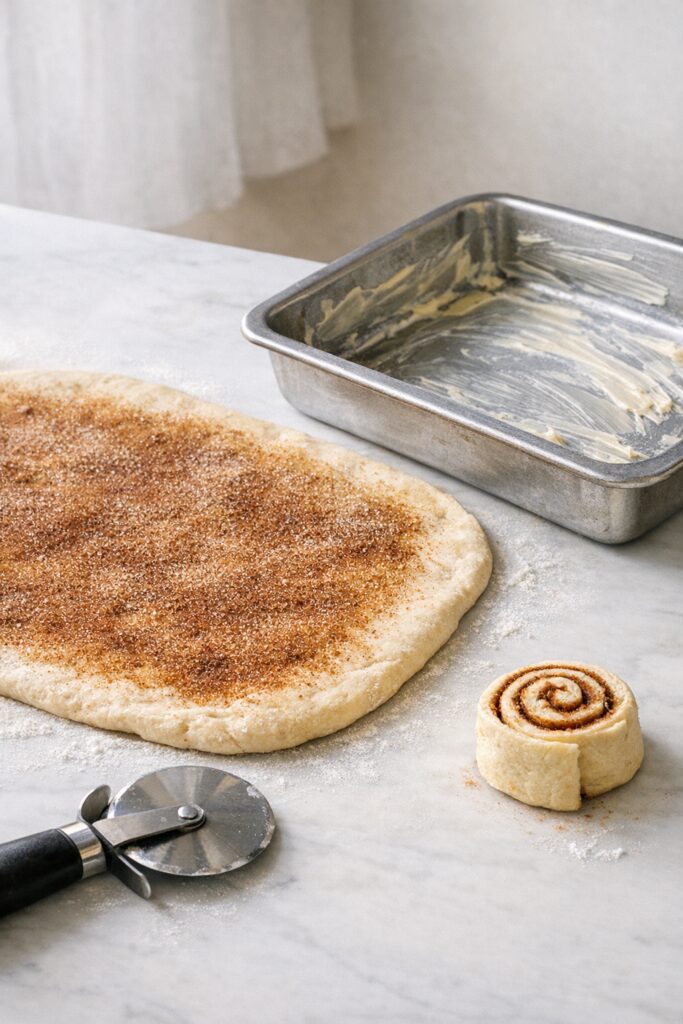
Remove your dough from the refrigerator 1 to 2 hours before you plan to roll it out, as room temperature dough is much easier to work with. Lightly flour your work surface and turn the dough onto it. Using a rolling pin, preferably a French-style one that distributes pressure evenly, roll the dough into a 17×10-inch rectangle. Try to square off the short sides as much as possible for uniform rolls. Meanwhile, butter the bottom and sides of a 9×13-inch metal baking dish. Metal pans conduct heat better than glass, resulting in more evenly baked rolls with slightly crispy edges.
Step 5: Spread Butter and Add Cinnamon Sugar
Dot the surface of your rolled-out dough with 6 tablespoons of softened butter, then use an offset spatula or regular spatula to spread it evenly across the entire surface. Dotting first makes spreading much easier and prevents tearing the dough. In a small bowl, combine the brown sugar and cinnamon, then sprinkle this mixture generously over the buttered dough. Don’t hold back here, the generous amount of filling is what makes these rolls so special. The butter layer acts as glue, holding the cinnamon sugar in place as you roll.
Step 6: Cut and Roll the Cinnamon Rolls
Here’s where technique makes a difference. Using a pizza cutter, slice the dough lengthwise into 12 even strips. This method, rather than rolling the entire rectangle and then slicing, ensures every roll looks perfectly uniform. Roll each strip tightly, one at a time, starting from one short end and keeping consistent tension as you go. Once rolled, pinch the seam to seal it and prevent the roll from unraveling during proofing. Place each finished roll in your prepared baking dish, spacing them evenly. At this point, you can cover and refrigerate overnight if you want to bake them fresh the next morning.
Step 7: Proof the Rolls
Cover your pan of rolls with a damp kitchen towel and let them proof in a warm location for 2 to 3 hours, or until they look puffed and visibly larger. A warm room temperature of around 75-80°F is ideal. If your kitchen is cooler, place the dish in the oven with just the light on, which creates a gentle warmth of about 80-90°F. This is perfect for encouraging the sourdough to rise without overheating. Remember to remove the rolls from the oven before preheating it for baking. Properly proofed rolls should look pillowy and will spring back slowly when gently pressed.
Step 8: Bake the Sourdough Cinnamon Rolls
When your rolls are nearly done proofing, preheat your oven to 400°F. Bake on the center rack for 18 to 20 minutes, or until the edges are just beginning to turn golden. The most important tip here is not to overbake, which is the number one cause of dry cinnamon rolls. If you have an instant-read thermometer, the center of the rolls should reach 190-200°F. Pull them out as soon as you see light golden color at the edges, even if the tops still look pale. They’ll continue cooking slightly from residual heat.
Step 9: Make the Cream Cheese Frosting
While your rolls bake, prepare the frosting so it’s ready the moment they come out of the oven. In a large mixing bowl, beat together the softened butter and cream cheese until smooth and well combined. Add the vanilla extract, powdered sugar, and a pinch of salt. Start mixing on low speed to avoid a cloud of powdered sugar, then increase to high speed and beat for 2 to 3 minutes, scraping down the bowl as needed. The finished frosting should be light, fluffy, and whipped, with an airy texture that spreads beautifully.
Step 10: Frost and Serve
Once your sourdough cinnamon rolls come out of the oven, let them cool for exactly 5 minutes, no more. Then spread the frosting generously over the very warm rolls. The heat will cause some of the frosting to melt into the grooves and crevices, which is exactly what you want. This creates pockets of creamy sweetness throughout the rolls. Serve immediately while they’re still warm for the ultimate indulgent experience. The combination of warm, soft dough with melting frosting is simply unbeatable.
Healthier Alternatives for the Recipe
While these sourdough cinnamon rolls are meant to be an indulgent treat, there are several modifications you can make to lighten them up without sacrificing too much flavor or texture. These swaps allow you to enjoy the same comforting experience with a slightly better nutritional profile.
- Use whole wheat flour: Replace up to half of the all-purpose flour with whole wheat flour for added fiber and nutrients. This will create a slightly denser, nuttier roll that pairs beautifully with the cinnamon.
- Reduce the sugar in the filling: Cut the brown sugar down to 1/2 cup instead of 2/3 cup. You’ll still get plenty of sweetness, especially with the frosting on top.
- Try Greek yogurt frosting: Replace half the cream cheese with plain Greek yogurt for added protein and reduced fat. Mix 2 ounces cream cheese with 2 ounces Greek yogurt, then proceed with the recipe as written.
- Use coconut sugar: Substitute coconut sugar for brown sugar in the filling for a lower glycemic option with a subtle caramel flavor.
- Reduce butter in the dough: Cut the butter in the dough down to 113 grams (1 stick) and add 2 tablespoons of unsweetened applesauce to maintain moisture.
- Make mini rolls: Cut the dough into 16 strips instead of 12 for smaller portion sizes with the same great flavor.
Serving Suggestions
These sourdough cinnamon rolls are incredibly versatile and can be served in numerous ways to suit different occasions and preferences. Here are some creative ideas to elevate your cinnamon roll experience.
- Classic breakfast spread: Serve warm rolls alongside scrambled eggs, crispy bacon, and fresh fruit for a complete brunch that will impress guests.
- Coffee pairing: The tangy sourdough pairs beautifully with a bold, dark roast coffee or a creamy latte. The acidity of the coffee cuts through the richness of the frosting perfectly.
- Ice cream sundae base: Warm a cinnamon roll, top it with a scoop of vanilla ice cream, drizzle with caramel sauce, and sprinkle with chopped pecans for an over-the-top dessert.
- Holiday breakfast tradition: Make these the centerpiece of Christmas morning or Thanksgiving breakfast. The aroma alone creates a memorable holiday atmosphere.
- Add-ins and toppings: Sprinkle chopped pecans or walnuts into the cinnamon sugar filling, or add a handful of raisins for extra texture and flavor.
- Drizzle additions: After frosting, drizzle with maple syrup, caramel sauce, or melted chocolate for an extra layer of decadence.
- Savory brunch board: Include these sweet rolls as part of a larger brunch spread with quiche, fresh pastries, smoked salmon, and fruit salad.
Common Mistakes to Avoid
Even experienced bakers can run into issues when making sourdough cinnamon rolls. Here are the most common pitfalls and how to avoid them for perfect results every time.
- Adding too much flour: This is the number one mistake that leads to dry, dense rolls. Always measure flour by spooning it into the measuring cup and leveling off, or better yet, weigh it with a kitchen scale. The dough should be soft and slightly tacky, not stiff.
- Using cold ingredients: Cold milk and eggs will slow down fermentation and make it harder to achieve a smooth dough. Always bring dairy and eggs to room temperature before mixing.
- Skipping the overnight rest: While you can make these rolls in one day, the overnight refrigeration develops significantly better flavor and texture. Plan ahead when possible.
- Overbaking the rolls: Pull rolls from the oven when they’re just starting to turn golden at the edges. They’ll look slightly underdone, but the residual heat will finish cooking them perfectly.
- Rolling too loosely: When rolling your strips, maintain consistent tension to create tight spirals. Loose rolls will have gaps and won’t hold together as well.
- Frosting cold rolls: Always frost the rolls while they’re still warm so the frosting melts slightly into all the nooks and crannies. This creates the best texture and flavor distribution.
- Inactive sourdough starter: Make sure your starter is bubbly and active before using. An inactive starter will result in rolls that don’t rise properly and lack that characteristic tangy flavor.
- Uneven rolling: Take time to roll your dough into an even rectangle with square corners. This ensures all your rolls are the same size and bake evenly.
Storing Tips for the Recipe
Proper storage ensures your sourdough cinnamon rolls stay fresh and delicious for days after baking. Here’s how to maximize their shelf life and quality.
- Room temperature storage: Store unfrosted rolls in an airtight container at room temperature for up to 2 days. Frosted rolls should be covered tightly with plastic wrap or kept in an airtight container for up to 3 days.
- Refrigerator storage: Frosted rolls can be refrigerated for up to 5 days. The frosting may firm up, so let them come to room temperature or warm them slightly before serving.
- Freezing baked rolls: Wrap individual rolls tightly in plastic wrap, then place them in a freezer bag. Freeze for up to 3 months. Thaw at room temperature, then warm in a 300°F oven for 10 minutes.
- Freezing unbaked rolls: After placing rolls in the baking dish, cover tightly with plastic wrap and aluminum foil, then freeze for up to 1 month. Thaw overnight in the refrigerator, then let proof at room temperature for 2-3 hours before baking.
- Reheating tips: For the best texture, reheat individual rolls in the microwave for 15-20 seconds, or warm them in a 300°F oven for 8-10 minutes. Cover with foil to prevent over-browning.
- Freeze frosting separately: If you plan to freeze rolls, consider freezing them unfrosted and making fresh frosting when you’re ready to serve. This maintains the best texture for both components.
- Make-ahead dough: The dough can be refrigerated for up to 3 days after the initial 2-hour rest. This gives you flexibility to bake fresh rolls whenever you’re ready.
Why This Recipe Works
Understanding the science behind these sourdough cinnamon rolls helps you appreciate why each step matters and how to troubleshoot if needed. The combination of sourdough fermentation with enriched dough techniques creates something truly special.
The overnight cold fermentation serves multiple purposes beyond just convenience. First, it allows the sourdough starter to slowly break down the flour’s complex carbohydrates, developing that characteristic tangy flavor while creating a more digestible final product. Second, the cold temperature firms up the butter in the dough, making it much easier to roll out without sticking. Third, this slow fermentation creates a stronger gluten network, resulting in rolls that are both tender and structurally sound enough to hold all that cinnamon sugar filling.
The butter layer between the dough and filling isn’t just for richness, it acts as a barrier that prevents the moisture from the brown sugar from making the dough soggy. Brown sugar contains more moisture than white sugar due to its molasses content, which is why you need that protective butter layer. Additionally, melting some of the frosting into the warm rolls creates pockets of sweet creaminess throughout, rather than just sitting on top.
Frequently Asked Questions
Can I make sourdough cinnamon rolls without a stand mixer?
Absolutely! While a stand mixer makes the process easier, you can easily knead this dough by hand. Mix all the wet ingredients together in a large bowl, then gradually stir in the flour with a wooden spoon. Once it becomes too difficult to stir, turn it out onto a floured surface and knead for 6 to 8 minutes until smooth and elastic. The dough should be soft and slightly tacky but not sticky. Hand kneading might take a few extra minutes, but the results will be just as delicious.
Why do my cinnamon rolls turn out dry?
Dry cinnamon rolls typically result from one of two issues: adding too much flour or overbaking. Always measure flour correctly by spooning it into the cup and leveling off, or use a kitchen scale for accuracy. The dough should feel soft and moist, not stiff. Additionally, pull the rolls from the oven as soon as the edges start turning golden, even if the centers look slightly pale. They should reach an internal temperature of 190-200°F. Overbaking is the most common cause of dry rolls, so err on the side of slightly underdone.
Can I use discard sourdough starter instead of active starter?
While you can use sourdough discard in this recipe, your rolls won’t rise as much or develop as much tangy flavor. Discard starter lacks the active yeast colonies needed for optimal leavening. If you only have discard available, consider adding 1/2 teaspoon of instant yeast to help with rising, and expect a less pronounced sourdough flavor. For best results, use active, recently fed starter that’s bubbly and at its peak.
How do I know when my rolls are properly proofed?
Properly proofed rolls should look noticeably puffed and larger than when you first placed them in the pan. They should have expanded to nearly touch each other. When you gently press a finger into the dough, it should slowly spring back but leave a slight indentation. If it springs back immediately, it needs more time. If the indentation stays completely, you may have slightly overproofed, but they’ll still bake up fine. Proofing time varies based on room temperature, anywhere from 2 to 4 hours typically.
Can I make these rolls in advance?
Yes, these sourdough cinnamon rolls are excellent for make-ahead preparation. You have several options: refrigerate the dough after the initial rest for up to 3 days before rolling out; shape the rolls and refrigerate overnight before proofing and baking the next morning; or freeze shaped unbaked rolls for up to 1 month. You can also bake the rolls completely, freeze them unfrosted, and reheat when needed. Each method works well, giving you flexibility for your schedule.
What’s the best way to reheat leftover cinnamon rolls?
For the softest texture, reheat individual rolls in the microwave for 15 to 20 seconds. If you prefer slightly crispy edges, warm them in a 300°F oven for 8 to 10 minutes, covered loosely with foil to prevent over-browning. You can also wrap rolls in damp paper towels before microwaving to add moisture back. Avoid reheating at high temperatures, which will dry them out. If frozen, thaw overnight in the refrigerator before reheating.
Can I use all-purpose flour instead of bread flour?
Yes, both all-purpose and bread flour work beautifully in this recipe. All-purpose flour will yield slightly softer, more tender rolls, while bread flour creates a chewier texture with a bit more structure. The protein content difference (bread flour has more protein) affects gluten development, but both produce excellent results. Choose based on your texture preference, many home bakers actually prefer all-purpose for the softer crumb it creates.
Why didn’t my cream cheese frosting turn out fluffy?
Fluffy cream cheese frosting requires proper temperature and technique. Make sure both the butter and cream cheese are truly softened to room temperature, not cold or melted. Beat them together first until smooth, then add the powdered sugar and beat on high speed for a full 2 to 3 minutes. This whipping action incorporates air, creating that light, fluffy texture. If your frosting is too thin, refrigerate it for 15 minutes to firm up. If it’s too thick, add a teaspoon of milk and beat again.
Final Thoughts
These sourdough cinnamon rolls represent the perfect marriage of traditional sourdough baking with the beloved comfort of cinnamon rolls. The tangy depth from the sourdough starter elevates what could be an ordinary breakfast pastry into something truly memorable and special. While the timeline might seem lengthy with overnight rests and long proofing periods, most of that time is hands-off, and the active work is actually quite straightforward.
What makes this recipe particularly valuable is its flexibility. You can adapt it to your schedule with multiple make-ahead options, adjust the sweetness and richness to suit your preferences, and even experiment with different fillings once you’ve mastered the basic technique. The result is consistently soft, fluffy rolls with distinct layers and that irresistible combination of cinnamon sweetness and tangy sourdough flavor.
Whether you’re serving these for a holiday breakfast, weekend brunch, or just because you’re craving something special, these rolls deliver every time. The aroma alone as they bake will have everyone gathering in the kitchen, and that first bite of warm, frosting-covered roll is pure bliss. Don’t be surprised if they become your new tradition, these sourdough cinnamon rolls have a way of becoming family favorites that get requested again and again.
Now it’s your turn to experience the magic. Gather your ingredients, feed your sourdough starter, and get ready to create the most incredible cinnamon rolls you’ve ever tasted. Your kitchen is about to smell absolutely amazing, and your family and friends will think you’re a baking genius. Happy baking!
Must Try Recipes
- Bagels Recipe
A simple guide to soft, chewy homemade bagels. - Breadsticks
Perfect soft, herbed breadsticks for dipping. - Healthy Banana Bread with Oat Flour
A moist banana loaf made with wholesome oat flour. - Almond Cream Rolls
Flaky sweet rolls filled with creamy almond paste. - French Bread Pizza
Quick and savory pizza made on a crusty baguette.
Tools You’ll Need
🍰 Essential Tools for This Recipe
Get the best equipment to make your baking easier and more professional





Want to save this recipe?
Want to save this recipe? Enter your email below, and we'll send it straight to your inbox. Plus, receive new recipes every week!

Easy Sourdough Cinnamon Rolls with Cream Cheese Frosting
- Total Time: 40 minutes
Description
Soft sourdough rolls swirled with cinnamon sugar and topped with fluffy cream cheese frosting for a cozy breakfast treat.
Ingredients
- 125 g active sourdough starter (⅔ cup)
- 130 g milk, room temperature (½ cup + 1 Tbsp)
- 170 g unsalted butter, melted and cooled (1½ sticks)
- 1 tsp vanilla extract
- 2 large eggs, room temperature
- 500 g all-purpose flour (4 cups)
- 2 Tbsp granulated sugar
- 1 tsp fine sea salt
- 85 g unsalted butter, softened (6 Tbsp), plus extra for pan
- 142 g packed light brown sugar (⅔ cup)
- 1½ Tbsp ground cinnamon
- 56 g unsalted butter, softened (4 Tbsp)
- 4 oz cream cheese, softened
- 1½ tsp vanilla extract
- 120 g confectioners’ sugar (1 cup)
- Pinch of fine sea salt
Instructions
- In a stand mixer bowl, whisk sourdough starter and milk until smooth. Add melted butter, vanilla, eggs, sugar, and salt; mix until combined.
- Attach dough hook, add flour gradually on low speed. Knead on medium speed 8–10 minutes until the dough is soft and no longer sticks.
- Transfer dough to a lightly oiled bowl, cover, and let rest at room temperature for 2 hours (or refrigerate overnight for 8–15 hours).
- Remove dough from fridge 1–2 hours before rolling. On a floured surface, roll into a 17×10 inch rectangle. Butter a 9×13 inch pan.
- Spread softened butter over dough, then sprinkle evenly with brown sugar and cinnamon mixture.
- Using a pizza cutter, cut dough into 12 strips. Roll each strip tightly and place seamside down in the pan. Cover and proof 2–3 hours until puffy.
- Preheat oven to 400 °F. Bake rolls in the center rack for 18–20 minutes until edges are light golden.
- Meanwhile, beat butter and cream cheese until smooth. Add vanilla, powdered sugar, and salt; beat until fluffy.
- Let rolls cool 5 minutes, then spread frosting generously and serve warm.
- Prep Time: 20 minutes
- Cook Time: 20 minutes
- Category: Breakfast
- Cuisine: American
Nutrition
- Serving Size: 12 cinnamon rolls
- Calories: 492 kcal
- Sugar: 24 g
- Sodium: 246 mg
- Fat: 26 g
- Saturated Fat: 16 g
- Unsaturated Fat: 8 g
- Trans Fat: 1 g
- Carbohydrates: 59 g
- Fiber: 2 g
- Protein: 7 g
- Cholesterol: 93 mg