



Mornings can feel rushed, and the usual scrambled eggs or toast routine gets old fast. When you want something that feels genuinely special without spending an hour in the kitchen, Turkish Eggs (known in Turkey as Çılbır, pronounced “chill-burr”) deliver something remarkable: silky poached eggs resting on garlicky yogurt, finished with a warm Aleppo pepper butter sauce and fresh herbs. The whole dish comes together in about 10 minutes, and the flavor is layered in a way that feels far more complex than the effort involved. Ottoman sultans were reportedly enjoying this combination over 500 years ago, and one bite explains why it stuck around.
Why This Dish Works So Well (Before You Touch a Pan)
The genius of Turkish Eggs is in the contrast. Cool, thick, garlicky yogurt acts as a creamy base that tempers the heat of the spiced butter sauce. The poached eggs sit in the middle, their runny yolks breaking into both layers when you cut through them, creating a sauce all on their own.
The yogurt needs to be full-fat and thick. Thin yogurt will pool and separate, turning the base watery rather than luscious. If you only have regular yogurt, strain it through a fine mesh strainer for 10 to 15 minutes first.
The Aleppo pepper in the butter sauce is not interchangeable with standard chili flakes without losing something. It brings a fruity, mild heat with a slightly oily texture that coats the dish beautifully. If you cannot find it, crushed red pepper flakes work but will be sharper and less nuanced.
Ingredients for Turkish Eggs
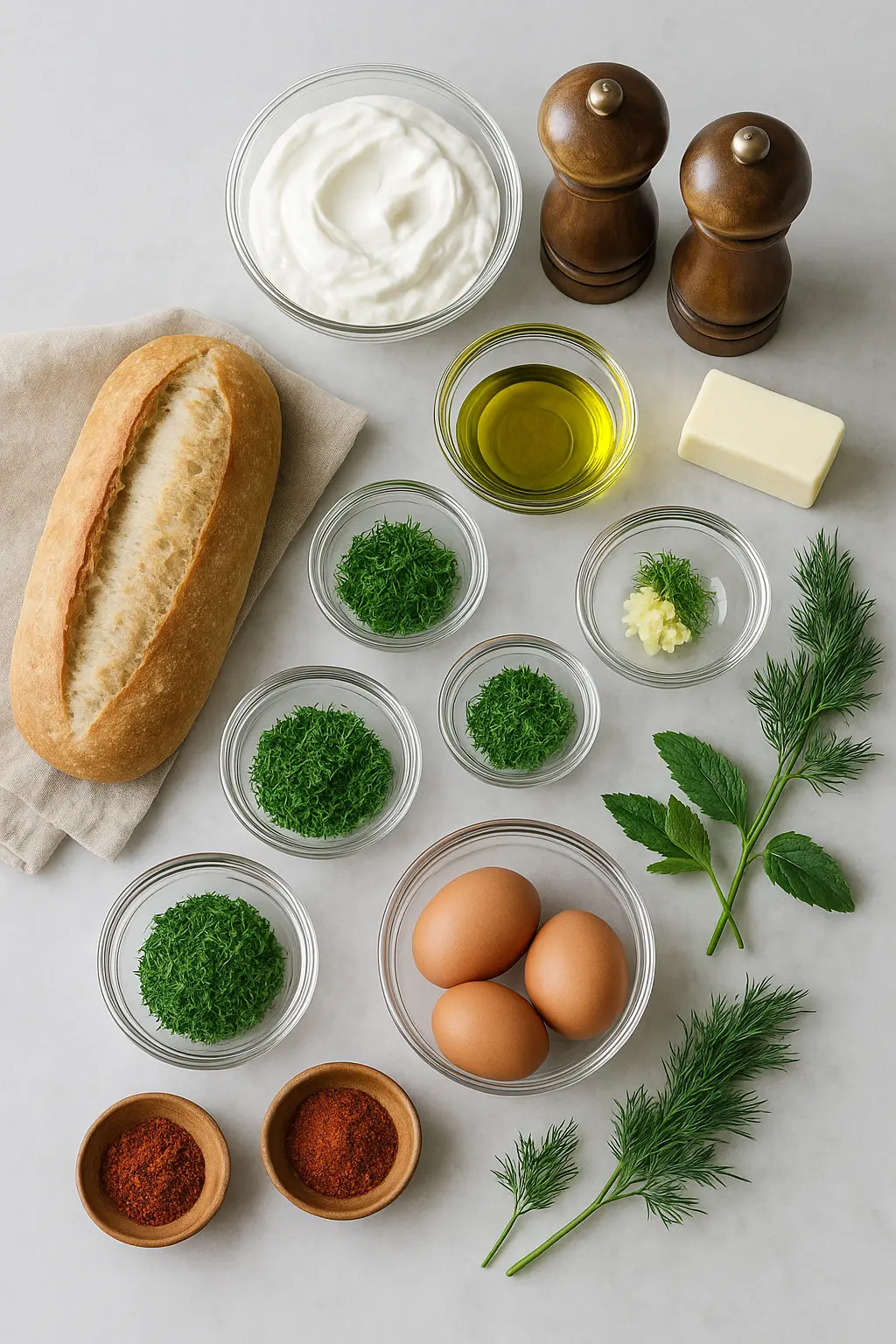
- 1 cup full-fat Greek yogurt
- 1 to 2 finely grated garlic cloves
- 2 tablespoons minced fresh dill (dry dill works in a pinch)
- ¼ cup olive oil
- 6 tablespoons unsalted butter
- 2 teaspoons Aleppo pepper
- 1 teaspoon sweet or smoked paprika
- 2 tablespoons white distilled vinegar
- 4 large eggs
- Coarse salt and freshly cracked pepper to taste
- Optional: finely minced fresh mint
- Optional: toasted bread for serving
On the butter: Use unsalted butter here. Salted butter hands control of the seasoning to the manufacturer, and the sauce can easily tip too salty. Unsalted butter lets you season the sauce yourself at the end.
On the vinegar: The white distilled vinegar is not just a flavor note. It helps the egg whites coagulate faster when they hit the water, giving you a neater, more compact poached egg rather than a wispy, ragged one.
Why Most Homemade Poached Eggs Fail (and How to Fix It)
The single biggest mistake people make with poached eggs is using water that is boiling too aggressively. A rolling boil tears the whites apart before they have a chance to set. You want a strong simmer where a few bubbles are gently breaking the surface, not a churning boil.
The second mistake is skipping the strainer step. Cracking the egg directly into the water means the loose, watery part of the white spreads out in every direction. Cracking into a fine mesh strainer first and letting it drain for 20 to 30 seconds removes that watery portion, leaving only the firmer white that holds its shape.
I skipped the strainer step the first few times I made this. The eggs tasted fine but looked like they had been through a storm. The strainer method takes 30 extra seconds and makes a visible difference.
Step-by-Step Instructions
Step 1: Build a Creamy, Garlicky Base
In a mixing bowl, combine the Greek yogurt with salt and freshly cracked pepper. Grate in one garlic clove and stir everything together. Taste it. The yogurt should smell sharp and savory, not bland. If you want more garlic presence (and I always do), grate in the second clove. Set aside at room temperature while you prepare the rest.
Step 2: Combine the Dill Oil for Drizzling
In a separate small bowl, stir together the minced fresh dill and the ¼ cup of olive oil. The oil will turn faintly green and smell grassy and bright. This is not a cooked element, so the freshness of the dill matters. Set it aside. If your dill stems are tender, include them, as they carry real flavor.
Step 3: Coax the Spiced Butter Sauce to Life
In a saucepan, melt the 6 tablespoons of unsalted butter over low to medium heat. Once melted, stir in the 2 teaspoons of Aleppo pepper and 1 teaspoon of paprika. Cook for 1 minute, stirring gently. The butter will turn a deep, burnished red and smell warm and slightly smoky. Turn off the heat and set aside. One thing to watch: if the heat is too high, the butter can brown and the spices can turn bitter. Low and slow is the move here.
Step 4: Prepare the Poaching Water
Fill a medium to large pot about three-quarters full with water and heat over low to medium heat until it reaches a strong simmer with a few bubbles breaking the surface. Pour in the 2 tablespoons of white distilled vinegar. The water should look gently active, not aggressively bubbling.
Step 5: Strain the Eggs for Cleaner Results
Crack each egg into a fine mesh strainer set over a bowl. Let it sit for 20 to 30 seconds. You will see the thin, watery white drip away, leaving the firmer white intact around the yolk. This is the step that separates a tidy poached egg from a ragged one. Transfer each strained egg gently to a small cup or bowl before adding to the water.
Step 6: Poach the Eggs to Your Preferred Doneness
Lower each egg into the simmering water one at a time, keeping them a few inches apart. For over-easy yolks (my preference), cook for 90 seconds to 2 minutes. The whites should look fully set and opaque while the yolk still has visible movement when you gently nudge the pot. Add 30 to 45 seconds more for over-medium, or 2 additional minutes for fully set yolks. If the eggs are drifting together, use a spoon to gently separate them.
Step 7: Drain the Eggs Before Plating
Lift each egg out with a slotted spoon and transfer to a paper towel. Let them rest for a few seconds to drain any excess water. Watery eggs will dilute the yogurt base and thin out the sauce, so this brief pause matters.
Step 8: Plate with Intention
Spoon a generous dollop of the garlicky yogurt onto a plate and spread it into a loose circle. Drizzle some of the dill oil over the yogurt. Place the poached eggs on top and season them lightly with salt and pepper. Drizzle the warm Aleppo butter sauce over everything. The colors at this stage are striking: deep red against pale yellow and white. Finish with optional fresh mint.
Step 9: Serve with Toasted Bread
Serve immediately with toasted bread for dipping. Classic Turkish breads like simit or pide are traditional, but any crusty artisan loaf works well. For an upgrade, brush the bread with olive oil or garlic-infused oil and toast it under the broiler until golden at the edges.
What Separates a Good Çılbır from a Great One
- Temperature contrast is intentional. The yogurt should be at room temperature, not cold from the fridge. Cold yogurt dulls the garlic flavor and creates an unpleasant contrast with the warm eggs.
- Do not skip the dill oil. It might seem like a minor garnish, but the grassy brightness of the dill cuts through the richness of the butter sauce and yogurt in a way that makes the whole dish feel balanced.
- Aleppo pepper is worth seeking out. It is available at most Middle Eastern grocery stores and online. The fruity, mild heat it brings is genuinely different from standard paprika or chili flakes.
- Season the eggs directly. The yogurt is seasoned, the butter sauce is seasoned, but the eggs themselves need their own pinch of salt and pepper. Without it, they taste flat against the boldly seasoned components around them.
- Cumin is an optional addition to the butter sauce that some Turkish cooks include. A quarter teaspoon stirred in with the Aleppo pepper adds an earthy warmth that works well if you enjoy that flavor.
Serving Suggestions
Turkish Eggs are traditionally a breakfast or brunch dish, but they work equally well as a light dinner. The richness of the butter sauce and the protein from the eggs make the meal genuinely satisfying at any hour.
Serve alongside a simple cucumber and tomato salad dressed with olive oil and lemon for a fresh counterpoint to the richness. A cup of strong Turkish coffee alongside the dish is a natural pairing that feels complete in a way that regular drip coffee does not quite match.
For a more substantial spread, add a bowl of olives and some sliced fresh vegetables on the side.
Storage and Reheating
The yogurt base and the Aleppo butter sauce can both be made ahead and stored separately in the refrigerator for up to 3 days. The dill oil is best made fresh but will hold for 1 to 2 days covered in the fridge.
Poached eggs do not store well once plated. If you want to prep ahead, poach the eggs, transfer them to a bowl of cold water, and refrigerate for up to 24 hours. To reheat, lower them into hot (not boiling) water for about 60 seconds until warmed through. You will know they are ready when the white feels firm but the yolk still has a slight give when pressed gently.
Do not reheat the assembled dish. The yogurt will weep and the eggs will overcook. Assemble fresh each time using your prepped components.
A Breakfast Worth Slowing Down For
Turkish Eggs solve the problem that most quick breakfasts cannot: they are genuinely fast to make and genuinely satisfying to eat. Not just filling, but actually interesting, with layers of flavor that reward attention.
The first time you break a yolk into that garlicky yogurt and watch it swirl into the red butter sauce, you will understand why this dish has been on Turkish tables for centuries. Give it a try on a weekend morning when you have 15 minutes and want something that feels like more than just fuel. You might find it becomes the breakfast you keep coming back to.
FAQs
What are Turkish Eggs made of?
Turkish Eggs consist of poached eggs served over a base of garlic-infused Greek yogurt, drizzled with a warm spiced butter sauce made from unsalted butter, Aleppo pepper, and paprika, then finished with fresh dill oil and optional mint.
Can I use regular yogurt instead of Greek yogurt?
Yes. Strain regular yogurt through a fine mesh strainer or cheesecloth for 10 to 15 minutes to remove excess liquid. The result should be thick and dense, similar to Greek yogurt, so it holds its shape under the eggs rather than spreading thin.
What can I substitute for Aleppo pepper?
Crushed red pepper flakes are the most accessible substitute, though they bring sharper heat without the fruity quality of Aleppo. Some cooks use Turkish sumac for a lemony, tart variation. Start with a smaller amount of either substitute and adjust to taste.
How do I keep poached eggs from falling apart?
Two things help most: use a fine mesh strainer to drain the watery egg white before poaching, and make sure your water is at a gentle simmer rather than a rolling boil. The vinegar in the water also helps the whites set faster and hold their shape.
Can Turkish Eggs be made ahead for meal prep?
The yogurt base and butter sauce can be prepared up to 3 days in advance and stored separately in the refrigerator. Poached eggs can be stored in cold water for up to 24 hours and reheated in hot water for about 60 seconds before serving. Assemble the dish fresh each time.
Is this dish spicy?
Not particularly. Aleppo pepper has a mild, fruity heat that most people find very approachable. The recipe as written produces a warmly spiced dish rather than a hot one. If you want more heat, substitute crushed red pepper flakes for the Aleppo pepper or add a pinch alongside it.
Essential Kitchen Tools
Making Turkish Eggs? Most failed attempts come from using the wrong pan or heat setup — not the recipe itself.
Must Try Recipes
- Mediterranean Sheet Pan Baked Eggs & Veggies — A hearty, veggie-packed breakfast option.
- Turkish chicken shish kebab — Perfect for pairing with your breakfast eggs for a Turkish feast.
- Homemade Peanut Butter Chocolate Eggs — A sweet treat to complement your savory breakfast.

Want to save this recipe?
Want to save this recipe? Enter your email below, and we'll send it straight to your inbox. Plus, receive new recipes every week!

Quick Turkish Eggs Recipe
- Total Time: 10 minutes
- Yield: 2 1x
Description
Perfectly poached eggs layered over velvety garlic yogurt, topped with a luscious Aleppo pepper butter sauce that brings heat, richness, and unforgettable flavor in every bite.
Ingredients
- Greek yogurt, 1 cup
- Finely grated garlic cloves, 1-2
- Fresh dill, minced, 2 tablespoons
- Olive oil, ¼ cup
- Unsalted butter, 6 tablespoons
- Aleppo pepper, 2 teaspoons
- Sweet or smoked paprika, 1 teaspoon
- White distilled vinegar, 2 tablespoons
- Large eggs, 4
- Coarse salt and freshly cracked pepper, to taste
- Optional: finely minced fresh mint
- Optional: toasted bread on the side
Instructions
- Combine the yogurt with salt and pepper in a small bowl, then set aside.
- In another small bowl, blend the dill with the olive oil and set aside.
- Melt the butter in a medium saucepan over low to medium heat. Once melted, mix in the Aleppo pepper and paprika, cooking for 1 minute before removing from heat.
- Bring a medium to large pot of water to a strong simmer over low-medium heat, then stir in the vinegar.
- Place the eggs in a strainer to eliminate the loose, watery egg whites.
- Gently add the eggs to the simmering water, ensuring they are spaced a few inches apart. For over-easy eggs, cook for 90 seconds to 2 minutes. For over medium, add an additional 30 to 45 seconds, and for over hard, cook for 2 more minutes.
- Transfer the poached eggs to paper towels to absorb any excess water.
- Spread the garlicky yogurt on a plate, drizzle with the dill oil, and place the eggs on top. Season gently with salt and pepper, then drizzle with the Aleppo pepper sauce and optionally garnish with fresh mint.
- Serve with toasted bread on the side for dipping if desired.
Notes
For a smooth and creamy base, whisk the Greek yogurt until it’s fluffy before adding it to your dish.
Store any leftover Turkish Eggs in an airtight container in the refrigerator for up to 2 days. Reheat gently over a low flame before serving.
If Aleppo pepper is unavailable, substitute with a mix of smoked paprika and cayenne pepper for a similar kick.
- Prep Time: 5 minutes
- Cook Time: 5 minutes
- Category: Breakfast
- Cuisine: Turkish
Nutrition
- Serving Size: 2
- Calories: 740 kcal
- Sugar: 4 g
- Sodium: 200 mg
- Fat: 70 g
- Saturated Fat: 28 g
- Unsaturated Fat: 38 g
- Trans Fat: 1 g
- Carbohydrates: 6 g
- Fiber: 1 g
- Protein: 22 g
- Cholesterol: 423 mg

