

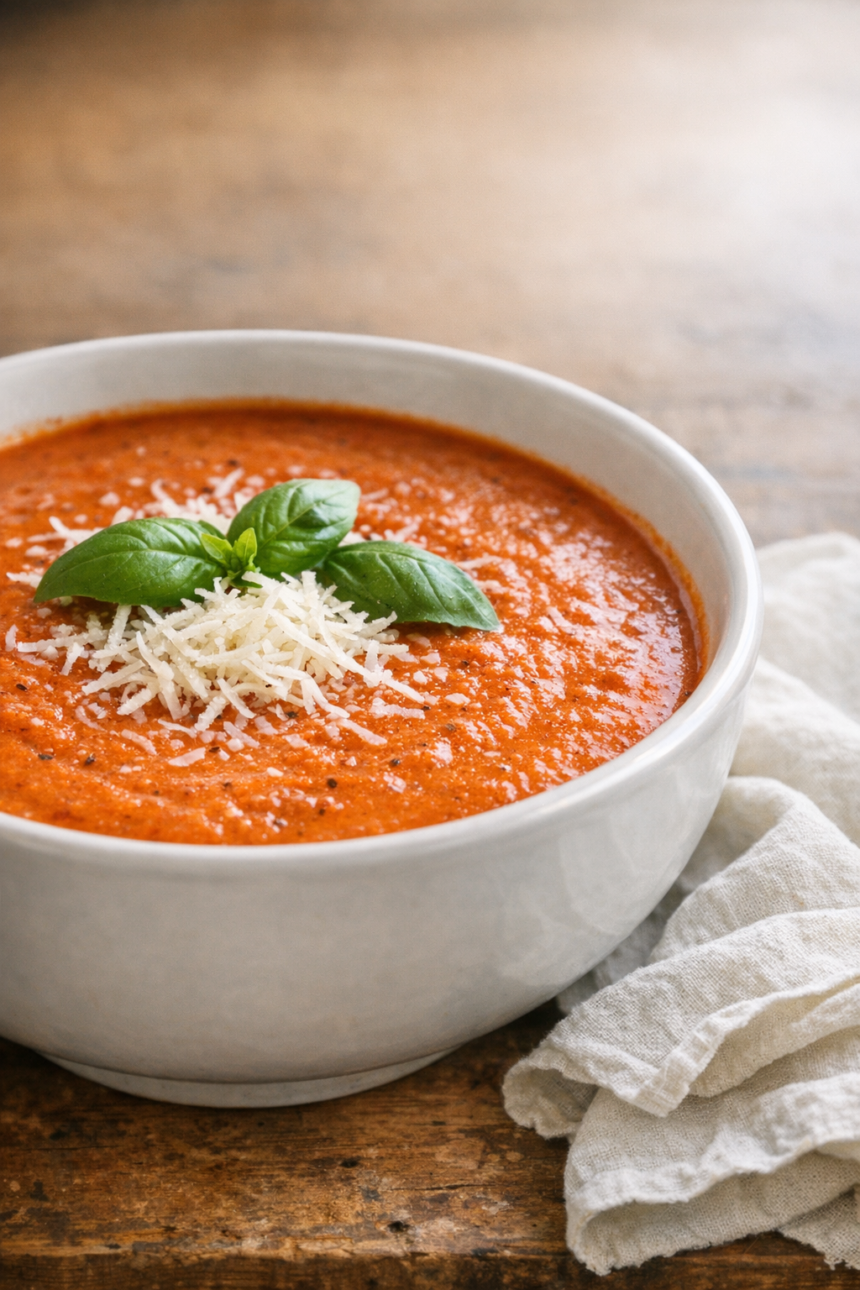
Did you know that roasting tomatoes before making soup can boost their natural sweetness by up to 30% while dramatically deepening the flavor? This Roasted Tomato Soup transforms simple garden-fresh tomatoes into a velvety, restaurant-quality comfort dish that pairs flawlessly with crispy, gooey grilled cheese sandwiches. Imagine the golden caramelized edges of roasted tomatoes blending with sweet onions and aromatic garlic, creating a rich, creamy bowl that warms you from the inside out. My family considers this their ultimate comfort meal, especially when made with homegrown tomatoes from late summer harvests. Moreover, this recipe is remarkably forgiving and comes together in about an hour, making it perfect for busy weeknight dinners or cozy weekend lunches. The secret lies in roasting the vegetables at high heat until they develop those beautiful brown, caramelized edges that add incredible depth. Furthermore, the addition of fresh basil, cream, and Parmesan cheese creates layers of flavor that you simply cannot achieve with canned soup. If you’re ready to experience tomato soup that will make you abandon store-bought versions forever, let’s dive into this simple yet impressive recipe.
Ingredients List for Roasted Tomato Soup
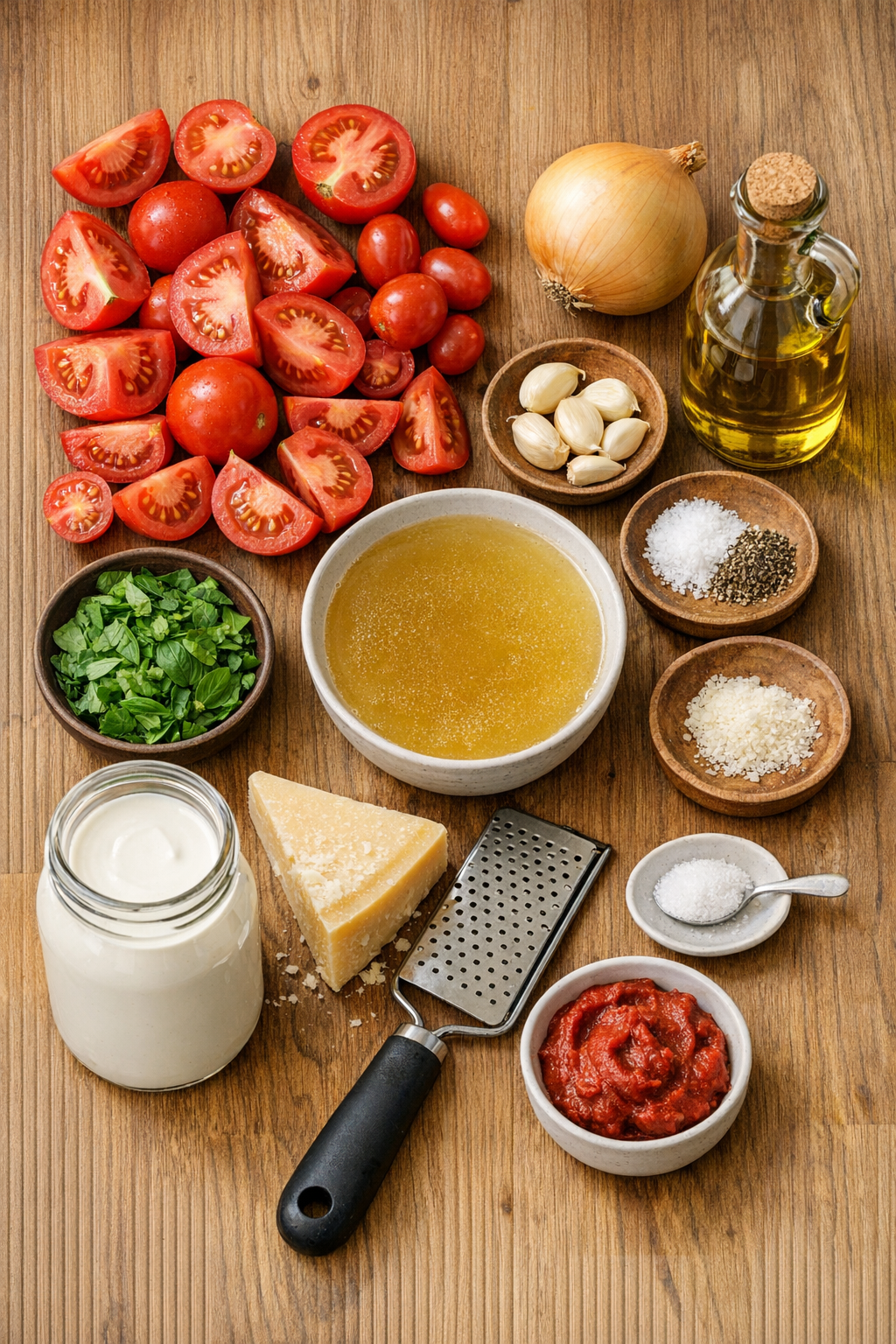
Gathering the right ingredients is essential for creating this flavorful roasted tomato soup. Consequently, using fresh, ripe tomatoes will yield the best results, though you can successfully use what’s available in your kitchen.
- 3 lbs ripe tomatoes: Roma tomatoes work beautifully, but any variety including heirloom or beefsteak will deliver excellent results. Halve smaller tomatoes lengthwise; quarter larger ones for even roasting.
- 1 large yellow onion: Quartered and separated into pieces. White onions or sweet Vidalia onions make wonderful substitutions if you prefer milder flavor.
- 8 garlic cloves: Peeled with ends trimmed. Smash them with the side of your knife for easy peeling and better roasting.
- 3 Tbsp extra-virgin olive oil: This helps caramelize the vegetables and adds richness. Avocado oil works as an alternative.
- 2 tsp fine sea salt: Plus additional to taste. Sea salt brings out the natural sweetness of the tomatoes.
- ¼ tsp freshly ground black pepper: Plus more to taste for a subtle kick.
- 2 cups chicken stock: Homemade bone broth adds tremendous depth, but low-sodium store-bought broth works perfectly. Use vegetable stock for a vegetarian version.
- 4 Tbsp fresh basil: Chopped, plus extra for garnish. If using dried basil, reduce to 2 tsp.
- ½ cup heavy cream: Creates that signature velvety texture. Half-and-half can be substituted for a lighter version.
- ½ cup freshly grated Parmesan cheese: Adds umami depth and creaminess. Pre-grated works but fresh tastes better.
- 2 Tbsp tomato paste: Intensifies the tomato flavor and adds body.
- 2 tsp sugar: Balances acidity, though the amount varies depending on your tomatoes’ natural sweetness.
Step-by-Step Instructions for Making Roasted Tomato Soup
Preparing and Roasting the Vegetables
First, preheat your oven to 400°F, which is the ideal temperature for caramelizing vegetables without burning them. Meanwhile, prepare your tomatoes by cutting them in half if they’re small to medium-sized, or into quarters if they’re particularly large. This ensures even roasting and optimal caramelization. Next, quarter your large yellow onion and separate the pieces so they roast evenly. For the garlic cloves, trim off the hard ends and smash them gently with the flat side of your knife, which makes the skins slide off effortlessly.
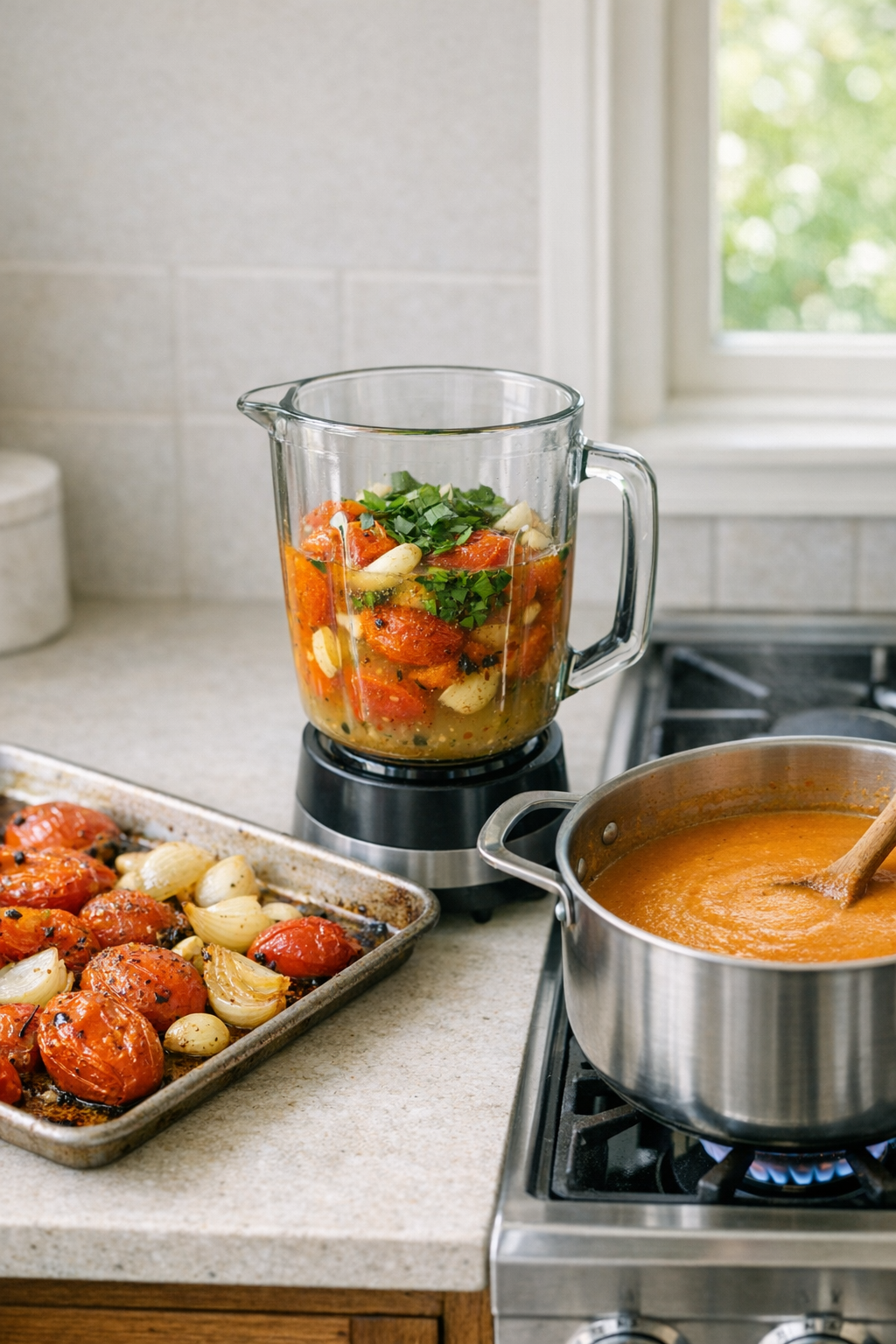
Subsequently, arrange all your prepared vegetables cut-side up on a large rimmed baking sheet in a single layer. Drizzle them generously with 3 tablespoons of extra-virgin olive oil, then season with 2 teaspoons of sea salt and ¼ teaspoon of freshly ground black pepper. Transfer the baking sheet to the center rack of your preheated oven and roast for 45 to 50 minutes. Importantly, you’ll know they’re ready when the edges of the tomatoes and onions turn golden brown and caramelized. Once roasted, remove the pan from the oven and let the vegetables rest for about 10 minutes, allowing them to cool slightly and their juices to settle.
Blending the Roasted Vegetables
After the vegetables have cooled briefly, it’s time to create that silky smooth texture. Add half of your roasted vegetable mixture to a blender or food processor along with 1 cup of chicken stock and 2 tablespoons of fresh basil. Blend on high speed until the mixture becomes completely smooth and creamy, which typically takes 30 to 45 seconds. Pour this first batch into a large soup pot or Dutch oven and set it aside.
Then, repeat the process with the remaining vegetables, making sure to scrape all those flavorful pan juices into the blender. Add the remaining 1 cup of chicken stock and 2 tablespoons of basil, then blend until silky smooth. Transfer this second batch to your soup pot with the first batch. This two-batch method prevents overwhelming your blender and ensures a perfectly smooth consistency throughout your roasted tomato soup.
Simmering and Finishing the Soup
Now, place your soup pot over medium heat and bring the blended mixture to a gentle simmer. Once simmering, stir in ½ cup of heavy cream, ½ cup of freshly grated Parmesan cheese, 2 tablespoons of tomato paste, 2 teaspoons of sugar, and the remaining 1½ teaspoons of salt. Stir continuously for 2 to 3 minutes to ensure the Parmesan melts evenly and incorporates smoothly into the soup without clumping.
Finally, taste your soup and adjust the seasonings according to your preference. If your tomatoes are particularly acidic, add a bit more sugar to balance the flavors. Likewise, if you prefer a creamier texture, add more heavy cream by the tablespoon until you reach your desired consistency. The beauty of this recipe is its flexibility, allowing you to customize it perfectly to your taste preferences.
Healthier Alternatives for Roasted Tomato Soup
While this roasted tomato soup is already nutritious thanks to the fresh vegetables, there are several modifications you can make to lighten it further without sacrificing flavor. Additionally, these swaps accommodate various dietary restrictions while maintaining that comforting, creamy texture.
- Replace heavy cream with coconut milk: Full-fat coconut milk provides similar creaminess with a dairy-free option that adds only a subtle coconut flavor.
- Use cashew cream instead: Blend soaked raw cashews with water for a plant-based cream that’s protein-rich and incredibly smooth.
- Swap Parmesan for nutritional yeast: This provides a cheesy, umami flavor while keeping the recipe vegan and adding B vitamins.
- Reduce the oil: Cut the olive oil down to 1 to 2 tablespoons and use cooking spray on the vegetables to reduce overall fat content.
- Add hidden vegetables: Roast carrots or red bell peppers alongside the tomatoes to increase nutrient density and add natural sweetness.
- Use Greek yogurt: Stir in plain Greek yogurt instead of cream for added protein and probiotics with fewer calories.
- Skip the sugar: If your tomatoes are naturally sweet, you may not need any added sugar, reducing empty calories.
- Choose vegetable stock: This makes the soup completely vegetarian while reducing sodium if you select a low-sodium variety.
Perfect Serving Suggestions for Your Soup
Serving this velvety roasted tomato soup in creative ways elevates it from a simple lunch to a memorable dining experience. Therefore, consider these presentation ideas that complement the soup’s rich, comforting flavors.
- Classic grilled cheese pairing: Serve alongside crispy, golden grilled cheese sandwiches made with a combination of cheddar and mozzarella for the ultimate cheese pull.
- Baked grilled cheese method: Butter both sides of your bread, layer with cheese, place on a baking sheet, and bake at 400°F for 10 minutes, flipping halfway through for perfectly crispy sandwiches that finish exactly when your soup is ready.
- Elegant garnish presentation: Drizzle warm cream in a decorative swirl on top, sprinkle freshly grated Parmesan, and add a few fresh basil leaves for restaurant-quality presentation.
- Crusty bread for dipping: Serve with warm sourdough, ciabatta, or French baguette slices for dipping and soaking up every last drop.
- Crouton topping: Add homemade garlic croutons or crispy croutons for added texture and crunch.
- Protein additions: Stir in cooked, shredded chicken or white beans to transform the soup into a heartier, protein-packed meal.
- Fresh herb finish: Beyond basil, try topping with fresh thyme, oregano, or chives for additional flavor dimensions.
- Cheese board accompaniment: Serve as a starter alongside a cheese and charcuterie board for an impressive dinner party opener.
Common Mistakes to Avoid When Making Tomato Soup
Even with a straightforward recipe like this roasted tomato soup, certain pitfalls can affect the final result. Consequently, being aware of these common mistakes helps ensure perfect soup every time.
- Not roasting long enough: The vegetables need those golden, caramelized edges for maximum flavor. Pulling them out too early results in a flat-tasting soup lacking depth.
- Overcrowding the baking sheet: Vegetables need space to roast properly. If they’re too close together, they’ll steam instead of caramelize. Use two baking sheets if necessary.
- Skipping the resting period: Letting the roasted vegetables cool for 10 minutes allows the flavors to concentrate and makes blending safer and easier.
- Overfilling the blender: Hot liquids expand when blended. Always blend in batches and leave space at the top to prevent dangerous spills.
- Adding cheese to boiling soup: High heat can cause Parmesan to become grainy. Always stir cheese into gently simmering soup for smooth incorporation.
- Not tasting and adjusting: Tomatoes vary in acidity and sweetness. Always taste your finished soup and adjust sugar, salt, and cream to achieve perfect balance.
- Using pre-ground pepper: Freshly ground black pepper provides significantly more flavor and aroma than pre-ground varieties.
- Forgetting the pan juices: Those caramelized juices on the baking sheet contain concentrated flavor. Scrape them all into the blender for maximum taste.
Storing Tips for Roasted Tomato Soup
Proper storage ensures your homemade roasted tomato soup maintains its fresh flavor and creamy texture for future meals. Furthermore, this soup freezes exceptionally well, making it perfect for meal prep and busy weeknights.
- Refrigerator storage: Allow the soup to cool completely before transferring to airtight containers. It will keep in the refrigerator for 4 to 5 days.
- Freezer storage: This soup freezes beautifully for up to 3 months. Use freezer-safe containers or heavy-duty freezer bags, leaving about an inch of space at the top for expansion.
- Portioning for convenience: Freeze in individual serving sizes using mason jars or smaller containers for quick grab-and-go lunches.
- Reheating from refrigerator: Warm gently on the stovetop over medium-low heat, stirring occasionally until heated through. Add a splash of cream or stock if it’s thickened too much.
- Reheating from frozen: Thaw overnight in the refrigerator, then reheat on the stovetop. Alternatively, microwave from frozen in 2-minute intervals, stirring between each.
- Avoid repeated reheating: Only reheat the portion you plan to eat to maintain the best texture and flavor.
- Storage without cream: For maximum freezer longevity, freeze the soup before adding cream, then stir it in after reheating.
- Labeling containers: Always date your containers so you can track freshness and use the oldest batches first.
Conclusion
This Roasted Tomato Soup recipe delivers restaurant-quality results with minimal effort and simple, wholesome ingredients. The roasting process transforms ordinary tomatoes into deeply flavorful, caramelized vegetables that create a soup far superior to anything from a can. Additionally, pairing it with crispy, gooey grilled cheese sandwiches makes for the ultimate comfort meal that satisfies both kids and adults alike. Whether you’re using homegrown tomatoes from your summer garden or store-bought varieties, this recipe adapts beautifully to what you have on hand. The flexibility to customize the creaminess, sweetness, and seasonings means you can make it perfectly suited to your family’s preferences. Moreover, with the ability to freeze beautifully, you can make multiple batches during peak tomato season and enjoy this comforting soup throughout the colder months. So grab those ripe tomatoes, fire up your oven, and treat yourself to a bowl of homemade goodness that will quickly become a family favorite. Don’t forget to share your results and any creative variations you discover along the way!
Frequently Asked Questions
Can I use canned tomatoes instead of fresh?
While fresh tomatoes provide the best flavor for this roasted tomato soup, you can use canned tomatoes in a pinch. Use two 28-ounce cans of whole peeled tomatoes, drain them slightly, and roast them with the onions and garlic for about 30 minutes instead of 45 to 50 minutes. However, the depth of flavor from caramelizing fresh tomatoes is difficult to replicate with canned varieties, so fresh is always recommended when available.
How can I make this soup completely dairy-free?
Making this soup dairy-free is simple and still delicious. Replace the heavy cream with full-fat coconut milk or cashew cream for similar richness and creaminess. Instead of Parmesan cheese, use 3 to 4 tablespoons of nutritional yeast, which provides a cheesy, umami flavor without any dairy. The result is a creamy, flavorful soup that’s completely plant-based and suitable for vegan diets.
Why is my soup too acidic?
Tomato acidity varies significantly based on variety, ripeness, and growing conditions. If your roasted tomato soup tastes too acidic, gradually add more sugar, starting with an additional teaspoon and tasting as you go. Alternatively, add a pinch of baking soda, which neutralizes acidity, though be careful as too much can affect the flavor. Increasing the cream also helps mellow the acidity while adding richness.
Can I make this soup in advance?
Absolutely! This soup actually tastes even better the next day as the flavors continue to meld. Prepare the soup completely, let it cool, then store it in the refrigerator for up to 5 days. When ready to serve, reheat gently on the stovetop, stirring occasionally. You may need to add a splash of cream or stock if it has thickened during storage. This makes it perfect for meal prep or entertaining.
What’s the best way to achieve a completely smooth texture?
For the silkiest roasted tomato soup, blend the soup in two batches on high speed for at least 45 seconds to 1 minute per batch. If you prefer an even smoother consistency, strain the blended soup through a fine-mesh sieve to remove any remaining seeds or skin particles. Using a high-powered blender like a Vitamix produces the smoothest results, though any standard blender works well if you blend long enough.
Can I double this recipe?
Yes, this recipe doubles beautifully for feeding a crowd or meal prepping. Use two large rimmed baking sheets to ensure the vegetables aren’t overcrowded and can properly caramelize. You may need to blend the soup in three or four batches depending on your blender size. The cooking times remain the same, though you’ll need a larger soup pot to accommodate the increased volume.
What tomato varieties work best?
Roma tomatoes are ideal because they have fewer seeds, meatier flesh, and less water content, resulting in a richer soup. However, any ripe tomato variety works well including beefsteak, heirloom, cherry, or grape tomatoes. Mixing varieties often creates complex, interesting flavor profiles. Avoid underripe or pale tomatoes as they lack the sweetness and depth needed for exceptional roasted tomato soup.
How do I prevent the soup from separating?
Soup separation typically occurs when the temperature is too high or when dairy is added to boiling liquid. Always reduce the heat to a gentle simmer before adding cream and cheese. Stir continuously while adding the cream and Parmesan to ensure even incorporation. If separation does occur, blend the soup again briefly or use an immersion blender to re-emulsify the ingredients smoothly.
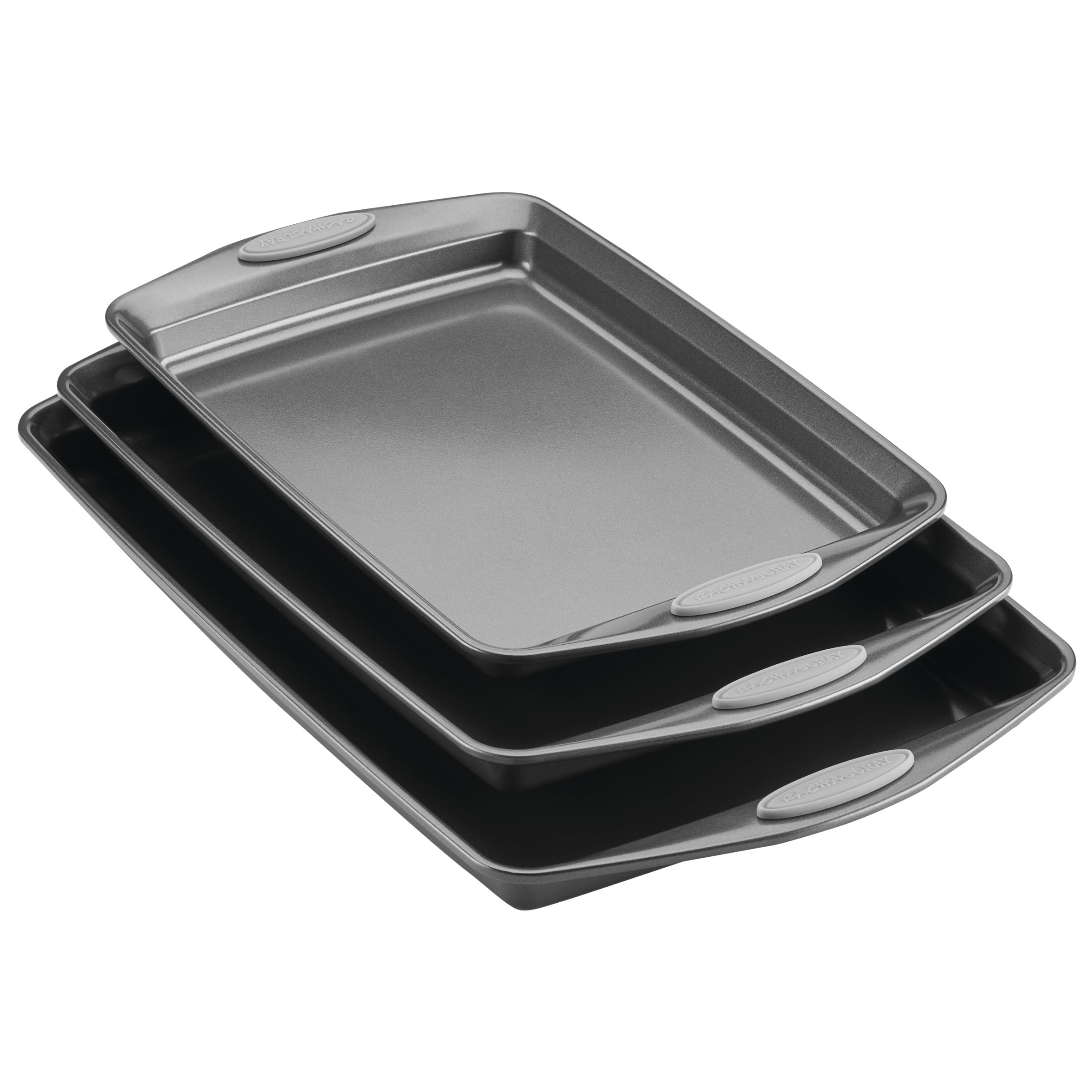
Tools You’ll Need
Essential Kitchen Tools
Everything you need to make cooking easier and more enjoyable


Must Try Recipes
- Instant Pot Tomato Soup
A quick, pressure-cooked tomato soup with rich flavor. - Broccoli Cheese Soup
Creamy soup loaded with tender broccoli and melted cheese. - Chicken Tortilla Soup
Spicy, hearty chicken soup with tortilla strips and avocado. - Black Bean Soup
Flavorful, protein-packed black bean soup with Mexican spices. - Beef and Barley Soup
Hearty stew of tender beef, barley, and vegetables.

Want to save this recipe?
Want to save this recipe? Enter your email below, and we'll send it straight to your inbox. Plus, receive new recipes every week!
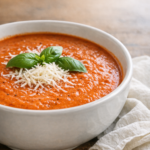
Creamy Roasted Tomato Soup
- Total Time: 1 hour
Description
A rich, velvety soup made from caramelized tomatoes, garlic, and fresh basil for ultimate comfort.
Ingredients
- 3 lbs ripe tomatoes, halved if small/medium or quartered if large
- 1 large yellow onion, quartered
- 8 garlic cloves, peeled and trimmed
- 3 Tbsp extra-virgin olive oil
- 2 tsp fine sea salt, plus more to taste
- ¼ tsp freshly ground black pepper, plus more to taste
- 2 cups chicken or vegetable stock
- 4 Tbsp fresh basil, chopped
- ½ cup heavy cream
- ½ cup freshly grated Parmesan cheese
- 2 Tbsp tomato paste
- 2 tsp sugar
Instructions
- Preheat oven to 400°F. On a rimmed baking sheet, toss tomatoes, onion, and garlic with oil, ½ tsp salt, and pepper. Roast 45–50 minutes, then let cool 10 minutes.
- In a blender, combine half the roasted vegetables, 1 cup stock, and 2 Tbsp basil. Blend until smooth, and pour into a soup pot.
- Blend the remaining vegetables with 1 cup stock and 2 Tbsp basil. Add the puree to the pot.
- Heat soup over medium, stirring in cream, Parmesan, tomato paste, sugar, and the remaining salt. Taste and adjust seasoning. Garnish with basil and Parmesan before serving.
- Prep Time: 5 minutes
- Cook Time: 55 minutes
- Category: Soup
- Cuisine: American
Nutrition
- Serving Size: 6 servings
- Calories: 257 kcal
- Sugar: 11 g
- Sodium: 1096 mg
- Fat: 18 g
- Saturated Fat: 7 g
- Unsaturated Fat: 10 g
- Trans Fat: 0 g
- Carbohydrates: 19 g
- Fiber: 3 g
- Protein: 8 g
- Cholesterol: 32 mg