



Eating well during a busy week often falls apart not because of motivation, but because healthy options take too long to prepare. You need something that comes together fast, holds up in the fridge for days, and actually tastes good cold. This Greek Pasta Salad checks every one of those boxes. Built on fusilli pasta, crisp English cucumber, juicy grape tomatoes, Kalamata olives, and tangy feta, it is tossed in a bright homemade Greek salad dressing that pulls everything together. Each serving comes in at 239 calories with 7 grams of protein and only 3 grams of sugar, making it a genuinely smart choice for health-conscious meal prep.
Why This Works Before You Even Start Cooking
Most store-bought pasta salads lean heavily on sodium-loaded dressings and very little vegetable content. This recipe flips that ratio. The homemade dressing uses fresh lemon juice, red wine vinegar, and extra virgin olive oil as its base, which means you control exactly what goes in.
The vegetables are not just garnish here. Cucumber adds crunch, bell pepper adds sweetness, and the Kalamata olives bring a briny depth that makes the whole salad taste more complex than the prep time suggests. Feta cheese adds creaminess and a salty punch without needing a heavy sauce.
One more thing worth knowing: the chilling time is doing real work. As the salad rests, the dressing soaks into the pasta and the flavors meld in a way that a freshly tossed bowl simply cannot replicate.
What You Need: Ingredients for Greek Pasta Salad
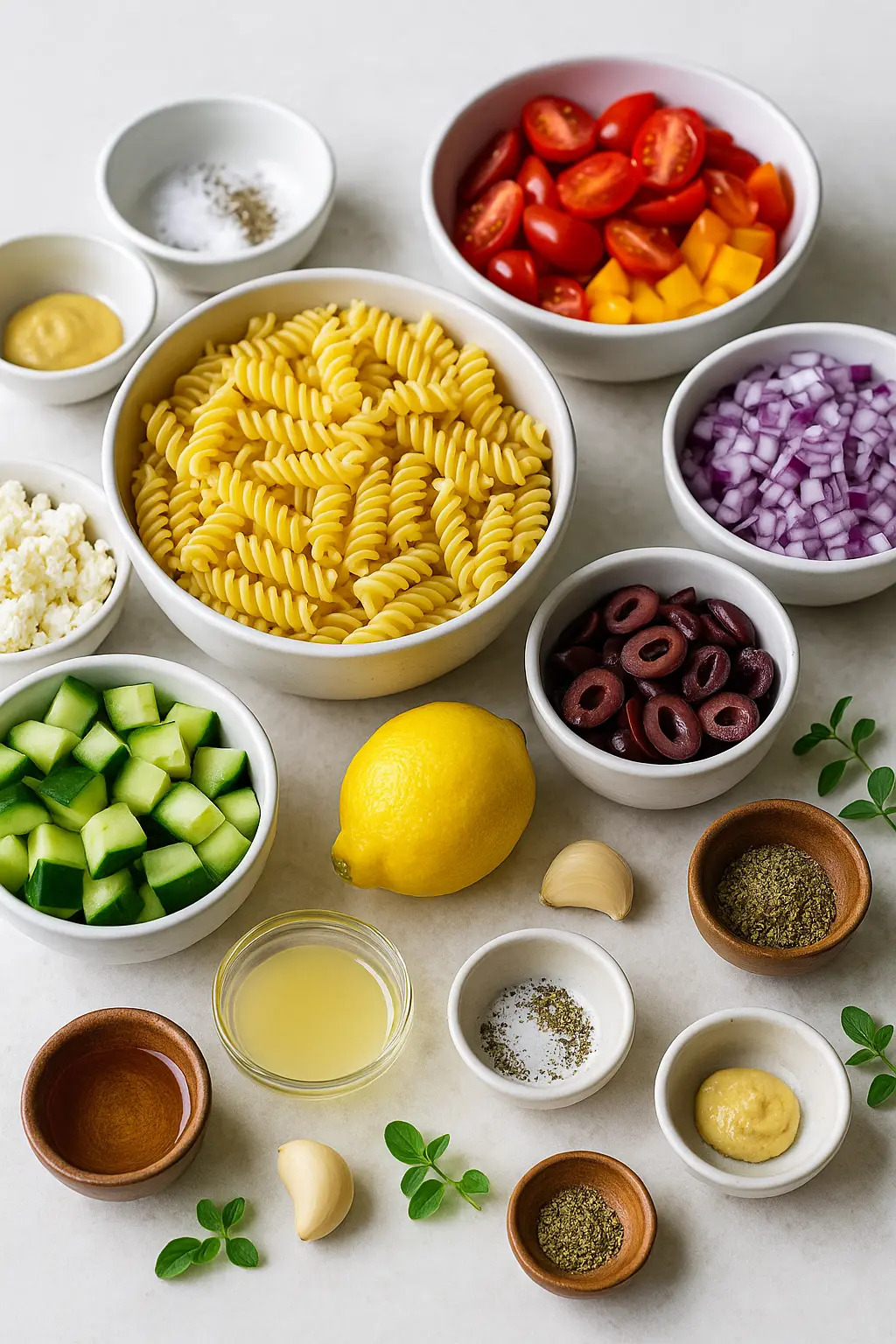
For the Salad
- 16 ounces short pasta (penne, bowtie, or fusilli all work well)
- 1 English cucumber, diced
- 1 pint grape tomatoes, halved
- 1 bell pepper, diced (yellow or orange preferred)
- 1/2 cup pitted Kalamata olives, sliced
- 1/2 cup red onion, diced
- 3 ounces feta cheese, crumbled
For the Greek Salad Dressing
- 1 large clove garlic, crushed
- 1/2 teaspoon Dijon mustard
- 1 teaspoon dried oregano
- 1/4 cup fresh lemon juice
- 2 tablespoons red wine vinegar
- 1/3 cup extra virgin olive oil
- 1/2 teaspoon sea salt
- 1/4 teaspoon black pepper
Ingredient notes: English cucumbers are seedless and stay noticeably crunchier than regular cucumbers, which matters after a day or two in the fridge. For the feta, buy it in block form and crumble it yourself. Pre-crumbled feta tends to be drier and less flavorful. If you need a dairy-free version, a marinated tofu crumble can stand in, though the flavor profile will shift.
The Dijon mustard is not just for flavor. It acts as an emulsifier, helping the olive oil and lemon juice bind into a cohesive dressing rather than separating into a greasy pool at the bottom of the bowl.
What to Avoid Before You Touch a Single Ingredient
A few mistakes consistently derail this salad, and knowing them upfront saves you from a soggy, bland result.
- Skipping the cold rinse on the pasta: Hot pasta keeps cooking even after draining. Rinsing under cold water stops that process and prevents mushy texture. If you skip this, the pasta absorbs the dressing unevenly and turns soft by day two.
- Using bottled lemon juice: The brightness of this dressing depends on fresh citrus. Bottled juice is flatter and slightly bitter. The difference is noticeable in the final taste.
- Under-chilling the salad: Serving immediately after tossing is the most common mistake. The flavors need 2 to 3 hours in the fridge to develop properly. Rushed versions taste sharp and disconnected.
- Over-dressing if you prefer a lighter coat: The recipe as written produces a lightly dressed salad. If you know you like more coverage, scale the dressing up by half rather than doubling it and drowning the vegetables.
- Using soft or overripe tomatoes: Look for firm, vibrant tomatoes. A mealy tomato releases too much water and makes the salad watery within hours.
Step-by-Step Instructions
Step 1: Prep Every Vegetable Before Anything Else Hits the Bowl
Dice the English cucumber, halve the grape tomatoes, dice the bell pepper, slice the Kalamata olives in half, and finely dice the red onion. Having everything prepped and ready before the pasta is cooked keeps the workflow smooth and prevents the pasta from sitting and clumping while you scramble to chop.
Use a Chef Knife for clean, even cuts, especially on the bell pepper. To dice the onion without tears, slice off the stem end, halve it lengthwise, peel the outer skin, make horizontal cuts toward the root, then vertical cuts, and finally slice straight down. One thing to watch: if your red onion tastes too sharp raw, soak the diced pieces in cold water for 10 minutes and pat dry before adding them.
Step 2: Build the Dressing So the Flavors Have Time to Bloom
Combine the crushed garlic, Dijon mustard, dried oregano, lemon juice, and red wine vinegar in a small mason jar or bowl. Before adding the oregano, crush it between your fingers first. This small step releases the essential oils and noticeably intensifies the herbal flavor.
Slowly whisk in the extra virgin olive oil, or if using a mason jar, seal the lid and shake vigorously until the dressing looks opaque and slightly thickened. You will know the emulsion is holding when the whisk leaves visible trails in the dressing and it no longer separates immediately. Season with 1/2 teaspoon sea salt and 1/4 teaspoon black pepper. Set aside.
Step 3: Cook the Pasta to Al Dente, Not Beyond
Bring a large pot of salted water to a boil and cook 16 ounces of fusilli (or your chosen short pasta) according to package directions until al dente, meaning it still has a slight bite at the center. Drain using a Colander, then rinse under cold running water until the pasta feels cool to the touch.
Transfer to a large Mixing Bowl. If the pasta is sticking together, toss it with a tiny drizzle of olive oil while it cools. If your pasta came out softer than expected, that is usually a sign the water was not fully boiling when you added it, or it cooked a minute too long. Al dente pasta holds its texture through the chilling period; overcooked pasta turns mushy by serving time.
Step 4: Combine Everything Into One Cohesive Salad
Add the prepped cucumber, tomatoes, bell pepper, Kalamata olives, red onion, and crumbled feta cheese directly into the bowl with the cooled pasta. Give the dressing one final shake to re-emulsify, then drizzle it over the top of the salad.
Toss gently but thoroughly so every piece of pasta and vegetable gets coated. The salad should look glossy and vibrant, with the feta distributed throughout rather than clumped in one spot. Chill for 2 to 3 hours before serving. This resting time is not optional if you want the flavors to taste balanced and cohesive rather than sharp and separate.
What Separates a Good Greek Pasta Salad from a Great One
- Buy feta in block form: Pre-crumbled feta has a drier, chalky texture. A block crumbled by hand gives you irregular pieces that melt slightly into the dressing and deliver better flavor in every bite.
- Choose the most vibrant tomatoes you can find: Color is a reliable indicator of ripeness and flavor. A dull, pale tomato will taste watery. A deep red or orange one will taste sweet and bright.
- Crush the garlic, do not mince it: Crushed garlic releases flavor more gradually into the dressing, giving a rounder, less aggressive garlic note. Minced garlic can turn sharp after a few hours in the fridge.
- Scale the dressing if needed: The base recipe produces a lightly dressed salad. If you prefer more coverage, increase the dressing by half. It is much easier to add more than to fix an overdressed bowl.
- Letting it rest in the fridge for even two hours makes a noticeable difference in how the garlic and oregano integrate into the pasta. The flavors go from bright and separate to genuinely harmonious.
Healthier Alternatives Worth Considering
- Whole wheat or chickpea pasta: Swapping regular fusilli for whole wheat or chickpea-based pasta increases the fiber and protein content per serving. The texture is slightly denser, but it holds up well in a chilled salad.
- Reduce the feta: If you are watching sodium, cut the feta to 2 ounces and add a squeeze of extra lemon juice to compensate for the lost tang.
- Add more vegetables: Artichoke hearts, roasted red peppers, or baby spinach all integrate naturally into this salad without changing the flavor profile significantly.
- Use a lighter hand with the olive oil: The dressing works with slightly less oil if you increase the lemon juice by a tablespoon. The result is a sharper, more acidic dressing that still coats well.
Serving Suggestions for This Easy Greek Pasta Salad Recipe
This salad works as a standalone light lunch, especially during warmer months when you want something cold and filling without turning on the oven. It also pairs naturally alongside grilled chicken, lamb skewers, or a simple piece of baked salmon.
For a summer pasta salad spread at a cookout or picnic, serve it alongside hummus and warm pita. The creamy, earthy hummus contrasts nicely with the bright acidity of the dressing. If you are building a meal prep rotation, portion the salad into individual containers right after chilling. It travels well and tastes just as good on day three as it does on day one.
Make It Once, Use It All Week
Store the Greek pasta salad in an airtight container in the refrigerator for up to 4 to 5 days. The vegetables stay crisp and the dressing continues to deepen in flavor over the first two days.
This salad is served cold and does not require reheating. If it has been sitting for a few days and looks a little dry, add a small drizzle of olive oil and a squeeze of fresh lemon juice, then toss again. You will notice the salad brightens immediately and the texture loosens back up. This is a genuinely practical meal prep option because it requires no reheating equipment and tastes better the longer it sits.
Avoid freezing. The cucumber and tomatoes do not survive freezing and thawing with any usable texture.
A Salad Worth Making on a Sunday
When the week ahead looks packed and you want to eat well without spending an hour in the kitchen every night, this meal prep Greek salad is one of the most reliable things you can make. It is bright, filling, and genuinely satisfying cold straight from the fridge.
The prep is honest and fast.
Give this one a try on a Sunday afternoon, portion it into containers, and see how differently the week feels when a good lunch is already waiting for you. I have made this more times than I can count, and it never lasts as long as I expect it to.
Must Try Recipes
- Pesto Pasta Salad — A vibrant twist with basil and parmesan.
- Asparagus Quinoa Salad — Perfect for a protein-packed, gluten-free side.
- Mediterranean Salmon Salad — Complements with rich, savory flavors.
Frequently Asked Questions
Can I make Greek Pasta Salad ahead of time?
Yes, and it actually improves with time. After tossing, chill the salad for at least 2 to 3 hours before serving. The dressing absorbs into the pasta and the flavors become more cohesive. It keeps well in the fridge for up to 4 to 5 days in an airtight container.
What pasta shape works best for this salad?
Short pasta with texture works best because it catches the dressing and holds onto the small vegetable pieces. Fusilli, penne, and bowtie are all solid choices. Avoid long pasta like spaghetti, which does not mix as evenly with the chunky vegetables.
Can I use a different dressing instead of making it from scratch?
You can use a store-bought Greek vinaigrette in a pinch, but the homemade version in this recipe takes about 3 minutes to make and tastes noticeably fresher. The Dijon mustard in the homemade dressing also helps it cling to the pasta better than most bottled versions.
Is this recipe suitable for a vegetarian or gluten-free diet?
Yes on both counts. The recipe is naturally vegetarian. For a gluten-free version, swap the regular pasta for a certified gluten-free short pasta made from rice, corn, or chickpeas. All other ingredients in the recipe are naturally gluten-free.
Why does my pasta salad taste bland after chilling?
Cold temperatures mute flavors slightly. If the salad tastes flat after chilling, add a small pinch of sea salt and a squeeze of fresh lemon juice before serving, then toss again. The brightness of the lemon will lift the whole salad back up without needing to remake the dressing.
How many servings does this healthy pasta salad recipe make?
The recipe makes 12 servings of approximately 1 cup each. Each serving contains 239 calories, 33 grams of carbohydrates, 7 grams of protein, and 9 grams of fat, based on the recipe as written.
Tools That Make Greek Pasta Salad Actually Work
Most failed attempts come down to the wrong equipment. These are the exact tools that get you the right texture, heat, and result every time.

Want to save this recipe?
Want to save this recipe? Enter your email below, and we'll send it straight to your inbox. Plus, receive new recipes every week!

Light Greek Pasta Salad Recipe
- Total Time: 2 hours 15 minutes
- Yield: 12 servings 1x
- Diet: Gluten Free, Vegetarian
Description
This quick and easy-to-make Healthy Greek Pasta Salad is tossed in a light and delicious Greek salad dressing and packed with veggies. It’s a delicious combination of fusilli pasta, diced cucumber, grape tomatoes, yellow peppers, Kalamata olives, red onion, and tangy feta cheese! This simple pasta salad makes a great summer side dish or light lunch and is also perfect for meal prep.
Ingredients
- 16 ounces short pasta (such as penne, bowtie, or fusilli)
- 1 English cucumber, diced
- 1 pint grape tomatoes, halved
- 1 bell pepper, diced (yellow or orange)
- 1/2 cup pitted kalamata olives, sliced
- 1/2 cup red onion, diced
- 3 ounces feta cheese, crumbled
- 1 large clove of garlic, crushed
- 1/2 teaspoon dijon mustard
- 1 teaspoon dried oregano
- 1/4 cup lemon juice
- 2 tablespoons red wine vinegar
- 1/3 cup extra virgin olive oil
- 1/2 teaspoon sea salt
- 1/4 teaspoon black pepper
Instructions
- Begin by cooking the pasta until al dente, following the instructions on the package. Afterward, rinse it under cold water and place it in a large mixing bowl.
- Next, incorporate the diced cucumber, halved tomatoes, diced bell pepper, sliced Kalamata olives, diced red onion, and crumbled feta cheese into the bowl.
- In a small jar, combine the crushed garlic, oregano, lemon juice, red wine vinegar, and dijon mustard. Gradually whisk in the extra virgin olive oil, then season with salt and pepper. If a mason jar is used, simply secure the lid and shake until everything is well mixed.
- Pour the dressing over the salad ingredients and toss everything together thoroughly. Allow the salad to chill for 2-3 hours before serving for the best flavor.
Notes
For best results, cook the pasta al dente to maintain its texture. Store the salad in an airtight container in the fridge for up to 3 days. Substitute feta with goat cheese for a creamier texture.
- Prep Time: 15 minutes
- chill: 3 hours
- Category: Salad, Side Dish
- Method: Stovetop
- Cuisine: American, Greek
Nutrition
- Serving Size: 1serving
- Calories: 239 kcal
- Sugar: 3 g
- Sodium: 274 mg
- Fat: 9 g
- Saturated Fat: 2 g
- Unsaturated Fat: 6 g
- Trans Fat: 0 g
- Carbohydrates: 33 g
- Fiber: 2 g
- Protein: 7 g
- Cholesterol: 6 mg


