


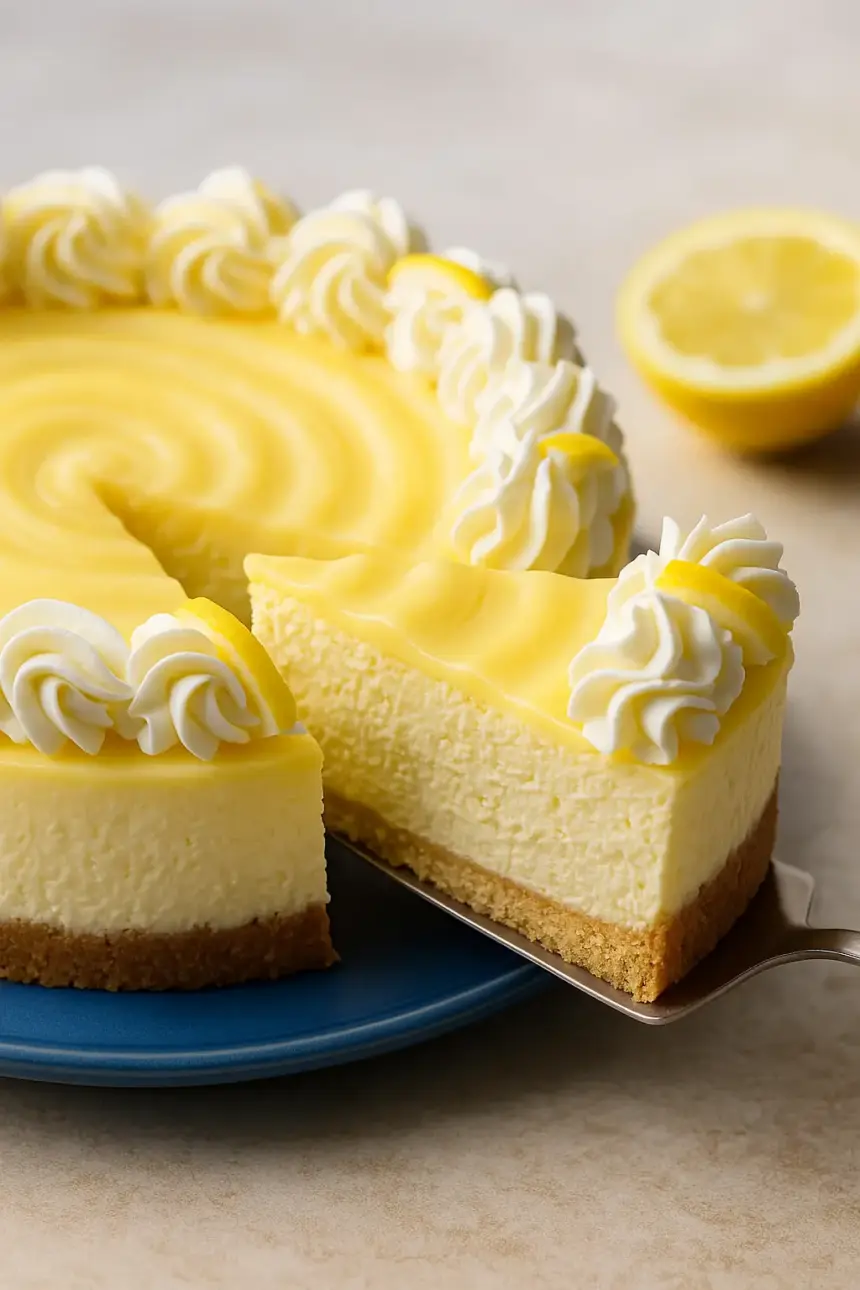
Making a cheesecake that looks bakery-worthy and actually sets properly is one of those things that intimidates a lot of home bakers. Crack down the center, soupy filling, soggy crust — these are real fears. This lemon cheesecake solves all of that with a clear, beginner-friendly method that has been tested and loved by real home cooks. The filling is rich and creamy with a bright citrus tang from both lemon zest and juice, topped with golden lemon curd and clouds of whipped cream. It yields 12 slices and can be made days ahead.
Lemon Cheesecake Ingredients
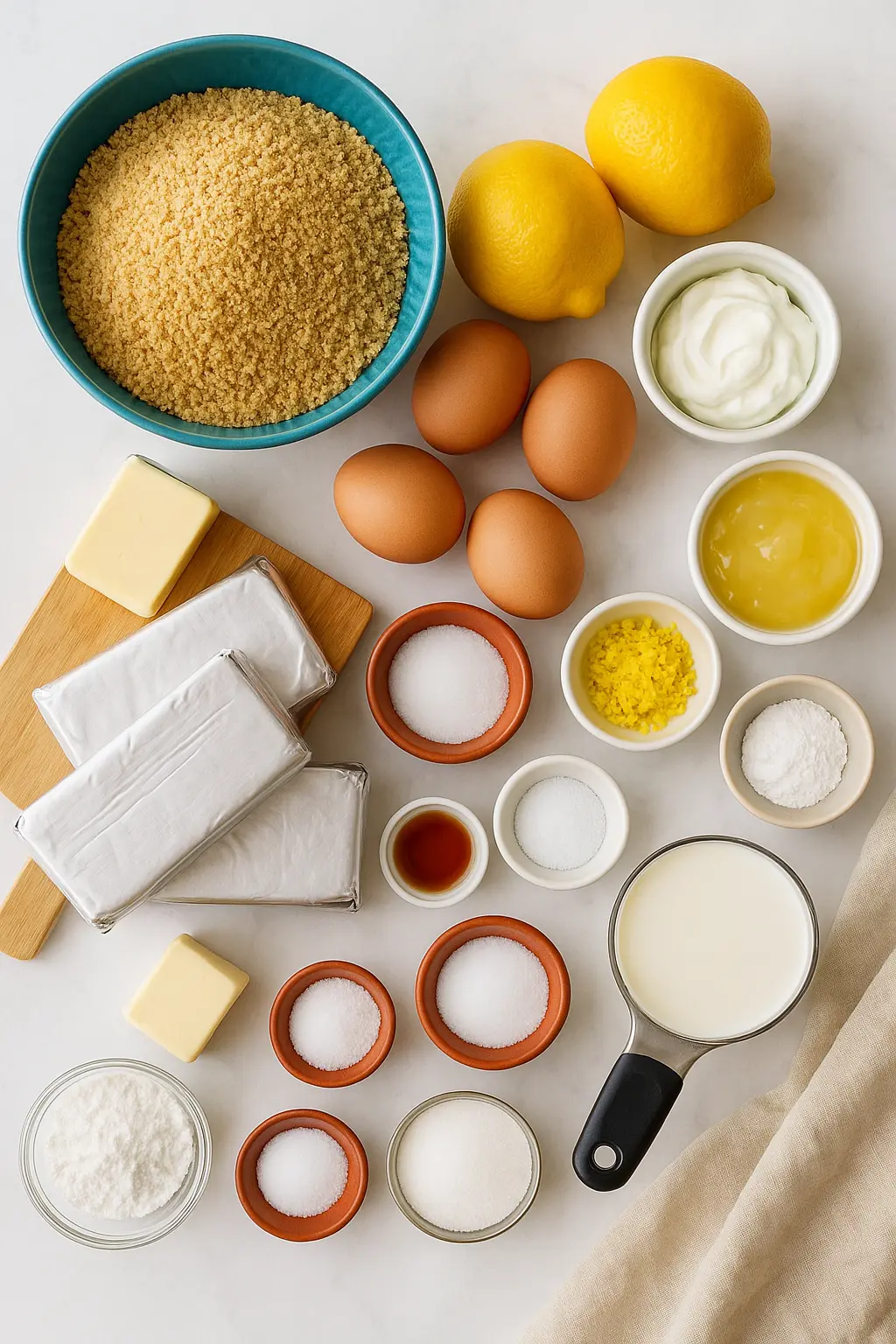
The ingredient list is straightforward and organized into three components: crust, filling, and toppings. Everything is easy to find at any grocery store.
For the Graham Cracker Crust
- 1 ¾ cups graham cracker crumbs (from about 14 whole crackers)
- 6 tablespoons unsalted butter, melted
- 2 tablespoons granulated sugar
No graham crackers? Vanilla wafers or Biscoff cookies work as a swap and bring their own subtle flavor to the base.
For the Cheesecake Filling
- 2 lb cream cheese, room temperature (4 packages, 8 oz each)
- 1 cup granulated sugar
- 5 large eggs, room temperature
- 2 tablespoons sour cream
- 1 tablespoon lemon zest (from 2 lemons)
- 2 tablespoons lemon juice
- ½ tablespoon vanilla extract
The cream cheese must be at room temperature — cold blocks will leave lumps in the batter no matter how long you beat them. The sour cream adds a subtle tang and helps the filling stay silky rather than dense. Use block-style cream cheese, not the tub version, which is whipped and affects how the cheesecake sets.
For the Toppings
- ½ cup lemon curd (homemade or storebought)
- 1 cup heavy whipping cream
- 3 tablespoons powdered sugar
- ½ teaspoon vanilla extract
Homemade lemon curd is genuinely worth the extra effort here. The flavor is brighter and more vibrant than most storebought versions, but storebought works fine in a pinch.
How to Make Lemon Cheesecake: Step-by-Step Instructions
Step 1: Prepare the Pan and Bake the Crust
Preheat your oven to 350°F with a rack in the center. Lightly butter the bottom of a 9-inch springform pan and line it with a circle of parchment paper for easy release.
In a mixing bowl, combine the graham cracker crumbs and sugar, then stir in the melted butter until all the crumbs are moistened and clump slightly when pressed. Press the mixture firmly into the bottom of the pan and slightly up the sides.
Bake for 8 minutes, until the crust smells toasty and feels set to the touch. Transfer to a wire rack to cool completely before adding the filling.
Step 2: Wrap the Pan and Increase Oven Temperature
Increase the oven temperature to 450°F. Lay 2 sheets of extra-wide heavy-duty foil flat on the counter. Set the springform pan in the center and fold the foil up the sides of the pan, pressing it snugly without tearing. Fan the foil out slightly at the top rim to allow the cheesecake to rise freely and to keep water from splashing in.
If you find a small tear in the foil, start over with a fresh sheet. Even a pinhole can let water into the crust.
Step 3: Make the Cheesecake Filling
In the bowl of a stand mixer fitted with the paddle attachment (or using a hand mixer), beat the room-temperature cream cheese and 1 cup of sugar on medium-high speed for 5 minutes. The mixture should look completely smooth and slightly fluffy, with no visible lumps.
Reduce speed to medium and add the eggs one at a time, letting each one fully incorporate before adding the next. Scrape down the bowl between additions.
Reduce to low speed and add the sour cream, lemon zest, lemon juice, and vanilla. Mix only until incorporated — overmixing at this stage adds excess air, which can cause cracks. If your batter looks slightly curdled after adding the eggs → check that all ingredients were truly at room temperature and keep mixing on low until smooth.
Pour the batter over the cooled crust.
Step 4: Bake in a Water Bath
Boil a full kettle of water — more than you think you need. Place the foil-wrapped cheesecake pan inside a deep roasting pan. Pour the hot water around the outside of the springform pan until it reaches about 1 inch up the sides.
Carefully transfer the roasting pan to the center rack of the oven. Bake at 450°F for 15 minutes, then reduce the heat to 225°F without opening the oven door. Continue baking for 60 to 65 minutes, until the edges look set and matte but the center still has a gentle wobble when you nudge the pan. That wobble is exactly what you want — it will firm up as it cools.
Step 5: Cool and Chill
Remove the cheesecake from the oven and let it rest in the roasting pan with the water still around it for 45 minutes. Then discard the foil, transfer the springform pan to a wire rack, and let it cool completely to room temperature.
Once fully cooled, cover the pan and refrigerate for at least 8 hours, or overnight. Skipping this step is the most common beginner mistake — cutting into a warm cheesecake results in a soupy center that won’t hold its shape on the plate.
Step 6: Top and Serve
Beat the heavy whipping cream, powdered sugar, and vanilla extract on medium-high speed until stiff peaks form. The cream should hold its shape when the beater is lifted, but stop before it looks grainy or butter-like.
Run a thin knife around the edge of the cheesecake to loosen it, then remove the springform ring. Slide the cheesecake onto a serving platter. Spread ½ cup of lemon curd evenly over the top, then pipe whipped cream around the edges. Garnish with thin lemon slices if desired. Refrigerate until ready to serve.
Expert Tips for the Best Lemon Cheesecake Recipe
- Zest before you juice. Once a lemon is juiced, the skin becomes nearly impossible to zest. Always zest first, then cut and squeeze.
- Crack eggs into a separate cup first. This prevents any shell fragments from ending up in your batter.
- Use a kettle to pour the water bath. The narrow spout gives you control and prevents hot water from splashing onto the cheesecake or oven door.
- Clean the knife between slices. Wipe the blade with a damp paper towel after each cut. Every slice will look clean and neat rather than dragged.
- Add toppings just before serving. The cheesecake stores well for several days in the fridge, but the whipped cream and lemon curd look freshest when added right before it hits the table.
Common Mistakes to Avoid
- Using cold cream cheese. Cold cream cheese creates lumps that no amount of mixing will fix. Pull it from the fridge at least an hour before you start.
- Skipping the water bath. The steam keeps the oven environment moist and prevents the top from drying and cracking. It is not optional if you want a smooth, level surface.
- Opening the oven door during baking. A sudden drop in temperature causes the cheesecake to sink or crack. Set a timer and walk away.
- Rushing the chill time. Eight hours is the minimum. Overnight is better. A cheesecake that hasn’t fully set will look fine on the outside but collapse when sliced.
- Overbeating the whipped cream. Once it starts to look dull and chunky, it’s turning into butter. Stop at stiff peaks while it still looks glossy.
Serving Suggestions
This lemon cheesecake is a natural fit for spring and summer gatherings, but the brightness of lemon makes it welcome any time of year. Serve it as the centerpiece dessert at Easter dinner, birthday celebrations, or holiday meals.
For a simple presentation, a few thin lemon rounds tucked into the whipped cream rosettes make it look like it came from a bakery. For a more casual setting, skip the piping bag and simply dollop the whipped cream in the center.
Pair each slice with a cup of strong coffee or a light sparkling water with citrus — the acidity in both complements the tangy lemon curd without competing with it.
Storage and Make-Ahead Instructions
One of the best things about this recipe is how well it fits into a busy schedule. The cheesecake can be made several days in advance without any loss of quality.
- Refrigerator: Store covered in the fridge for up to 3 to 4 days. For the cleanest presentation, hold off on adding the toppings until you are ready to serve.
- Freezer: After the overnight chill, wrap the undecorated cheesecake in plastic wrap, then a layer of heavy-duty foil. Freeze for up to 2 to 3 months.
- To thaw: Remove the foil but keep the plastic wrap on. Place it on a serving plate and refrigerate overnight. Add toppings just before serving.
Frozen cheesecake thaws with the same creamy texture as fresh — there is no rubbery or icy quality when it is wrapped properly.
A Cheesecake Worth Making
This lemon cheesecake takes the fear out of baking cheesecake from scratch. The water bath method, the slow bake, the overnight chill — each step has a clear purpose, and once you understand why they matter, the process feels natural rather than intimidating.
The result is a creamy, citrus-forward cheesecake with a buttery crust, a tangy lemon curd topping, and a texture that is genuinely hard to achieve with a store-bought version. Give it a try this weekend and see for yourself.
Must Try Recipes
- Lemonade — Refreshing and tangy, perfect to pair with a slice of cheesecake.
- Lemon Salmon Kabobs — A savory dish that complements the sweet and tangy flavors of the cheesecake.
- Lemon Garlic Asparagus — A light side dish that pairs well with the richness of cheesecake.
Frequently Asked Questions
Can I make lemon cheesecake without a water bath?
Yes, it is possible, but the risk of cracking increases significantly. The water bath keeps the oven humid and the temperature even, which is what gives the top that smooth, uncracked finish. If you skip it, bake at a lower temperature and avoid opening the oven door at any point during baking.
How do I know when the cheesecake is done baking?
The edges should look set and slightly puffed, while the center — about a 2-inch circle — still wobbles gently when you nudge the pan. It will firm up completely during the cooling and chilling process. If the entire surface is firm in the oven, it is likely overbaked.
Why did my lemon cheesecake crack on top?
Cracks usually happen for one of three reasons: the batter was overmixed and incorporated too much air, the oven temperature was too high, or the cheesecake cooled too quickly. The water bath and the gradual temperature reduction in this recipe address all three causes.
Can I use bottled lemon juice instead of fresh?
Fresh lemon juice is strongly preferred here. Bottled juice has a flat, slightly metallic flavor that becomes noticeable in a filling this simple. Since you are already zesting 2 lemons, juicing them takes only seconds more and the flavor difference is significant.
How far ahead can I make this easy lemon cheesecake recipe?
The cheesecake base can be made up to 3 to 4 days ahead and stored covered in the refrigerator. For longer storage, freeze it undecorated for up to 2 to 3 months. Add the lemon curd and whipped cream on the day you plan to serve it for the best appearance.
Can I use a regular cake pan instead of a springform pan?
A springform pan is strongly recommended because it allows you to release the cheesecake cleanly without flipping it. If you use a glass pie dish or regular cake pan, you will not be able to remove it in one piece — plan to serve it directly from the dish in wedges instead.
Tools That Make lemon cheesecake Actually Work
Most failed attempts come down to the wrong equipment. These are the exact tools that get you the right texture, heat, and result every time.

Want to save this recipe?
Want to save this recipe? Enter your email below, and we'll send it straight to your inbox. Plus, receive new recipes every week!

Beginner-Friendly Lemon Cheesecake Recipe
- Total Time: 9 hours 45 minutes
- Yield: 12 slices 1x
Description
Lemon Cheesecake combines the creaminess of classic cheesecake with a burst of vibrant lemon. The rich and smooth filling is balanced by a hint of lemon zest and is topped with golden lemon curd. A buttery graham cracker crust provides the perfect foundation.
Ingredients
For the Crust:
- 1 ¾ cups graham cracker crumbs (from 14 whole crackers*)
- 6 Tbsp unsalted butter (melted)
- 2 Tbsp granulated sugar
For the Cheesecake:
- 2 lb cream cheese (room temperature (4 packages, 8 ounces each))
- 1 cup granulated sugar
- 5 large eggs (room temperature)
- 2 Tbsp sour cream
- 1 Tbsp lemon zest (from 2 lemons)
- 2 Tbsp lemon juice
- ½ Tbsp vanilla extract
For the Toppings:
- ½ cup Lemon Curd (homemade or storebought)
- 1 cup heavy whipping cream
- 3 Tbsp powdered sugar
- ½ tsp vanilla extract
Instructions
- Preheat the oven to 350°F with a rack in the center. Dot the bottom of a 9-inch springform pan with butter and line it with a circle of parchment for an easier release.
- In a medium bowl, combine graham cracker crumbs with sugar then stir in melted butter. Mix until moistened. Press crumbs into your prepared pan, going slightly up the sides. Bake for 8 minutes then transfer to a rack to cool to room temperature.
- Increase the oven to 450°F. Place 2 sheets of extra-wide heavy-duty foil on the counter. Set the springform pan in the center and gently fold the foil up the sides of the pan ensuring there are no rips. Fan the foil out slightly at the tops to keep the rim clear for rising and to keep water splashes out.
- In the bowl of a stand mixer fitted with a paddle attachment (or using an electric hand mixer), beat cream cheese and 1 cup sugar on medium/high speed for 5 minutes until completely smooth, scraping down the bowl a couple of times.
- Reduce speed to medium and add eggs, one at a time, allowing them to incorporate between each addition. Scrape down the bowl with a spatula as needed.
- Reduce speed to low and add sour cream, lemon zest, lemon juice, and vanilla. Mix on low speed just until incorporated, scraping down the bowl as needed. Pour batter over the cooled crust.
How to Bake Cheesecake in a Water Bath
- Boil a kettle of water (boil more than you think you’ll need). Set your foil-wrapped cheesecake pan in a deep roasting pan. Pour hot water around the edges about 1 inch up the sides of the springform pan.
- Carefully transfer the cheesecake to the center rack of the oven and bake at 450°F for 15 minutes then reduce heat to 225°F and, without opening the door, bake an additional 60-65 minutes or until the center of the cheesecake wobbles slightly when you jolt the pan.
- Remove the cheesecake from the oven and let it rest in the roasting pan with water for 45 minutes then discard the foil and set the springform pan on a wire rack to cool completely. Once fully cooled, cover the springform pan and chill in the refrigerator for at least 8 hours or overnight to fully set before serving.
To Top and Serve
- In a large mixing bowl, beat together heavy cream, powdered sugar, and vanilla extract on medium/high speed until stiff peaks form. Transfer to a piping bag fitted with an open star tip and set aside (or refrigerate if not using right away).
- Run a thin knife or spatula around the edges of the cheesecake to loosen it from the pan. Remove the springform pan and transfer the cake to a cake platter (you can slide off the parchment paper if desired).
- Spread 1/2 cup of lemon curd over the surface of the cheesecake. Pipe a generous amount of whipped cream around the edge of the cake or design however you prefer. Garnish with small slices of fresh lemon if desired. Refrigerate until ready to serve.
Notes
- Prep Time: 30 minutes
- Chill Time: 8 hours
- Cook Time: 1 hour 15 minutes
- Category: Dessert
- Cuisine: American
Nutrition
- Serving Size: 12 slices
- Calories: 581 kcal
- Sugar: 34 g
- Sodium: 381 mg
- Fat: 43 g
- Saturated Fat: 25 g
- Unsaturated Fat: 13 g
- Trans Fat: 0.3 g
- Carbohydrates: 42 g
- Fiber: 0.5 g
- Protein: 9 g
- Cholesterol: 183 mg


