



Weeknight dinners have a way of becoming a battle between what sounds good and what you actually have time to make. Chicken Pesto Pasta solves that problem completely. This is a creamy, Italian-inspired pasta dish that comes together in just 20 minutes, using one pan for the chicken and one pot for the pasta. The sauce is velvety, the sun-dried tomatoes add a bright, tangy contrast, and the basil pesto ties everything together with that unmistakable herby richness. Whether you are cooking for a date night or just need something satisfying on a Tuesday, this recipe delivers.
Why This Recipe Works Before You Even Start
The genius of this dish is in the order of operations. The chicken cooks in the same pan that becomes the sauce base, which means every bit of flavor stays in the dish. The starchy pasta cooking water acts as a natural sauce thickener, adding creaminess without extra cream. And the pesto goes in last, off the heat, so the fresh basil flavor stays bright and grassy rather than turning dull and cooked-out.
That last detail matters more than it seems. Adding pesto to a hot pan kills the vibrancy that makes it worth using in the first place.
What You Need for Creamy Chicken Pesto Pasta
Every ingredient here has a job to do. Here is the full list from the recipe:
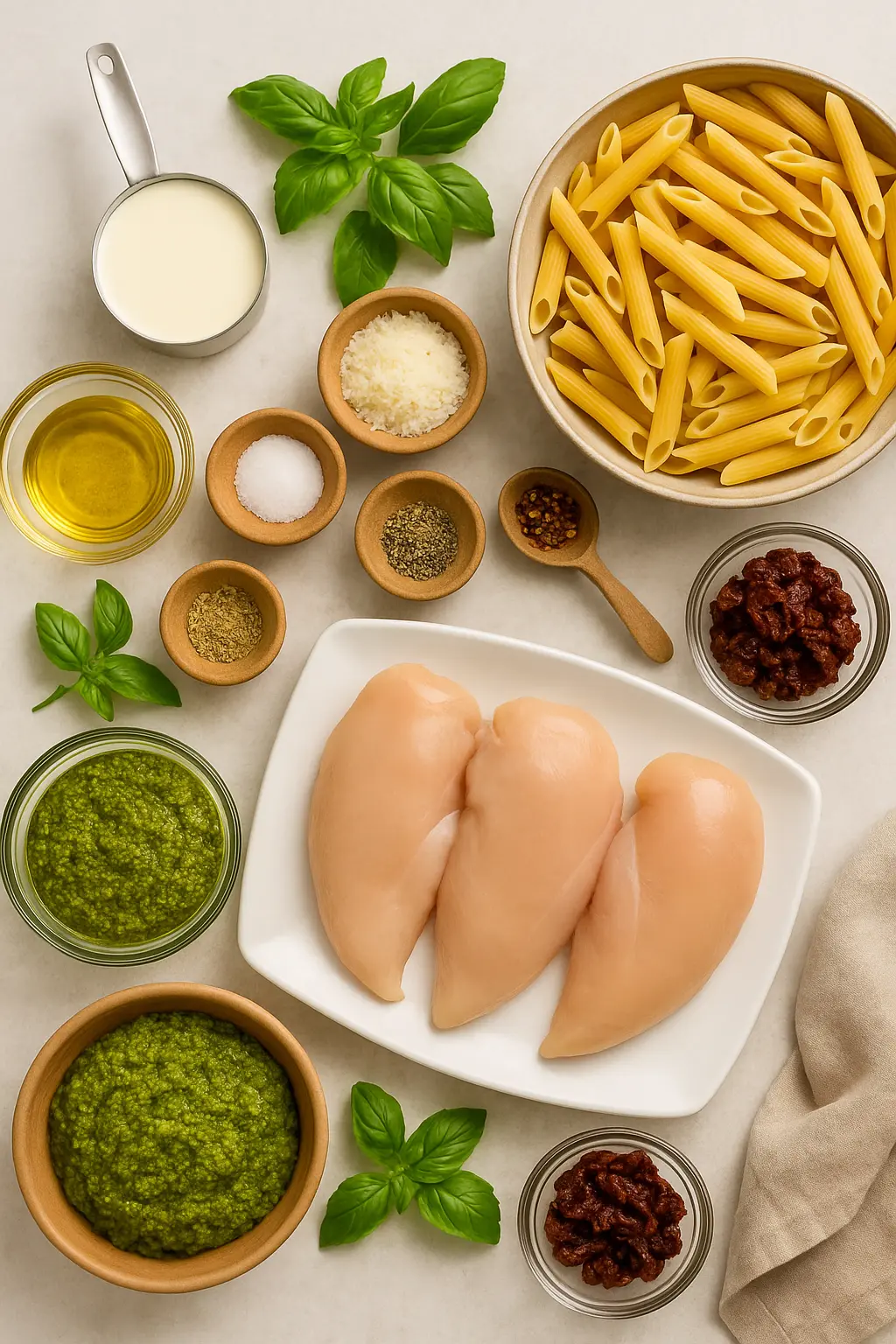
- 1 pound boneless skinless chicken breasts, cut into 1-inch pieces
- 1 teaspoon Italian seasoning
- Kosher salt and black pepper
- 8 ounces penne pasta, preferably with ridges
- 2 tablespoons extra virgin olive oil
- 1/2 cup heavy cream
- 1/4 cup parmesan cheese, plus more for serving
- 1/4 cup sun-dried tomatoes, drained if packed in oil
- 1/2 cup basil pesto, homemade or quality store-bought
- 1/2 to 1 teaspoon red pepper flakes
- A handful of torn fresh basil leaves, for garnish
On the pasta: Penne with ridges is the right call here. Those ridges grip the creamy sauce in a way that smooth pasta simply cannot. If you only have spaghetti, it will still work, but you will notice the difference.
On the pesto: Homemade basil pesto has a brightness that store-bought versions tend to lack. That said, a quality jarred pesto absolutely works on a weeknight. One thing to watch: avoid any pesto that looks brown or dull in the jar. Fresh, vibrant green color means the basil flavor is still alive.
On the parmesan: Buy a block and grate it yourself if you can. Pre-grated parmesan contains anti-caking agents that prevent it from melting smoothly into the sauce, which can leave you with a slightly grainy texture instead of that silky finish.
What to Avoid Before You Cook
A few common mistakes can quietly undermine this dish, even when you follow the recipe closely.
- Skipping the pasta water reserve: This is the single most forgotten step in pasta cooking. That cloudy, starchy water is what makes the sauce cling and coat every piece. Reserve at least 1 cup before you drain.
- Adding pesto over heat: Heat destroys the fresh, herby character of basil pesto. Always turn off the burner and pull the pan off the heat before stirring the pesto in.
- Overcrowding the chicken: If you pile the chicken pieces too close together in the pan, they steam instead of sear. You want golden-brown edges, not pale, soft pieces. Cook in a single layer and resist the urge to stir constantly.
- Under-salting the pasta water: The recipe calls for about 1 tablespoon of salt in the boiling water. That is not excessive. It is the only chance you have to season the pasta itself from the inside out.
- Using low-quality olive oil for searing: The olive oil flavor carries into the chicken and the sauce. A buttery, high-quality extra virgin variety makes a noticeable difference in the final dish.
Step-by-Step: How to Make Chicken Pesto Pasta
Step 1: Season the Chicken for Maximum Flavor Penetration
Add the chicken pieces to a bowl and season with 1 teaspoon of Italian seasoning and a generous pinch each of kosher salt and black pepper. Toss until every piece is evenly coated. You should see the seasoning distributed across all surfaces, not clumped in one spot. If the chicken looks patchy, toss again.
Step 2: Get the Pasta Water Going Early
Bring a medium pot of water to a boil and salt it well with about 1 tablespoon of salt. Drop in the penne and cook until al dente according to package instructions, about 8 to 9 minutes. The pasta should have a slight resistance when you bite into it, not soft all the way through. If it feels completely tender, it has gone a minute too long.
Step 3: Sear the Chicken Until Genuinely Golden
While the pasta cooks, heat 2 tablespoons of extra virgin olive oil in a large nonstick skillet over medium-high heat. Add the seasoned chicken in a single layer. Cook, tossing occasionally, until golden brown on the outside and cooked through, about 7 to 8 minutes. You will know it is ready when the pieces have deep amber edges and the juices run completely clear when you press one with a spoon. If the chicken is browning too fast before cooking through, lower the heat to medium and add a tablespoon of water to the pan.
Step 4: Reserve the Pasta Water, Then Drain
Before draining the pasta, scoop out about 1 cup of the cooking water and set it aside. That cloudy liquid is full of starch and will become your secret sauce tool. Drain the pasta and set it aside briefly.
Step 5: Build the Creamy Sauce in the Chicken Pan
Lower the heat under the chicken pan and add the drained pasta, 1/2 cup of heavy cream, 1/4 cup of parmesan, and 1/4 cup of sun-dried tomatoes. Stir everything together vigorously. The vigorous stirring is important here: it encourages the pasta’s starch to release and naturally thicken the sauce. If the mixture looks dry or tight, add the reserved pasta water a couple of tablespoons at a time until the pasta looks glossy and fully coated. The sauce should cling to each piece of penne, not pool at the bottom of the pan.
Step 6: Finish with Pesto Off the Heat
Turn off the heat and move the pan completely off the burner. Stir in 1/2 cup of basil pesto. Finish with a sprinkle of grated parmesan, red pepper flakes to taste, and a handful of torn fresh basil leaves. Serve immediately while the sauce is still loose and fragrant.
What Separates a Good Chicken Pesto Pasta from a Great One
- Stir vigorously when combining: This is not just mixing. Vigorous stirring releases the pasta’s surface starch, which thickens the sauce naturally and helps it cling rather than slide off.
- Use the pasta water in small increments: Add it two tablespoons at a time. It is much easier to add more than to fix a sauce that has become too thin.
- Do not skip the sun-dried tomatoes: They provide a tangy, slightly sweet burst that cuts through the richness of the cream and pesto. Without them, the dish can taste one-dimensional.
- Taste before serving: Pesto brands vary significantly in saltiness. Taste the finished dish before adding any extra salt or parmesan.
I personally find that letting the chicken rest in the pan for about 30 seconds after turning off the heat, before adding the pesto, gives the temperature just enough time to drop so the basil flavor stays vivid.
Serving Suggestions for a Complete Meal
This pasta is hearty enough to stand on its own. For a date night spread, pair it with a simple lemon parmesan lettuce salad, which provides a crisp, acidic contrast to the creamy sauce. A piece of crusty focaccia or rosemary bread alongside is ideal for capturing any sauce left in the bowl.
If you want to keep things lighter, a green bean salad with a bright vinaigrette works beautifully. The freshness balances the richness without competing with the pesto flavor.
Storage and Reheating
Store leftovers in an airtight container in the refrigerator. The pasta will keep well for up to 3 days. The sauce will thicken considerably as it sits, which is completely normal.
To reheat, add the pasta to a skillet over medium-low heat with a splash of water or chicken broth. Stir gently as it warms. You will know it is ready when the sauce has loosened back to its original glossy consistency and the pasta is heated through, about 3 to 4 minutes. Avoid microwaving if you can, as it tends to dry out the chicken and make the sauce separate.
This dish is not ideal for freezing, as the cream-based sauce can break and turn grainy after thawing.
A Recipe Worth Coming Back To
There is something genuinely satisfying about a dinner that looks and tastes like it took much longer than it did. This chicken pesto pasta is that kind of recipe. Twenty minutes, one pan, and a handful of ingredients that most people already keep on hand.
Give this one a try the next time you want something that actually feels special on a weeknight. The combination of creamy sauce, golden chicken, and bright pesto is the kind of thing that gets requested again and again, and you will be glad you have it in your regular rotation.
Must Try Recipes
- Juicy, Tender Baked Chicken Breast for Easy Weeknight Meals — Perfectly complement your pasta with tender baked chicken.
- How to Make Creamy Instant Pot Chicken and Dumplings Fast — Another creamy delight for a cozy meal night.
- Authentic Indian Butter Chicken — Add an exotic touch to your weeknight dinners with this rich dish.
FAQs
Can I use store-bought pesto for chicken pesto pasta?
Yes, a quality store-bought pesto works well here. Look for one that is bright green in color, which signals fresh basil flavor. Avoid any jar where the pesto looks brown or dull, as that indicates oxidation and a noticeably flat taste in the finished dish.
What pasta shape works best for this recipe?
Penne with ridges is the top choice because the ridges physically grip the creamy sauce. Other short pasta shapes like rigatoni or fusilli work well for the same reason. Long pasta like spaghetti will still taste good but tends to let the sauce slide off rather than coat evenly.
Can I substitute the heavy cream with something lighter?
Half-and-half can work in place of heavy cream and will produce a slightly thinner sauce. Whole milk mixed with a small amount of butter is another option that several home cooks have used successfully. The sauce will be less rich but still flavorful, especially with a good pesto.
How do I keep the chicken from drying out?
Cutting the chicken into 1-inch pieces is key. Smaller pieces cook faster and more evenly, which reduces the window for overcooking. Cook over medium-high heat and pull the pan off the heat as soon as the juices run clear. The residual heat in the pan will finish the job without drying the meat out.
Can I make this easy chicken pesto pasta ahead of time?
The dish is best served fresh, right after the pesto is stirred in. If you want to prep ahead, cook the chicken and pasta separately, then store them in the refrigerator. Combine everything in the pan with the cream and parmesan when you are ready to eat, and add the pesto at the very end off the heat.
Why does my sauce look dry or clumpy after combining?
This usually happens when the pasta water is not added in time. Add the reserved pasta cooking water two tablespoons at a time while stirring vigorously over low heat. The starch in the water will loosen the sauce and bring it back to a glossy, cohesive consistency within about 30 seconds of stirring.
Essential Kitchen Tools
Making Chicken Pesto Pasta? Most failed attempts come from using the wrong pan or heat setup — not the recipe itself.

Want to save this recipe?
Want to save this recipe? Enter your email below, and we'll send it straight to your inbox. Plus, receive new recipes every week!

Beginner-Friendly Chicken Pesto Pasta
- Total Time: 20 minutes
- Yield: 6 1x
Description
This Creamy Pesto Chicken Pasta is a no-muss, flavorful recipe that uses pantry staples and easy to find ingredients. Perfect for busy weeknights!
Ingredients
- 1 pound boneless skinless chicken breasts, cut into 1-inch pieces
- 1 teaspoon Italian seasoning
- Kosher salt
- Black pepper
- 8 ounces penne pasta, preferably with ridges
- 2 tablespoons extra virgin olive oil
- 1/2 cup heavy cream
- 1/4 cup parmesan cheese, plus more for serving if desired
- 1/4 cup sun dried tomatoes, drained if packed in oil
- 1/2 cup basil pesto, homemade or quality store-bought, plus more if desired
- 1/2 to 1 teaspoon red pepper flakes
- Handful of torn basil leaves, for garnish
Instructions
- In a bowl, season the chicken pieces with Italian seasoning, along with a generous pinch of kosher salt and black pepper. Toss until evenly coated.
- In a medium pot, bring water to a boil and add about 1 tablespoon of salt. Add the penne pasta and cook according to package directions until al dente, approximately 8 to 9 minutes.
- While the pasta cooks, heat olive oil in a large non-stick skillet over medium-high heat. Add the chicken and sauté, stirring occasionally, until it turns golden brown and is fully cooked, about 7 to 8 minutes.
- Once the pasta is cooked, reserve about 1 cup of the cooking water, then drain the pasta.
- Reduce the heat in the skillet with the chicken, then incorporate the drained pasta, heavy cream, parmesan cheese, and sun dried tomatoes. Stir until all ingredients are well mixed. If the mixture appears dry, add a little of the reserved pasta water, one tablespoon at a time, until the pasta is evenly coated and glossy.
- Remove the skillet from heat and mix in the basil pesto. Finish by sprinkling with additional grated parmesan, red pepper flakes, and torn basil leaves before serving.
Notes
TECHNIQUE TIP: Stir vigorously to thicken the sauce with pasta starch.
STORAGE: Store in an airtight container in the fridge for up to 3 days. Reheat gently before serving.
SUBSTITUTION: Swap sun-dried tomatoes for cherry tomatoes for a fresher taste.
- Prep Time: 10 minutes
- Cook Time: 10 minutes
- Category: Appetizer, Main Course
- Cuisine: Italian
Nutrition
- Calories: 444.6 kcal
- Sugar: 4 g
- Sodium: 363.1 mg
- Fat: 23.3 g
- Saturated Fat: 7.8 g
- Unsaturated Fat: 7.6 g
- Trans Fat: 0.01 g
- Carbohydrates: 33.4 g
- Fiber: 2.3 g
- Protein: 24.7 g
- Cholesterol: 75.3 mg


