



Baking a layered cake that looks stunning and tastes incredible is one of those goals that feels just out of reach for most home bakers. The layers crack, the frosting slides, the filling oozes out the sides. This Raspberry Almond Cake solves all of that with a clear, methodical approach that produces bakery-worthy results in your own kitchen.
What you get at the end: three delicate almond cake layers soaked with Amaretto, filled with tart raspberry buttercream and raspberry preserves, and finished with a smooth, rosy frosting. The almond flavor is present but not overwhelming, the raspberry adds brightness, and the texture is genuinely soft and moist.
Why This Combination Works So Well
The almond flour in the batter does two things at once: it lightens the crumb and deepens the nutty flavor without making the cake dense. The buttermilk keeps everything tender. Together, they create layers that hold up to filling and frosting without crumbling or drying out.
The raspberry buttercream brings tartness that cuts through the richness of the butter and sugar. That balance is exactly what Best Almond Cream Rolls explores in depth when it comes to pairing almond-forward flavors with complementary fillings.
The Amaretto soak is the detail most home bakers skip. It adds moisture and a subtle almond warmth that ties every layer together.
What to Avoid Before You Even Start
Most layered cakes fail at the assembly stage, not the baking stage. Here are the four most common problems and how to prevent them:
- Skipping the crumb coat: Without a thin first layer of frosting, crumbs migrate into your final coat and the surface looks rough. Always chill after the crumb coat.
- Skipping the barrier ring: Spreading preserves directly to the edge without a piped frosting border causes the filling to squeeze out the sides when you stack the next layer.
- Adding too much red food coloring: A single drop too many turns your buttercream bright red instead of soft pink. Add it in tiny increments and stop earlier than you think you need to.
- Serving the cake cold: A refrigerated cake feels drier and the frosting loses its creamy texture. Always allow at least one to two hours at room temperature before serving.
- Uneven layers: Skipping the leveling step means your assembled cake will lean. Use a long serrated knife and take off just enough to flatten any dome.
Ingredients You Will Need
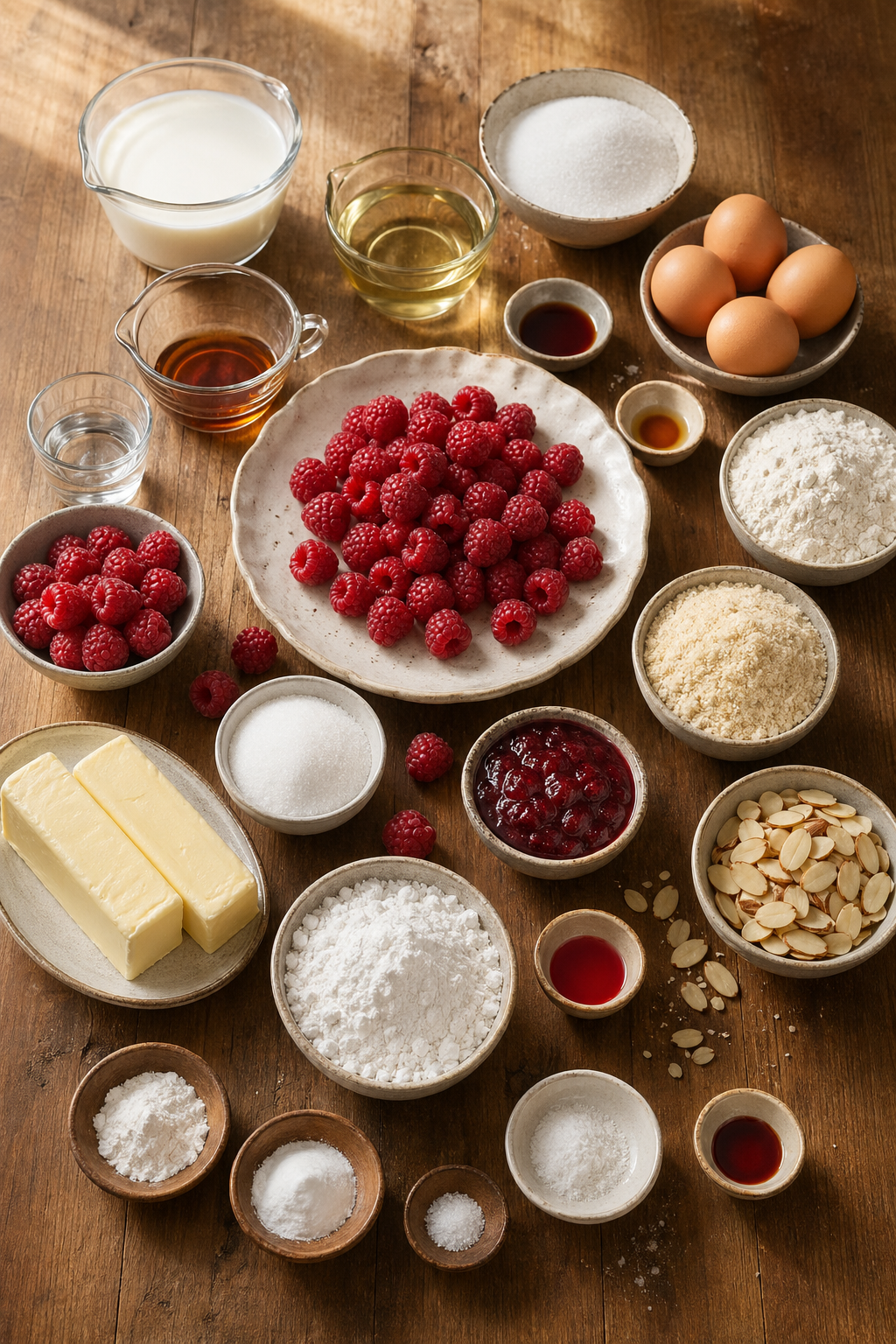
Almond Cake Layers
- 1 cup buttermilk
- 3/4 cup cooking oil (or melted, unsalted butter)
- 4 large eggs, at room temperature
- 1 cup white granulated sugar
- 1 tsp vanilla extract
- 2 tsp almond extract
- 1 1/2 cups all-purpose flour
- 1 cup finely ground almond flour
- 2 tsp baking powder
- 2 tsp baking soda
- 1/4 tsp sea salt
For Assembly
- 1/4 cup Amaretto, plus 2 to 3 tbsp water
- 2/3 cup raspberry preserves
- 2 cups fresh raspberries
- Sliced almonds, for garnish
For the Raspberry Buttercream
- 1 cup raspberries (fresh or frozen)
- 1/4 cup white granulated sugar
- 2 cups unsalted butter, softened
- 3 cups powdered sugar
- 1 tsp citric acid
- 1 tsp raspberry extract (optional)
- Red food coloring (optional)
Substitution note: No almond flour on hand? Increase the all-purpose flour from 1 1/2 cups to 2 cups. The cake will be slightly less delicate but still works well. For a non-alcoholic soak, combine a simple syrup with a few drops of almond extract instead of Amaretto.
How to Make Raspberry Almond Cake: Step-by-Step
Step 1: Set Up Your Oven and Pans for Even Baking
Preheat the oven to 350°F. Line three 8-inch cake pans with parchment paper, or use two 9-inch cake pans. Preheat the oven for at least 15 minutes before the pans go in so the temperature is fully stable when the batter hits the heat.
Step 2: Build a Batter That Stays Moist
In a large Mixing Bowl, combine the buttermilk, cooking oil (or melted butter), eggs, sugar, vanilla extract, and almond extract. Beat with a Hand Mixer for a few minutes until the eggs are well beaten and the mixture looks uniform and slightly pale.
The buttermilk is not just a liquid here: its acidity reacts with the baking soda to create a tender, open crumb. Room-temperature eggs incorporate more evenly and help the batter emulsify properly. If your eggs are cold, rest them in warm water for 10 minutes first.
Step 3: Combine the Dry Ingredients Without Overmixing
In a separate bowl, whisk together the all-purpose flour, almond flour, baking soda, baking powder, and salt. Sift the dry ingredients directly into the wet mixture, then beat on medium speed just until no clumps remain. The batter should look smooth and pourable, not thick or gluey.
One thing to watch: overmixing after the flour goes in develops gluten and makes the layers tough. Stop the mixer the moment the batter looks smooth.
Step 4: Divide and Bake the Layers Evenly
Divide the batter evenly between the prepared pans. Using a kitchen scale here makes a real difference: equal weights mean equal baking times and layers that stack without tilting. Bake at 350°F for 22 to 24 minutes, until the tops are golden-yellow and a toothpick inserted into the center comes out clean.
You will know the layers are ready when the edges have pulled slightly away from the sides of the pan and the tops spring back gently when pressed. Allow the layers to cool in the pans for 5 to 7 minutes, then transfer to a wire rack to cool completely. Refrigerating the layers speeds this up considerably.
Step 5: Prepare the Raspberry Buttercream While the Layers Cool
While the cake layers cool, prepare a full batch of raspberry buttercream using the ingredients listed above: cook the raspberries with the granulated sugar until reduced, then beat into the softened butter with the powdered sugar, citric acid, and optional raspberry extract. Transfer approximately 1/2 cup of finished frosting into a pastry bag fitted with a round or star tip for piping the barrier ring later.
The citric acid is not optional if you want that tart edge: it sharpens the raspberry flavor and balances the sweetness of the powdered sugar in a way that extract alone cannot replicate.
Step 6: Level and Soak the Layers Before Assembly
Once the cake layers are completely cool, use a long serrated knife to level off any domed tops. In a small bowl, combine the Amaretto with 2 to 3 tablespoons of water. Using a pastry brush, lightly soak each layer. The cake should feel barely damp, not wet or soggy.
If you prefer to skip the alcohol, a simple syrup with a few drops of almond extract gives you the same moisture and flavor without the Amaretto.
Step 7: Layer the Filling Without Letting It Escape
Spread a layer of raspberry buttercream onto the first cake layer, then pipe a border ring of frosting around the outer edge using your pastry bag. This ring acts as a dam. Add approximately 1/3 cup of raspberry preserves inside the ring and spread it to the edges of the border.
Place the next cake layer on top and repeat. For the top layer, soak it with the Amaretto mixture first, then invert it onto the stack so the flat bottom faces up. This gives you a cleaner, more level top surface to frost.
The raspberry preserves filling here creates a concentrated berry layer that contrasts with the buttercream. For a different take on using raspberries in layered baking, the Raspberry Swiss Roll Cake uses a rolled sponge format rather than stacked layers, which changes the filling-to-cake ratio entirely.
Step 8: Apply the Crumb Coat to Lock In a Clean Finish
Apply a thin crumb coat of frosting over the entire outside of the cake, sealing all cracks and crumbs. The layer should be thin enough that you can almost see through it. Refrigerate the cake for 20 minutes until the crumb coat is firm to the touch.
Step 9: Frost and Finish the Exterior
Apply the final coat of frosting using a cake scraper and offset spatulas, smoothing it evenly around the sides and top. Work in long, steady strokes. If you want a truly professional surface, the technique in The Best Mirror Cake Glaze addresses how to achieve a flawless exterior finish when standard frosting alone is not giving you the result you want.
Garnish with fresh raspberries, dollops of buttercream piped with a star tip, and sliced almonds. For extra texture, press nonpareils lightly into the sides of the cake.
What Separates a Good Raspberry Almond Cake from a Great One
- Use finely ground almond flour, not almond meal. Coarser almond meal creates a grainier texture. The fine grind keeps the crumb delicate and light.
- Measure the batter by weight. Eyeballing equal portions between pans almost always results in one layer that is thicker and takes longer to bake.
- Chill between frosting coats. Skipping the 20-minute refrigeration after the crumb coat means the final coat drags crumbs to the surface. The chill sets the base so the final layer goes on cleanly.
- Bring the cake to room temperature before serving. Cold buttercream is firm and waxy. At room temperature, it becomes creamy and the almond flavor in the cake layers opens up fully.
- Go easy on the red food coloring. Add it one small drop at a time and mix thoroughly before adding more. The color deepens as it sits, so stop a shade lighter than your target.
Serving Suggestions
This cake works for a wide range of occasions: birthdays, Mother’s Day, Valentine’s Day, or any spring gathering where you want a centerpiece dessert. The flavor profile, fruity and lightly nutty, reads as both elegant and approachable.
Serve each slice at room temperature with a small handful of fresh raspberries on the side. The contrast between the cool, fresh berries and the creamy buttercream is worth the extra garnish. A light dusting of powdered sugar over the plate adds a clean visual finish without adding sweetness.
This cake also pairs well with a cup of strong coffee or a light sparkling wine, where the acidity in the drink echoes the tartness of the raspberry buttercream.
Storage and Make-Ahead Notes
Store the finished cake in the refrigerator, covered, for up to four days. Before serving, remove it from the refrigerator and allow it to sit at room temperature for one to two hours. A cold cake will feel noticeably drier and the frosting will lose its soft, creamy texture.
The cake layers can be baked ahead and refrigerated (wrapped tightly in plastic wrap) for up to two days before assembly. The raspberry buttercream can also be made a day ahead and stored in the refrigerator: bring it back to room temperature and re-whip briefly before using.
Letting the assembled cake rest overnight in the refrigerator actually improves the flavor: the Amaretto soak and the preserves have time to settle into the layers, and the whole cake becomes more cohesive by the next day.
A Cake Worth the Effort
Layered cakes have a reputation for being complicated, and some of that reputation is earned. But this one is built on a forgiving batter, a clear assembly process, and a frosting that is genuinely hard to mess up if you take the food coloring slowly.
The result is a cake that looks like it came from a bakery and tastes even better than it looks.
Give this one a try the next time you want to bake something that genuinely impresses, and do not skip the Amaretto soak. That one small step is what makes the layers taste like they were made by someone who really knows what they are doing.
FAQs
Can I make this Raspberry Almond Cake without almond flour?
Yes. Increase the all-purpose flour from 1 1/2 cups to 2 cups. The layers will be slightly less delicate in texture, but the almond extract and Amaretto soak will still carry the almond flavor through the cake.
How do I prevent the raspberry preserves from leaking out the sides?
Pipe a firm border ring of buttercream around the outer edge of each layer before adding the preserves. The ring acts as a physical barrier. Make sure the ring is thick enough to hold the preserves in place when the next layer is pressed down.
Can I use frozen raspberries for the buttercream?
Yes, frozen raspberries work well for the buttercream. Cook them down with the sugar until the mixture is reduced and concentrated. Fresh raspberries are better for the garnish since they hold their shape and look cleaner on the finished cake.
My frosting turned out too red. Can I fix it?
Once the color is in, it is difficult to reverse. The best approach is to make a small additional batch of plain buttercream and fold it into the colored batch to dilute the intensity. Going forward, add food coloring one drop at a time and mix fully before assessing the color.
How do I know when the cake layers are fully baked?
Insert a toothpick into the center of the layer at the 22-minute mark. It should come out clean with no wet batter attached. The tops should be golden-yellow and the edges will have pulled slightly away from the sides of the pan.
Can I make this cake in two pans instead of three?
Yes. Use two 9-inch cake pans instead of three 8-inch pans. The layers will be slightly thicker and may need a minute or two of additional baking time. Check with a toothpick at 24 minutes.
Essential Kitchen Tools
Making Raspberry Almond Cake? Most failed attempts come from using the wrong pan or heat setup — not the recipe itself.

Want to save this recipe?
Want to save this recipe? Enter your email below, and we'll send it straight to your inbox. Plus, receive new recipes every week!

Foolproof Raspberry Almond Cake Recipe
- Total Time: 1 hour 30 minutes (including cooling and decorating time)
- Yield: 16 servings 1x
Description
A beautiful layered cake that’s perfect for any occasion. The delicate almond cake layers are complemented by a tart and fruity raspberry buttercream and a layer of raspberry preserves. It’s garnished with fresh raspberries on top for an added touch of elegance.
Ingredients
- 1 cup buttermilk
- 3/4 cup cooking oil (or melted, unsalted butter)
- 4 large eggs (at room temperature)
- 1 cup white granulated sugar
- 1 tsp vanilla extract
- 2 tsp almond extract
- 1 1/2 cups all-purpose flour
- 1 cup finely ground almond flour
- 2 tsp baking powder
- 2 tsp baking soda
- 1/4 tsp sea salt
- 1/4 cup Amaretto (plus 2 to 3 tbsp water)
- 2/3 cup raspberry preserves
- 2 cups fresh raspberries
- sliced almonds (for garnish)
- 1 cup raspberries (fresh or frozen)
- 1/4 cup white granulated sugar
- 2 cups unsalted butter (softened)
- 3 cups powdered sugar
- 1 tsp citric acid
- 1 tsp raspberry extract (optional)
- red food coloring (optional)
Instructions
Begin by preheating the oven to 350°F. Prepare three 8-inch cake pans with parchment paper, or alternatively, use two 9-inch cake pans.
Preparing the Cake Batter:
- In a large mixing bowl, whisk together the buttermilk, cooking oil (or melted butter), eggs, sugar, vanilla extract, and almond extract until the eggs are thoroughly combined.
- In a separate bowl, mix the dry ingredients: all-purpose flour, almond flour, baking soda, baking powder, and salt.
- Gradually sift the dry mixture into the wet ingredients, beating on medium speed until the batter is smooth and free of lumps.
Baking Instructions:
- Evenly distribute the cake batter among the prepared pans. Bake the almond cake layers in the preheated oven for 22 to 24 minutes, or until they turn golden-yellow and a toothpick inserted in the center comes out clean.
- Let the layers cool in the pans for 5 to 7 minutes, then transfer them to a wire rack to cool completely. For quicker cooling, place the layers in the refrigerator.
Raspberry Buttercream:
- While the cake layers cool, prepare a batch of Raspberry Buttercream Frosting, following my separate video tutorial for detailed instructions.
- Place about ½ cup of the frosting into a pastry bag fitted with a simple round or star tip.
Assembling the Cake:
- Once the cake layers are fully cooled, use a long, serrated knife to trim the tops of each layer for an even surface.
- Mix the amaretto with a small amount of water in a bowl. Use a pastry brush to lightly moisten the cake layers with the amaretto mixture.
- Spread a layer of raspberry buttercream on the first cake layer. Pipe a ring of frosting around the edge to create a barrier for the raspberry preserves. Add about 1/3 cup of preserves and spread it to the edges.
- Repeat this process with the next layer. Lightly moisten the final cake layer before placing it on top.
- Apply a thin crumb coat of frosting around the outside of the cake to seal in any crumbs. Refrigerate the cake for 20 minutes to set the crumb coat.
- Finish by applying the final layer of frosting, smoothing it out with a cake scraper and offset spatulas.
Serving Suggestions:
- Garnish the raspberry almond cake with fresh raspberries and dollops of raspberry buttercream. For an elegant touch, consider adding nonpareils to the sides of the cake.
- This cake is best enjoyed at room temperature. If not served the same day, store it in the refrigerator. Before serving, allow the cake to sit at room temperature for an hour or two, as a cold cake may taste drier and the frosting will not be as creamy.
Notes
TECHNIQUE TIP: Use a French star tip to pipe a barrier of frosting around cake layers to prevent raspberry jam from oozing out.
STORAGE: Store the cake in the refrigerator, covered, to maintain its freshness for up to three days.
SUBSTITUTION: If Amaretto is unavailable, increase almond extract slightly and add water to maintain moisture.
- Prep Time: 1 hour 30 minutes
- Cook Time: 22 minutes
- Category: Dessert
- Method: Baking
- Cuisine: American
Nutrition
- Serving Size: 12 servings
- Calories: 619 kcal
- Sugar: 48 g
- Sodium: 269 mg
- Fat: 39 g
- Saturated Fat: 16 g
- Unsaturated Fat: 17 g
- Trans Fat: 1 g
- Carbohydrates: 63 g
- Fiber: 3 g
- Protein: 5 g
- Cholesterol: 109 mg


