



Baking cookies from scratch can feel intimidating, but coconut macaroons are genuinely one of the most forgiving things you can make. Six ingredients, 40 minutes total, and no special skills required. Skip this recipe and you end up with store-bought versions that tend to be overly sweet, dry in the middle, and missing that irresistible chewy pull. These homemade coconut macaroons deliver a crisp golden exterior, a moist and chewy center, and an optional chocolate dip that takes them from simple to stunning. They yield 24 cookies and are naturally gluten-free, making them a crowd-pleaser for almost any occasion.
Why This Recipe Works (Before You Touch a Bowl)
Most coconut macaroon recipes skip a critical step: whipping the egg whites separately. That shortcut produces dense, heavy cookies that feel more like compressed coconut bars than actual macaroons.
Beating the egg whites to stiff peaks and folding them into the coconut mixture introduces air that lightens the entire texture. The sweetened condensed milk binds everything together while keeping the interior moist. Salt is not just a background note here, it sharpens the sweetness and keeps the flavor from tasting flat.
The result is a cookie that is simultaneously crunchy on the outside and cloud-like on the inside. That contrast is what makes these worth making.
Ingredients for Coconut Macaroons
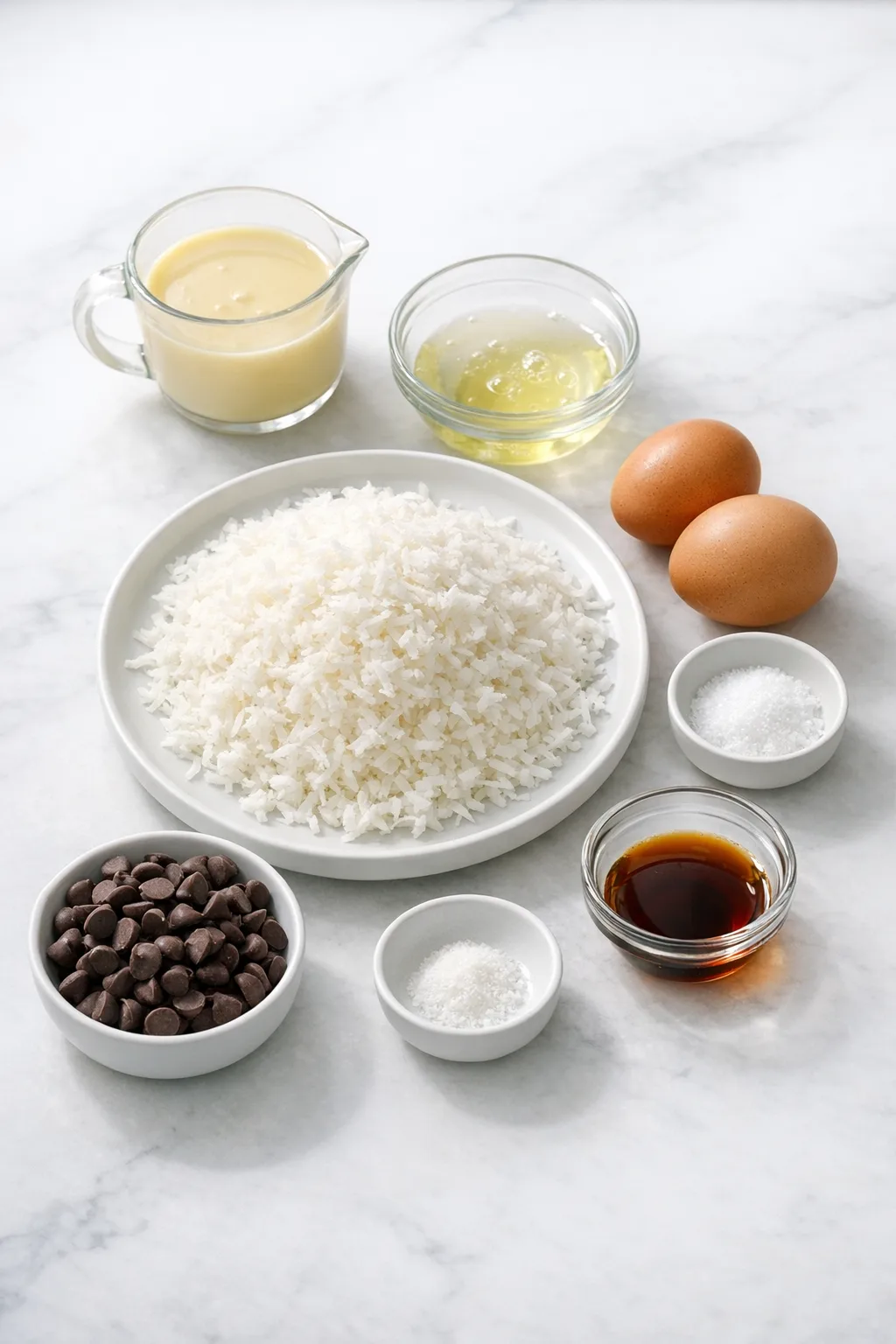
Every ingredient in this recipe pulls its weight. Here is what you need:
- 1 (14-ounce / 396g) bag sweetened shredded coconut — the star of the recipe. For a finer texture, chop it briefly before mixing.
- ⅔ cup (160ml) sweetened condensed milk — binds the coconut and adds richness. Using the whole can makes the macaroons extra gooey but they will spread more and take on deeper color during baking.
- 1 teaspoon vanilla extract — rounds out the sweetness with warmth.
- ½ teaspoon salt — balances the sugar and adds contrast.
- 2 large egg whites, room temperature — room temperature whites whip faster and hold more volume than cold ones. This is the ingredient that transforms the texture entirely.
- 6 ounces (170g) semi-sweet chocolate chips or chopped chocolate — for dipping. Semi-sweet is the right call here; milk chocolate can make the overall cookie too sweet.
Coconut macaroons use a very different technique and ingredient base than something like Coconut Orange Slice Cookies, which rely on a formed dough rather than a folded meringue mixture, making these macaroons significantly lighter in texture.
What to Avoid Before You Start Baking
A few common errors trip up first-time macaroon bakers. Knowing them ahead of time saves a batch.
- Cold egg whites: Cold whites take much longer to whip and may never reach stiff peaks properly. Pull your eggs from the fridge at least 30 minutes before starting.
- Overmixing after folding: Once the egg whites go into the coconut mixture, fold gently and stop as soon as they are incorporated. Aggressive stirring collapses the air bubbles and produces flat, dense cookies.
- Overbaking: These bake low and slow at 325°F for a reason. Pushing past 25 minutes dries them out and destroys the chewy interior that makes them worth eating.
- Dipping warm cookies in chocolate: The chocolate will not set properly on a warm cookie and will slide right off. Cool completely first, every time.
- Mushing the batter into the scoop: Pack it loosely. Compressed batter produces tight, dense macaroons instead of the open, airy mounds you want.
Step-by-Step Instructions
Step 1: Prepare Your Workspace for Even Baking
Preheat the oven to 325°F. Line two rimmed baking sheets with parchment paper. Using two sheets means you bake one at a time, which gives each batch consistent heat and even browning.
Step 2: Build the Coconut Base
In a large mixing bowl, stir together the shredded coconut, sweetened condensed milk, vanilla extract, and salt until fully combined. The mixture should look dense and slightly sticky, almost like a thick granola cluster. One thing to watch: if you use the full can of condensed milk instead of ⅔ cup, expect the cookies to spread more and brown faster during baking.
Step 3: Whip the Egg Whites to Stiff Peaks
In a separate, larger bowl, beat the two egg whites on high speed for about 3 minutes until stiff peaks form. You will know they are ready when the peaks hold their shape and the whites look glossy and bright white, not wet or droopy. If the peaks flop over when you lift the beater, keep going for another 30 to 60 seconds.
Step 4: Fold the Whites Into the Coconut Mixture Without Deflating Them
Gently fold the whipped egg whites into the coconut base. Use a wide spatula and a slow, deliberate motion, cutting down through the center and sweeping up the sides. You will lose some volume, and that is expected. Stop folding the moment no large white streaks remain. Overfold here and the cookies lose their lift entirely.
Step 5: Scoop and Shape the Macaroons
Using a 1½-tablespoon scoop, portion the batter onto the lined baking sheets, spacing each mound about 1 inch apart. Do not compress the batter into the scoop. If a mound looks uneven or has a gap, use your fingers to gently press it back into shape. The batter should feel light and slightly springy, not packed.
Step 6: Bake Until Golden and Fragrant
Bake one sheet at a time at 325°F for 20 to 25 minutes. The tops and bottom edges should be a warm golden brown when done. You will smell the toasted coconut before you see the color change, which is a reliable early cue that they are close. Let the macaroons cool completely on the pan before moving them.
Step 7: Dip in Chocolate for the Finishing Touch
Place the semi-sweet chocolate in a microwave-safe bowl. Microwave on high in 30-second intervals, stirring between each, until the chocolate is completely smooth. You will know it is ready when it stirs into a glossy, fluid consistency with no visible chips remaining. Dip the bottom of each cooled macaroon into the chocolate, let the excess drip off, and place back on the parchment-lined sheet. Allow the chocolate to set at room temperature for about 1 hour. Alternatively, drizzle the chocolate over the tops if you prefer a lighter coating.
What Separates a Good Coconut Macaroon from a Great One
- Toast the coconut for a nuttier depth: Spread the shredded coconut on a baking sheet and toast at 350°F, stirring every few minutes, until lightly golden. Keep a close eye on it because the high sugar content means it can go from golden to burnt quickly. Toasted coconut does produce a slightly less chewy macaroon, so weigh that trade-off based on your preference.
- Add mix-ins at the coconut stage: Up to ½ cup of dried fruit, toasted pecans, or macadamia nuts can be stirred into the coconut base before the egg whites go in. The contrast of chewy, gooey, and crunchy in one bite is genuinely worth trying.
- Use a double boiler for the chocolate if you want more control: Microwaving works well, but a double boiler gives you a slower, more controlled melt that is harder to scorch.
- Bake one sheet at a time: Two sheets in the oven simultaneously creates uneven heat distribution. The bottom sheet tends to overbrown while the top sheet underbakes. Patience here pays off.
Personally, I prefer the plain dipped version over the drizzle. The solid chocolate base adds a satisfying snap that contrasts beautifully with the chewy coconut interior in a way the drizzle just does not replicate.
Serving Suggestions
Coconut macaroons work well as a standalone dessert, a holiday cookie tray addition, or a Passover treat since they contain no flour. They pair naturally with a strong espresso or a cold glass of milk, where the bitterness cuts through the sweetness cleanly.
For a more indulgent spread, serve them alongside a Coconut Tres Leches Cake, which brings a completely different texture profile to the table and deepens the coconut theme across an entire dessert course.
They also hold up well on a gift plate or in a tin, making them a practical choice when you need something that travels without falling apart.
Storage: Make a Batch, Enjoy It All Week
Coconut macaroons store exceptionally well compared to most homemade cookies.
- Room temperature: Store in an airtight container for up to 1 week. They stay chewy and moist without refrigeration.
- Freezer: Freeze for up to 3 months in a sealed container. Thaw at room temperature for about 30 minutes before serving.
- Keeping them chewy: Add a few marshmallows to the storage container. The marshmallows release just enough moisture to prevent the macaroons from drying out, the same principle used with brown sugar storage. This small trick makes a noticeable difference by day three or four.
FAQs
Can I make coconut macaroons without egg whites?
The egg whites are what give these macaroons their lighter, airier texture. Without them, the cookies will be denser and chewier, closer to a coconut candy bar than a cookie. If you need an egg-free version, aquafaba (the liquid from canned chickpeas) can be whipped to stiff peaks and used as a substitute in equal amounts.
Why did my coconut macaroons spread out flat?
Flat macaroons usually mean the egg whites were not whipped to true stiff peaks, or they were overmixed after folding. The batter should hold its mounded shape when scooped. If it looks runny or collapses immediately, the whites lost too much air during folding.
Can I use unsweetened coconut instead of sweetened?
Yes, but the result will be noticeably less sweet and slightly drier since sweetened coconut contains added sugar and moisture. If you use unsweetened coconut, consider adding an extra tablespoon of condensed milk to compensate for the reduced moisture.
How do I know when coconut macaroons are done baking?
The tops and bottom edges should be a clear golden brown, not pale and not dark. The interior will still feel slightly soft when you press gently, but it firms up as the cookies cool completely on the pan. Pulling them out too early leaves the center underset; waiting for deep browning dries them out.
Can I make these ahead of time for an event?
Absolutely. Coconut macaroons actually improve slightly after the first day as the flavors settle. Bake them up to three days in advance, store in an airtight container at room temperature, and dip in chocolate the day before serving for the best presentation.
Do I have to dip them in chocolate?
No. The macaroons are fully complete without the chocolate and taste wonderful on their own. The chocolate dip adds a layer of richness and a slight bitterness that balances the sweetness, but it is entirely optional. A drizzle over the top is a lighter alternative if you want the visual effect without the full coating.
Ready to Bake Your First Batch
Coconut macaroons are proof that a short ingredient list and a straightforward process can produce something genuinely impressive. The whipped egg white technique is the one step that separates a truly great macaroon from a mediocre one, and now you know exactly why it matters.
Give this recipe a try the next time you want a homemade cookie that does not require hours in the kitchen. You might be surprised how quickly 24 cookies disappear.
Essential Kitchen Tools
Making Coconut Macaroons? Most failed attempts come from using the wrong pan or heat setup — not the recipe itself.

Want to save this recipe?
Want to save this recipe? Enter your email below, and we'll send it straight to your inbox. Plus, receive new recipes every week!

Beginner-Friendly Coconut Macaroon Recipe
- Total Time: 40 minutes
- Yield: 24 cookies 1x
Description
Savor the chewy texture of coconut macaroons drizzled with semi-sweet chocolate. This beginner-friendly recipe combines sweetened shredded coconut and vanilla for a delightful, easy-to-make treat.
Ingredients
- 1 14-ounce/ 396g bag sweetened shredded coconut
- ⅔ cup sweetened condensed milk ((160ml) (see Notes about using the whole can))
- 1 teaspoon vanilla extract
- ½ teaspoon salt
- 2 large egg whites (room temperature)
- 6 ounces semi-sweet chocolate chips or chopped bars ((170g))
Instructions
- Set the oven temperature to 325°F and prepare two rimmed baking sheets by lining them with parchment paper.
- In a large mixing bowl, combine the coconut, condensed milk, vanilla, and salt thoroughly.
- In a separate larger bowl, whip the egg whites on high speed until they form stiff peaks, which should take about 3 minutes. Carefully fold the whipped egg whites into the coconut mixture.
- With a 1½-tablespoon scoop, portion the cookie batter onto the lined baking sheets, ensuring each scoop is spaced about 1 inch apart.
- Bake one sheet at a time for 20 to 25 minutes, or until both the tops and bottom edges are golden brown. Allow them to cool completely on the pan.
- In a microwave-safe bowl, place the semi-sweet chocolate. Heat in the microwave in 30-second intervals, stirring in between, until the chocolate is fully melted and smooth.
- Coat the bottoms of the cookies in the melted chocolate. Return them to the lined baking sheets and let them cool at room temperature until the chocolate hardens, which takes about 1 hour. Alternatively, you can drizzle chocolate over the tops of the cookies if preferred. Store the cookies in an airtight container at room temperature for up to 1 week.
Notes
TECHNIQUE TIP: Ensure the egg whites are at room temperature for easier whipping and better texture in the macaroons.
STORAGE: Store macaroons in an airtight container at room temperature for up to 5 days. For longer storage, refrigerate them.
- Prep Time: 20 minutes
- Cook Time: 20 minutes
- Category: Dessert
- Method: Baked
- Cuisine: American
Nutrition
- Calories: 153 kcal
- Sugar: 14 g
- Sodium: 107 mg
- Fat: 9 g
- Saturated Fat: 7 g
- Unsaturated Fat: 1.2 g
- Trans Fat: 0.01 g
- Carbohydrates: 16 g
- Fiber: 1 g
- Protein: 2 g
- Cholesterol: 3 mg


