

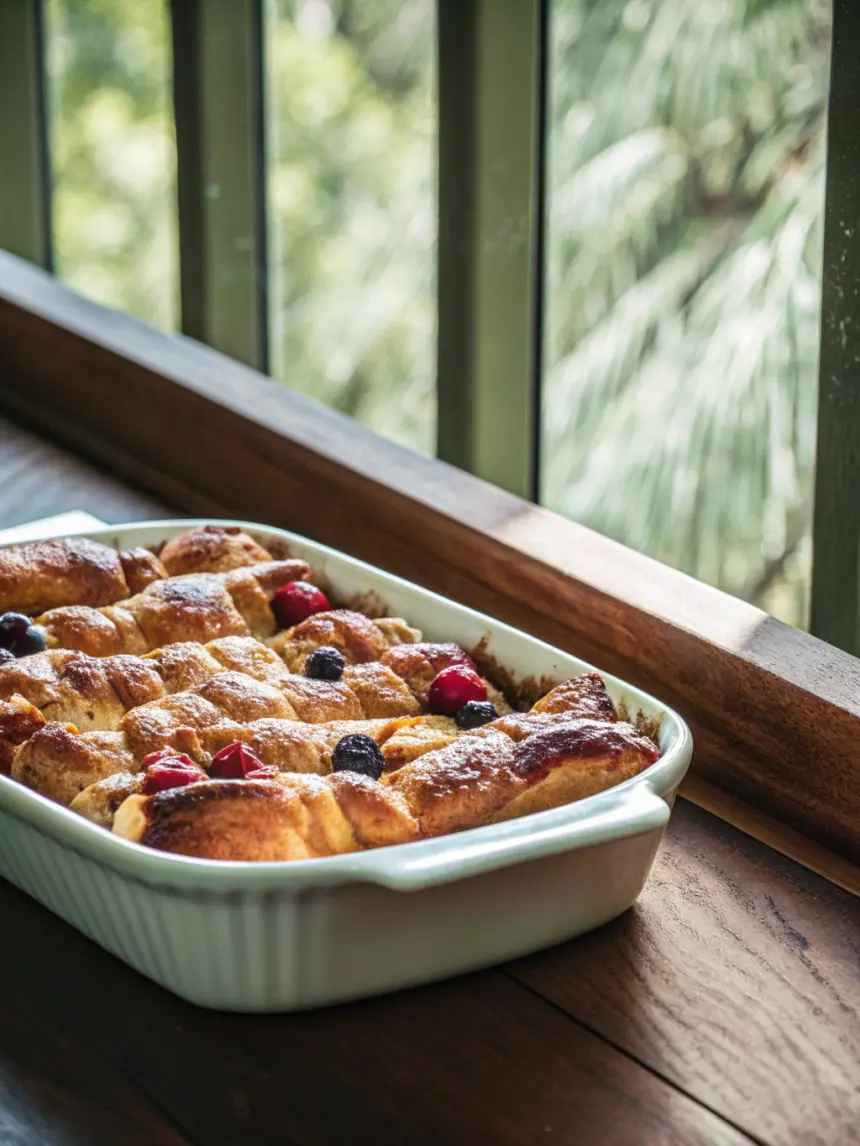
Did you know that Croissant French Toast Casserole can be assembled the night before and baked fresh the next morning, saving you precious time while feeding a crowd? This buttery, custardy breakfast bake transforms flaky croissants into a decadent brunch centerpiece, complete with jammy berries that burst with flavor in every bite. The secret lies in the croissants themselves: their delicate, layered structure absorbs the rich custard beautifully without turning soggy, creating a texture that’s crispy on top and tender inside.
I first encountered this croissant French toast casserole at a church potluck, where a friend shared her family recipe with me. After one bite, I was hooked. The combination of warm cinnamon, sweet vanilla custard, and those gorgeous baked blueberries made it impossible to resist. Since then, it’s become my go-to recipe for holiday breakfasts, baby shower brunches, and any occasion where I need to impress without spending hours in the kitchen. Plus, it’s the perfect way to use up day-old croissants that might otherwise go to waste.
What makes this recipe truly special is its versatility and make-ahead convenience. Whether you’re hosting overnight guests or planning a stress-free holiday morning, this casserole delivers restaurant-quality results with minimal effort. Best of all, it requires just a handful of pantry staples and about 15 minutes of prep time. Let’s dive into everything you need to know to make this stunning breakfast bake the star of your next brunch gathering.
Ingredients List
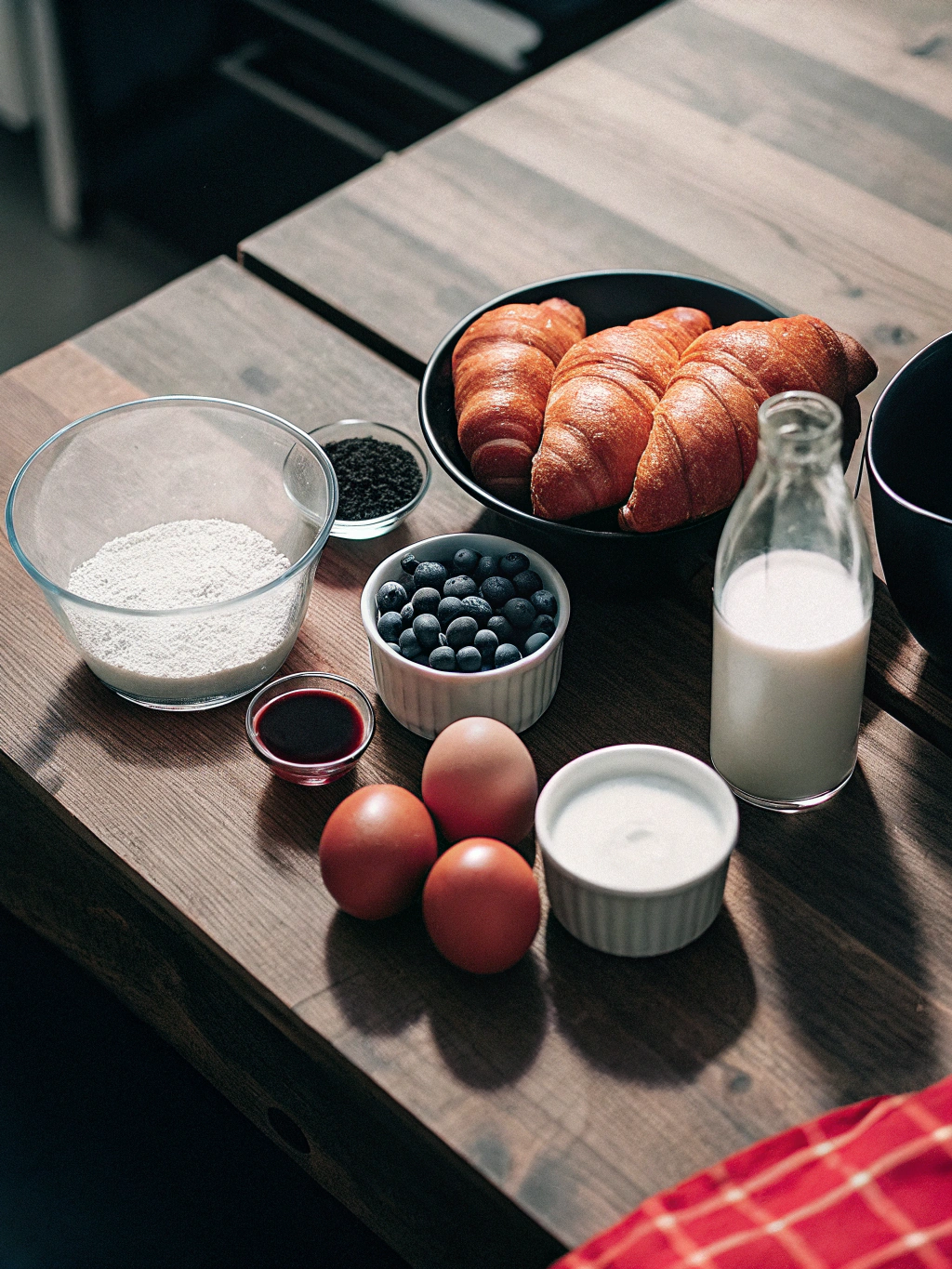
Gathering your ingredients is the first step to creating this show-stopping breakfast casserole. The beauty of this recipe lies in its simplicity: you likely have most of these items in your kitchen already. Here’s what you’ll need to serve 8 people generously:
- 5-6 large croissants (fresh or a few days old work perfectly; day-old croissants actually absorb the custard better without falling apart)
- 5 large eggs (these provide structure and protein to the custard)
- 1 cup whole milk, warmed (warming prevents the butter from solidifying when mixed)
- 1/2 cup heavy cream (adds richness and creates that luxurious, velvety texture)
- 4 tablespoons melted butter (unsalted preferred, for controlling the salt level)
- 1/3 cup granulated sugar (keeps the casserole lightly sweet, perfect for topping with maple syrup)
- 2 teaspoons vanilla extract (use pure vanilla for the best flavor)
- 2 teaspoons ground cinnamon (adds warmth and that classic French toast flavor)
- 1/2 teaspoon fine sea salt (balances the sweetness and enhances all the flavors)
- 2 cups blueberries or mixed berries (blueberries and blackberries bake beautifully and turn jammy; save strawberries and raspberries for fresh topping)
- Fresh berries for garnish (strawberries, raspberries, blueberries, blackberries)
- Powdered sugar for dusting (optional but adds a beautiful finish)
- Maple syrup for serving (essential for drizzling over each portion)
Substitution tips: If you don’t have heavy cream, you can use half-and-half or additional whole milk, though the texture will be slightly less rich. For a dairy-free version, try coconut milk and coconut cream with vegan butter. Gluten-free croissants work wonderfully if you’re avoiding gluten, and you can replace the granulated sugar with coconut sugar or a sugar substitute that measures 1:1.
Step-by-Step Instructions for Perfect Croissant French Toast Casserole
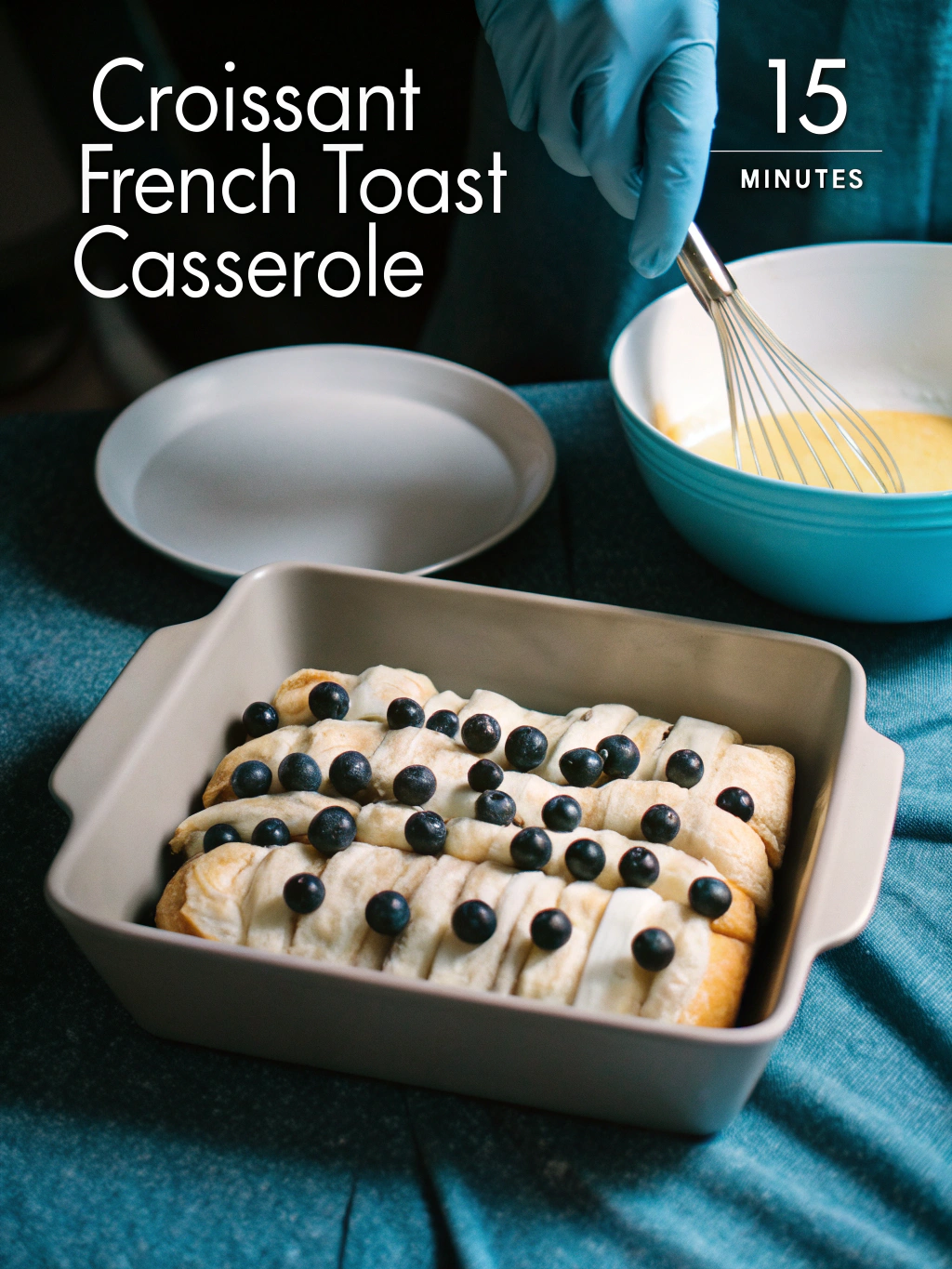
Creating this impressive breakfast casserole is surprisingly straightforward. Follow these detailed steps for foolproof results every time:
Step 1: Prepare Your Baking Dish and Oven
Start by preheating your oven to 350°F (175°C). While the oven warms, generously butter a 9×13-inch casserole dish, making sure to coat the bottom and sides thoroughly. This prevents sticking and creates delicious crispy edges. A glass or ceramic baking dish works best because it distributes heat evenly and allows you to see the beautiful layers of your casserole.
Step 2: Cut the Croissants
Using a serrated knife, cut your croissants into 1 to 1.5-inch pieces. Don’t worry about making them perfectly uniform; irregular pieces actually create more interesting texture and allow the custard to seep into all the nooks and crannies. Transfer the croissant pieces to your prepared baking dish, arranging them in a relatively even layer. Day-old croissants are ideal because they’re slightly firmer and absorb the custard without becoming mushy, but fresh croissants work beautifully too.
Step 3: Make the Custard Mixture
In a large mixing bowl, crack your 5 eggs and whisk them until the yolks and whites are fully combined. Add the warm whole milk (heating it for about 30-45 seconds in the microwave works perfectly), followed by the heavy cream and melted butter. The warm milk is crucial here because it prevents the butter from solidifying into little lumps, ensuring a smooth, cohesive custard.
Next, add the sugar, vanilla extract, ground cinnamon, and sea salt. Whisk everything together vigorously for about 30 seconds until the mixture is completely smooth and the sugar begins to dissolve. The custard should have a beautiful golden color from the egg yolks and a warm, inviting aroma from the cinnamon and vanilla.
Step 4: Assemble the Casserole
Pour the custard mixture evenly over the croissant pieces, making sure to cover all areas of the dish. Here’s a pro tip that makes all the difference: use a rubber spatula to gently press down on the croissants, encouraging them to absorb the liquid. Press several times across the entire surface, allowing the custard to soak deep into the layers. You’ll notice the croissants becoming saturated and taking on that rich, custardy appearance.
Step 5: Add the Berries
Scatter 2 cups of blueberries (or a mix of blueberries and blackberries) over the top of the casserole. Additionally, use your fingers to tuck some berries between the croissant layers, pushing them down into the custard. This creates pockets of jammy fruit throughout the dish, not just on top. As the casserole bakes, these berries will burst and release their juices, creating a gorgeous purple-blue sauce that adds both flavor and visual appeal.
Step 6: Rest the Casserole
Let the assembled casserole rest at room temperature for 15 minutes before baking. This resting period allows the croissants to fully absorb the custard, resulting in a more cohesive, evenly cooked dish. Alternatively, and this is where the make-ahead magic happens, you can cover the dish tightly with plastic wrap or aluminum foil and refrigerate it overnight. The extended soaking time actually improves the texture, and you’ll save yourself all the morning prep work.
Step 7: Bake to Golden Perfection
When you’re ready to bake, place the casserole in your preheated 350°F oven. Bake for 45 minutes, or until the top is golden brown and crispy, the custard is set (it should jiggle only slightly in the center), and the berries have burst into jammy goodness. The edges should be caramelized and slightly darker than the center. If you’re baking from the refrigerator, you may need to add an extra 5-10 minutes to the baking time.
Step 8: Add Fresh Toppings and Serve
Remove the casserole from the oven and let it cool for about 5 minutes. While it’s still warm, scatter fresh berries over the top—raspberries, halved strawberries, and additional blueberries create a beautiful, colorful presentation. Dust the entire surface with powdered sugar using a fine-mesh sieve for that professional bakery look. Slice into generous portions and serve immediately with warm maple syrup on the side. The combination of crispy top layers, custardy center, jammy baked berries, and fresh fruit creates an unforgettable breakfast experience.
Healthier Alternatives for Croissant French Toast Casserole
While this breakfast casserole is already lighter than many traditional versions (using just 1/3 cup of sugar for 8 servings), you can easily adapt it to meet specific dietary goals without sacrificing flavor. Here are some thoughtful modifications that maintain the dish’s delicious character:
- Use whole wheat croissants: Swap regular croissants for whole grain or whole wheat versions to add fiber and nutrients. Many bakeries now offer whole grain croissants that have the same buttery, flaky texture.
- Reduce the sugar: Cut the sugar down to 3 tablespoons instead of 1/3 cup, or use a natural sweetener like maple syrup or honey (2-3 tablespoons). The berries and maple syrup topping provide plenty of sweetness.
- Lighten the dairy: Replace the heavy cream with additional whole milk, or use 2% milk throughout. For an even lighter option, unsweetened almond milk or oat milk work well, though the custard will be slightly less rich.
- Add protein powder: Whisk 1-2 scoops of unflavored or vanilla protein powder into the custard mixture to boost the protein content, making this casserole more filling and balanced.
- Incorporate more fruit: Double the berries to 4 cups, adding more antioxidants, fiber, and natural sweetness while reducing the overall calorie density per serving.
- Use coconut oil instead of butter: Substitute the melted butter with melted coconut oil for a dairy-free option that adds a subtle tropical note.
- Try egg whites: Replace 2-3 whole eggs with 4-6 egg whites to reduce cholesterol and fat while maintaining the custard structure.
These modifications allow you to customize the recipe to fit various nutritional needs while keeping the essential character of this beloved croissant French toast casserole intact. Moreover, you can combine several of these adjustments for an even healthier version that still tastes indulgent.
Serving Suggestions That Elevate Your Brunch Game
This versatile breakfast casserole pairs beautifully with a variety of accompaniments and fits seamlessly into different meal occasions. Here are some creative serving ideas that will impress your guests:
- Classic brunch spread: Serve alongside crispy bacon, breakfast sausage links, or turkey sausage for a protein boost. Add a simple fruit salad and freshly squeezed orange juice for a complete brunch menu.
- Coffee bar pairing: This casserole is the perfect companion to a DIY coffee bar featuring various brews, flavored syrups, and whipped cream. The sweetness of the dish balances perfectly with bold coffee.
- Yogurt parfait station: Set up a yogurt parfait bar with Greek yogurt, granola, honey, and additional fresh berries. Guests can enjoy both the warm casserole and cool, refreshing parfaits.
- Savory balance: Offset the sweetness with savory sides like scrambled eggs with herbs, a spinach and feta frittata, or avocado toast points.
- Whipped cream variations: Top individual servings with vanilla whipped cream, cinnamon whipped cream, or mascarpone cream for extra indulgence.
- Nut butter drizzle: Warm almond butter or peanut butter thinned with a bit of maple syrup creates a delicious protein-rich topping that adds depth of flavor.
- Holiday presentation: For special occasions, serve in individual ramekins instead of one large dish. Bake for 25-30 minutes and garnish each portion with a mint sprig and dusting of powdered sugar.
- Brunch cocktails: Pair with mimosas, Bellinis, or a signature brunch cocktail to create a festive atmosphere for adult gatherings.
The beauty of this recipe is its adaptability to both casual family breakfasts and elegant entertaining scenarios. Furthermore, the casserole holds well on a buffet table for up to an hour, making it ideal for gatherings where guests serve themselves.
Common Mistakes to Avoid When Making This Casserole
Even though this croissant French toast casserole is remarkably forgiving, avoiding these common pitfalls will ensure perfect results every time:
- Using cold milk: Cold milk causes the melted butter to solidify into little clumps, creating an uneven custard. Always warm your milk to room temperature or slightly warmer before mixing.
- Skipping the resting time: Rushing to bake immediately after assembly means the croissants won’t fully absorb the custard, resulting in dry spots and a less cohesive texture. Always allow at least 15 minutes for soaking.
- Overbaking: Baking beyond 45-50 minutes can dry out the custard and make the croissants too hard. The casserole is done when the center jiggles only slightly and the top is golden brown.
- Using too much sugar in the custard: Since you’ll be serving with maple syrup and the berries add natural sweetness, keeping the custard lightly sweet (1/3 cup sugar) prevents the dish from becoming cloyingly sweet.
- Baking strawberries and raspberries: These delicate berries become mushy and lose their vibrant color when baked. Reserve them for fresh topping after baking, using heartier blueberries and blackberries in the casserole itself.
- Cutting croissants too small: Pieces smaller than 1 inch can become too mushy and lose their structure. Aim for 1 to 1.5-inch pieces that maintain some texture after soaking.
- Not pressing down the custard: Simply pouring the custard over the croissants isn’t enough. Gently pressing with a spatula ensures even absorption and prevents dry, unsoaked pieces.
- Forgetting to butter the dish: An ungreased dish leads to stuck-on edges that are difficult to serve and clean. Always generously butter your baking dish before adding the croissants.
By avoiding these mistakes, you’ll achieve that perfect balance of crispy top, custardy center, and jammy berries that makes this casserole so irresistible. Additionally, understanding these principles helps you troubleshoot any issues that might arise during preparation.
Storing Tips for Maximum Freshness
Proper storage ensures you can enjoy this delicious breakfast casserole for several days after baking, or prepare it well in advance for stress-free entertaining. Here’s how to store it correctly:
- Refrigerating leftovers: Once cooled to room temperature, cover the casserole tightly with plastic wrap or aluminum foil and refrigerate for up to 4 days. The texture remains remarkably good, though the crispy top will soften slightly.
- Reheating individual portions: Place a serving on a microwave-safe plate and heat for 60-90 seconds until warmed through. For a crispier top, reheat in a 350°F oven for 10-15 minutes or use a toaster oven.
- Freezing for later: This casserole freezes surprisingly well. Wrap cooled, unsliced casserole tightly in plastic wrap, then in aluminum foil, and freeze for up to 2 months. Thaw overnight in the refrigerator before reheating.
- Make-ahead assembly: Assemble the entire casserole up to 24 hours before baking. Cover tightly and refrigerate. When ready to bake, add 5-10 extra minutes to the baking time since it’s starting cold.
- Storing fresh berry toppings separately: If you know you’ll have leftovers, add fresh berries only to the portions you’re serving immediately. Store extra fresh berries separately to maintain their texture and appearance.
- Portioning before freezing: For ultimate convenience, cut the baked and cooled casserole into individual portions, wrap each piece separately, and freeze. You can then reheat single servings as needed.
- Preventing freezer burn: Use freezer-safe containers or wrap very tightly in multiple layers to prevent freezer burn and maintain the best flavor and texture.
These storage methods make this croissant French toast casserole an excellent meal prep option for busy mornings. Simply reheat and enjoy a homemade breakfast in minutes, even on hectic weekdays.
Why This Recipe Works So Well
Understanding the science behind this impressive breakfast dish helps you appreciate why it delivers such consistently delicious results. Croissants are uniquely suited for French toast casseroles because their laminated dough structure—created by folding butter into the dough multiple times—forms distinct layers that absorb liquid while maintaining structural integrity.
Unlike regular bread, which can become soggy or fall apart when soaked in custard, croissants have a higher fat content (approximately 25% compared to bread’s 3-5%) that creates a richer, more luxurious final texture. The butter in the croissant layers essentially bastes the interior as it bakes, keeping everything moist and tender.
The custard ratio in this recipe (5 eggs to 1.5 cups liquid) creates the perfect balance between a set, sliceable casserole and a creamy, custardy interior. This ratio is approximately 15% lower in liquid than traditional bread pudding recipes, accounting for the croissants’ delicate structure. Moreover, warming the milk before mixing prevents the butter from solidifying, ensuring a smooth custard that distributes evenly throughout the dish.
The 15-minute resting period (or overnight refrigeration) allows the croissants to absorb the custard fully without breaking down. During this time, the egg proteins begin to bond with the bread structure, creating the foundation for that perfect custardy texture. The baking process then sets these proteins while simultaneously crisping the exposed tops of the croissants, creating that irresistible contrast of textures.
Finally, baking at 350°F for 45 minutes provides gentle, even heat that cooks the eggs through without overcooking or drying out the casserole. This moderate temperature also allows the berries to release their juices slowly, creating that jammy consistency without burning or turning bitter.
Perfect Occasions for Serving This Casserole
This versatile breakfast bake shines in numerous settings, making it a valuable addition to your recipe repertoire. Its make-ahead convenience and crowd-pleasing appeal make it ideal for:
- Holiday mornings: Christmas, Easter, Mother’s Day, and Father’s Day breakfasts become effortless when you’ve prepped this casserole the night before. You can enjoy family time instead of being stuck in the kitchen.
- Baby and bridal showers: The elegant presentation and easy serving make this perfect for daytime celebrations. Cut into smaller portions for a brunch buffet, yielding 12-16 servings.
- Overnight guests: Impress houseguests with a restaurant-quality breakfast that requires minimal morning effort. Assemble before bed, bake while everyone’s getting ready, and serve fresh and hot.
- Potluck contributions: This casserole travels well and can be served at room temperature if necessary, though it’s best warm. It’s always the first dish to disappear at church potlucks and community gatherings.
- Weekend family breakfasts: Turn ordinary Saturday mornings into something special. The recipe easily halves for smaller families (use an 8×8-inch dish) or doubles for larger crowds.
- Breakfast meetings: For business breakfasts or committee meetings, this casserole looks professional, serves easily, and doesn’t require last-minute preparation.
- Birthday brunches: Celebrate someone special with this impressive dish that feels like a treat. Add a candle to their slice for a fun twist on birthday cake at breakfast.
The combination of convenience, impressive appearance, and universally appealing flavor makes this croissant French toast casserole your new secret weapon for stress-free entertaining and special family moments.
Bringing It All Together
This Croissant French Toast Casserole has earned its place as a beloved breakfast staple in my kitchen, and I’m confident it will become one of your favorites too. The combination of buttery, flaky croissants, rich custard, jammy berries, and fresh fruit creates a symphony of flavors and textures that feels indulgent yet balanced. What makes it truly special is its remarkable versatility: equally at home at elegant brunches and casual family breakfasts, adaptable to various dietary needs, and convenient enough for busy mornings thanks to its make-ahead friendliness.
The recipe’s forgiving nature means even novice cooks can achieve impressive results, while the quality of ingredients and attention to technique satisfy experienced bakers. Whether you’re using leftover croissants from yesterday’s bakery run or picking up fresh ones specifically for this dish, you’re transforming simple ingredients into something memorable.
I encourage you to make this recipe your own by experimenting with different berry combinations, trying the healthier modifications, or adapting the serving suggestions to suit your family’s preferences. The foundational technique remains reliable regardless of these variations, giving you confidence to be creative. Now it’s your turn to experience the magic of this croissant French toast casserole. Gather your ingredients, set aside just 15 minutes for prep, and get ready to serve up something truly special at your next breakfast or brunch gathering. Your family and friends will be asking for the recipe before they’ve finished their first slice!
Frequently Asked Questions
Can I make this croissant French toast casserole dairy-free?
Absolutely! Replace the whole milk with unsweetened almond milk, oat milk, or coconut milk. Substitute the heavy cream with coconut cream (the thick part from a can of full-fat coconut milk), and use vegan butter or coconut oil in place of regular butter. The texture will be slightly different but still delicious, with the coconut versions adding a subtle tropical note that pairs beautifully with berries. Many readers have reported excellent results with this modification, especially when serving guests with dairy sensitivities.
What if I don’t have croissants? Can I use regular bread instead?
While croissants create the most luxurious texture, you can substitute with other breads in a pinch. Brioche is the closest alternative, offering similar richness and a tender crumb. Challah works well too, providing a slightly less buttery but still wonderful result. French bread or sourdough can be used, though you may want to increase the butter in the custard by 1-2 tablespoons to compensate for their lower fat content. Avoid using very soft sandwich bread, as it tends to become too mushy. Whatever bread you choose, cutting it into 1-1.5 inch pieces and allowing adequate soaking time ensures the best texture.
How do I know when the casserole is fully cooked?
The casserole is done when the top is golden brown and crispy, the edges are set and slightly caramelized, and the center jiggles only slightly when you gently shake the pan. Insert a knife into the center; it should come out mostly clean with just a bit of custard clinging to it. An instant-read thermometer inserted into the center should read 170-175°F. If the top is browning too quickly but the center isn’t set, tent the casserole loosely with aluminum foil and continue baking. Conversely, avoid overbaking, as this creates a dry, rubbery texture. The casserole will continue cooking slightly from residual heat after you remove it from the oven.
Can I prepare this casserole more than 24 hours in advance?
For best results, assemble the casserole no more than 24 hours before baking. Beyond that timeframe, the croissants can become overly saturated and break down too much, losing their characteristic texture. However, you can prep the individual components further in advance: cut the croissants and store them in an airtight container for up to 2 days, and whisk together the custard ingredients and refrigerate for up to 2 days. When ready to use, whisk the custard again to recombine, then assemble and bake as directed. This method gives you flexibility while maintaining optimal texture.
My croissants are very fresh and soft. Will they hold up in this recipe?
Fresh, soft croissants work perfectly in this recipe, though they’ll absorb the custard faster than day-old croissants. To prevent them from becoming too mushy, reduce the resting time to 10 minutes instead of 15, or bake immediately after assembling. The baking process will set the custard and create structure even if the croissants seem very soft initially. Many bakers actually prefer using fresh croissants because they create a more tender, delicate final texture. If you’re concerned, you can lightly toast the croissant pieces in a 300°F oven for 5-7 minutes before assembling the casserole, which helps them maintain more structure.
What’s the best way to reheat leftovers to maintain the crispy top?
For the crispiest results, reheat individual portions in a 350°F oven or toaster oven for 10-15 minutes. Place the piece on a baking sheet (you can line it with parchment paper for easy cleanup) and heat until warmed through and the top regains some crispness. Alternatively, microwave the portion for 60-90 seconds until warm, then transfer to a toaster oven or under the broiler for 2-3 minutes to crisp the top. While the microwave alone is the fastest method, it won’t restore the crispy texture that makes this casserole so appealing. For whole casserole reheating, cover with foil and bake at 325
Must Try Recipes
- Stuffed French Toast
A stuffed variation of your brunch favorite with creamy filling. - Berry Baked Oatmeal
Hearty and fruity—perfect for meal-prep breakfasts. - Lemon Ricotta Pancakes
Bright, fluffy pancakes that elevate your morning meal. - Creamy Chicken Florentine Crepes
Savory brunch with tender chicken and spinach in crepes. - Whipped Cream
Perfect topping for this casserole or any dessert.
Tools You’ll Need
Essential Kitchen Tools
Everything you need to make cooking easier and more enjoyable




Want to save this recipe?
Want to save this recipe? Enter your email below, and we'll send it straight to your inbox. Plus, receive new recipes every week!

Easy Croissant French Toast Casserole
- Total Time: 1 hour
Description
This easy croissant french toast bake combines flaky croissants, sweet cinnamon custard, and juicy berries baked to golden perfection.
Ingredients
- 5–6 large croissants (fresh or slightly stale)
- 5 eggs
- 1 cup warm whole milk
- 1/2 cup heavy cream
- 4 tbsp melted butter
- 1/3 cup sugar
- 2 tsp vanilla extract
- 2 tsp ground cinnamon
- 1/2 tsp fine sea salt
- 2 cups blueberries or mixed berries (plus extra for garnish)
Instructions
- Preheat your oven to 350°F. Lightly butter a 9×13-inch baking dish.
- Chop croissants into 1 to 1.5-inch pieces and scatter evenly in the dish.
- In a mixing bowl, whisk together eggs, warmed milk, cream, butter, sugar, vanilla, cinnamon, and salt until smooth.
- Pour the custard over the croissants, pressing gently to help them absorb the mixture. Sprinkle berries over and between layers. Let soak for 15 minutes or overnight for best results.
- Bake for 45 minutes, until puffed and golden on top. Serve warm, topped with fresh berries or maple syrup.
- Prep Time: 15 minutes
- Cook Time: 45 minutes
- Category: Breakfast
- Cuisine: American
Nutrition
- Serving Size: 1 serving
- Calories: 360 kcal
- Sugar: 18 g
- Sodium: 382 mg
- Fat: 22 g
- Saturated Fat: 13 g
- Unsaturated Fat: 7 g
- Trans Fat: 0.2 g
- Carbohydrates: 33 g
- Fiber: 2 g
- Protein: 8 g
- Cholesterol: 162 mg