



Weeknight dinners that need to feed a crowd without a pile of dishes afterward are genuinely hard to pull off. When tacos are the answer but the mess of shells, spills, and assembly chaos is not, a fish taco bowl steps in as the smarter move. Everything you love about fish tacos lands in one bowl: flaky, spiced white fish, crisp purple cabbage, creamy avocado, and that legendary crema sauce drizzled over the top. Ready in 30 minutes, this recipe serves 8 and comes together with ingredients most families already keep on rotation.
Why This Works Before You Even Start
The genius of the fish taco bowl is structural. By swapping the tortilla for cilantro lime rice, you get a base that absorbs the sauce rather than competing with it. Every bite carries the full flavor stack: spiced fish, cool crema, bright lime, and salty cotija.
The crema sauce is the real anchor here. This is the same sauce that made the original fish tacos famous, built from sour cream, mayo, fresh lime juice, garlic powder, and a measured hit of Sriracha. More than just a topping, it ties every element together.
One thing to watch: if you skip the squeeze bottle for the sauce, it tends to pool in one spot rather than coat the bowl evenly. A spoon works fine, but drizzle slowly in a circular motion for even coverage.
What You Need for Fish Taco Bowls
For the Fish
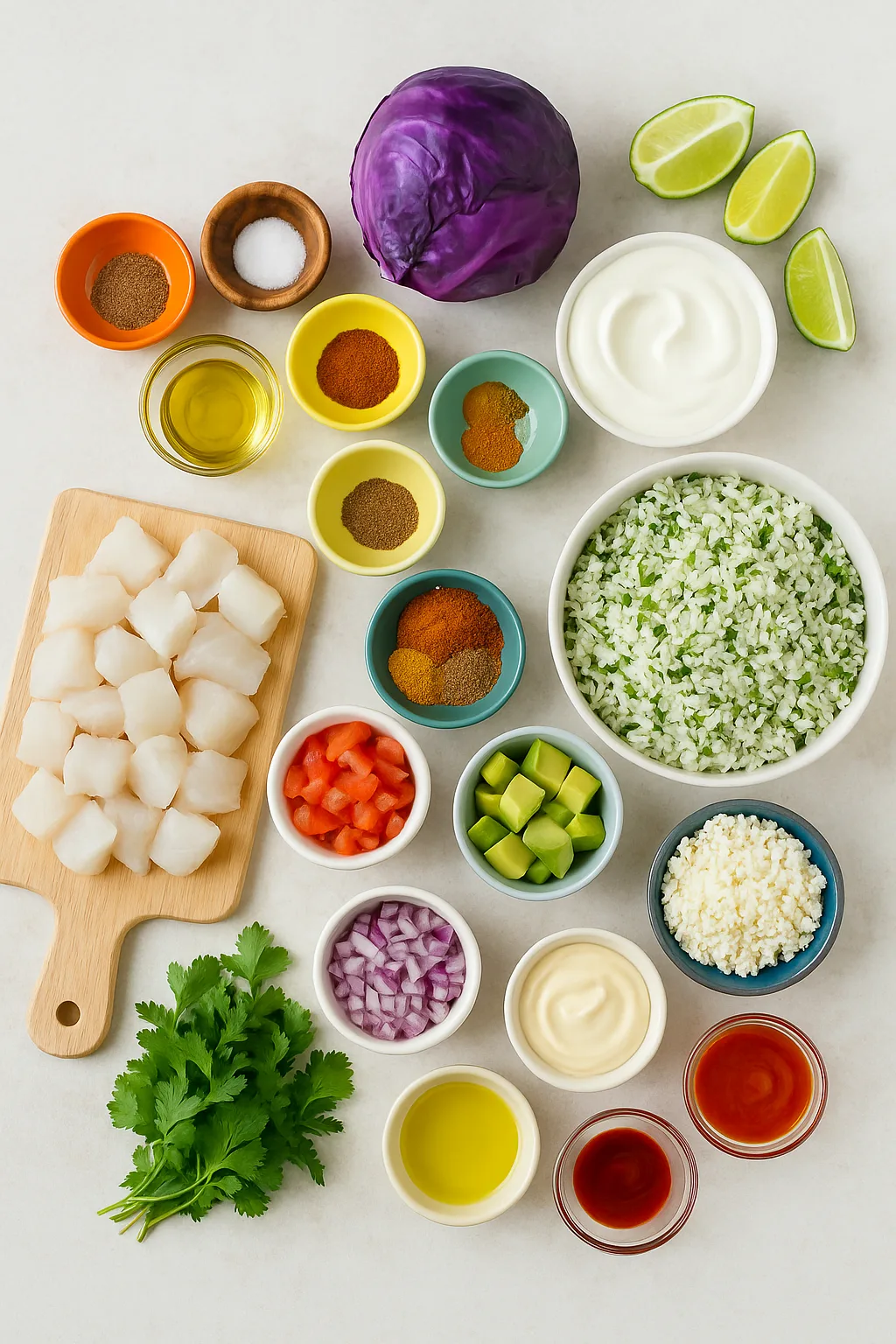
- 1 1/2 lbs white fish (cod, halibut, rockfish, or tilapia), chopped into bite-size chunks
- 1/2 tsp ground cumin
- 1/2 tsp cayenne pepper
- 1/4 to 1/2 tsp chili powder, added to taste
- 1 tsp fine sea salt
- 1/2 tsp black pepper
- 1 Tbsp olive oil
Toppings
- 3 cups cilantro lime rice (or any cooked grain you prefer)
- 1 small purple cabbage, thinly sliced
- 2 medium avocados, diced
- 2 roma tomatoes, diced
- 1/2 red onion, chopped
- 1/2 bunch cilantro, leaves chopped
- 4 oz cotija cheese (about 1 cup grated or crumbled)
- 1 lime, cut into 8 wedges
Cotija is the preferred cheese here because its salty, firm bite cuts through the richness of the crema and avocado. If you cannot find it, queso fresco crumbles just as well and has a milder, slightly milky flavor. For a completely different protein direction, the seasoning technique here follows the same logic as Ultimate Crispy Beef Tacos, where bold spice layering is what separates a flat bowl from one that actually tastes like something.
Fish Taco Crema Sauce
- 1/2 cup sour cream
- 1/3 cup mayonnaise
- 2 Tbsp lime juice (from 1 to 2 limes)
- 1 tsp garlic powder
- 1 tsp Sriracha sauce, added to taste
How to Make Fish Taco Bowls: Step-by-Step
Step 1: Season and Cook the Fish for Maximum Flavor
Line a baking sheet with parchment paper. Add the chopped fish to a mixing bowl, drizzle with olive oil, then sprinkle on the cumin, cayenne pepper, chili powder, salt, and black pepper. Toss gently until every piece is evenly coated. You will know the seasoning is distributed correctly when the fish looks uniformly orange-red with no pale, uncoated spots.
Spread the fish onto the prepared baking sheet in a single layer. Bake at 375°F for 20 minutes. For browned, slightly crisp edges, broil for the last 3 to 5 minutes until the internal temperature reaches 145°F. The fish is done when it pulls apart into clean white flakes with no translucency in the center.
Air Fryer Method: Add the seasoned fish chunks to the air fryer basket and cook at 400°F for 7 to 9 minutes, tossing halfway through. This method gives you slightly crispier edges in less time. If you prefer a golden seared crust with a different texture entirely, the technique in How to Pan Sear Fish covers every variable that affects browning on the stovetop.
Step 2: Build the Rice Base While the Fish Cooks
Use the fish’s cook time to prepare your cilantro lime rice. If you are working with leftover rice, reheat it in a skillet over medium heat until the grains crisp slightly on the bottom, then cover to keep warm. That light crispiness on reheated rice adds a texture contrast that plain microwaved rice misses entirely.
Plain white rice, brown rice, or quinoa all work here. The cilantro lime version adds a pop of brightness that complements the spiced fish, but the bowl is forgiving. If you are short on time, a microwavable cilantro lime rice pouch gets the job done.
Step 3: Whisk the Crema Sauce to a Smooth, Drizzleable Consistency
Combine the sour cream, mayonnaise, lime juice, garlic powder, and Sriracha in a small bowl. Whisk until completely smooth and no streaks remain. The sauce is ready when it coats the back of a spoon and holds a thin, even layer without sliding off immediately.
Transfer it to a squeeze bottle if you have one. The sauce is thick enough to drizzle in ribbons rather than pour in a flood, which means better coverage across the whole bowl. If the sauce feels too thick to drizzle, add lime juice or a small splash of water, one teaspoon at a time, until it loosens to your liking.
Step 4: Assemble the Bowls for Maximum Visual Impact
Add rice to the bottom of each bowl as the base. Layer on the purple cabbage first, then place the fish on top so it sits as the centerpiece. Arrange the avocado, tomatoes, red onion, and cilantro around the fish. Scatter the cotija cheese generously across the top, then finish with a liberal drizzle of crema sauce.
Serve with lime wedges on the side. A fresh squeeze of lime over the assembled bowl right before eating brightens the fish and sharpens every other flavor in the bowl. Do not skip it.
What Separates a Good Fish Taco Bowl from a Great One
- Buy fish the day you cook it. At the fish counter, look for a mild smell, firm white flesh, and no dark or mushy patches. A strong fishy odor means the fish is past its prime, and no amount of seasoning fixes that.
- Set up a buffet for groups. Place each topping in a separate small bowl and let everyone build their own. It removes the pressure of assembly and keeps the toppings fresh longer.
- Do not dice the avocado too early. Cut it right before serving. Avocado oxidizes quickly once cut, and brown avocado in a bright, colorful bowl is a visual letdown.
- Be generous with the sauce. A light drizzle disappears into the bowl. Go back for a second pass. The crema is what makes this feel like a restaurant bowl rather than a thrown-together weeknight plate.
- Taste the Sriracha before committing. One teaspoon adds a warm background heat that is noticeable but not aggressive. Add more only after tasting, because the heat builds as the sauce sits.
Healthy Fish Taco Bowl Variations Worth Trying
The base recipe is already a solid nutritional choice, with 28g of protein and 7g of fiber per serving according to the recipe data. A few swaps make it work for different dietary needs without changing the character of the dish.
- Grain-free base: Swap the rice for cauliflower rice to reduce carbohydrates while keeping the bowl format intact.
- Higher fiber base: Brown rice or quinoa both add more fiber and a nuttier flavor than white rice.
- Dairy-free sauce: Replace the sour cream with a plain coconut yogurt. The tang is slightly different but still works with the lime and Sriracha.
- Add beans: Stir in black beans or refried beans alongside the rice to bulk up the bowl and add plant-based protein, similar to a Chipotle-style burrito bowl. Unlike Healthy Chipotle Chicken Burrito Bowls, this version keeps the protein lighter with white fish rather than marinated chicken, which means a shorter cook time and a cleaner finish.
- Mayo substitute: Greek yogurt works in place of mayonnaise in the crema sauce. The sauce will be slightly tangier and thinner, but the flavor profile holds.
Make It Once, Use It All Week
Each component stores separately and holds well, which makes this a strong meal prep option for the week ahead.
Refrigerator: Store the fish, sauce, rice, and toppings in separate airtight containers for up to 3 days. Keeping them separate prevents the cabbage from wilting and the rice from absorbing too much moisture.
Avocado and tomatoes: Cut these fresh just before serving. They do not store well once diced and will affect the color and texture of the bowl if prepped too far in advance.
Reheating the fish: Warm it gently in the microwave in 30-second intervals, or return it to the air fryer at 350°F for 3 to 4 minutes. You will know it is properly reheated when it steams lightly and the flakes separate easily again without drying out. Avoid overheating, which turns the fish rubbery and removes the moisture that makes it worth eating.
Sauce shelf life: The crema sauce keeps in the refrigerator for up to 3 days in a sealed container. Give it a quick stir before using, as the lime juice can settle at the bottom.
FAQs
What is the best fish for a fish taco bowl?
Mild, flaky white fish works best. Cod is a reliable first choice because it holds its shape when baked and flakes cleanly. Halibut, rockfish, and tilapia are all solid alternatives. Fresh fish is ideal, but frozen-thawed fish works fine as long as it is fully thawed and patted dry before seasoning.
Can I make this easy fish taco bowl recipe ahead of time?
Yes. Cook the fish and rice up to 3 days in advance and store them separately in airtight containers. Prep the dry toppings like cabbage, onion, and cilantro ahead as well. Hold off on cutting the avocado and tomatoes until right before serving for the best color and texture.
How do I keep the fish from drying out when reheating?
Reheat in short intervals, either 30 seconds at a time in the microwave or 3 to 4 minutes in the air fryer at 350°F. The fish should feel moist and pull apart easily when it is properly warmed. If it smells dry or looks shrunken, it has gone too long.
What fish taco bowl toppings can I swap out?
The toppings list is flexible. Fresh pico de gallo works in place of diced tomatoes. Guacamole can replace the diced avocado. Mexican cheese blend or feta can substitute for cotija. The only topping worth keeping consistent is the crema sauce, because it is the flavor thread that holds the bowl together.
How spicy is the crema sauce?
At 1 tsp of Sriracha, the sauce has a mild, warm background heat that most people find approachable. It is noticeable but not sharp. For a spicier version, add more Sriracha in small increments and taste as you go. For a completely mild sauce, omit the Sriracha entirely and add a pinch of smoked paprika instead for depth without heat.
Can I use a different grain as the base for a healthy fish taco bowl?
Absolutely. Brown rice, quinoa, buckwheat, and cauliflower rice all work as the base. Cauliflower rice keeps the bowl grain-free. Quinoa adds a slightly nutty flavor and a firmer texture than white rice. The cilantro lime seasoning can be added to any of these grains after cooking using the same method.
A Bowl Worth Coming Back To
The fish taco bowl solves the real problem with taco night: all the flavor, none of the structural chaos. Everything is prepped in parallel, assembled in minutes, and served in a format that actually holds together through the last bite.
Personally, I find the crema sauce is the part that makes people ask for the recipe. It is deceptively simple, but the balance of sour cream, mayo, lime, and Sriracha hits a note that store-bought sauces never quite reach.
Give this one a try on a Tuesday when you want something that actually satisfies the whole table. You might find it becomes the meal everyone requests by name.
Essential Kitchen Tools
Making Fish Taco Bowl? Most failed attempts come from using the wrong pan or heat setup — not the recipe itself.

Want to save this recipe?
Want to save this recipe? Enter your email below, and we'll send it straight to your inbox. Plus, receive new recipes every week!

Quick Fish Taco Bowl Recipe
- Total Time: 30 minutes
- Yield: 8 servings 1x
Ingredients
- 1 1/2 lbs Whitefish (such as Cod, Halibut, Rockfish, or Tilapia, chopped into bite-size pieces)
- 1/2 tsp ground cumin
- 1/2 tsp cayenne pepper
- 1/4 – 1/2 tsp chili powder (or adjusted to taste)
- 1 tsp fine sea salt
- 1/2 tsp black pepper
- 1 Tbsp olive oil
- 3 cups Cilantro Lime Rice (or your preferred cooked rice or grain)
- 1 small purple cabbage
- 2 medium avocados (diced)
- 2 roma tomatoes (diced)
- 1/2 red onion (chopped)
- 1/2 bunch cilantro (leaves chopped)
- 4 oz cotija cheese (1 cup grated/crumbled)
- 1 lime (cut into 8 wedges for serving)
- 1/2 cup sour cream
- 1/3 cup mayonnaise
- 2 Tbsp lime juice (from 1 to 2 limes)
- 1 tsp garlic powder
- 1 tsp Sriracha sauce (or adjusted to taste)
Instructions
- Begin by preparing the fish: Preheat your oven to 375°F. In a mixing bowl, combine the chopped fish with olive oil and the seasonings: cumin, cayenne pepper, salt, and black pepper. Gently toss to ensure the fish is well coated. Spread the seasoned fish evenly on a lined baking sheet. Bake for 20 minutes, and if a crispier finish is desired, broil for the last 3-5 minutes until browned and the fish reaches an internal temperature of 145°F. Set aside once done.
- While the fish is baking, prepare the rice: Cook the cilantro lime rice or reheat any leftover rice in a skillet until it becomes crispy, then cover to keep warm.
- Prepare the taco sauce: In a small bowl, whisk together the ingredients for the sauce until fully blended. For convenience, transfer the mixture to a squeeze bottle.
- Assemble the taco bowls: Start by placing rice at the bottom of each bowl, then layer the toppings as you prefer: cabbage, avocado, tomato, onion, cilantro, and cotija cheese. Finish with a generous drizzle of the sauce and serve with lime wedges for added flavor.
Notes
TECHNIQUE TIP: For even cooking, toss the fish chunks halfway through baking at 400°F.
STORAGE: Store any leftovers in an airtight container in the refrigerator for up to 2 days.
SUBSTITUTION: Substitute cotija cheese with queso fresco or a Mexican cheese mix if unavailable.
- Prep Time: 10 minutes
- Cook Time: 20 minutes
- Category: Dinner
- Method: Baked
- Cuisine: Mexican
Nutrition
- Calories: 595 kcal
- Sugar: 5 g
- Sodium: 619 mg
- Fat: 23 g
- Saturated Fat: 6 g
- Unsaturated Fat: 15 g
- Trans Fat: 0.02 g
- Carbohydrates: 72 g
- Fiber: 7 g
- Protein: 28 g
- Cholesterol: 64 mg


