



Making pasta dough at home sounds intimidating until you actually do it, and then you wonder why you ever bought the boxed stuff. The real challenge most beginners face is not the kneading or the rolling, it is not knowing what the dough should feel and look like at each stage. Without that tactile knowledge, it is easy to add too much flour, skip the rest, and end up with noodles that snap instead of stretch. This homemade pasta recipe fixes that by walking you through every sensory cue, so you know exactly when the dough is right, not just when the timer goes off.
Why This Pasta Dough Works (Before You Touch a Single Ingredient)
The secret is in the rest. Gluten strands in fresh pasta dough are tight and resistant right after mixing, which is why rolling feels like a wrestling match if you skip that 20-minute window. Resting at room temperature lets those strands relax, and the difference is dramatic: the dough goes from stiff and springy to smooth and cooperative.
The olive oil is not just for flavor. It lubricates the gluten network, which makes the dough slip through the pasta roller cleanly and gives the finished noodles a slightly silky surface that holds sauce well. The eggs add structure and elasticity, which is what keeps the noodles from falling apart in boiling water.
Understanding these two things before you start means you will not panic when the dough feels dry and shaggy in the first two minutes of kneading. That is normal. Keep going.
Why Most Homemade Pasta Fails (and How to Fix It)
The single most common mistake is adding too much flour too soon. The dough looks crumbly and dry at the start, and the instinct is to keep it that way. But pasta dough is supposed to feel firm, almost leathery, after kneading. If you dust it into softness, the noodles will taste dense and bland.
The second mistake is skipping the rest. The first time many cooks try this, they roll the dough immediately after kneading because it looks smooth enough. The dough tears, sticks, and fights back the entire time. A 20-minute rest is not optional, it is the step that makes everything else easier.
Cold eggs are another quiet saboteur. Cold eggs stiffen the dough during mixing, making it harder to bring together and harder to knead. Room temperature eggs incorporate smoothly and give you a more pliable dough from the start.
One more: do not rinse the cooked noodles. The starch on the surface of fresh pasta is what allows sauce to cling. Rinsing strips it away and leaves you with slippery noodles that the sauce slides right off of.
Ingredients for Homemade Pasta
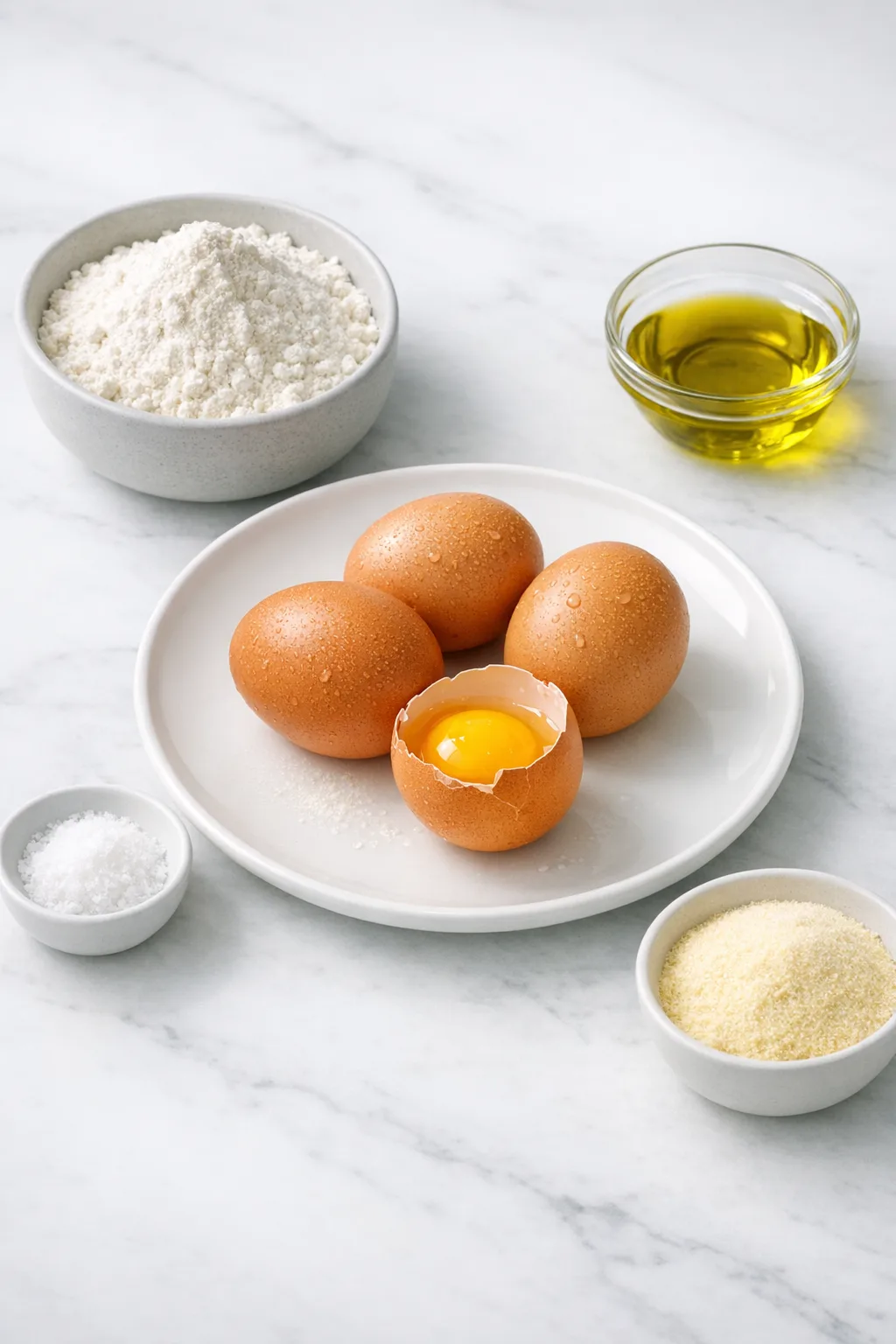
This recipe makes 6 servings and uses only five ingredients. Quality matters here because there is nowhere for a weak ingredient to hide.
- 2 1/2 cups Italian-style “00” flour (measured correctly, approximately 318 grams): This is the gold standard for pasta dough. It is milled very fine from soft durum wheat, which creates a silky, tender noodle with a satisfying chew. All-purpose flour works as a substitute and produces a good result, but “00” flour gives you noticeably better texture.
- 1 tsp fine sea salt: Seasons the dough itself, not just the cooking water.
- 4 large eggs, room temperature: Eggs give the dough color, strength, and elasticity. Room temperature is important because cold eggs make the dough seize up and become difficult to knead.
- 1 Tbsp extra virgin olive oil: Adds a subtle richness and helps the dough feed smoothly through a pasta roller.
- Semolina flour, for dusting: Coarser than regular flour, semolina does not absorb into the dough as quickly, which keeps cut noodles from sticking together without making them gummy.
Step-by-Step Instructions
Step 1: Set Up Your Station So Nothing Slows You Down
Dust a large baking sheet generously with semolina flour and set it aside. Secure your pasta roller and set it to the widest rolling setting before you start mixing. Having everything ready means the dough does not sit and dry out while you scramble for equipment.
Step 2: Build the Dough from the Inside Out
In a large mixing bowl, whisk together the flour and salt. Make a well in the center and crack all 4 eggs directly into it. Drizzle the olive oil over the eggs, then use your fingers to break the yolks and begin blending the eggs into the surrounding flour.
Work from the inside of the well outward, pulling flour in gradually until the dough comes together into a rough, shaggy mass. Transfer it to a lightly floured surface and knead by hand for about 5 minutes, pushing the heel of your hand down and away, turning the dough, and repeating.
When it is ready, the dough will feel smooth and flexible but not sticky, and it will spring back slowly when you press a finger into it. If it sticks aggressively to your hands, dust lightly with flour, but resist the urge to add more than necessary.
Shape into a ball, flatten into a disk, cover tightly with plastic wrap, and rest at room temperature for 20 minutes or up to an hour.
One thing to watch: if the dough still feels sticky after 3 minutes of kneading, give it 30 more seconds before adding flour. It almost always smooths out on its own.
Step 3: Divide and Begin Rolling for Even Thickness
Unwrap the rested dough and use a bench scraper to cut it into 4 equal pieces. Keep the pieces you are not working with covered under plastic wrap to prevent them from drying out. Take one piece and flatten it into a rough rectangle that will fit through your pasta roller. Dust both sides with flour. Feed it through the roller on the widest setting, catching it as it comes through. Fold the dough into thirds like a letter, feed it through the widest setting again, then fold once more and roll through the widest setting a third time. This folding process strengthens the dough’s structure and gives you a more uniform sheet.
Step 4: Thin the Dough to Your Target Thickness
Continue feeding the dough through the machine without folding, moving to a narrower setting with each pass. For fettuccine, stop at setting 2. You will notice the sheet getting longer and longer with each pass, which is exactly what should happen. If it becomes too long to handle comfortably, cut it in half and continue rolling each piece separately. Keep the dough dusted with flour throughout to prevent sticking. If the dough tears as you roll thinner, it likely needs a bit more flour on the surface.
Step 5: Cut the Noodles Cleanly Without Sticking
Dust the final rolled sheet generously with flour before cutting. This is the step that prevents the noodles from fusing back together after they are cut. Switch to your desired pasta cutter attachment and feed the sheet through, catching the noodles as they emerge from the bottom. Arrange the cut noodles on your semolina-dusted baking sheet and dust the tops with more semolina. Cover loosely with a clean kitchen towel and let them dry for 20 minutes before cooking or freezing.
Once you are comfortable cutting fettuccine, the same dough opens up a lot of possibilities. The same sheet, rolled slightly thicker and left uncut, becomes lasagna. Rolled thin and cut into squares, it becomes the foundation for Cheese Ravioli, which uses this exact dough technique but takes the filling in a completely different direction.
Step 6: Cook the Pasta to Tender, Not Eggy
Bring a large pot of water to a boil and salt it, keeping in mind the dough already contains salt. Add the pasta, stirring gently right away to keep the noodles from clumping. Fresh homemade pasta cooks much faster than dried store-bought pasta, so start checking for doneness between 2 and 4 minutes. You will know it is ready when the noodles are tender but still have a slight resistance when you bite through. If they taste eggy, they need another 30 to 60 seconds. If cooking from frozen, add 2 extra minutes and do not thaw first.
What Separates Good Homemade Pasta from a Great One
- Use a kitchen scale when you can. 2 1/2 cups of “00” flour measures out to 318 grams. Scooping directly from the bag compacts the flour and can add significantly more than intended, which throws off the egg-to-flour ratio.
- Keep a small bowl of flour nearby while rolling. You will need it constantly, and reaching across the kitchen mid-roll is a good way to let the dough fold on itself.
- Form nests for storage. After the 20-minute drying period, lift a handful of noodles from the center, lower them back onto the baking sheet with a slight twist, and they will form a compact nest. This makes freezing and storing much more manageable than loose strands.
- Reserve pasta water before draining. A splash of the starchy cooking water added to butter and Parmesan creates a loose, creamy coating that clings to every strand. It is a small step that makes a noticeable difference in the final dish.
- Do not overcrowd the baking sheet. Noodles piled on top of each other will stick together even with semolina dusting. Spread them in a single layer and dust generously between any overlapping strands.
Serving Suggestions
Fresh pasta has a delicate, slightly eggy richness that pairs beautifully with sauces that are either very simple or deeply savory. Butter and freshly grated Parmesan is the simplest route, and it is genuinely one of the best ways to taste the pasta itself. Grate the cheese directly onto the hot noodles so it melts into a creamy coating rather than clumping.
For a more substantial meal, a rich meat sauce works wonderfully. A Wild Mushroom Bolognese is a particularly good match here: unlike a quick tomato sauce, the slow-cooked depth of a bolognese stands up to the richness of egg-based pasta without overwhelming it.
When you want something herbaceous and bright, toss the cooked noodles with a spoonful of fresh pesto. For a complete dinner that comes together quickly once the pasta is made, Pesto Chicken Pasta solves the “what protein goes with this” question with a combination that works every time.
Make It Once, Use It All Week
Fresh pasta dough does not refrigerate well for long because the eggs in the dough can cause the noodles to discolor and stick. Freezing is the better option and it works extremely well.
After the 20-minute drying period, dust the noodles with additional semolina and twist them into nests on the baking sheet. Place the baking sheet in the freezer uncovered and freeze for 1 hour, or until the nests are firm to the touch. Transfer the frozen nests to a freezer-safe zip bag and store for up to 2 months.
To cook from frozen, drop the nests directly into boiling salted water without thawing. They will take slightly longer, so add 2 minutes to the standard cook time. You will know they are done when they taste fully cooked through with no eggy flavor remaining.
I prefer making a double batch whenever I have the time and keeping a stash in the freezer. Having homemade pasta ready to cook on a weeknight changes the whole calculation of what is possible for dinner.
FAQs
Can I make pasta dough without a pasta machine?
Yes. Roll each piece of dough out with a rolling pin to an even thickness similar to a dime. Fold the sheet twice like a letter, then roll it out again to your target thickness. To cut fettuccine, roll or fold the flour-dusted sheet like a burrito and slice it into thin strips. Unfold and lay the noodles flat on the semolina-dusted baking sheet. It takes more effort than a machine, but the result is the same.
What is the best flour for homemade pasta dough?
Italian “00” flour is the traditional choice and produces the most tender, silky noodles. It is milled very fine from soft durum wheat. All-purpose flour works well as a substitute and is easier to find. Whichever you use, measure carefully: 2 1/2 cups of “00” flour equals 318 grams, and 2 1/2 cups of all-purpose equals 310 grams.
Why does my pasta dough feel too dry and crumbly?
This is normal in the first 2 to 3 minutes of kneading. The dough will come together as you work it. Keep kneading and resist adding water. If it is still crumbly after 4 minutes of active kneading, add a few drops of water, not flour. The issue is usually that the eggs were not fully incorporated before kneading began.
How long should I rest the pasta dough?
At least 20 minutes at room temperature, and up to 1 hour. The rest allows the gluten to relax, which is what makes rolling smooth and even. Dough that has not rested will snap back toward its original shape every time you roll it, making it nearly impossible to get thin sheets.
Can I freeze homemade pasta dough?
Yes, and it freezes beautifully. After cutting and drying for 20 minutes, twist the noodles into nests, freeze on a baking sheet for 1 hour until firm, then transfer to a freezer-safe bag. They keep well for up to 2 months. Cook directly from frozen and add 2 minutes to the standard 2 to 4 minute cook time.
How do I know when fresh pasta is done cooking?
Start tasting at the 2-minute mark. Fresh pasta is done when it is tender all the way through with no eggy or raw flavor. It cooks significantly faster than dried pasta, so checking early prevents overcooking. If the noodles taste eggy, they need more time, not more salt.
Give This One a Try
Homemade pasta is one of those skills that feels out of reach until the first time you actually do it, and then it feels completely ordinary in the best possible way. The dough is forgiving, the process is tactile and satisfying, and the result is something that genuinely tastes different from anything that comes out of a box.
Start with fettuccine. Get comfortable with how the dough feels at each stage. Then freeze a batch and see how good a Tuesday dinner can be when you have fresh pasta waiting in the freezer.
You will be glad you made the time for it.
Essential Kitchen Tools
Making Pasta Dough? Most failed attempts come from using the wrong pan or heat setup — not the recipe itself.

Want to save this recipe?
Want to save this recipe? Enter your email below, and we'll send it straight to your inbox. Plus, receive new recipes every week!

Beginner-Friendly Pasta Dough Recipe
- Total Time: 1 hour
- Yield: 6 servings 1x
Description
Soft, fresh, and perfectly chewy, this homemade pasta recipe is made with simple ingredients and creates restaurant-quality noodles every time. Easy to roll, cut, and cook, these fresh pasta noodles pair perfectly with any sauce for an authentic Italian-style meal at home.
Ingredients
- 2 1/2 cups Italian-style “00” flour (measured correctly*)
- 1 tsp fine sea salt
- 4 large eggs
- 1 Tbsp extra virgin olive oil
- Semolina flour (for dusting the baking sheet and cut noodles)
Instructions
- Prepare by dusting a large baking sheet with semolina flour. Secure the pasta roller and adjust it to the widest rolling setting.
- For the dough, in a large mixing bowl, combine the flour and salt. Create a well in the center and crack the eggs into it. Drizzle the olive oil over the eggs, then blend the eggs into the flour using your fingers. Gradually stir the flour from the sides of the well outward until the mixture is fully combined into a cohesive dough. Move the dough to a lightly floured surface and knead it until smooth and elastic, adding more flour if it becomes sticky. This should take about 5 minutes. Form the dough into a ball, flatten it into a disk, cover with plastic wrap, and let it rest at room temperature for 20 minutes to 1 hour.
- Divide the dough by cutting it into 4 equal portions using a bench scraper. Keep the remaining dough covered with plastic wrap while working with one piece at a time. Flatten the dough piece into a rectangle suitable for the dough roller and dust it with flour to avoid sticking. Roll it through the pasta maker on the widest setting, catching it as it comes out, then fold it like a letter. Repeat by rolling it through the widest setting again and folding it once more.
- Continue to roll the pasta through the machine without folding, adjusting the rollers to a smaller setting after each pass until the desired thickness is achieved (for fettuccini, stop at setting 2). Keep the dough dusted with flour to prevent sticking. If the sheet becomes too long, cut it into manageable lengths and keep rolling.
- To cut the pasta, dust the final sheet with flour to ensure clean cuts that won’t stick together. Switch to your preferred pasta cutter attachment. Catch the pasta as it comes through the cutter and place it on the prepared baking sheet, dusting with additional semolina flour. Cover with a clean kitchen towel and allow to dry for 20 minutes before cooking or freezing.
- To cook the homemade pasta, salt a large pot of water and bring it to a boil. Add the dried or frozen pasta, stirring gently at first to prevent sticking. Homemade pasta cooks significantly faster than store-bought, so check for doneness between 2-4 minutes. If the noodles are undercooked, they may taste slightly eggy. If cooking from frozen, add an additional 2 minutes. Drain the pasta once cooked.
Notes
TECHNIQUE TIP: For the best texture, use Italian-style “00” flour and knead the dough until it’s smooth.
STORAGE: Store unused pasta dough in the refrigerator for up to 2 days, wrapped tightly in plastic.
SUBSTITUTION: If semolina flour is unavailable, dust with more Italian-style “00” flour when cutting the noodles.
- Prep Time: 20 minutes
- resting time: 1 hour 20 minutes
- Category: Dinner
- Cuisine: Italian
Nutrition
- Calories: 252 kcal
- Sugar: 0.2 g
- Sodium: 430 mg
- Fat: 6 g
- Saturated Fat: 1 g
- Unsaturated Fat: 4 g
- Trans Fat: 0.01 g
- Carbohydrates: 40 g
- Fiber: 1 g
- Protein: 9 g
- Cholesterol: 109 mg


