



Cold evenings have a way of demanding something substantial, and a thin broth just won’t cut it. When you want a bowl that actually fills you up and warms you from the inside out, Beef Barley Soup delivers in a way few other recipes can. This homestyle version uses tender chunks of chuck roast, whole grain pearl barley, and a deeply seasoned broth built from layers of aromatics and umami-rich ingredients. It makes about 11 cups and serves 7, so there’s plenty to go around.
Why This Soup Works Before You Even Start
Most homemade beef soups fall flat because the beef turns chewy or the broth tastes thin. This recipe solves both problems through two deliberate techniques: searing the beef in batches before simmering, and building the broth with tomato paste, soy sauce, and Worcestershire alongside fresh herbs.
Chuck roast is the right cut here because its fat content breaks down during the long simmer, turning what starts as tough, fibrous meat into spoon-tender chunks. If you want to explore what else chuck roast can do, The Best Slow-Cooked Pot Roast is the leaner path when you want the same cut treated as a centerpiece rather than a soup ingredient.
The barley adds more than texture. It absorbs the broth as it cooks, thickening the soup naturally and giving each spoonful a satisfying chewiness that rice or pasta simply can’t replicate.
Beef Barley Soup Ingredients
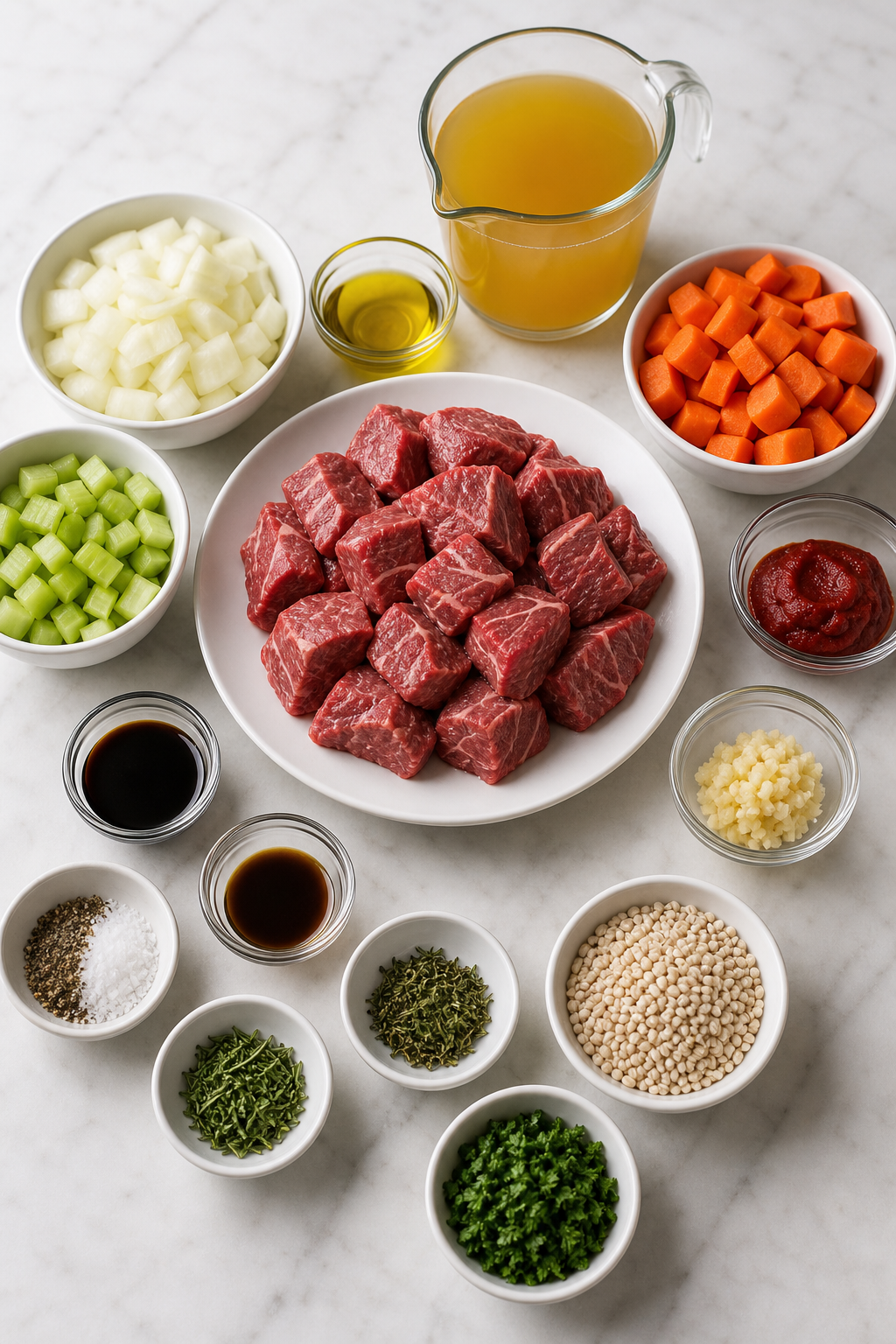
Here’s everything you need, pulled directly from the recipe. No guesswork on quantities.
- 2 lbs chuck roast, trimmed of excess fat, cut into 3/4-inch cubes
- 3 Tbsp olive oil, divided
- 1 1/2 cups chopped carrots (about 3 medium)
- 1 cup chopped celery (about 2 ribs)
- 2 cups chopped yellow onion (1 large)
- 3 Tbsp tomato paste
- 1 1/2 Tbsp minced garlic (4 cloves)
- 2 (32 oz) cartons low-sodium chicken broth or beef broth
- 1 Tbsp low-sodium soy sauce
- 2 tsp Worcestershire sauce
- 2 tsp minced fresh rosemary (or 1/2 tsp dried)
- 2 tsp minced fresh thyme (or 1/2 tsp dried)
- Salt and freshly ground black pepper
- 1 cup pearl barley
- 3 Tbsp minced fresh parsley
On the broth: Chicken broth works surprisingly well here. It’s lighter in color but the soy sauce and Worcestershire bring enough depth that the final soup tastes unmistakably beefy. Use beef broth if you prefer a darker, richer base.
On the herbs: Fresh rosemary and thyme smell almost piney and bright when you first add them to the pot. If substituting dried, use exactly 1/2 tsp of each since dried herbs are more concentrated. The flavor difference is noticeable but both versions work.
Pearl barley tip: It’s not always shelved where you’d expect. Check near the rice and grains, the baking aisle, and sometimes near canned soups. It’s worth tracking down rather than substituting.
How to Make Beef Barley Soup: Step-by-Step
Step 1: Sear the Beef to Build Deep Flavor
Heat 1 Tbsp olive oil in a large pot over medium-high heat. Pat the beef cubes dry with paper towels, then add half or one-third of the beef to the pot, leaving space between pieces. Season with salt and pepper. Let the beef sear undisturbed until the bottom is golden brown, about 3 minutes, then flip and cook 1 minute longer.
You will know the sear is working when you hear a steady, confident sizzle rather than a wet, steaming sound. If the beef is releasing a lot of liquid and steaming instead of browning, the pan isn’t hot enough or the pieces are too crowded. Transfer the seared beef to a plate with its juices and repeat with the remaining beef, adding another 1 Tbsp oil to the pot.
One thing to watch: skipping the drying step is the most common reason beef steams instead of sears. Moisture on the surface kills the browning reaction instantly. Pat each piece thoroughly before it hits the pan. If you enjoy working with chuck roast, the same searing principle is central to the Easy Beef Stroganoff Recipe, which explores how browning beef in batches builds the foundation of a rich sauce.
Step 2: Coax the Aromatics into a Fragrant Base
Add the remaining 1 Tbsp oil to the now-empty pot. Add the carrots, celery, and onion and sauté for 3 minutes, stirring occasionally. The onion should soften and turn slightly translucent at the edges, and the whole pot will smell sweet and savory at the same time.
Cut the vegetables on the thicker side. They’ll simmer for well over an hour and thin pieces will turn mushy long before the beef is done.
Step 3: Activate the Tomato Paste for Maximum Depth
Add the tomato paste and garlic to the vegetables and sauté for 1 minute longer. The paste should darken slightly and smell caramelized rather than raw and acidic. This step matters more than it looks. Cooking the tomato paste directly in the oil concentrates its flavor and removes the sharp, tinny edge that uncooked paste can leave behind.
Step 4: Bring the Broth Together and Return the Beef
Pour in the broth, soy sauce, Worcestershire sauce, rosemary, and thyme. Season with salt and pepper to taste. Return all the seared beef and its accumulated juices to the pot. The broth will look thin at this stage. That changes.
Step 5: Simmer Low and Slow Until the Beef Softens
Bring the mixture to a simmer, then reduce the heat to low. Cover and simmer until the beef is fairly tender, about 45 to 60 minutes. Resist the urge to rush this stage with higher heat. A hard boil makes beef tough and stringy. Low, gentle heat is what coaxes the connective tissue into silky, yielding texture.
If the beef still feels firm and resistant when you press a piece with a spoon at the 45-minute mark, give it the full 60 minutes before moving on.
Step 6: Add the Barley and Finish the Simmer
Add the pearl barley to the pot, cover, and continue simmering until the barley is cooked through and the beef is fully tender, about 45 to 60 minutes longer. The barley is ready when it’s plump and slightly chewy with no hard center, and the broth will have thickened noticeably from the starch the barley releases.
If the soup thickens more than you’d like, stir in a splash of water or additional broth at the end to loosen it to your preferred consistency.
Step 7: Finish with Fresh Parsley and Serve
Stir in the 3 Tbsp minced fresh parsley and serve warm. The parsley brightens the color and adds a clean, slightly grassy note that cuts through the richness of the broth. Don’t skip it.
Cooking Method Variations
Slow Cooker Beef Barley Soup
Sear the beef in a pot with olive oil as described above. Transfer the beef to a crockpot along with all remaining ingredients except the parsley. Cook on low for 7 to 8 hours, then stir in the parsley before serving. The long, unattended cook time makes this ideal for busy days.
Instant Pot Beef Barley Soup
Select the “sauté” setting on the pressure cooker and add oil. Brown the beef in 2 to 3 batches, then turn to the “off” setting. Return all beef to the Instant Pot. Add all remaining ingredients except parsley, and reduce the broth to 7 cups since liquid doesn’t evaporate under pressure. Cover, set the valve to “sealing,” select “manual mode,” and set the time to 20 minutes. Once cooking is complete, allow the pressure to release naturally for at least 10 minutes, then carefully quick-release any remaining pressure. Stir in parsley and serve.
What Separates a Good Beef Barley Soup from a Great One
- Brown the beef in batches, never all at once. Crowding the pan drops the temperature and causes steaming. Each batch should sizzle immediately when it hits the oil.
- Don’t skip sautéing the tomato paste. That extra minute in the oil caramelizes the sugars and removes the raw, acidic edge. The difference in the final broth is real.
- Add barley halfway through, not at the start. Barley added too early turns gluey and breaks down. Added at the right moment, it stays pleasantly chewy.
- Cut the carrots thicker than you think you need to. They’ll simmer for a long time and thin coins turn to mush. Aim for substantial pieces that hold their shape.
- Simmer covered on low heat throughout. High heat toughens beef and evaporates the broth too quickly. Low and slow is non-negotiable here.
I’ll be honest: the first time I made a beef soup like this, I added the barley at the very beginning thinking it would save time. The result was a thick, starchy paste rather than a soup. Adding it halfway through the simmer is the step that changes everything.
Serving Suggestions
A bowl of this soup is substantial on its own, but a thick slice of crusty bread or a warm dinner roll alongside it makes the meal feel complete. The bread is good for soaking up the broth at the bottom of the bowl.
A simple side salad with a sharp vinaigrette provides a bright, acidic contrast to the richness of the soup. Roasted seasonal vegetables like butternut squash also work well, adding a slightly sweet note that plays nicely against the savory broth.
For those who rotate through comforting soups during colder months, this beef barley version is heartier and more filling than Perfect Comforting Chicken and Rice Soup, which relies on a lighter broth and a shorter cook time for a gentler, quicker result.
Make It Once, Use It All Week
This soup stores exceptionally well. Refrigerate leftovers in an airtight container for up to 4 to 5 days. The barley will continue to absorb broth as it sits, so the soup will thicken considerably overnight. Add a splash of water or broth when reheating to bring it back to the right consistency.
To freeze, transfer cooled soup to airtight containers, leaving space at the top for expansion. It keeps well in the freezer for up to 3 months. Thaw overnight in the refrigerator before reheating.
Reheat on the stovetop over medium-low heat, stirring occasionally, until the soup is steaming and the beef is heated through. You will know it’s ready when the broth is bubbling gently around the edges and the aroma fills the kitchen again.
A Soup Worth Making Again
On a cold evening when you want something that genuinely satisfies, this beef barley soup delivers. The beef is tender, the broth is rich and layered, and the barley gives it a substance that makes one bowl feel like a complete meal.
Give this one a try on a weekend when you have a couple of hours to let it do its thing on the stove. The smell alone, once that broth gets going, makes the wait completely worth it.
FAQs
Can I use a different cut of beef instead of chuck roast?
Chuck roast is strongly recommended because its fat content breaks down during the long simmer, producing tender, flavorful meat. Leaner cuts like rump roast tend to turn chewy and dry over the same cook time. Stick with a fattier cut for the best result.
Can I use quick-cooking barley in this beef barley soup recipe?
Quick-cooking barley can work on the stovetop. Let the soup simmer for the full time until the beef is tender, then add the quick-cooking barley for only about 10 to 12 minutes at the end. Avoid quick-cooking barley in the slow cooker or Instant Pot methods, as the extended cook times will overcook it.
Why does my soup taste flat even after seasoning?
The most likely culprit is under-searing the beef or skipping the tomato paste sauté step. Both steps build layers of flavor that the broth alone cannot replicate. Also check that you’ve added both the soy sauce and Worcestershire sauce. They’re added in small amounts but they significantly deepen the savory quality of the broth.
Can I add other vegetables to this homemade beef barley soup?
Mushrooms, potatoes, canned tomatoes, green beans, and peas all work well as additions. Add heartier vegetables like mushrooms and potatoes early in the simmer. Add green beans and peas in the last 15 to 20 minutes so they don’t overcook. If adding a significant amount of extra vegetables, increase the broth accordingly to maintain the right soup-to-solid ratio.
How do I know when the beef is actually done?
Press a piece of beef against the side of the pot with a spoon. When it’s done, it should yield easily and begin to break apart with gentle pressure. If it resists or feels springy, it needs more time. The full simmer of 45 to 60 minutes before adding barley, followed by another 45 to 60 minutes after, is what gets it to that tender, falling-apart texture.
Can I replace the barley with another grain?
Brown rice or farro are both reasonable substitutes. Keep in mind that cook times will vary. Brown rice typically takes 40 to 50 minutes to fully cook, while farro takes about 30 to 40 minutes. Add whichever grain you choose at the same point in the recipe and adjust the final simmer time accordingly.
Essential Kitchen Tools
Making Beef Barley Soup? Most failed attempts come from using the wrong pan or heat setup — not the recipe itself.

Want to save this recipe?
Want to save this recipe? Enter your email below, and we'll send it straight to your inbox. Plus, receive new recipes every week!

Comforting Beef Barley Soup Recipe
- Total Time: 2 hours 30 minutes
- Yield: 7 1x
Description
Ingredients
- 2 lbs chuck roast, cut into 3/4-inch cubes and trimmed of excess chunks of fat
- 3 Tbsp olive oil
- 1 1/2 cups chopped carrots (about 3)
- 1 cup chopped celery (about 2 ribs)
- 2 cups chopped yellow onion (1 large)
- 3 Tbsp tomato paste
- 1 1/2 Tbsp minced garlic (4 cloves)
- 2 (32 oz) cartons low-sodium chicken broth (or beef broth)
- 1 Tbsp low-sodium soy sauce
- 2 tsp Worcestershire sauce
- 2 tsp minced fresh rosemary (or 1/2 tsp dried)
- 2 tsp minced fresh thyme (or 1/2 tsp dried)
- Salt and freshly ground black pepper
- 1 cup pearl barley
- 3 Tbsp minced fresh parsley
Instructions
- In a large pot, heat 1 Tbsp of olive oil over medium-high heat. Pat the beef dry and add a portion of it, ensuring not to overcrowd the pot. Season with salt and pepper, allowing it to sear until the bottom is golden brown, approximately 3 minutes, then flip and cook for an additional minute.
- Remove the beef from the pot along with its juices and place it on a plate. Repeat the searing process with the remaining beef, adding another 1 Tbsp of oil to the pot.
- Add 1 Tbsp of oil to the now-empty pot. Incorporate the carrots, celery, and onion, sautéing for 3 minutes.
- Stir in the tomato paste and garlic, continuing to sauté for another minute.
- Pour in the broth, soy sauce, Worcestershire sauce, rosemary, and thyme, then season with salt and pepper to taste. Return the beef to the pot.
- Bring the mixture to a simmer, then reduce the heat to low. Cover and let it simmer until the beef is fairly tender, about 45 to 60 minutes.
- Add the barley, cover, and continue to simmer until the barley is cooked through and the beef is tender, approximately another 45 to 60 minutes.
- Mix in the parsley and serve warm.
Notes
TECHNIQUE TIP: Sear the chuck roast in olive oil before slow cooking to enhance flavor.
STORAGE: Keep leftovers in an airtight container in the refrigerator for up to 3 days.
SUBSTITUTION: For a richer taste, use beef broth instead of chicken broth.
- Prep Time: 30 minutes
- Cook Time: 2 hours
- Category: Soup
- Cuisine: American
Nutrition
- Calories: 455 kcal
- Sugar: 7 g
- Sodium: 366 mg
- Fat: 21 g
- Saturated Fat: 7 g
- Carbohydrates: 40 g
- Fiber: 8 g
- Protein: 31 g
- Cholesterol: 74 mg


