



Store-bought English muffins have a reputation for being convenient, but they also have a reputation for tasting like cardboard unless you toast them into submission. Homemade English muffins solve that problem entirely. These come out of the skillet with a crisp, semolina-dusted crust, a genuinely soft and airy center, and those signature nooks and crannies that actually hold butter instead of just looking like they might. Each muffin clocks in at 147 calories, and the ingredient list is shorter and cleaner than most commercial versions. No toasting required when they’re fresh.
Why Most Homemade English Muffins Fail (and How to Fix It Before You Start)
The number one reason homemade English muffins disappoint is the dough. Most beginner bakers see a wet, sticky mass after mixing and assume something went wrong. Nothing went wrong. That high-hydration dough is exactly what creates the open, airy crumb structure inside. Resist every urge to add more flour.
The second common failure is overproofing. If the dough rises past double its size in the first proof, the yeast exhausts itself and the muffins won’t puff properly in the second rest. Keep an eye on it, especially in a warm kitchen.
A third issue worth flagging early: cutting the dough too thin. Spreading it to anything less than half an inch will give you flat, dense muffins. Use your fingers, not a rolling pin, and be gentle.
Ingredients for This English Muffins Recipe
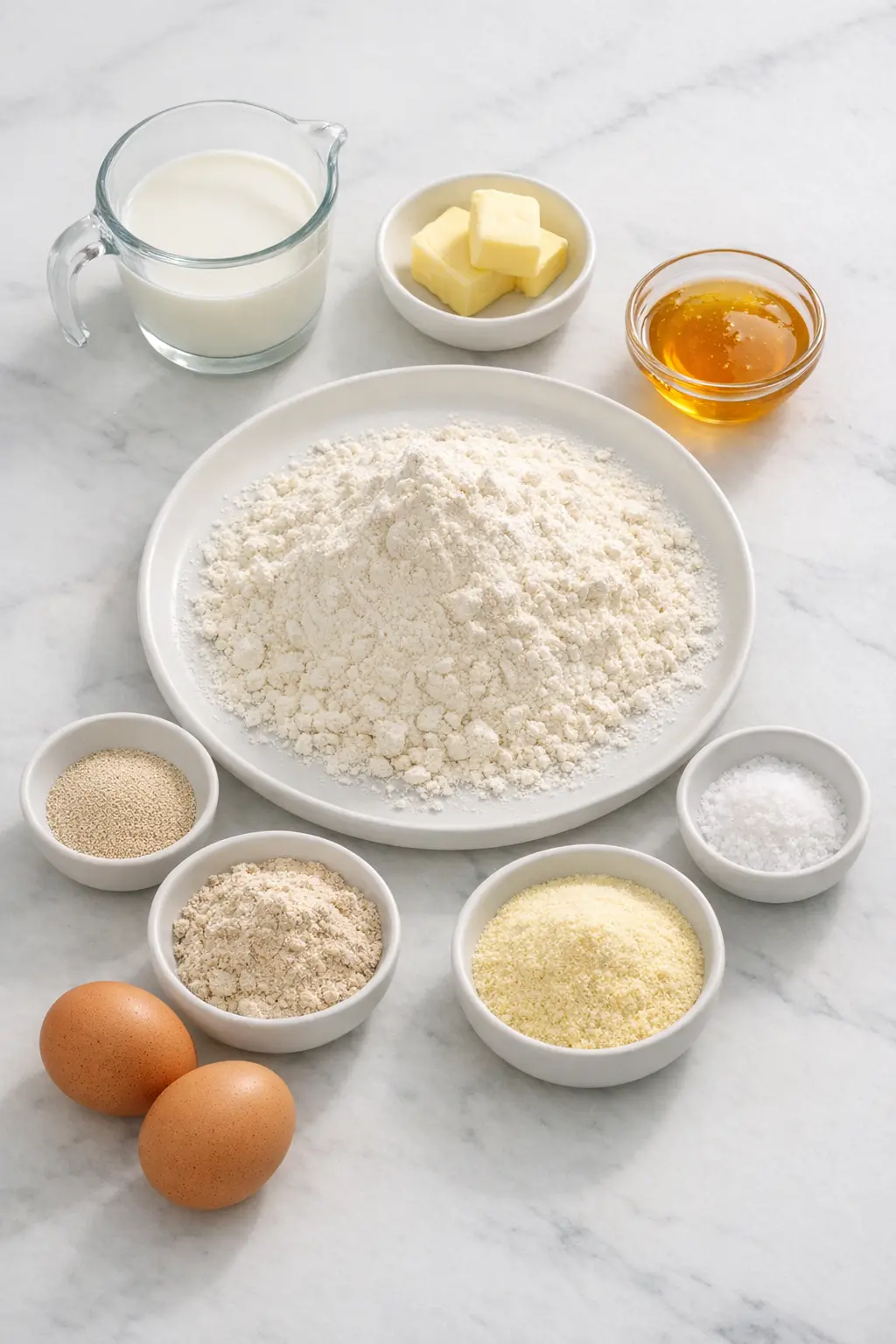
This recipe makes 14 muffins. Every ingredient below has a job to do, and skipping or swapping carelessly will affect the final texture.
- 1 1/2 cups whole milk minus 1 Tbsp — the fat content creates a softer crumb; 2% will work in a pinch but the texture will be slightly less tender
- 2 Tbsp unsalted butter — unsalted so you control the salt level precisely
- 2 Tbsp honey — feeds the yeast and adds a subtle sweetness and golden color to the crust
- 1 tsp active dry yeast, at room temperature — room temperature yeast activates more reliably; cold yeast straight from the fridge can stall
- 2 3/4 cups bread flour — the higher protein content develops more gluten, giving the muffins their characteristic chew. If you want to explore other flour-based breads, a Foolproof Pita Bread Recipe uses a similar high-protein approach for a completely different flatbread result.
- 1/4 cup whole wheat flour (optional, or substitute more bread flour) — adds a subtle nuttiness and that classic English muffin flavor
- 1 1/2 tsp fine sea salt — don’t skip this; salt balances the honey’s sweetness and helps regulate yeast fermentation
- 1/4 cup semolina flour or finely ground cornmeal — for dusting; this is what creates the slightly crunchy, toasty exterior crust
A note on flour: all-purpose flour can substitute for bread flour, but the muffins will be slightly less chewy. Avoid using too much whole wheat flour or the muffins will turn dense and firm.
How to Make English Muffins: Step-by-Step
Step 1: Activate the Yeast Without Killing It
Warm the milk in the microwave or a saucepan to 120°F. Stir in the butter and honey until both are melted, then let the mixture cool to 110°F before adding the yeast. This temperature window matters more than most people realize.
Stir the active dry yeast into the warm milk mixture until dissolved, then set it aside for 7 to 10 minutes. You will know the yeast is active when a foamy, bubbly layer forms across the surface. If the mixture stays flat and clear after 10 minutes, the yeast is dead and the batch needs to start over.
One thing to watch: if your milk is still above 115°F when the yeast goes in, you risk killing it entirely. Always check with a kitchen thermometer rather than guessing by touch.
Step 2: Build the Dough in a Stand Mixer
Add the bread flour, whole wheat flour, and fine sea salt to the bowl of a stand mixer and stir to combine. Pour in the yeast and milk mixture. Beat on speed 2 with the paddle attachment for 8 to 10 minutes, scraping down the sides of the bowl a few times to catch any stray flour.
After 8 minutes, the dough will still look very wet and sticky. That is correct. The hydration level is intentional, and this is the step where developing your bread-making instincts pays off. If you want to build confidence with wet, sticky doughs, the techniques behind Homemade Bagels That Actually Taste Like a Bakery follow the same principles of working with high-hydration bread dough.
Transfer the dough to a generously oiled large mixing bowl. Roll it around to coat it in oil so it moves freely without sticking to the sides.
Step 3: First Rise Until Doubled
Cover the bowl with a dry kitchen towel and place it in a warm spot, ideally around 100°F, until the dough doubles in size. This takes approximately 2 hours depending on how warm your kitchen is.
If your house runs cool, place the covered bowl in the oven with just the oven light on. The light generates enough gentle heat to help the dough along without overheating it. Keep it under 100°F.
The dough is ready when it has visibly doubled and feels pillowy and light when you gently press the surface. If it’s still dense and hasn’t moved much, give it another 20 to 30 minutes before proceeding.
Step 4: Shape the Muffins Without Deflating the Dough
Line a baking sheet with parchment paper, brush it with oil, and dust generously with semolina flour. Dust a clean work surface generously with flour, then invert the risen dough onto it. Use your fingers to gently spread the dough to a 1/2-inch thickness. Do not use a rolling pin and do not press it thinner than half an inch or the muffins will come out flat.
Dip a 3-inch round cutter in flour between each cut. Press straight down, then twist slightly at the base to release. Transfer each round to the prepared baking sheet as you go, keeping cuts close together to minimize scraps. Collect the scraps, press them together, and cut one or two more rounds from them.
Dust the tops of the cut muffins with more semolina, cover with a clean kitchen towel, and rest at room temperature for 20 minutes until they lightly puff.
Make-ahead option: Instead of the 20-minute rest, cover the rounds with an oiled sheet of plastic wrap and refrigerate overnight. Cook them fresh in the morning directly from the fridge.
Step 5: Cook Low and Slow on a Cast Iron Skillet
Set the muffins onto a dry cast iron skillet or griddle over low heat. Cover with a lid and cook until the bottom is golden brown, about 6 minutes. Rotate the muffins halfway through for even browning, and reduce the heat if they’re coloring too fast.
Flip when the surface looks matte and the muffins have visibly puffed. Cook uncovered for another 4 to 5 minutes on the second side. The muffins are done when both sides are golden brown and the internal temperature reads 200°F on an instant-read thermometer.
Transfer to a wire rack and cool until just barely warm before opening. Cutting into hot bread makes the center gummy, and that ruins the texture you worked to build.
Step 6: Open with a Fork, Not a Knife
Pierce all the way around the edge of the muffin with the tines of a fork, working toward the center. Then use your fingers to pull the two halves apart. This technique tears along the natural air pockets inside the dough rather than slicing through them, which is what exposes those deep nooks and crannies. A knife will give you a clean cut but a flat, compressed surface. The fork method is worth the extra 10 seconds.
What Separates a Good English Muffin from a Great One
- Temperature discipline on the yeast: The milk must be between 110°F and 115°F when the yeast goes in. A thermometer is not optional here; it’s the difference between active dough and a flat batch.
- Don’t rush the first rise: Two hours in a warm spot is not excessive. The slow fermentation is what builds flavor and the open crumb structure.
- Low heat is non-negotiable: Cooking over medium or high heat will brown the outside before the inside cooks through. Low and slow with a lid on is the method that works.
- Semolina on both sides: Dusting the baking sheet and the tops of the muffins before the second rest creates that slightly crunchy, toasty exterior that makes these taste distinctly like English muffins and not just small bread rounds.
- Cool before opening: I’ve skipped this step more than once when impatient, and the center turns gummy every time. Even 10 minutes of cooling makes a real difference.
Serving Suggestions
Fresh English muffins don’t need much. A thin spread of good salted butter while they’re still slightly warm is genuinely hard to beat. The butter melts into the nooks and pools in the crannies in a way that store-bought muffins, with their compressed texture, simply can’t replicate.
For a heartier breakfast, stack them with scrambled eggs and bacon for a breakfast sandwich that holds together better than most because the open crumb grips the fillings. They also work well as the base for Eggs Benedict, where the hollandaise soaks into the surface instead of sliding off.
Spread with jam, peanut butter, or marmalade for a simpler option. English muffin pizzas are a genuinely good weeknight move: a spoonful of pizza sauce, a handful of cheese, and whatever toppings you have on hand, then broiled for 3 to 4 minutes until bubbling.
For a completely different breakfast bread experience, Fluffy Low-Carb Keto French Crepes take a lighter, thinner approach compared to the thick, chewy crumb you get here.
Make It Once, Use It All Week
These muffins stay soft at room temperature for 2 to 3 days when stored in an airtight container or a zip-close bag with the air pressed out. No toasting needed during that window.
For longer storage, refrigerate in an airtight container for up to a week. Cold muffins do benefit from toasting to restore their texture.
To freeze, cool completely, wrap individual muffins in foil, and place them in a freezer-safe bag. They freeze well and thaw on the counter. For the best texture after freezing, split and toast directly from thawed. Slicing them almost all the way through before freezing makes it easier to separate them straight from frozen.
The dough itself can be made the night before. After cutting the rounds, cover with oiled plastic wrap and refrigerate overnight. Cook them fresh in the morning without any additional proofing time needed.
Worth Every Minute of the Rise Time
The total time here is about 3 hours, and most of that is hands-off waiting. The active work is maybe 30 minutes. What you get at the end is a batch of 14 muffins that are genuinely softer, more flavorful, and more satisfying than anything from a grocery store shelf.
Give this one a try on a weekend morning when you have time to let the dough do its thing. The moment you pull apart that first muffin with a fork and see the nooks and crannies open up, you’ll understand why people make these again and again.
FAQs
Can I make this English muffins recipe without a stand mixer?
Yes, it works by hand, but a stand mixer is strongly recommended. The dough is very wet and sticky, and 8 to 10 minutes of hand mixing is tiring. If mixing by hand, use a sturdy wooden spoon and be patient with the sticky texture.
How do I know when the homemade English muffins are fully cooked?
Both sides should be golden brown and the internal temperature should read 200°F on an instant-read thermometer. The surface will look matte rather than shiny, and the muffins will have visibly puffed during cooking.
Can I use instant yeast instead of active dry yeast?
Instant yeast works, but active dry yeast produces slightly better flavor. If using instant yeast, skip the activation step and add it directly to the dry ingredients along with the warm milk and butter mixture.
Why is my dough so thick and stiff instead of wet and sticky?
Too much flour is almost always the cause. If flour is scooped directly from the bag with a measuring cup rather than spooned in and leveled, it compacts and you can end up with significantly more than the recipe calls for. Weigh your flour if possible, or spoon it lightly into the measuring cup and level off the top.
Can I make English muffins without toasting them?
When fresh, absolutely. These stay soft enough to eat straight from the rack for 2 to 3 days at room temperature. After refrigerating, toasting restores the texture and brings back the crisp exterior.
Can I freeze the dough before cooking?
Freezing the raw cut rounds has not been tested with reliable results. The recommended approach is to cook the muffins first, cool completely, then freeze wrapped in foil inside a freezer bag. They reheat well and the texture holds up.
Essential Kitchen Tools
Making English Muffins ? Most failed attempts come from using the wrong pan or heat setup — not the recipe itself.

Want to save this recipe?
Want to save this recipe? Enter your email below, and we'll send it straight to your inbox. Plus, receive new recipes every week!

Beginner-Friendly English Muffins Recipe
- Total Time: 3 hours
- Yield: 14 muffins 1x
Ingredients
- 1 1/2 cups whole milk minus 1 Tbsp
- 2 Tbsp unsalted butter
- 2 Tbsp honey
- 1 tsp active dry yeast (at room temperature)
- 2 3/4 cups bread flour ((*see note 1))
- 1/4 cup whole wheat flour (optional, or use more Bread Flour)
- 1 1/2 tsp fine sea salt
- 1/4 cup semolina flour or finely ground cornmeal (for dusting)
Instructions
- Heat the milk in a microwave or saucepan until it reaches 120 ̊F. Mix in the butter and honey until fully melted, then allow it to cool to 110 ̊F. Incorporate the yeast into the warm milk mixture, stirring until dissolved, and let it sit for 7-10 minutes until bubbles form, indicating the yeast is active.
- Combine the dry ingredients in the bowl of a stand mixer. Pour in the warm yeast and milk mixture. Mix on speed 2 with a paddle attachment for 8-10 minutes, scraping down the sides of the bowl occasionally. The resulting dough will be very wet and sticky.
- Coat a large mixing bowl with oil. Place the dough in the bowl, ensuring it does not stick. Cover it with a kitchen towel and let it rise in a warm location (100 ̊F) until it has doubled in size, approximately 2 hours.
- Prepare a baking sheet by lining it with parchment paper, brushing it with oil, and dusting it generously with semolina. Flour a clean work surface and turn the risen dough onto it, using your fingers to spread it to a thickness of 1/2 inch.
- Using a floured 3-inch round cutter, cut out the muffins by pushing straight down and twisting at the base. Carefully remove the cut muffins and transfer them to the prepared baking sheet. Dust the muffins with semolina, cover with a towel, and let them rest for 20 minutes to puff slightly. If making in advance, instead of allowing for a second rise, cover with an oiled plastic wrap and refrigerate overnight.
- Place the English muffins on a dry cast iron pan or griddle over low heat, cover with a lid, and cook slowly until the bottoms are golden brown, about 6 minutes (rotate halfway for even cooking and reduce heat if browning too quickly). Flip the muffins when the tops appear matte and have puffed. Cook uncovered for an additional 4-5 minutes on the other side. The internal temperature should reach 200 ̊F.
- Transfer the muffins to a cooling rack to cool. Enjoy immediately or store for later use. To open, poke around the edges with a fork and gently pull the sides apart.
Notes
TECHNIQUE TIP: Dust the bottom of the dough with semolina flour or finely ground cornmeal to prevent sticking and add a crunchy crust.
STORAGE: Store baked English muffins in an airtight container at room temperature for up to 3 days or freeze for longer storage.
SUBSTITUTION: If you don’t have whole wheat flour, you can use additional bread flour for a similar texture.
- Prep Time: 30 minutes
- resting: 2 hours
- Cook Time: 10 minutes
- Category: Breakfast
- Cuisine: American
Nutrition
- Calories: 147 kcal
- Sugar: 4 g
- Sodium: 260 mg
- Fat: 3 g
- Saturated Fat: 2 g
- Unsaturated Fat: 1.3 g
- Trans Fat: 0.1 g
- Carbohydrates: 25 g
- Fiber: 1 g
- Protein: 5 g
- Cholesterol: 7 mg


