



Getting a Philly Cheesesteak right at home is one of those things that sounds straightforward but trips up a lot of cooks. The beef ends up chewy, the cheese doesn’t melt properly, or the bread turns into a soggy mess before it even reaches the table. This classic Philly Cheesesteak recipe fixes all of that: tender ribeye, gooey provolone, sweet caramelized onions, and a garlic butter hoagie roll that tastes like garlic bread. Ready in 28 minutes, it feeds four people and genuinely rivals what you’d get at a restaurant.
Why This Works Before You Touch a Pan
The secret to a great Philly Cheesesteak isn’t a special sauce or a fancy technique. It’s two things: paper-thin beef and a properly toasted roll. Thin beef cooks fast at high heat, staying tender instead of turning rubbery. The toasted roll creates a barrier that keeps the bread from absorbing moisture and collapsing under the filling.
The garlic butter step is one I’d never skip. Spreading softened butter mixed with a pressed garlic clove onto the cut sides of the hoagie rolls before toasting transforms them into something closer to garlic bread. That crunch and flavor in every bite is what makes this version stand out.
What You Need: Philly Cheesesteak Ingredients
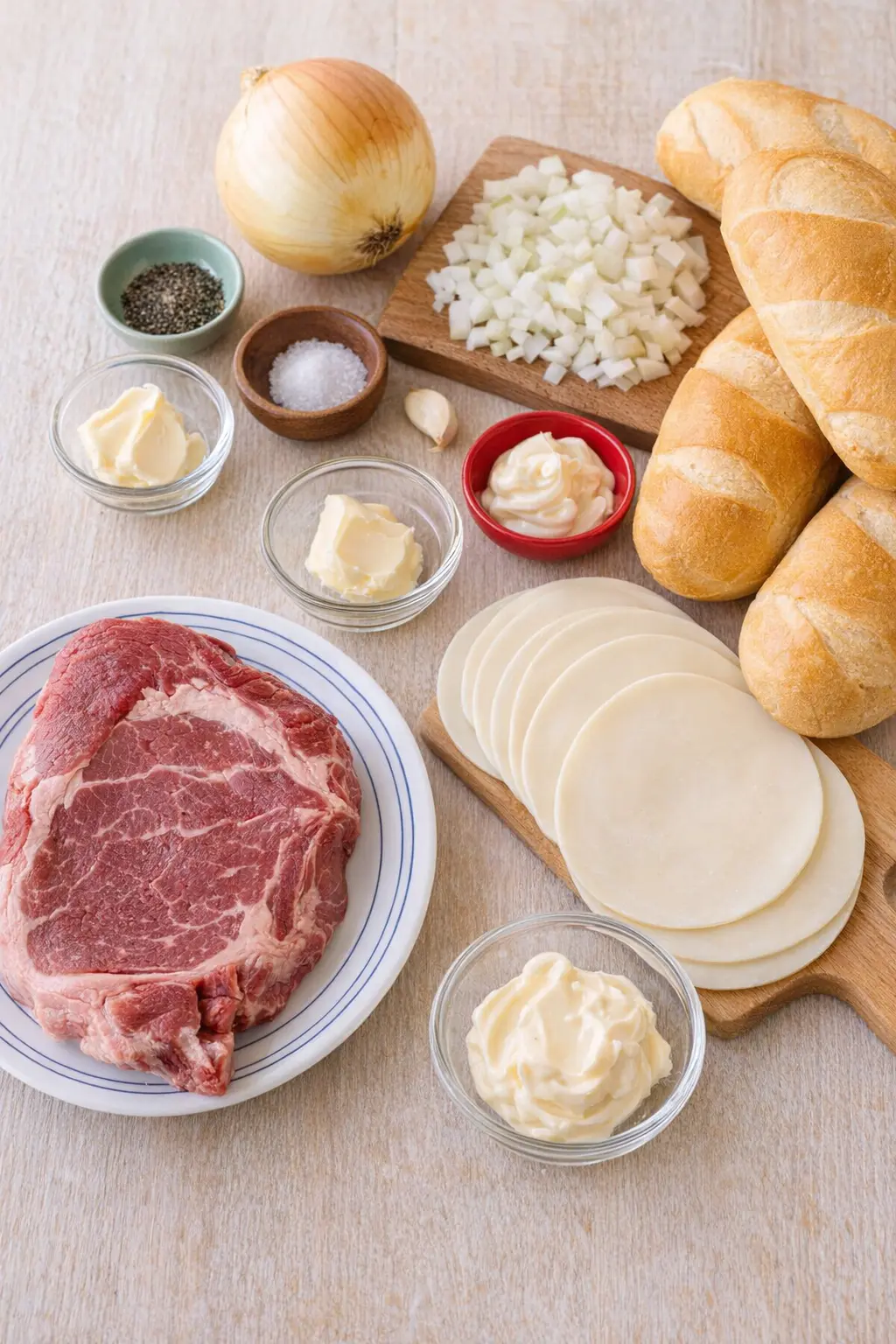
- 1 lb ribeye steak, trimmed and thinly sliced
- 1/2 tsp sea salt, or to taste
- 1/2 tsp black pepper, or to taste
- 1 large sweet onion, diced
- 8 slices mild provolone cheese (not aged provolone)
- 4 hoagie rolls, sliced 3/4 through
- 2 Tbsp unsalted butter, softened
- 1 garlic clove, pressed
- 2-4 Tbsp mayonnaise, or to taste
A Few Ingredient Notes Worth Reading
Ribeye is the right cut here because it’s well-marbled, which means it stays juicy and tender even at high heat. Flank steak works as a leaner substitute, but you’ll need a little extra oil on the pan. I personally prefer ribeye every time.
For the cheese, use mild provolone. Aged provolone has an overpowering sharpness that fights the beef rather than complementing it. White American cheese is a popular alternative and melts beautifully. Some Philadelphia spots use Cheez Whiz, which is a legitimate classic choice if you want that ultra-creamy texture.
Want to skip the roll entirely? The filling works well stuffed into bell peppers or portobello mushrooms for a lower-carb version. For a fully dedicated low-carb approach, the Keto-Friendly Philly Cheesesteak Casserole uses the same flavors without any bread at all, which is a genuinely different experience in texture and richness.
Why Most Homemade Philly Cheesesteak Fails (and How to Fix It)
Before the steps, here are the four places where this recipe most commonly goes wrong:
- Beef sliced too thick: Thick slices take longer to cook, which means they toughen up before they brown. Freeze the steak for 20-30 minutes first and use a sharp knife to get those paper-thin cuts. Or ask your butcher to do it.
- Skipping the onion caramelization: Rushing the onions means they stay sharp and pungent instead of sweet and silky. Low and slow is the move here, even if it feels like it’s taking too long.
- Cooking the beef on medium heat: Medium heat steams the beef instead of browning it. You need high heat so the steak gets color fast without overcooking.
- Melting cheese with the heat still on: Leaving the burner on while the cheese melts overcooks the meat underneath. Turn off the heat, lay the cheese on top, and let residual warmth do the work.
- Skipping the mayo: It sounds minor, but a thin layer of mayo on the toasted side of the roll adds a creamy richness that ties the whole sandwich together.
How to Make a Classic Philly Cheesesteak: Step-by-Step
Step 1: Freeze and Slice the Beef for Maximum Tenderness
Cover your ribeye and freeze it for 20-30 minutes before slicing. A thicker steak needs the full 30 minutes; a thinner cut needs about 20. Once firm, trim off excess fat and slice against the grain as thinly as possible using a sharp Chef Knife. The slices should be nearly translucent. If they look thick, they’ll chew tough. Dice the large sweet onion at the same time so everything is ready before the heat goes on.
Step 2: Build the Garlic Butter Rolls
In a small bowl, combine 2 Tbsp softened butter with 1 pressed garlic clove and stir until evenly mixed. Spread this onto the cut sides of all 4 hoagie rolls. Toast them on a large Skillet/Pan, flat cooktop, or griddle over medium heat until the cut sides are golden brown and fragrant. You will know they are ready when the edges look deep gold and the kitchen smells like garlic bread. Set them aside. If they brown too fast, your heat is too high and the centers won’t toast through.
Step 3: Caramelize the Onions Until Silky and Sweet
Add 1 Tbsp oil to the same pan and add the diced onions. Sprinkle lightly with salt and cook over medium heat, stirring occasionally, until the onions are soft, golden, and deeply sweet-smelling. This takes patience. One thing to watch: if the onions start to brown unevenly or stick, add a splash of water and scrape the pan. Once caramelized, transfer them to a bowl and set aside.
Step 4: Sear the Steak at High Heat for a Proper Crust
Increase the heat to high and add another 1 Tbsp oil. Spread the thinly sliced steak across the pan in an even layer using a Cutting Board-prepped arrangement. Let it brown undisturbed for a couple of minutes. You should hear a confident sizzle when the beef hits the pan. Flip the steak, then season with 1/2 tsp salt and 1/2 tsp black pepper. Sauté, stirring occasionally, until fully cooked through. Stir in the caramelized onions and give the mixture a rough chop with your spatula to break up any large pieces.
Step 5: Melt the Cheese Without Overcooking the Meat
Divide the steak and onion mixture into 4 even portions directly in the pan. Top each portion with 2 slices of mild provolone, then turn off the heat completely. The residual warmth will melt the cheese gently without drying out the beef underneath. You will know the cheese is ready when it sags and loses its shape, turning glossy and smooth across the top of each portion.
Step 6: Load the Rolls and Serve Immediately
Spread a thin layer of mayo onto the toasted side of each hoagie roll. Working one portion at a time, place a toasted roll over a cheesy beef portion and use a spatula to scrape the filling up into the bun as you flip it over. Serve warm right away. The flip technique keeps the filling intact and the cheese pressed against the bread where it belongs.
What Separates a Good Philly Cheesesteak from a Great One
- Freeze the steak before slicing. Even 20 minutes in the freezer makes a dramatic difference in how thin you can cut it. Paper-thin slices are non-negotiable for the right texture.
- Don’t crowd the pan during the sear. If the steak is piled up, it steams instead of browning. Spread it in a single layer and resist the urge to stir immediately.
- Ask your butcher. If you pre-plan this, ask the butcher to slice the ribeye paper-thin. Many will even put it in the freezer while you finish shopping.
- Use mild provolone, not aged. The flavor difference is significant. Aged provolone overwhelms the beef; mild provolone melts into it.
- Serve with crunchy dill pickles on the side. The acidity cuts through the richness of the beef and cheese in a way that makes each bite feel fresh again.
Serving Suggestions
A Philly Cheesesteak is a complete meal on its own, but pairing it with something crunchy on the side makes the whole plate more satisfying. Air fryer french fries, baked potato wedges, or onion rings all work well. The contrast of crispy and cheesy is hard to beat.
For a different kind of comfort food night, the Easy Beef Stroganoff Recipe gives you a similarly rich, beefy result in a completely different format, which makes it a strong option when you want something hearty but want to change up the presentation.
If you want to stretch the filling further, the steak and onion mixture works beautifully as a topping for pasta, stuffed into quesadillas, or layered into slider rolls for a crowd.
Storage and Reheating
Store the steak and onion filling separately from the rolls. The filling keeps well in an airtight container in the refrigerator for up to 3 days. The rolls are best toasted fresh each time.
To reheat the filling, warm it in a skillet over medium heat with a splash of water or beef broth to loosen it up. You will know it is ready when it starts to steam gently and the edges begin to sizzle. Avoid the microwave if you can: it tends to make the beef rubbery and the cheese greasy rather than melty.
This filling also makes excellent meal prep. Cook a full batch on Sunday and use it across different formats during the week, from sandwiches to stuffed peppers to quesadillas.
A Sandwich Worth Making Tonight
The gap between a disappointing homemade cheesesteak and a genuinely great one comes down to a few small decisions: thin beef, high heat, caramelized onions, and that garlic butter roll. None of it is complicated. All of it matters.
Give this one a try on a weeknight when you want something hearty and satisfying without a long cleanup. The first time I made this, I skipped the garlic butter step thinking it was unnecessary. That was a mistake I only made once. The rolls alone are worth the extra two minutes.
FAQs
What is the best cheese for Philly Cheesesteak?
Mild provolone is the top choice for its balanced flavor and excellent melt. White American cheese is a close second and produces a creamier result. Avoid aged provolone, as the sharpness overpowers the beef. Some classic Philadelphia shops use Cheez Whiz for an ultra-smooth, saucy texture.
Can I use a different cut of beef instead of ribeye?
Flank steak is a solid alternative. It’s leaner than ribeye but stays tender when sliced thinly against the grain. You’ll want a little extra oil in the pan since flank steak has less natural fat. Freeze it the same way, 20-30 minutes, before slicing.
How do I slice the beef thin enough without a deli slicer?
Freeze the steak for 20-30 minutes until it’s firm but not frozen solid. Use a sharp knife and slice against the grain in long, steady strokes. The slices should be nearly see-through. If they’re tearing rather than slicing cleanly, the knife needs sharpening or the steak needs more time in the freezer.
Can I make Philly Cheesesteak in a regular skillet instead of a griddle?
Yes, a large skillet works well. The key is cooking in batches if needed so the beef isn’t crowded. Crowding causes steaming rather than browning, which changes both the texture and the flavor of the finished sandwich.
How do I keep the hoagie rolls from getting soggy?
Two things prevent soggy bread: toasting the rolls with garlic butter until golden, and spreading a thin layer of mayo on the toasted side before adding the filling. The toasted surface acts as a barrier. Assemble and serve immediately for the best texture.
Can I add vegetables to a classic Philly Cheesesteak?
The original classic uses only steak, onion, and cheese. The West Coast version commonly includes sliced green bell peppers and mushrooms, both of which are added during the onion sauté step. Sauté them until softened before removing from the pan, then proceed with the beef as written.
Essential Kitchen Tools
Making Philly Cheesesteak? Most failed attempts come from using the wrong pan or heat setup — not the recipe itself.

Want to save this recipe?
Want to save this recipe? Enter your email below, and we'll send it straight to your inbox. Plus, receive new recipes every week!

Quick Philly Cheesesteak Recipe
- Total Time: 28 minutes
- Yield: 4 1x
Description
Tender ribeye steak, melted provolone cheese, and sweet caramelized onions nestled in a toasted garlic butter hoagie roll create an authentic Philly cheesesteak experience right in your own kitchen.
Ingredients
- 1 lb Ribeye steak (trimmed and thinly sliced*)
- 1/2 tsp Sea salt (or to taste)
- 1/2 tsp Black pepper (or to taste)
- 1 sweet onion (large, diced)
- 8 slices provolone cheese (mild, not aged provolone)
- 4 Hoagie Rolls (sliced 3/4 through)
- 2 Tbsp unsalted butter (softened)
- 1 garlic clove (pressed)
- 2–4 Tbsp mayonnaise (or to taste)
Instructions
- Using a serrated knife, cut the hoagie rolls about 3/4 of the way through. Prepare the onions by dicing and slice the beef thinly.
- In a small bowl, combine 2 tablespoons of softened butter with 1 pressed garlic clove. Apply the garlic butter to the cut sides of the hoagie rolls. Toast the buns on a skillet, flat cooktop, or griddle over medium heat until they turn golden brown, then set aside.
- Pour 1 tablespoon of oil into your pan or cooktop and sauté the diced onions until they become tender. Lightly sprinkle with salt and continue cooking until they are caramelized, then transfer them to a bowl.
- Raise the heat to high and add another tablespoon of oil. Spread the thinly sliced steak evenly in the pan. Allow it to brown for a couple of minutes without stirring, then flip it over and season with 1/2 teaspoon of salt and 1/2 teaspoon of black pepper. Cook until the steak is thoroughly done, then mix in the caramelized onions.
- Divide the mixture into 4 equal portions, placing 2 slices of cheese on top of each. Turn off the heat to let the cheese melt without overcooking the meat.
- On the toasted side of each roll, spread a thin layer of mayonnaise. For each portion, place a toasted bun over it and use a spatula to transfer the cheesy beef into the bun as you flip it. Serve while warm.
Notes
TECHNIQUE TIP: Freeze the ribeye steak for 20-30 minutes before slicing for easier handling.
STORAGE: Store leftovers in an airtight container in the fridge for up to 3 days.
SUBSTITUTION: Replace onions with bell peppers or mushrooms for a different flavor.
- Prep Time: 15 minutes
- Cook Time: 13 minutes
- Category: Main Course
- Cuisine: American
Nutrition
- Calories: 732 kcal
- Sugar: 9 g
- Sodium: 1184 mg
- Fat: 44 g
- Saturated Fat: 21 g
- Carbohydrates: 40 g
- Fiber: 2 g
- Protein: 43 g
- Cholesterol: 126 mg


