



Store-bought Caesar dressing is one of those things that seems convenient until you actually taste a homemade version side by side. The bottled stuff is watery, overly salty, and missing that rich, garlicky depth that makes a Caesar salad worth eating. This creamy Caesar Dressing recipe fixes that problem in exactly 10 minutes, with one bowl and a whisk. Rated 4.93 out of 5 from 368 home cooks, it produces a thick, glossy dressing that clings to every leaf and crouton like it was made for them. Because it was.
Ingredients for Homemade Caesar Dressing
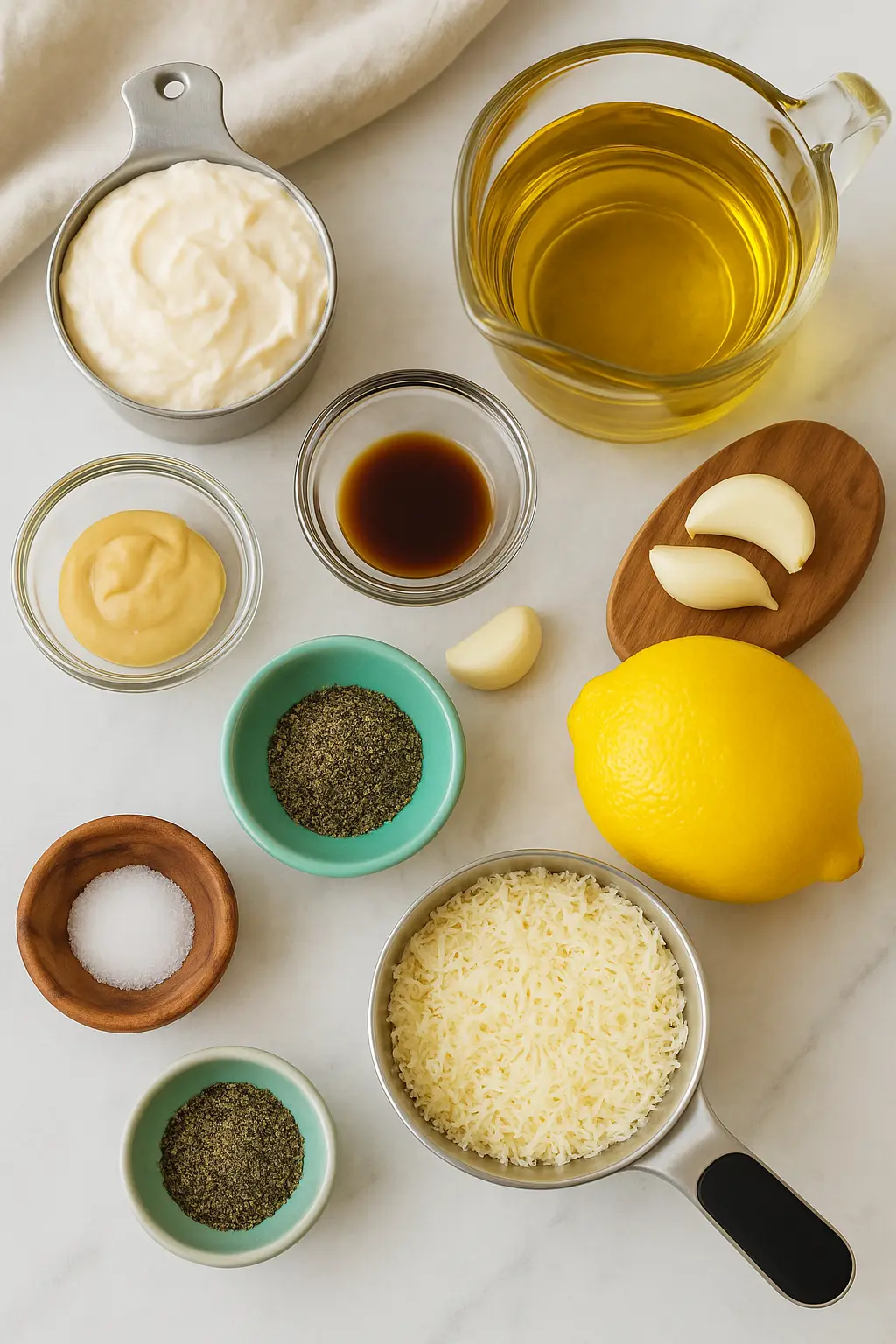
Every ingredient here pulls its weight. Nothing is filler.
- 1/2 cup mayonnaise – Use real, full-fat mayo. The eggs already in the mayo act as an emulsifier, which means the dressing holds together without raw eggs or any fuss.
- 2 tsp Dijon mustard – Adds depth and a subtle sharpness. Grey Poupon works well, but any Dijon will do.
- 2 tsp Worcestershire sauce – This is where the umami lives. It also contains anchovies in most brands, so you get that classic Caesar flavor without adding whole anchovies.
- 2 garlic cloves, grated or pressed – Fresh garlic only. Pre-minced garlic from a jar lacks the punch this dressing needs.
- 3 Tbsp fresh lemon juice (from 1 large lemon) – Freshly squeezed makes a noticeable difference. It adds brightness that bottled juice simply cannot replicate.
- 1/2 tsp fine sea salt
- 1/2 tsp freshly ground black pepper
- 1/2 cup extra light olive oil (not extra virgin) – Extra virgin olive oil has too strong a flavor and can cause the dressing to separate. A neutral oil keeps the emulsion stable and lets the other flavors shine.
- 1/2 cup freshly grated parmesan cheese – Freshly grated melts into the dressing more smoothly. Pre-grated works too, but add it gradually and taste as you go since it tends to be saltier.
Substitution note: If you want a lighter version, swap half the mayo for plain Greek yogurt. One reader reported great results using half low-fat mayo and half Greek yogurt, mixed in a blender. If you are vegetarian or have a fish allergy, choose a Worcestershire sauce that lists no anchovies in the ingredients.
How to Make Easy Homemade Caesar Dressing
Step 1: Build the Creamy Base
In a large mixing bowl, combine the mayonnaise, Dijon mustard, Worcestershire sauce, grated garlic, lemon juice, salt, and pepper. Whisk everything together until the mixture looks smooth, pale, and uniformly creamy with no streaks of mustard visible.
If the garlic smells sharp and raw at this stage, that is exactly right. It will mellow as the dressing rests in the refrigerator.
Step 2: Emulsify the Oil
This step is the one most people rush, and it is the reason dressings turn out thin and watery. While whisking vigorously, slowly drizzle in the 1/2 cup of extra light olive oil in a thin, steady stream. Do not pour it all in at once.
As you whisk and drizzle, you will notice the dressing thickening and turning a slightly lighter shade. That is the emulsion forming. Once all the oil is incorporated, keep whisking for another 30 seconds until the texture feels silky and holds its shape on the whisk.
If the dressing looks greasy or broken rather than creamy and cohesive, you added the oil too fast. Whisk in an extra teaspoon of mayo to help bring it back together.
Step 3: Add the Parmesan
Add the 1/2 cup of freshly grated parmesan cheese and whisk until fully combined. The dressing should now be thick enough to coat the back of a spoon, with visible flecks of cheese throughout.
Step 4: Store Until Ready to Use
Transfer the finished dressing to a mason jar, seal with a lid, and refrigerate until needed. It thickens further as it chills, so do not worry if it seems slightly loose right after mixing.
Expert Cooking Tips for the Best Caesar Dressing
- Drizzle slowly, whisk constantly. The slow oil drizzle is the single most important technique in this recipe. It creates an emulsion that keeps the dressing thick and prevents it from separating into an oily mess.
- Try an immersion blender. If whisking and drizzling at the same time feels awkward (it can be), use an immersion blender. It does the emulsifying work for you. One reader noted it made the dressing slightly thicker than the whisk method, so keep that in mind.
- Grate the garlic, do not chop it. Grated or pressed garlic distributes more evenly and blends into the dressing without leaving chunks. A microplane or garlic press works best here.
- Taste before you seal the jar. Before refrigerating, dip a piece of lettuce into the dressing and taste it as you would actually eat it. Adjust salt, lemon, or pepper at this stage while it is easy to fix.
- Let it rest. The dressing tastes noticeably better after 30 minutes in the refrigerator. The garlic softens, the lemon brightens, and everything melds together.
Healthier Alternatives
- Swap half the mayo for Greek yogurt. This cuts fat while keeping the creamy texture. Greek yogurt also adds a slight tang that works well with the lemon and garlic. Use a full-fat variety for the best consistency.
- Use avocado oil instead of olive oil. Avocado oil is neutral in flavor and high in heart-healthy monounsaturated fats. It emulsifies well and will not overpower the dressing.
- Reduce the parmesan. If you are watching sodium, start with 1/4 cup of parmesan and taste before adding more. The Worcestershire and salt already contribute sodium, so the cheese can be adjusted without losing the overall flavor profile.
Serving Suggestions
This dressing works far beyond a classic Caesar salad, though that is always a great starting point. Toss it with crisp romaine, homemade croutons, and an extra shower of parmesan for a salad where every bite is coated and satisfying.
- Caesar Salad with Protein: Add sliced baked chicken breast or grilled shrimp to turn it into a full meal. The creamy dressing pairs especially well with the smoky char on grilled chicken.
- Pasta Salad: Toss with cooked pasta, diced broccoli, cherry tomatoes, and extra parmesan for a crowd-pleasing side dish.
- Vegetable Dip: Serve alongside sliced cucumbers, carrots, and cauliflower florets. The thick texture clings to raw vegetables without pooling at the bottom of the bowl.
- Grilling Marinade: Coat chicken thighs in the dressing before grilling. The mayo base tenderizes the meat and the parmesan forms a golden, slightly crisp crust.
- Potato Salad Base: Use it as the creamy dressing for a classic potato salad in place of plain mayo.
Common Mistakes to Avoid
- Using extra virgin olive oil. EVOO has a bold, peppery flavor that overwhelms the dressing and can also cause it to separate when chilled. Stick with extra light olive oil or another neutral oil like avocado oil or vegetable oil.
- Adding all the oil at once. Pouring the oil in too quickly breaks the emulsion before it forms. The result is a greasy, thin dressing that does not coat the lettuce. Drizzle slowly and whisk the entire time.
- Skipping fresh lemon juice. Bottled lemon juice tastes flat and slightly metallic in a dressing this simple. Fresh juice adds a clean brightness that makes the whole recipe pop.
- Not tasting before serving. Every brand of Worcestershire sauce, parmesan, and mayo has a different salt level. Always taste and adjust before the dressing goes into the jar.
- Dressing the salad too early. Caesar dressing wilts lettuce quickly. Add it right before serving to keep the romaine crisp and the croutons crunchy.
Storage and Make-Ahead Tips
Transfer the finished Caesar dressing to a mason jar or airtight container and refrigerate for up to one week. Label the jar with the date so you always know how fresh it is.
One of the best things about this recipe is that the dressing does not separate when chilled. You can pull it straight from the refrigerator and use it without re-whisking. It will be slightly thicker when cold, which actually makes it coat the salad even better.
This dressing is excellent for meal prep. Make a full batch on Sunday and use it throughout the week on salads, wraps, pasta, or as a dip. Each serving contains 164 calories, 17g of fat, and just 1g of carbohydrates, making it a satisfying addition to lighter meals.
Make This Caesar Dressing Your Weekly Staple
Once you have a jar of homemade Caesar dressing in your refrigerator, you will understand why so many families stop buying the store-bought version entirely. It takes 10 minutes, uses ingredients you likely already have, and produces a thick, creamy, restaurant-quality result that kids and adults both love.
The anchovies are optional, the technique is forgiving, and the flavor is genuinely better than anything that comes in a bottle. Give it a try this week and see for yourself.
Must Try Recipes
- Italian Tomato Sauce — Complements the rich flavors of Caesar dressing.
- Coleslaw Recipe — Pair with fresh Caesar dressing for a tangy twist.
- Greek Salad — Add Caesar dressing for a unique flavor blend.
Frequently Asked Questions About Caesar Dressing
Can I make Caesar dressing without anchovies?
Yes. Worcestershire sauce already contains anchovies as an ingredient, so the classic umami flavor is present even without adding whole anchovies or anchovy paste. If you have a fish allergy or follow a vegetarian diet, choose a Worcestershire sauce that is specifically labeled anchovy-free.
Why is my Caesar dressing too thin?
The most common reason is adding the oil too quickly. The dressing needs to be whisked vigorously while the oil is drizzled in slowly to form a proper emulsion. If it is already thin, whisk in an extra teaspoon of mayo to help thicken it. It will also firm up noticeably after 30 minutes in the refrigerator.
How long does homemade Caesar dressing last in the fridge?
Stored in a sealed mason jar or airtight container, this dressing keeps well for up to one week in the refrigerator. It does not separate when chilled and can be used directly from the jar without stirring.
Can I use a blender instead of a whisk?
An immersion blender works very well for this recipe and makes the oil emulsification easier, especially if you find it difficult to whisk and drizzle simultaneously. A food processor also works. One reader noted the immersion blender produced a slightly thicker result, so adjust the oil amount to your preferred consistency.
What oil is best for creamy Caesar dressing?
Extra light olive oil is the top choice because it is neutral in flavor and emulsifies smoothly. Avoid extra virgin olive oil, which has a strong, peppery taste that can overpower the dressing and may cause it to separate when refrigerated. Avocado oil and vegetable oil are both good alternatives.
Can I substitute Greek yogurt for the mayonnaise?
Several readers have had success replacing part or all of the mayo with plain Greek yogurt. Using half mayo and half Greek yogurt keeps the creamy texture while reducing the fat content. Full-fat Greek yogurt produces the best consistency and the closest result to the original recipe.
Tools That Make Caesar Dressing Actually Work
Most failed attempts come down to the wrong equipment. These are the exact tools that get you the right texture, heat, and result every time.

Quick Caesar Dressing
- Total Time: 10 minutes
- Yield: 12 people (makes 1 1/2 cups) 1x
Description
A quick and easy recipe for homemade Caesar salad dressing that rivals anything store-bought. Perfect for Caesar salads, pasta dishes, or as a marinade.
Ingredients
- 1/2 cup mayonnaise
- 2 tsp Dijon mustard
- 2 tsp Worcestershire sauce (*)
- 2 garlic cloves (grated or pressed)
- 3 Tbsp fresh lemon juice (from 1 large lemon)
- 1/2 tsp salt
- 1/2 tsp freshly ground black pepper
- 1/2 cup extra light olive oil (not extra virgin*)
- 1/2 cup freshly grated parmesan cheese
Instructions
- In a large mixing bowl, combine 1/2 cup mayonnaise, 2 tsp Dijon mustard, 2 tsp Worcestershire sauce, grated garlic, 3 Tbs lemon juice, salt, and pepper, and whisk to combine.
- While whisking vigorously*, slowly drizzle in 1/2 cup olive oil. Once all of the olive oil is in, continue whisking until it’s well incorporated. Add parmesan and whisk together to combine.
- Transfer to a mason jar, cover with a lid, and refrigerate until ready to use.
Notes
1. Whisk vigorously while drizzling in oil to keep the dressing emulsified and thick. 2. Store in an airtight container in the fridge for up to 5 days; whisk before serving. 3. For a gluten-free option, use gluten-free Worcestershire sauce.
- Prep Time: 10 minutes
- Category: Condiments
- Method: No-Bake
- Cuisine: American
Nutrition
- Serving Size: 2 Tbsp
- Calories: 164 kcal
- Sugar: 0.3 g
- Sodium: 252 mg
- Fat: 17 g
- Saturated Fat: 3 g
- Unsaturated Fat: 13 g
- Trans Fat: 0.02 g
- Carbohydrates: 1 g
- Fiber: 0.1 g
- Protein: 1 g
- Cholesterol: 8 mg


