



Getting a Greek salad right sounds easy until you taste one that’s watery, bland, or drowning in a bottled dressing that tastes like vinegar and nothing else. The vegetables go limp, the feta disappears into the mix, and the whole bowl feels like a missed opportunity. This easy Greek salad recipe fixes all of that in under 10 minutes, with a homemade dressing that genuinely transforms every bite. Think juicy tomatoes, crisp cucumber, salty kalamata olives, creamy feta, and a tangy red wine vinegar dressing that coats every single piece. Bright, colorful, and completely satisfying without any cooking required.
Why This Greek Salad Works (Before You Touch a Knife)
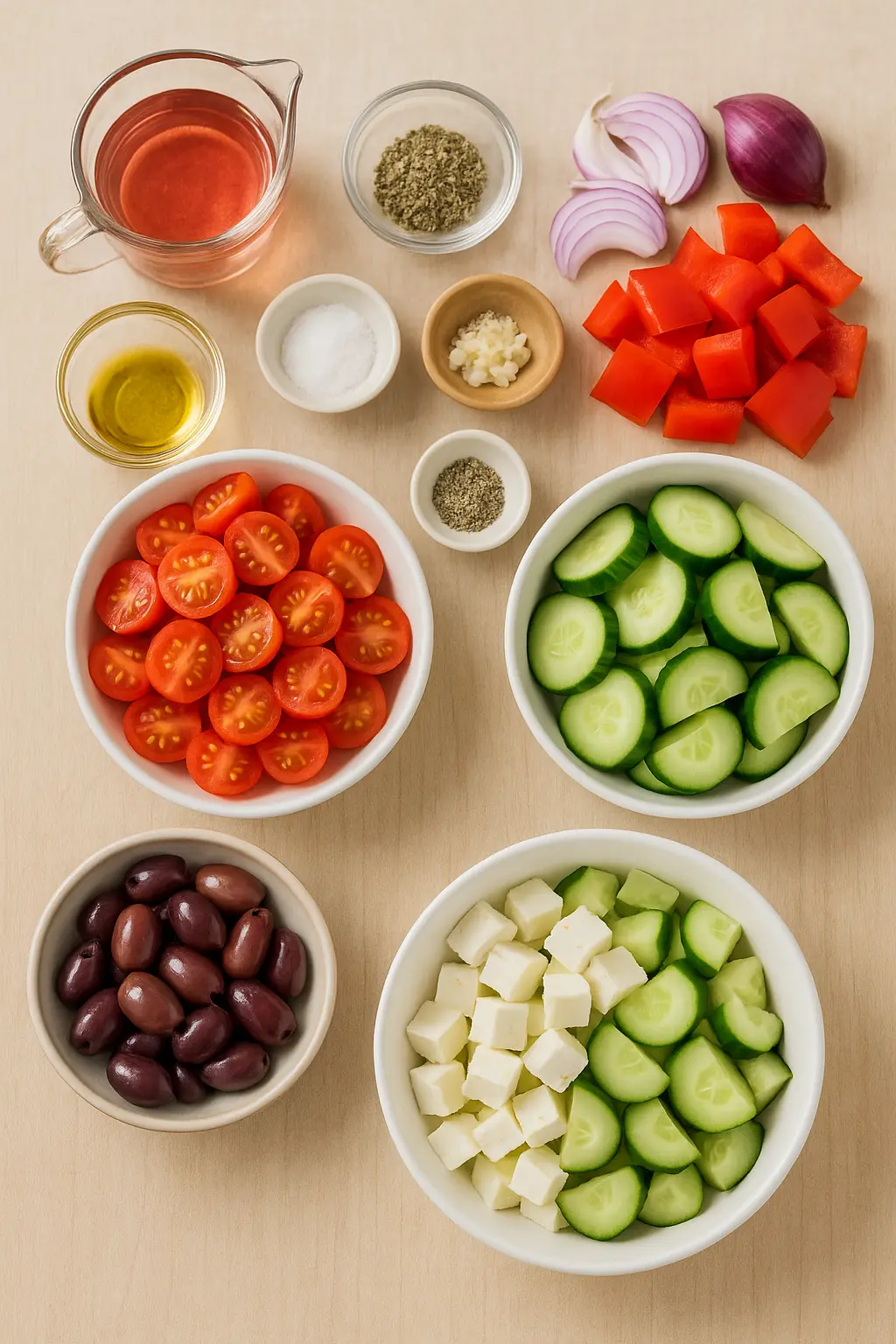
Most Greek salads fail at the dressing stage. A good Greek salad dressing needs to emulsify properly, meaning the oil and vinegar actually come together rather than sitting in two sad layers at the bottom of the bowl. The trick is building the dressing first, before you chop anything, so the dried oregano has time to rehydrate and the garlic mellows out.
Fresh garlic is non-negotiable here. Dried oregano, on the other hand, is actually preferred over fresh in this recipe because it softens in the vinegar as you prep the vegetables, releasing a deeper, more rounded flavor than fresh herbs would.
That short window of resting time is what separates a flat-tasting dressing from one that tastes like it came from a good Mediterranean kitchen.
What You Need for a Classic Greek Salad
For the Greek Salad Dressing
- ¼ cup red wine vinegar — gives the dressing its characteristic tang. White wine vinegar or lemon juice can substitute, though the flavor will shift slightly.
- 1 tsp dried oregano leaves — rehydrates in the vinegar for a softer, more integrated herb flavor
- 2 garlic cloves, minced or grated
- ¾ tsp fine sea salt
- ½ tsp freshly ground black pepper
- ½ cup extra-virgin olive oil — use a good quality one here; you will taste the difference
For the Salad
- 2 cups cherry tomatoes, halved (or 1 pound garden tomatoes, chopped)
- 1 English cucumber, sliced into half-moons (or 4 garden cucumbers)
- 1 bell pepper, any color, stemmed, seeded, and chopped
- 6 oz feta cheese, diced from a block or crumbled (about 1 cup)
- ½ cup pitted kalamata olives, halved or roughly chopped
- ¼ cup thinly sliced red onion
A note on feta: buying a block and cutting it yourself gives you cubes that hold their shape when tossed. Crumbles work fine, but they tend to disappear into the dressing rather than giving you that satisfying creamy bite in every forkful. I prefer the cubed version for that reason.
How to Make Greek Salad: Step-by-Step
Step 1: Build a Dressing That Actually Emulsifies
Measure the red wine vinegar, dried oregano, salt, and pepper into a medium bowl or a resealable mason jar. Stir to combine, then add the minced garlic. Pour in the extra-virgin olive oil and whisk vigorously, or seal the jar and shake hard for about 20 seconds.
You will know the emulsion is holding when the whisk leaves visible trails in the dressing and the mixture looks slightly creamy rather than separated. Set it aside while you prep the vegetables. One thing to watch: if you stop whisking mid-pour, the oil will pool immediately and you will need to start the emulsification again.
If the dressing separates by the time you are ready to serve, a quick 10-second re-whisk or shake brings it right back together.
Step 2: Prep the Vegetables for Maximum Texture
In a large mixing bowl, combine the halved cherry tomatoes, sliced cucumber, chopped bell pepper, feta, olives, and red onion. Use a cutting board with enough surface area so you can work quickly without crowding your cuts.
For the cherry tomatoes, try this: sandwich them between two flat plastic container lids, hold the lids steady, and slice through the gap with a serrated chef knife. It cuts every tomato in half in one pass. The bowl should look vibrant at this stage: deep red tomatoes, pale green cucumber, bright bell pepper, white feta, and dark purple olives.
If you plan to make this ahead, consider scooping out the cucumber seeds before slicing. They release water over time and can make the salad soupy by the next day.
Step 3: Dress and Serve at the Right Moment
Just before serving, drizzle the dressing over the salad and toss gently to combine. The goal is to coat every piece without breaking up the feta cubes. This salad is best enjoyed within 2 to 3 hours of adding the dressing, while the cucumbers are still crisp and the tomatoes hold their shape.
If you overdress it, the vegetables will release liquid faster. Start with most of the dressing, taste, and add the rest if needed.
What Separates a Good Greek Salad from a Great One
- Grate the garlic, don’t mince it. A microplane produces a paste that dissolves into the dressing smoothly. Chunky minced garlic can taste sharp and uneven.
- Dress at the last possible moment. The dressing begins softening the vegetables immediately. Even 30 minutes early is fine; an hour or more and the cucumbers start losing their snap.
- Don’t skip the kalamata olives. They add a salty, briny depth that regular black olives simply don’t replicate. If someone at the table dislikes them, swap for regular pitted olives rather than leaving them out entirely.
- Bell pepper is optional but adds crunch. If you or someone you are cooking for doesn’t enjoy it, leave it out. The salad holds up well without it.
- The dressing can be made up to 7 days ahead and stored in a sealed jar in the fridge. Shake before using.
Serving Suggestions for Every Occasion
This Greek salad works as a standalone lunch, especially when you tuck it into a warm pita pocket with a little extra feta. It also pairs beautifully alongside grilled or roasted proteins where you want something fresh and acidic to cut through the richness.
- Grilled chicken or shrimp skewers — the tangy dressing acts as a natural contrast to charred, smoky meat
- Pan-seared salmon — the brininess of the olives and feta echoes the savory notes of the fish
- Homemade pita bread — serve the salad alongside or stuff it inside for a vegetarian meal
- Greek lemon potatoes — a full Mediterranean spread that works for weeknight dinners or casual entertaining
Common Mistakes to Avoid
- Adding the dressing too early. The salt in the dressing draws moisture out of the tomatoes and cucumbers fast. Dress right before the bowl hits the table.
- Using pre-crumbled feta from a bag. It tends to be drier and saltier than block feta. The texture also breaks down faster once tossed. Block feta gives you control over the size and saltiness.
- Skipping the garlic rest time. Raw garlic in dressing tastes sharp and aggressive when used immediately. Letting it sit in the vinegar for even 5 minutes softens the bite noticeably.
- Over-tossing the salad. Toss gently and only once. Aggressive mixing breaks the feta into dust and bruises the tomatoes.
- Using a dull knife on cherry tomatoes. A dull blade crushes them instead of slicing cleanly, and you lose all that juice before the salad is even assembled.
Make It Once, Use It All Week
The dressing stores well in an airtight container or mason jar in the refrigerator for up to 7 days. Shake or whisk before each use since the oil will separate when cold.
The chopped vegetables (without dressing) can be stored in an airtight container in the fridge for up to 2 days. Keep the dressing separate until you are ready to serve.
Dressed leftovers can be refrigerated overnight in an airtight container. The vegetables will soften and release some liquid, but the flavor actually intensifies. It won’t have the same crunch as fresh, but it is still worth eating the next day.
A Salad Worth Coming Back To
There is something genuinely satisfying about a bowl of food that takes less than 10 minutes and still tastes like you put real effort into it. This Greek salad delivers that every time, whether you are pulling fresh tomatoes from a summer garden or working with grocery store produce in January.
The homemade dressing is the real reason to make this from scratch. Once you taste how much better it is than anything bottled, it becomes the kind of recipe you keep on rotation without even thinking about it. Give this one a try the next time you need something fresh and filling, and don’t be surprised if the bowl is empty before you’ve had a chance to sit down.
Must-Try Salad Recipes That Delight
- Best Ever Greek Pasta Salad – Perfect for gatherings, this salad bursts with flavor.
- Creamy Cucumber Salad – Ideal for a quick lunch, offering a refreshing crunch.
- dolmades – Enjoy these Greek delights for a taste of tradition.
FAQs
Can I make Greek salad ahead of time?
Yes, with one important rule: keep the dressing separate from the vegetables until you are ready to serve. The chopped salad ingredients can be stored in the fridge for up to 2 days, and the dressing keeps for up to 7 days. Combine them within 2 to 3 hours of eating for the best texture.
What is the best feta cheese for Greek salad?
A block of feta cheese gives you the best results. It is creamier, less salty, and holds its shape when cubed and tossed. Pre-crumbled feta works in a pinch, but it tends to dissolve into the dressing rather than giving you distinct, creamy bites throughout the salad.
Can I use a different vinegar in the Greek salad dressing?
Red wine vinegar is the traditional choice and gives the dressing its characteristic sharpness. You can substitute white wine vinegar, apple cider vinegar, or fresh lemon juice, but each will shift the flavor profile slightly. Lemon juice produces a brighter, more citrus-forward dressing that still works well with the other ingredients.
Why does my Greek salad get watery?
The salt in the dressing draws moisture out of the tomatoes and cucumbers quickly. The main fix is to dress the salad right before serving rather than letting it sit. If you are making it ahead, you can also scoop out the cucumber seeds before slicing, since they hold the most water.
Is Greek salad a healthy meal option?
Each serving contains 280 calories, 5 grams of protein, 8 grams of carbohydrates, and 2 grams of fiber, based on 6 servings. The fat content comes primarily from extra-virgin olive oil and feta, both of which are staples of a Mediterranean-style diet. It is naturally gluten-free and vegetarian as written.
Can I leave out the bell pepper or red onion?
Absolutely. Bell pepper is one of the most commonly omitted ingredients in this recipe, and the salad still tastes complete without it. Red onion adds a sharp, savory layer that is worth keeping if you enjoy it, but shallots make a milder substitute, or you can leave it out entirely if raw onion is not your preference.
Essential Kitchen Tools
Making Greek Salad? Most failed attempts come from using the wrong pan or heat setup — not the recipe itself.

Want to save this recipe?
Want to save this recipe? Enter your email below, and we'll send it straight to your inbox. Plus, receive new recipes every week!

Quick Greek Salad Recipe
- Total Time: 5 minutes
- Yield: 6 servings 1x
Description
A refreshing and authentic Greek Salad made with fresh vegetables, tangy feta, and a homemade dressing. Perfect for summer meals or meal prep!
Ingredients
- ¼ cup red wine vinegar
- 1 tsp dried oregano leaves
- 2 garlic cloves (minced or grated)
- ¾ tsp fine sea salt
- ½ tsp freshly ground black pepper
- ½ cup extra-virgin olive oil
- 2 cups cherry tomatoes (halved (or 1 pound garden tomatoes, chopped))
- 1 English cucumber (or 4 garden cucumbers, sliced into 1/2 inch-thick half-moons)
- 1 bell pepper (any color, stemmed, seeded)
- 6 oz feta cheese (diced from a block or crumbled (about 1 cup))
- ½ cup pitted kalamata olives (halved or roughly chopped)
- ¼ cup thinly sliced red onion
Instructions
- To prepare the dressing, combine the vinegar, oregano, salt, and pepper in a medium bowl or a resealable mason jar, then mix well. After that, incorporate the oil into the mixture and whisk or shake thoroughly. Set it aside.
- For the salad, in a large serving bowl, arrange the chopped tomatoes, cucumber, bell pepper, feta, olives, and red onion.
- Before serving, pour the dressing over the salad and toss everything together to combine. This salad is best enjoyed within 2-3 hours after adding the dressing.
Notes
TECHNIQUE TIP: To quickly slice cherry tomatoes, place them between two lids and cut with a serrated knife.
STORAGE: Store the salad in an airtight container in the fridge for up to 2 days for maximum freshness.
SUBSTITUTION: Use garden cucumbers instead of an English cucumber for a more traditional taste.
- Prep Time: 5 minutes
- Category: Salad
- Cuisine: Greek
Nutrition
- Serving Size: 1 serving
- Calories: 280 kcal
- Sugar: 3 g
- Sodium: 798 mg
- Fat: 26 g
- Saturated Fat: 7 g
- Unsaturated Fat: 18 g
- Carbohydrates: 8 g
- Fiber: 2 g
- Protein: 5 g
- Cholesterol: 25 mg


