

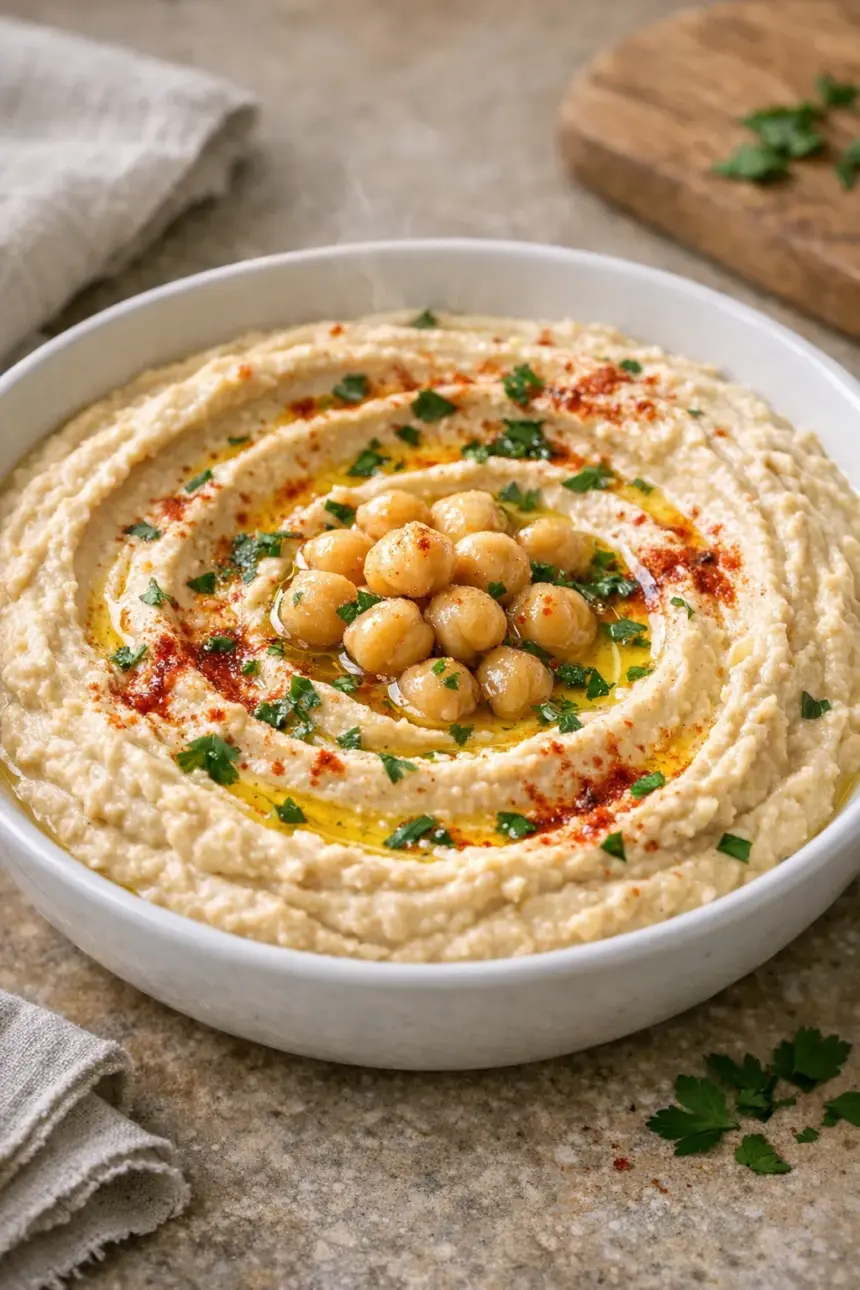
Did you know that making fresh hummus at home takes just three minutes and tastes infinitely better than anything you’ll find at the grocery store? If you’ve been relying on store-bought tubs that often taste bland or overly processed, this homemade hummus recipe will completely change your snack game. With just a handful of pantry staples like chickpeas, tahini, and fresh lemon juice, you can whip up a batch that’s creamier, more flavorful, and free from unnecessary preservatives. This recipe is perfect whether you need a quick healthy snack, a crowd-pleasing dip for entertaining, or a versatile spread for sandwiches and wraps. The best part? You control every ingredient, so you can adjust the garlic, lemon, and spices to suit your exact taste. Once you see how easy it is to blend up silky smooth hummus in your own kitchen, you’ll never go back to store-bought again.
Ingredients for Homemade Hummus
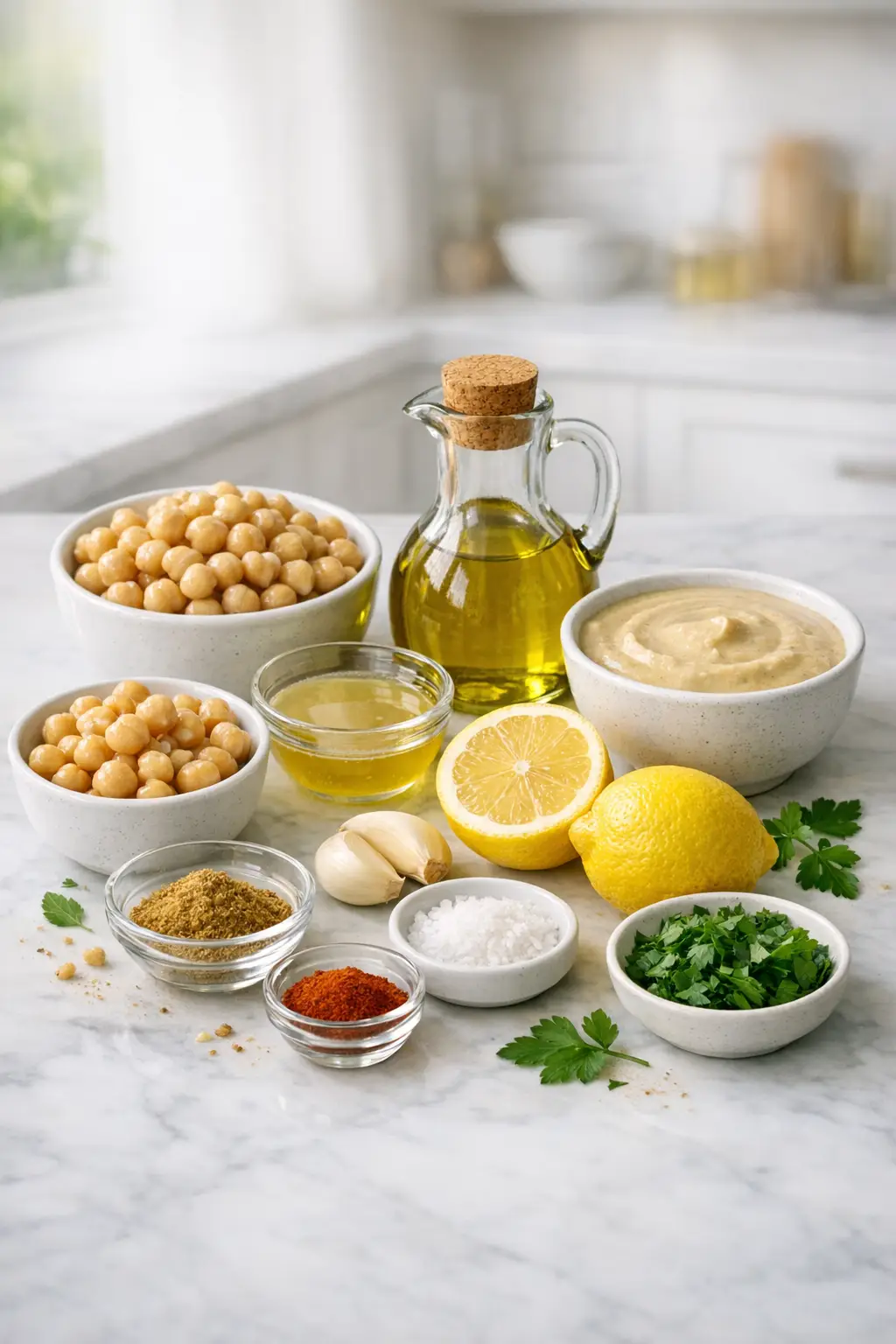
This hummus recipe uses simple, wholesome ingredients you can find at any grocery store. Here’s everything you’ll need:
- 2 (15-ounce) cans chickpeas (drained, with liquid reserved) – You can also use dried chickpeas soaked overnight if you prefer, but canned organic chickpeas save time and work beautifully.
- ⅓ cup chickpea liquid (aquafaba) – This is the liquid from the canned chickpeas. It helps achieve that ultra-smooth, creamy texture. Add more if you like thinner hummus.
- ½ cup tahini – Ground sesame paste that adds nutty, rich flavor. Stir well before measuring since tahini separates naturally.
- ¼ cup olive oil – Use a good quality extra-virgin olive oil for the best flavor.
- 2 lemons, juiced – Fresh lemon juice is essential for bright, tangy flavor. Bottled juice won’t taste the same.
- 2 garlic cloves – Start with two for a mild garlic flavor. Add more if you love garlicky hummus. No need to mince them, just peel and toss them in.
- 1 teaspoon cumin – Adds warm, earthy depth.
- ½ teaspoon kosher salt – Adjust to taste after blending.
- Garnishes: extra-virgin olive oil, paprika, and freshly chopped parsley
Substitution tips: If you don’t have tahini, you can substitute with almond butter or cashew butter, though the flavor will be slightly different. For a lower-fat version, reduce the olive oil and add extra aquafaba instead. If you want a spicier kick, add a pinch of cayenne pepper or red pepper flakes.
Step-by-Step Instructions for Making Hummus
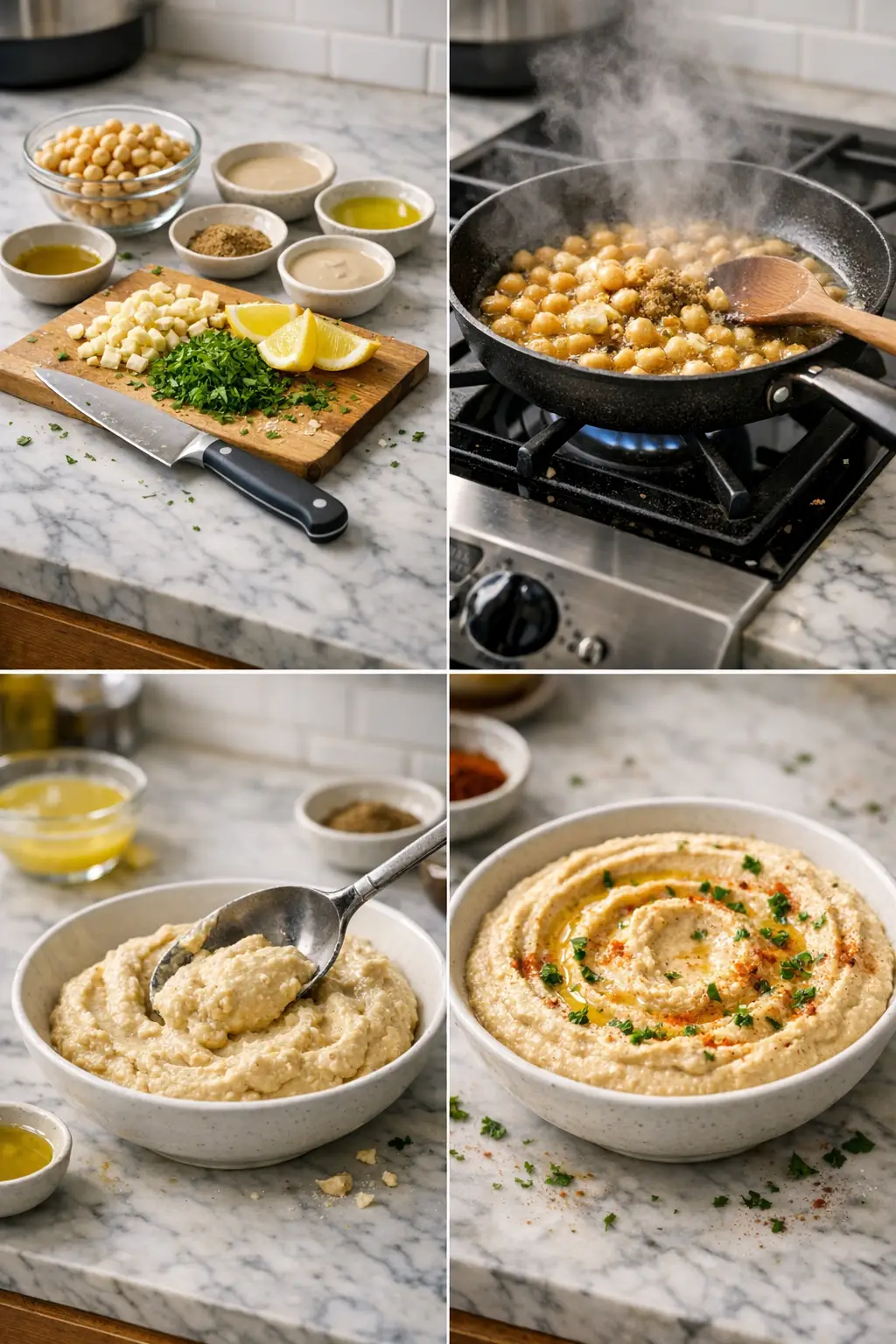
Step 1: Drain and Reserve the Chickpea Liquid
Open both cans of chickpeas and drain them over a bowl to catch the liquid. This liquid is called aquafaba, and it’s a key ingredient for achieving that silky smooth texture. Set aside at least ⅓ cup of aquafaba. Rinse the chickpeas briefly under cool water if you prefer, though it’s not strictly necessary.
Step 2: Add All Ingredients to Your Blender
Add the drained chickpeas, tahini, olive oil, lemon juice, garlic cloves, cumin, and salt to a high-powered blender. Pour in ⅓ cup of the reserved aquafaba. If you’re using a standard blender instead of a high-powered one, you may need to blend a bit longer or add slightly more liquid to help it process smoothly.
Step 3: Blend Until Creamy and Smooth
Secure the blender lid and turn it on high speed. If your blender has a tamper tool, use it to push the hummus down into the blades, just like you would when making nut butter. Blend for about 30 seconds, or longer if you want an even creamier consistency. Stop and scrape down the sides if needed. If the hummus looks too thick, add more aquafaba one tablespoon at a time until you reach your desired texture.
Step 4: Taste and Adjust Seasonings
Taste your hummus and adjust the flavors as needed. Add more salt for depth, more lemon juice for brightness, or an extra clove of garlic for punch. Blend again briefly after any additions to incorporate them evenly.
Step 5: Serve and Garnish
Spoon the hummus onto a serving plate or shallow bowl. Use the back of your spoon to create a swirl or well in the center. Drizzle with extra-virgin olive oil, sprinkle with paprika, and finish with freshly chopped parsley. This not only looks beautiful but also adds extra flavor and richness.
Healthier Alternatives for Hummus
While traditional hummus is already a nutritious choice packed with plant-based protein and fiber, you can make a few simple swaps to suit specific dietary needs:
- Reduce oil: Cut the olive oil in half and add extra aquafaba or a tablespoon of water to maintain creaminess while lowering calories.
- Add roasted vegetables: Blend in roasted red peppers, roasted beets, or steamed carrots for extra vitamins and a unique flavor twist.
- Boost protein: Stir in a tablespoon of hemp hearts or chia seeds after blending for additional protein and omega-3 fatty acids.
- Lower sodium: Use low-sodium canned chickpeas and reduce or eliminate added salt, relying on lemon juice and spices for flavor.
- Go nut-free: Replace tahini with sunflower seed butter if you have a sesame allergy.
Serving Suggestions for Hummus
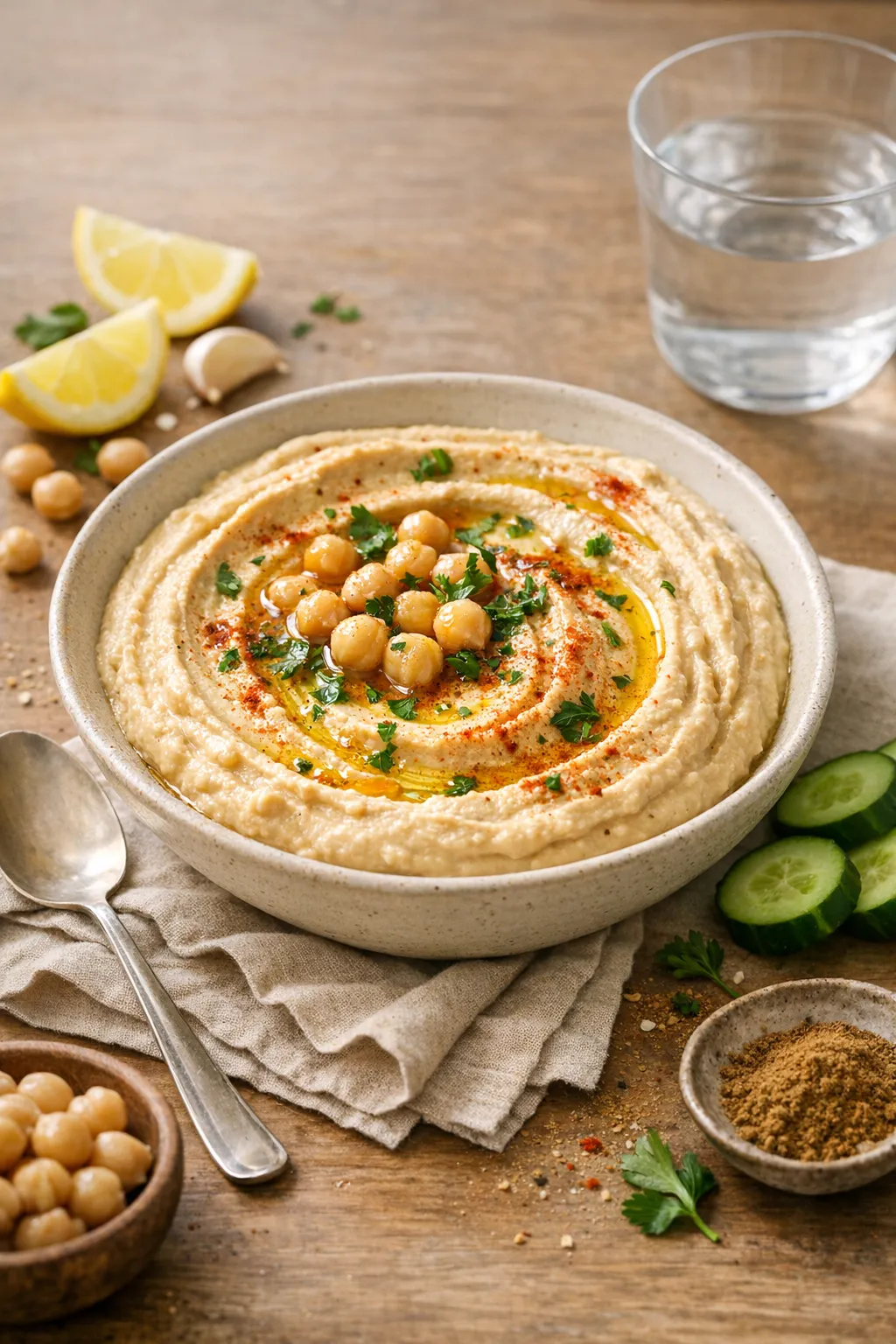
Hummus is incredibly versatile and works beautifully in countless meal scenarios. Here are some practical ways to enjoy it:
- As a dip: Serve with fresh vegetables like carrots, cucumbers, bell peppers, cherry tomatoes, and celery sticks for a healthy snack.
- With pita or crackers: Pair with warm pita bread, pita chips, or whole-grain crackers for a satisfying appetizer.
- In wraps and sandwiches: Spread a thick layer of hummus on wraps, sandwiches, or burgers instead of mayo for extra flavor and nutrition.
- On grain bowls: Use hummus as a creamy base or topping for quinoa bowls, falafel bowls, or Mediterranean-style grain salads.
- As a side dish: Serve alongside grilled chicken, lamb kebabs, or roasted vegetables for a complete meal.
- On toast: Spread hummus on toasted sourdough or whole-grain bread and top with sliced avocado, tomatoes, or a fried egg for a quick breakfast or lunch.
Common Mistakes to Avoid When Making Hummus
Even though hummus is simple to make, a few common mistakes can affect the texture and flavor:
- Using old tahini: Tahini can go rancid over time, especially if stored improperly. Always taste your tahini before adding it to the hummus. Fresh tahini should taste nutty and slightly bitter, not harsh or unpleasant.
- Not adding enough liquid: If your hummus is thick and grainy, you likely need more aquafaba or water. Add liquid gradually while blending until you reach a smooth, creamy consistency.
- Skipping the reserved chickpea liquid: Aquafaba is what gives hummus that restaurant-quality silkiness. Don’t pour it down the drain.
- Over-processing or under-processing: Blend long enough to fully break down the chickpeas, but not so long that the hummus warms up and loses its fresh flavor. About 30 to 60 seconds is usually perfect.
- Using bottled lemon juice: Fresh lemon juice makes a huge difference in flavor. Bottled juice tastes flat and artificial by comparison.
- Not tasting as you go: Everyone’s taste preferences are different. Always taste your hummus before serving and adjust salt, lemon, or garlic to suit your palate.
Storing Tips for Homemade Hummus
Proper storage keeps your hummus fresh and delicious for days, making it perfect for meal prep:
- Refrigerator storage: Transfer hummus to an airtight container and store it in the refrigerator for up to 5 to 7 days. Drizzle a thin layer of olive oil on top before sealing to help prevent drying out.
- Freezer storage: Hummus freezes surprisingly well. Portion it into freezer-safe containers or silicone muffin cups for single servings. Freeze for up to 3 months. Thaw in the refrigerator overnight and stir well before serving. You may need to add a splash of water or aquafaba to restore creaminess.
- Prevent browning: Like guacamole, hummus can darken slightly when exposed to air. Press a piece of plastic wrap directly onto the surface of the hummus before closing the lid to minimize oxidation.
- Refresh leftovers: If refrigerated hummus thickens over time, stir in a tablespoon or two of water or olive oil to bring back the creamy texture.
Why You’ll Love This Homemade Hummus Recipe
Making hummus from scratch is one of those simple kitchen skills that pays off every single time. You’ll save money compared to buying premium hummus at the store, and you’ll have complete control over the flavors and ingredients. This recipe delivers a creamy, dreamy texture that rivals any restaurant version, and it’s so fast you can make it on a weeknight without any stress. Whether you’re prepping healthy snacks for the week, entertaining guests, or just craving something fresh and flavorful, this hummus has you covered. Once you taste the difference, you’ll wonder why you ever settled for store-bought. So grab your blender, a can of chickpeas, and get ready to enjoy the best hummus you’ve ever made.
Frequently Asked Questions About Hummus
Can I make hummus without a high-powered blender?
Yes, you can make hummus in a regular blender or food processor. It may take a bit longer to achieve a smooth consistency, and you’ll likely need to stop and scrape down the sides several times. Adding extra aquafaba or a splash of water helps the blending process. A food processor works especially well and is actually the traditional tool used for making hummus.
Why is my hummus grainy instead of smooth?
Grainy hummus usually means the chickpeas weren’t blended long enough or there wasn’t enough liquid. Try blending for an additional 30 seconds and add more aquafaba or water one tablespoon at a time. Some people also prefer to peel the chickpeas before blending for an ultra-smooth texture, though this adds extra time.
Can I use dried chickpeas instead of canned?
Absolutely. Soak 1 cup of dried chickpeas overnight, then cook them until very soft. You’ll need about 3 cups of cooked chickpeas for this recipe. Save some of the cooking liquid to use in place of aquafaba. Dried chickpeas often result in an even creamier hummus.
How do I make my hummus more garlicky?
Simply add more garlic cloves to taste. Start with one additional clove and blend, then taste and adjust. Raw garlic can be quite strong, so add gradually. For a milder garlic flavor, you can roast the garlic cloves first before adding them to the blender.
What is aquafaba and why is it important?
Aquafaba is the liquid from canned or cooked chickpeas. It contains starches and proteins that help create a smooth, creamy texture in hummus. It’s also used as a vegan egg substitute in baking. Don’t skip it, it’s the secret to restaurant-quality hummus.
Can I make flavored variations of hummus?
Yes, hummus is incredibly versatile. You can blend in roasted red peppers, sun-dried tomatoes, roasted garlic, fresh herbs like cilantro or basil, or spices like smoked paprika or harissa. Add these ingredients after the base hummus is smooth and blend briefly to incorporate.
Is hummus healthy?
Yes, hummus is a nutritious choice. It’s rich in plant-based protein, fiber, healthy fats, and essential vitamins and minerals like folate, iron, and magnesium. It’s naturally vegan, gluten-free, and makes a satisfying snack that helps keep you full between meals.
Tools You’ll Need
Essential Kitchen Tools
Everything you need to make cooking easier and more enjoyable


Must Try Recipes
- 3 Minute Healthy Hummus
Another fast hummus option with simple steps for busy days. - Homemade Tahini
Make tahini ahead so hummus comes together even faster. - Pita Bread
A classic pairing for scooping and building quick lunches. - Falafel
Beginner-friendly Mediterranean bites that love a hummus dip. - 3 Healthy Condiments
A helpful guide to stocking quick, better-for-you spreads and sauces.

Want to save this recipe?
Want to save this recipe? Enter your email below, and we'll send it straight to your inbox. Plus, receive new recipes every week!

Ultra-Creamy 3-Minute Blender Hummus
- Total Time: 3 minutes
Description
A quick, reliable hummus you can blend up in about 3 minutes. It is smooth, customizable, and made with simple pantry staples for an everyday dip, spread, or wrap filling.
Ingredients
- 2 (15-ounce) cans chickpeas (drained, liquid reserved)
- 1/3 cup reserved chickpea liquid (plus more as needed)
- 1/2 cup tahini
- 1/4 cup olive oil
- Juice of 2 lemons
- 2 garlic cloves
- 1 teaspoon cumin
- 1/2 teaspoon kosher salt
- Extra-virgin olive oil (for topping)
- Paprika (for topping)
- Freshly chopped parsley (for topping)
Instructions
- Add the chickpeas, chickpea liquid, tahini, olive oil, lemon juice, garlic, cumin, and salt to a high-powered blender. Secure the lid.
- Blend on high until very smooth, about 30 seconds. If you want a softer, creamier hummus, add more reserved chickpea liquid a little at a time and blend again.
- Taste and adjust as needed: add more salt for overall flavor, more lemon for brightness, or an extra garlic clove for a stronger bite.
- Spoon into a bowl and top with a drizzle of extra-virgin olive oil, a sprinkle of paprika, and chopped parsley.
- Prep Time: 3 minutes
- Category: Appetizer
- Cuisine: Mediterranean
Nutrition
- Serving Size: 1 serving
- Calories: 166 kcal
- Sugar: 3 g
- Sodium: 80 mg
- Fat: 9 g
- Saturated Fat: 1 g
- Unsaturated Fat: 7 g
- Carbohydrates: 18 g
- Fiber: 5 g
- Protein: 6 g