



Making miso soup at home sounds intimidating until you realize the whole thing comes together in about 30 minutes, with ingredients you can keep stocked in your pantry indefinitely. The real barrier most people hit is not knowing how to build the broth from scratch, so they either skip it entirely or settle for a watery, flat version that tastes nothing like what you get at a Japanese restaurant. This easy miso soup recipe solves that completely, starting with a homemade dashi that takes minutes to make but delivers deep, layered umami flavor. It is gluten-free, nourishing, and genuinely satisfying.
Why Most Homemade Miso Soup Falls Flat (and How to Fix It Before You Start)
The most common reason homemade miso soup disappoints is the broth. Many recipes skip the dashi entirely and dissolve miso paste directly into plain water. The result tastes thin and one-dimensional, missing that savory depth you expect.
The second mistake happens during cooking: boiling the miso paste. Heat destroys the live cultures in unpasteurized miso and turns the flavor harsh. Once you know these two things going in, the rest of the recipe is straightforward.
One more thing worth knowing before you start: gluten can hide in both miso paste and store-bought dashi granules. Barley and wheat are common miso ingredients, and dashi granules sometimes contain gluten-based additives. Making everything from scratch, as this recipe does, puts you in full control of what goes in the bowl.
Unlike a cream-based soup such as Fresh Broccoli Cheese Soup, miso soup relies entirely on the quality of its broth for body and richness, which is why the dashi step is non-negotiable.
Miso Soup Ingredients
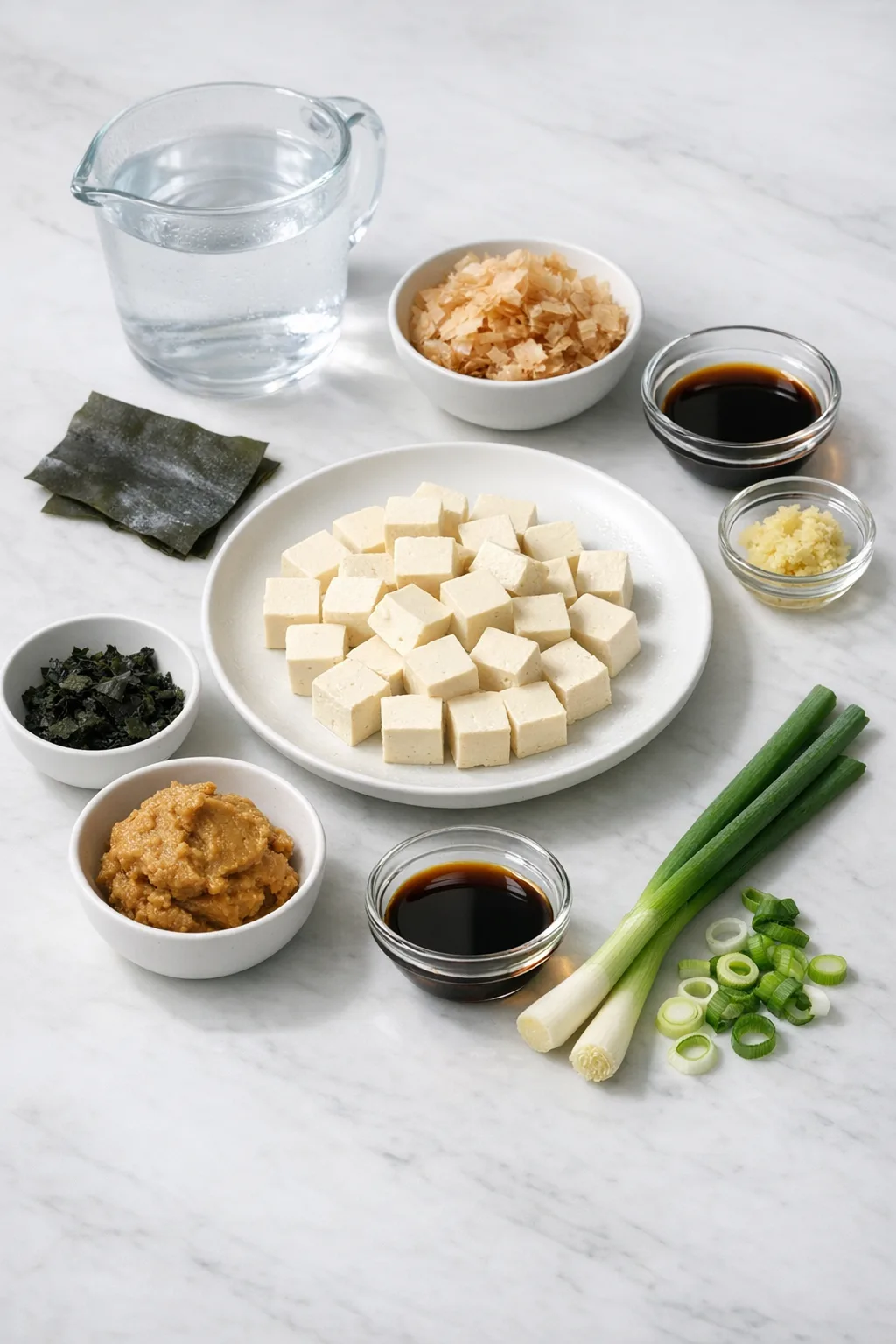
Every ingredient here plays a specific role. Here is what you need for 4 servings:
- 4 cups water
- 1 piece kombu (about 4 to 6 inches): The backbone of your dashi. Look for kombu that feels thick and has a white, powdery coating on the surface. That dusty film is natural glutamate, which is the source of kombu’s umami punch. Do not wipe it off.
- 1 cup bonito flakes: Thin shavings of dried, smoked tuna that add a gentle smokiness to the broth. Omit these for a vegan version. Once a bag is opened, the delicate aroma fades quickly, so smaller bags are worth buying.
- 1 tablespoon dried wakame seaweed: This is the soft, silky seaweed you actually eat in the soup. It is completely different from kombu in texture and purpose. It rehydrates in about 30 seconds and lasts indefinitely in the pantry.
- 3 to 4 tablespoons miso paste: White or yellow miso gives a milder, slightly sweet flavor that works at any time of day. Look for unpasteurized miso with live cultures and a short ingredient list. Always double-check that it is gluten-free if that matters to you.
- 7 ounces soft silken tofu, cut into ½-inch cubes: Silken tofu holds its shape gently in hot broth and gives the soup its classic, delicate texture. Extra firm tofu works in a pinch, though the texture will be slightly different.
- 2 green onions, thinly sliced: Adds a fresh, bright contrast to the savory broth.
- Optional: tamari soy sauce and freshly grated ginger, to taste
For a simple tomato-based broth comparison, Roasted Tomato Soup uses a completely different base-building technique, roasting rather than steeping, which shows how much the broth method shapes the final flavor.
How to Make Easy Miso Soup: Step-by-Step
Step 1: Build the Flavor Foundation with Homemade Dashi
Place the 4 cups of water and the kombu piece in a medium pot over medium heat and bring it to a gentle simmer. Watch the kombu closely as it begins to rehydrate and expand in the warming water.
Right before the water reaches a full boil, remove and discard the kombu. This timing matters: boiling kombu releases compounds that make the broth slimy or bitter, and it happens faster than you expect. If your broth smells slightly off or looks murky, the kombu likely stayed in too long.
Turn off the heat, stir in the 1 cup of bonito flakes, and let them steep for 3 to 5 minutes. You will know the steep is done when the flakes have sunk to the bottom and the broth smells gently smoky and savory. Strain the liquid through a fine-mesh sieve into a bowl. The dashi should look pale golden and completely clear.
Step 2: Rehydrate the Wakame While the Dashi Steeps
Place the 1 tablespoon of dried wakame in a small bowl and cover it with warm water. Within about 30 seconds, it will expand dramatically and turn from dark and shriveled to soft, silky, and bright green.
Drain it and set it aside. One thing to watch: if you leave the wakame soaking too long, it can become overly soft and lose its pleasant texture in the finished soup. Thirty seconds is genuinely all it needs.
Step 3: Warm the Tofu Gently in the Dashi
Return the strained dashi to the pot over medium heat. Add the 7 ounces of cubed silken tofu, along with the optional tamari soy sauce or grated ginger if you are using them, and let everything simmer gently for 2 to 3 minutes.
The goal here is to warm the tofu through without breaking it apart. Silken tofu is fragile, so avoid stirring aggressively. If the tofu starts crumbling, your heat is too high. Drop it to medium-low and let it sit undisturbed for the remaining time.
Step 4: Dissolve the Miso and Finish the Bowl
Remove the pot from the heat completely before adding the miso. Scoop 3 to 4 tablespoons of miso paste into a small bowl, then ladle some of the hot broth over it and whisk until the paste is fully dissolved and smooth. Stir this mixture back into the pot.
Never add miso paste directly to boiling liquid. The heat kills the beneficial cultures and makes the flavor sharp rather than rounded. Once the miso is stirred in, add the rehydrated wakame and sliced green onions, then serve immediately while the broth is warm and fragrant.
What Separates a Good Miso Soup from a Great One
- Do not skip the dashi. Dissolving miso in plain water produces a flat, one-note soup. The kombu and bonito flakes create a layered base that makes the miso taste fuller and more complex.
- Adjust the miso to your taste. Start with 3 tablespoons for a lighter, broth-forward soup. Add a fourth tablespoon for a deeper, more intense flavor. After making this a couple of times, you will find your personal sweet spot quickly.
- Add the miso off the heat, every time. This is the single step most people rush past, and it is the one that matters most for both flavor and nutrition.
- Ginger is optional but worth trying. It is not traditional in most miso soup recipes, but freshly grated ginger adds a warmth that works especially well on cold mornings. I add it whenever I have a knob in the kitchen.
- Meal prep the dashi separately. The broth freezes well in jars. When you want miso soup on a weeknight, thaw a jar and the rest of the recipe takes under 10 minutes.
Ways to Serve Miso Soup Throughout the Day
Miso soup is genuinely versatile in a way that most soups are not. A small bowl alongside scrambled eggs and avocado in the morning feels grounding and warming without being heavy. At lunch, it pairs naturally with a crisp salad or roasted vegetables.
For dinner, it works as a light starter before miso salmon, teriyaki chicken, grilled fish, or shrimp stir fry. The umami in the broth echoes the savory notes in those mains without competing with them. You can also bulk it up into a more filling bowl by adding mushrooms, spinach, or extra tofu.
For anyone building a plant-based meal rotation, Vegan Soup Recipes covers a broader range of broth-based and creamy options that follow the same principle of building flavor from whole ingredients rather than packaged bases.
Make It Once, Use It All Week
Homemade miso soup keeps well in the refrigerator for 2 to 3 days. For the best texture, store the broth separately from the tofu and seaweed if you can. The tofu absorbs liquid as it sits and can become waterlogged by day two.
When reheating, warm the soup gently over low heat until it is steaming but not simmering. You will know it is at the right temperature when you can see wisps of steam rising and the broth smells fragrant again. Never bring it back to a boil, which would degrade the miso flavor and eliminate the probiotic benefit.
The dashi itself freezes beautifully. Pour it into jars or ice cube trays, freeze, and pull out what you need. Having frozen dashi on hand means a full bowl of miso soup is genuinely a 10-minute effort on any given evening.
FAQs
Can I make this miso soup without bonito flakes?
Yes. Leaving out the bonito flakes makes this a vegan miso soup. The kombu alone still produces a flavorful dashi with a clean, oceanic umami quality. The broth will be slightly lighter in color and less smoky, but still very good.
What type of miso paste works best for this easy miso soup recipe?
White or yellow miso paste gives the mildest, most approachable flavor. Red miso is more intense and fermented longer, which can overpower the delicate dashi if you use the same quantity. If you only have red miso, start with 2 tablespoons and taste before adding more.
How do I know when to remove the kombu from the dashi?
Remove it right before the water reaches a rolling boil. You will see small bubbles beginning to form at the bottom of the pot and the water will look like it is about to break into a full simmer. At that point, pull the kombu out. If the broth tastes bitter or looks slightly slimy, the kombu stayed in too long.
Can I use a different type of tofu?
Soft silken tofu is traditional and gives the soup its characteristic delicate texture. Extra firm tofu works if that is what you have on hand, though it will feel chewier and less creamy in the broth. Avoid pressing the tofu before adding it, regardless of which type you use.
Is homemade dashi for miso soup difficult to make?
Not at all. The active time is under 10 minutes. You add kombu to cold water, bring it to a near-boil, remove the kombu, steep the bonito flakes for 3 to 5 minutes, and strain. The hardest part is watching the pot so you catch the kombu before it boils.
Can I add other vegetables to this gluten-free miso soup?
Absolutely. Mushrooms, spinach, thinly sliced potato, and yellow onion are all common additions in Japanese home cooking. Add heartier vegetables like potato before the tofu so they have time to soften. Leafy greens like spinach can go in at the very end, the same time as the wakame and green onions.
A Bowl Worth Coming Back To
There is something genuinely satisfying about making a soup this good from such a short ingredient list. The homemade dashi is the step that changes everything, and once you have made it once, you will understand why it is worth the extra few minutes.
Give this one a try on a quiet morning or as a starter before dinner. The broth is warm, the tofu is soft, and the whole bowl tastes like something that took far more effort than it actually did. I think you will find yourself making it more often than you expected.
Essential Kitchen Tools
Making Miso Soup? Most failed attempts come from using the wrong pan or heat setup — not the recipe itself.

Beginner-Friendly Miso Soup Recipe
- Total Time: 30 minutes
- Yield: 4 servings 1x
Description
Savor the rich umami flavor of miso soup crafted with homemade dashi, featuring tender silken tofu and vibrant green onions. Ideal for a comforting, gluten-free meal that brings a taste of Japanese cuisine to your kitchen with ease.
Ingredients
- 4 cups water
- 1 piece kombu (about 4 to 6 inches)
- 1 cup bonito flakes (omit for a vegan version)
- 1 tablespoon dried wakame seaweed
- 3 to 4 tablespoons miso paste
- 7 ounces soft silken tofu (cut into ½-inch cubes)
- 2 green onions (sliced)
- optional: tamari soy sauce and grated ginger, to taste
Instructions
- To prepare the dashi, combine the water and kombu in a medium pot over medium heat, bringing it to a gentle simmer. Just before the water reaches a boil, take out the kombu. Note: boiling kombu can result in a slimy or bitter broth, so be careful not to leave it in. Once the heat is off, mix in the bonito flakes and let them steep for 3 to 5 minutes. Strain the mixture through a fine mesh sieve into a bowl to obtain a clear dashi.
- To rehydrate the wakame, place it in a small bowl filled with warm water. After about 30 seconds, once it has expanded, drain it and set it aside.
- To make the miso soup, return the warm dashi to the pot over medium heat. Incorporate the tofu (and optional soy sauce and ginger if desired), allowing it to simmer gently for 2 to 3 minutes.
- To finish, take the pot off the heat. In a small bowl, combine the miso paste with a ladle of hot broth, whisking until smooth, then return this mixture to the pot. Stir in the green onions and wakame, and serve the soup warm.
Notes
TECHNIQUE TIP: Avoid boiling kombu to prevent a bitter or slimy broth. Remove from heat before adding bonito flakes to steep.
STORAGE: Store homemade miso soup in the refrigerator for 2 to 3 days. For best texture, keep broth separate from tofu and seaweed.
SUBSTITUTION: For a vegan version, omit bonito flakes and use a plant-based dashi alternative.
- Prep Time: 10 minutes
- Cook Time: 20 minutes
- Category: Dinner
- Cuisine: Japanese
Nutrition
- Calories: 252 kcal
- Sugar: 2 g
- Sodium: 661 mg
- Fat: 2 g
- Saturated Fat: 0.3 g
- Unsaturated Fat: 1.4 g
- Carbohydrates: 5 g
- Fiber: 1 g
- Protein: 44 g
- Cholesterol: 40 mg


