



Feeding a group on a weekend morning without spending an hour at the stove is one of those cooking challenges that sounds simple but rarely is. Scrambled eggs for eight people means standing over a pan in shifts, and nobody wants cold eggs. A frittata solves that completely. This recipe produces a silky, custardy egg dish packed with tender vegetables and melted cheese, ready in 35 minutes from start to finish, and it serves 6 to 8 people from a single skillet. The texture is nothing like rubbery baked eggs: think creamy, rich, and just set in the center.
Why This Frittata Works (Before You Touch a Pan)
The technique here is what separates a frittata worth making again from one that ends up dry and spongy. Two things matter most: how you whisk the eggs, and when you move the pan to the oven.
Overbeating the eggs incorporates too much air. Those bubbles expand under oven heat and produce a texture closer to a dry soufflé than a creamy custard. The goal is to combine the eggs and cream until just unified, not frothy. The heavy cream is not just for richness: the fat coats the egg proteins and slows their tightening in the heat, which is exactly what keeps the center silky rather than rubbery.
The oven finish is the other key. Cooking the frittata entirely on the stovetop scorches the bottom before the center sets. Starting on the burner to set the edges, then transferring to 400°F, gives you even heat from all sides.
Frittata Ingredients
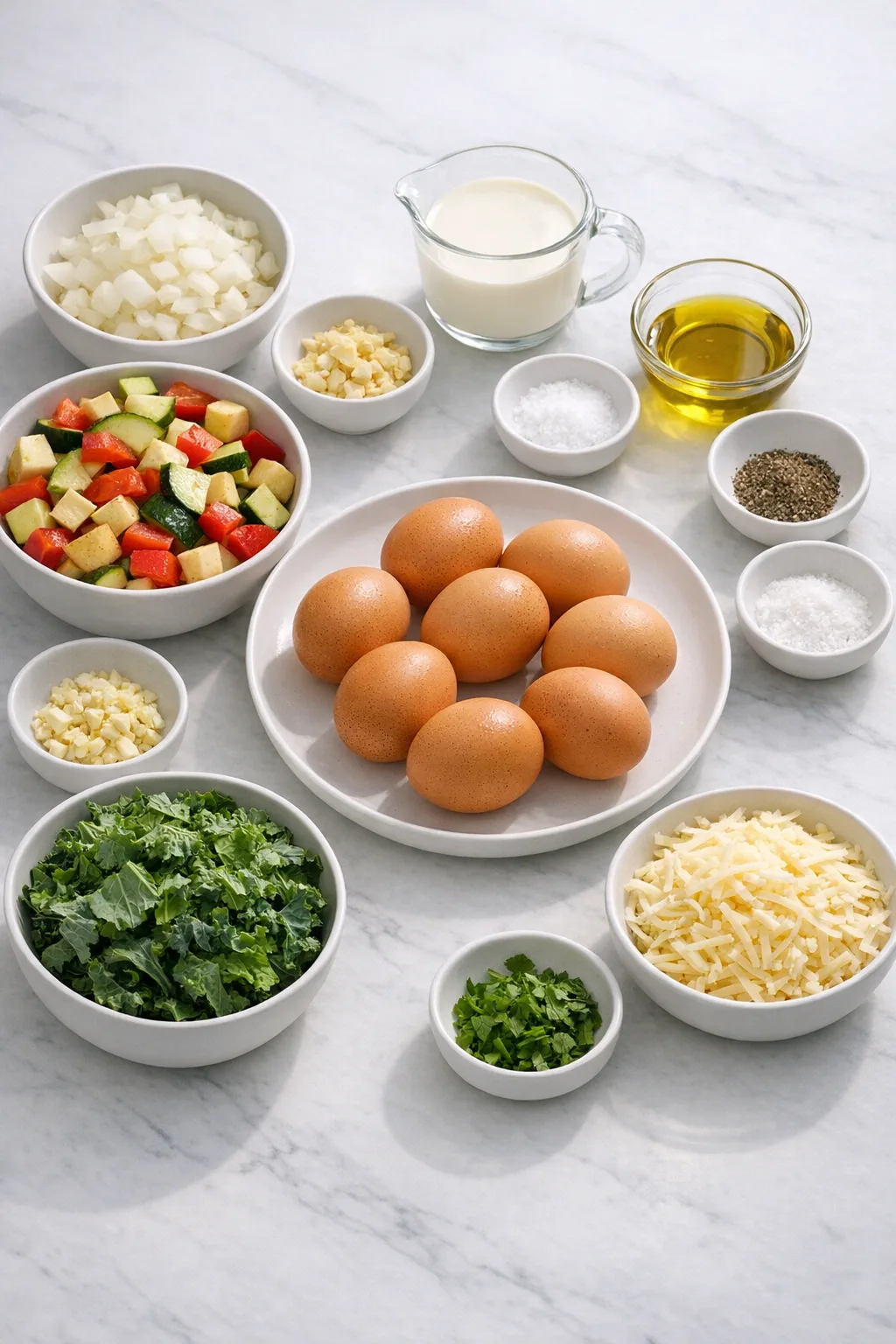
Every ingredient here has a job. The list is flexible, but the ratios matter.
- 8 large eggs at room temperature (cold eggs tighten faster and cook unevenly)
- ⅓ cup heavy cream (80mL): the fat that keeps the texture custardy
- 1 teaspoon salt, divided
- 3 tablespoons olive oil
- ½ cup chopped onion
- 4 garlic cloves, minced
- 3 cups chopped or sliced vegetables such as bell pepper, zucchini, or potatoes
- 2 cups chopped leafy greens such as kale or spinach
- ½ teaspoon ground black pepper
- 1½ cups shredded or crumbled cheese (6 ounces): divided for layering
- Chopped fresh herbs for serving, optional
On cheese: goat cheese, Gouda, mozzarella, cheddar, and Parmesan all work well here. I personally lean toward a mix of mozzarella for melt and Parmesan for sharpness. For a lighter version, half-and-half can substitute for heavy cream, though the center will be slightly less rich.
What to Avoid Before You Start Cooking
A few missteps happen at the very beginning and are easy to miss in the moment.
- Cutting vegetables too thick: Thick chunks do not cook through in 5 to 8 minutes on medium heat. Aim for bite-sized pieces, roughly ½ inch or thinner for denser vegetables like potato.
- Using a pan with a plastic handle: The skillet goes into a 400°F oven. Any non-oven-safe handle will cause a real problem. A cast-iron or fully metal skillet is the right tool here.
- Whisking the eggs aggressively: Vigorous whisking creates foam. That foam becomes spongy texture in the oven. Gentle, circular strokes until the yolks disappear into the whites is all you need.
- Skipping the stovetop edge-setting step: Pouring eggs over vegetables and going straight into the oven skips the step that anchors the frittata. The 5 minutes on the burner builds structure at the edges so the center can finish evenly in the oven.
Step-by-Step Frittata Instructions
Step 1: Preheat the Oven Early So It Is Ready When You Need It
Set the oven to 400°F before you do anything else. By the time the vegetables are cooked and the eggs are ready to go in, the oven will be fully up to temperature with no waiting.
Step 2: Build a Creamy, Stable Egg Base
In a large Mixing Bowl, whisk together the 8 eggs, ⅓ cup heavy cream, and ½ teaspoon salt. Use slow, deliberate strokes rather than speed. You will know the mixture is ready when it looks uniform and pale gold with no visible streaks of yolk, but no foam sitting on the surface. Set this aside.
One thing to watch: if you see a thick layer of bubbles on top, you have gone too far. Let the bowl sit for 2 minutes and the bubbles will settle before you pour.
Step 3: Soften the Aromatics Until Fragrant and Translucent
In a 10- or 12-inch cast-iron Skillet/Pan, heat 3 tablespoons of olive oil over medium heat. Add the chopped onion and the remaining ½ teaspoon salt. Cook, stirring frequently, until the onions turn translucent and the edges begin to soften, about 5 minutes. Then stir in the 4 minced garlic cloves and cook for 1 minute more. The garlic is ready when it smells nutty and sweet rather than sharp and raw.
Step 4: Cook the Vegetables to Crisp-Tender, Not Soft
Add your chosen vegetables to the skillet. Cook, stirring occasionally, until they are crisp-tender, about 5 to 8 minutes depending on what you are using. Potatoes need closer to 8 minutes; zucchini and peppers are done closer to 5. You want the vegetables to have some resistance when pressed with a spoon, not collapse.
Stir in the leafy greens and black pepper. Cook for 1 to 2 minutes, just until the greens are wilted and bright. If the pan looks dry or the vegetables are sticking, drizzle in another tablespoon of oil before the next step.
Step 5: Layer the Cheese to Create a Barrier Between Eggs and Vegetables
Spread the cooked vegetables evenly across the bottom of the skillet using a Chef Knife handle or spatula. Sprinkle 1 cup of the shredded or crumbled cheese evenly over the vegetables. This cheese layer does two things: it adds flavor and it creates a buffer that keeps the egg mixture from sinking directly into the vegetables and sticking.
Step 6: Pour the Egg Mixture and Set the Edges on the Stovetop
Pour the egg mixture over the vegetables and cheese. Tilt and swirl the pan gently to distribute it evenly. Sprinkle the remaining ½ cup of cheese over the top. Cook over medium heat for about 5 minutes, until the edges look matte and slightly firm while the center still moves when you shake the pan gently. That edge-set is your signal to transfer to the oven.
If the edges are browning quickly but the center is still completely liquid, lower the heat slightly and give it another minute before transferring.
Step 7: Finish in the Oven Until Puffed and Just Set
Transfer the skillet to the preheated 400°F oven. Bake for 8 to 12 minutes, until the frittata is slightly puffed and the center is set. A knife inserted into the center should come out clean with no wet egg clinging to it. Sprinkle with extra cheese and fresh herbs if desired. Cool for a few minutes before slicing and serving.
What Separates a Good Frittata from a Great One
- Room temperature eggs matter. Cold eggs straight from the fridge tighten faster and can produce an uneven texture. Pull them out 20 to 30 minutes before you start.
- Do not crowd the vegetables. Three cups is the right amount for a 10 to 12-inch skillet. More than that and the egg mixture cannot distribute evenly around them.
- Cook off the moisture first. Watery vegetables like zucchini release liquid as they cook. Let that moisture evaporate before adding the eggs or the frittata base will be watery rather than custardy.
- Let it rest before slicing. Two to three minutes of resting after the oven allows the center to finish setting from residual heat. Slicing immediately causes the center to look underdone even when it is not.
- Cheese in two layers, not one. Adding cheese both under and over the egg mixture gives you pockets of melt throughout and a golden top, rather than a single cheesy crust.
Serving Suggestions
A frittata works at any meal of the day, and the serving context changes how you plate it. For brunch, slice it into wedges and serve alongside a simple green salad or roasted tomatoes. The acidity of the tomatoes cuts through the richness of the eggs and cheese.
For a weeknight dinner, pair it with crusty bread and a light soup. The frittata holds up well at room temperature, which makes it a strong choice for a buffet-style setup where food sits out for a while.
For a baked egg dish with a different flavor profile, Mediterranean Sheet Pan Baked Eggs & Veggies takes a similar egg-and-vegetable approach but spreads across a sheet pan rather than a skillet, which changes the texture and the crust-to-center ratio noticeably.
Fresh herbs scattered over the top just before serving add brightness without any additional cooking. Flat-leaf parsley, chives, or basil all work well depending on what is in the frittata itself.
Make It Once, Use It All Week
A frittata stores well and reheats without losing much of its texture, which makes it genuinely useful for meal prep.
Refrigerator: Store cooled slices in an airtight container for up to 4 days. Freezer: Wrap individual slices tightly and freeze for up to 2 months. Thaw overnight in the refrigerator before reheating.
Reheating: The oven is the best method. Place slices on a baking sheet at 300°F for about 10 minutes. You will know they are ready when the cheese on top looks glossy again and the edges feel warm to the touch. The microwave works in a pinch but tends to make the eggs slightly rubbery: 60 to 90 seconds on medium power is better than full power.
One small personal observation: a cold slice of frittata eaten straight from the fridge the next morning is genuinely good. The flavors settle overnight and the texture firms up in a way that makes it feel almost like a savory tart.
FAQs
Can I make a frittata without an oven-safe skillet?
You need a pan that can go into a 400°F oven safely. Cast iron is the classic choice, but any fully metal skillet without plastic components works. If you only have a non-oven-safe pan, you can attempt to finish the frittata entirely on the stovetop over very low heat with a lid, but the top will not set as evenly and the bottom risks overcooking before the center is done.
Why does my frittata come out rubbery?
Rubbery texture almost always comes from overbeating the eggs or overcooking. Too much air beaten into the eggs creates a spongy structure in the oven. Overcooking drives out moisture and tightens the proteins. Pull the frittata when the center has a slight wobble and a knife comes out clean: residual heat will finish the job during the resting period.
Can I make a frittata ahead of time?
Yes. Bake it fully, cool it completely, and refrigerate it for up to 4 days. Reheat in a 300°F oven for about 10 minutes. It holds its texture well and is arguably better the next day once the flavors have had time to develop.
What vegetables work best in a frittata?
The recipe calls for 3 cups of chopped vegetables and 2 cups of leafy greens. Bell peppers, zucchini, potatoes, asparagus, and mushrooms all work well. The key is cutting them to a similar size so they cook evenly in 5 to 8 minutes. High-moisture vegetables like zucchini should be cooked until their liquid evaporates before the eggs go in.
Can I use milk instead of heavy cream?
Whole milk will work but the result will be slightly less rich and the center may be a touch firmer. The fat in heavy cream is what creates the custardy texture. Half-and-half is a reasonable middle ground if you want something lighter without sacrificing too much of the creaminess.
How do I know when the frittata is fully cooked?
The frittata is done when it is slightly puffed, the surface looks set rather than shiny and wet, and a knife inserted into the center comes out clean. Baking time is 8 to 12 minutes at 400°F, but start checking at 8 minutes since oven temperatures vary. The edges will pull slightly away from the sides of the pan when it is ready.
A Recipe Worth Having in Regular Rotation
The frittata solves a real problem: feeding people well without standing at the stove the entire time. Thirty-five minutes, one skillet, and whatever vegetables need using up in the fridge. The result is a meal that works for breakfast, brunch, or dinner without any adjustment.
Give this one a try on a weekend morning when you have a few people to feed. You might find it becomes the recipe you reach for whenever the fridge looks sparse but dinner still needs to happen.
For more ideas in the same spirit, 15 Easy and Healthy Breakfasts covers a range of quick, nourishing options that follow the same principle: real ingredients, minimal effort, and results that actually satisfy. And if you find yourself with leftover roasted vegetables after making this, Healthy Lemon Mediterranean Chicken Orzo is a lunch or dinner that puts them to equally good use.
Essential Kitchen Tools
Making Frittata? Most failed attempts come from using the wrong pan or heat setup — not the recipe itself.

Want to save this recipe?
Want to save this recipe? Enter your email below, and we'll send it straight to your inbox. Plus, receive new recipes every week!

Quick Frittata Recipe
- Total Time: 35 minutes
- Yield: 6 to 8 servings 1x
Ingredients
- 8 large eggs
- ⅓ cup heavy cream ((80mL))
- 1 teaspoon salt (divided)
- 3 tablespoons olive oil
- ½ cup chopped onion
- 4 garlic cloves (minced)
- 3 cups chopped or sliced vegetables ((such as bell pepper, potatoes, zucchini))
- 2 cups chopped leafy greens ((such as kale or spinach))
- ½ teaspoon ground black pepper
- 1½ cups shredded or crumbled cheese ((6 ounces))
- Chopped fresh herbs (for serving (optional))
Instructions
- Preheat the oven to 400°F.
Make the Base:
- Whisk together the eggs, cream, and ½ teaspoon salt in a large bowl. Set aside.
- In a cast-iron skillet measuring 10 or 12 inches, heat the olive oil over medium heat. Incorporate the onion along with the remaining ½ teaspoon salt. Sauté, stirring often, until the onions become translucent, which should take about 5 minutes.
- Add the garlic and sauté for 1 minute.
Cook the Add-ins:
- Incorporate any additional chopped vegetables into the skillet. Cook while stirring occasionally until the vegetables are crisp-tender, which should take about 5 to 8 minutes depending on the types of vegetables used.
- Add in the leafy greens and black pepper. Cook for 1 to 2 minutes, just until the greens are wilted.
- Evenly distribute the vegetables across the bottom of the skillet. If the pan appears dry or the vegetables are sticking, drizzle in another tablespoon of oil. Sprinkle 1 cup of cheese over the vegetables.
Assemble and Bake:
- Pour the egg mixture over the cooked vegetables. Tilt and swirl the skillet to ensure even distribution of the egg mixture if necessary. Top with the remaining ½ cup of cheese. Cook until the edges begin to set, which should take about 5 minutes. Then, transfer the skillet to the oven.
- Bake for 8 to 12 minutes or until slightly puffed and the center is fully set. (A knife inserted into the center should come out clean.) Add extra cheese on top and garnish with pepper and herbs if desired. Allow to cool for a few minutes before slicing and serving.
Notes
TECHNIQUE TIP: Avoid over-mixing the eggs to prevent a spongy texture. A gentle whisk will help you achieve a silky result.
STORAGE: Store leftover frittata in an airtight container in the refrigerator for up to 3 days. Reheat gently to maintain its texture.
SUBSTITUTION: Feel free to swap leafy greens such as kale with spinach or swiss chard for a different flavor profile.
- Prep Time: 10 minutes
- Cook Time: 25 minutes
- Category: Breakfast
- Method: Baked
- Cuisine: American
Nutrition
- Calories: 344 kcal
- Sugar: 2 g
- Sodium: 702 mg
- Fat: 24 g
- Saturated Fat: 10 g
- Unsaturated Fat: 13 g
- Trans Fat: 0.02 g
- Carbohydrates: 16 g
- Fiber: 4 g
- Protein: 18 g
- Cholesterol: 255 mg


