



Cooking scallops at home feels risky when you know how expensive they are. Overcook them by even a minute and that beautiful, tender texture turns rubbery and tight. These seared scallops with lemon garlic butter solve that problem entirely, because the technique is more forgiving than most people expect. A screaming-hot pan, a handful of pantry ingredients, and about 20 minutes is genuinely all it takes to produce something that looks and tastes like it came from a restaurant kitchen.
Why Most Homemade Scallops Fail (And How to Fix It Before You Start)
The single biggest reason home-cooked scallops disappoint is moisture. Wet scallops steam in the pan instead of browning, and you end up with a pale, soft exterior and no crust to speak of. The fix happens before the stove even turns on.
Pat every scallop thoroughly dry with paper towels. If you have a few extra minutes, lay them on a fresh sheet of paper towels and let them sit uncovered for five minutes. You will see the towels pull out residual moisture that a quick pat alone misses.
The second failure point is pan temperature. A lukewarm pan means slow cooking, which means moisture escapes gradually and the scallop toughens before it browns. You want the oil shimmering and almost smoking before a single scallop touches the surface. That initial contact should produce a confident sizzle, not a quiet hiss.
One thing to watch: crowding the pan drops its temperature fast, and you will lose that crust entirely. Cook in batches, even if it feels inefficient.
Ingredients for Pan Seared Scallops with Lemon Garlic Butter
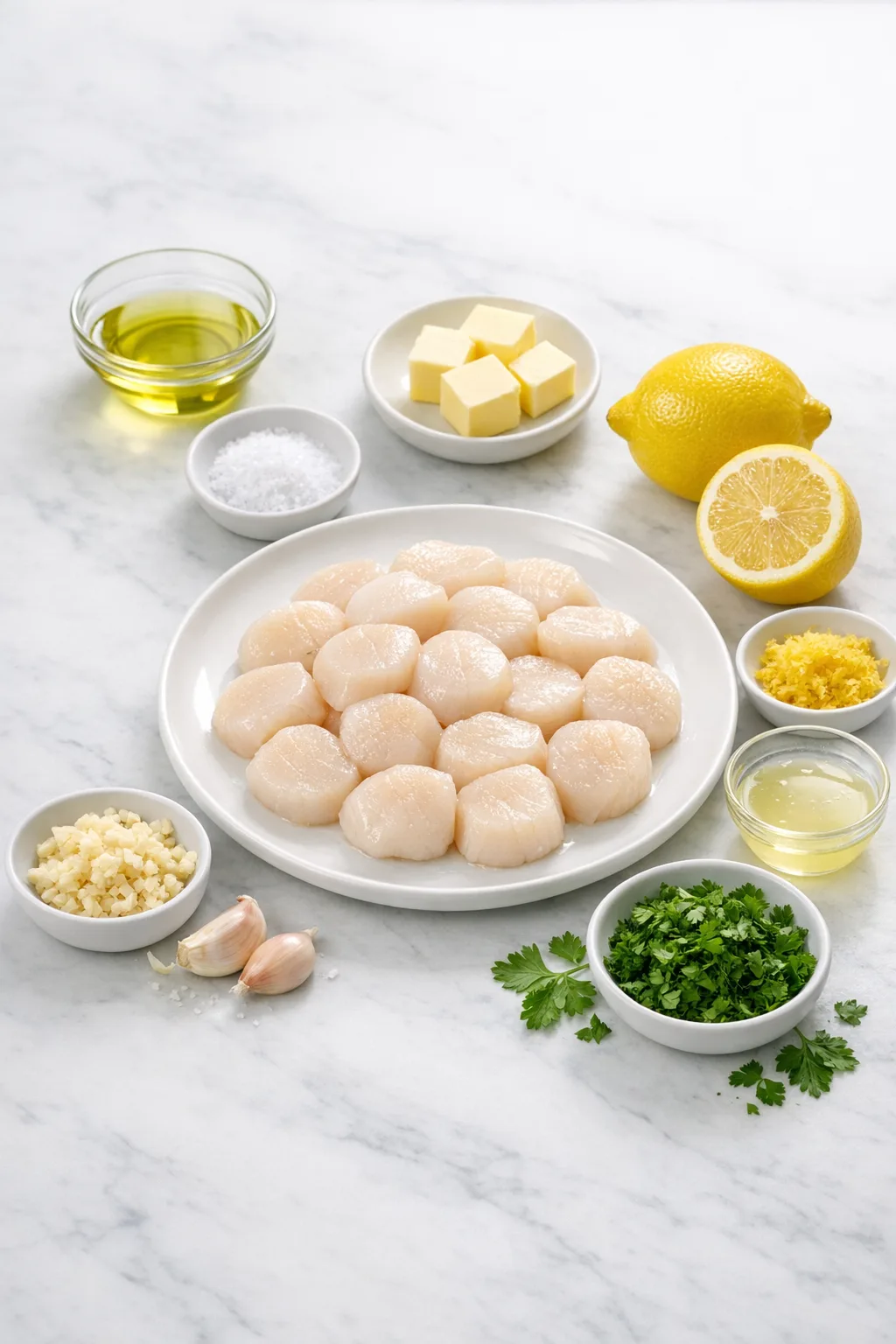
This recipe uses a short, focused ingredient list. Nothing here is filler.
- 1½ pounds sea scallops: Look for large, dry-packed sea scallops. Dry-packed means they have not been treated with water-retaining phosphates, which is exactly what you want for a proper sear. If using frozen, thaw completely and dry them very well.
- 2 tablespoons avocado oil: Avocado oil handles high heat better than olive oil without burning or turning bitter. This matters here because the sear happens fast and hot.
- 3 tablespoons butter: Butter builds the sauce and keeps the scallops tender as they finish cooking. For a dairy-free version, a good extra-virgin olive oil works as a substitute.
- 4 garlic cloves, minced
- 1 lemon, zested and juiced (about 1 tablespoon zest and 3 tablespoons juice)
- 1 tablespoon finely chopped fresh parsley, plus extra for garnish
- Kosher salt, to taste
Fresh parsley and lemon zest are not decorative here. The zest carries the citrus oils that brighten the butter sauce in a way that juice alone cannot replicate.
How to Cook Pan Seared Scallops: Step-by-Step
Step 1: Remove Moisture and Season for a Proper Crust
Check the side of each scallop for the small rectangular side muscle, sometimes called the foot. It is slightly tougher and chewier than the rest of the scallop. Peel it off with your fingers and discard it.
Pat the scallops dry with a paper towel, then season both sides with kosher salt. Dry scallops are the foundation of a golden crust. Any retained surface moisture will cause steaming instead of browning, and once that happens, no amount of extra heat will recover the sear.
Step 2: Sear Until the Edges Pull Away Cleanly
Heat 2 tablespoons of avocado oil in a sauté pan over medium-high heat. Wait until the oil is visibly shimmering before adding any scallops. This is the moment that determines your crust.
Place the scallops in the pan without touching each other. Press down gently on each one to ensure full contact with the surface. Sear for approximately 1½ to 2 minutes per side without moving them. They will release naturally from the pan once the crust has formed. If they resist when you try to flip, give them another 20 to 30 seconds. That resistance is the scallop telling you it is not ready. The Pan-Searing Technique behind this is the same principle that applies to fish: the protein releases when the crust is set, not before.
Transfer the seared scallops to a plate and repeat with any remaining scallops. Do not skip the batching step.
Step 3: Build the Lemon Garlic Butter Sauce in the Same Pan
Reduce the heat to medium. Add 3 tablespoons of butter, 4 minced garlic cloves, the lemon zest, lemon juice, and parsley directly to the pan. Whisk the sauce together as the butter melts. You will know it is ready when the sauce is lightly simmering and smells nutty and fragrant rather than sharp and raw.
If the garlic starts to brown too quickly before the butter is fully melted, pull the pan off the heat for 15 seconds and continue whisking. Burnt garlic in the sauce will make the whole dish bitter, and there is no fixing it once it happens.
Step 4: Finish the Scallops in the Sauce and Plate Immediately
Add the scallops back to the pan and spoon the sauce generously over the top. Keep them in the pan only long enough to warm through, about 30 to 45 seconds. Scallops continue cooking from residual heat after they leave the pan, so slightly undercooked is always the safer side to land on.
Plate the scallops, drizzle extra sauce over each one, and finish with a little freshly grated lemon zest and chopped parsley. That final garnish is not just visual. The fresh zest added at the end has a brightness that the cooked zest in the sauce does not.
What Separates Good Seared Scallops from Great Ones
- Have everything prepped before the pan heats up. This recipe moves fast. Once the oil is hot, you have about three minutes of active cooking. Minced garlic, zested lemon, and chopped parsley should all be sitting in small bowls before you turn on the stove.
- Use cast iron or stainless steel. Non-stick pans do not retain heat well enough to produce a proper crust. Stainless steel or cast iron holds temperature even when cold scallops hit the surface.
- Do not flip early. The scallop releases on its own when the crust is ready. Forcing it tears the surface and ruins the texture.
- Slightly undercooked beats overcooked every time. The center should be just barely opaque when you pull them. They will finish from carryover heat on the plate.
- Extra garnish matters. A small amount of freshly grated lemon zest and parsley added right before serving gives the dish a visual brightness and a fresh citrus note that makes it look genuinely restaurant-worthy.
I prefer avocado oil over olive oil for the sear specifically because it stays stable at the high heat this recipe requires. Olive oil can turn acrid before the scallops are done, and that flavor carries into the sauce.
Serving Suggestions
These scallops work beautifully over a simple risotto, where the lemon garlic butter sauce soaks into the rice and ties everything together. Creamy mashed potatoes or a light cauliflower puree also pair well, giving the sauce somewhere to pool.
For a vegetable side, Lemon Garlic Asparagus uses the same citrus and garlic profile as this dish, so the flavors reinforce each other rather than compete. A simple green salad with a light vinaigrette also works if you want to keep the plate feeling fresh and clean.
This recipe is well-suited for Valentine’s Day dinner, a Christmas dinner for two, or any occasion where you want the food to feel considered without spending hours in the kitchen.
Storage and Reheating
Scallops are at their best the moment they come off the stove. That said, leftovers can be stored in an airtight container in the refrigerator for up to two days.
To reheat, warm them gently in a pan over low heat with a small splash of water or a little extra butter. You are looking for them to just heat through, not cook further. The moment they start to look opaque all the way through again, pull them off. Microwaving scallops makes them rubbery and is worth avoiding entirely.
This is not a recipe that benefits from meal prep. The sear is a one-time event, and the texture on day two will always be softer than fresh. Make only what you plan to eat.
FAQs
Why are my scallops not getting a golden crust?
The most common cause is surface moisture. Even a small amount of water on the scallop creates steam, which prevents browning. Pat them completely dry, and make sure the oil is shimmering before they hit the pan. A second common cause is pan crowding, which drops the pan temperature and causes steaming instead of searing.
Can I use frozen scallops for this recipe?
Yes, but thaw them fully in the refrigerator overnight, then dry them very thoroughly before cooking. Frozen scallops often release more water than fresh ones, so extra time on paper towels before cooking makes a real difference to the final crust.
How do I know when scallops are done cooking?
Look for a deep golden-brown crust on the seared side and an opaque exterior. The center should still have a very slight translucency when you pull them. They will finish cooking from residual heat. If the center is fully white and firm, they are overcooked.
What is the side muscle on a scallop and do I have to remove it?
The side muscle is a small rectangular tab attached to the side of the scallop. It is edible but noticeably chewier than the rest of the scallop. Removing it takes about five seconds per scallop and makes a real difference in the final texture. Peel it off with your fingers before patting dry.
Can I make the lemon garlic butter sauce ahead of time?
The sauce comes together in about two minutes in the same pan you used for the sear, so making it ahead offers little advantage. The browned bits left in the pan from searing the scallops add flavor to the sauce that you cannot replicate separately. Make it fresh, right after the scallops are seared.
What oil works best for how to sear scallops at high heat?
Avocado oil is the best choice here because of its high smoke point. Olive oil can start to break down and turn bitter at the temperature needed for a proper sear. Refined coconut oil or a neutral vegetable oil are reasonable alternatives if avocado oil is not available.
Ready to Try It?
The gap between scallops that disappoint and scallops that genuinely impress comes down to two things: dry scallops and a hot pan. Once you have those two variables right, the rest of the recipe practically takes care of itself.
Give this one a try the next time you want a dinner that feels special without requiring a complicated process. The lemon garlic butter sauce alone is worth making twice.
Essential Kitchen Tools
Making Seared Scallops? Most failed attempts come from using the wrong pan or heat setup — not the recipe itself.

Want to save this recipe?
Want to save this recipe? Enter your email below, and we'll send it straight to your inbox. Plus, receive new recipes every week!

Beginner-Friendly Seared Scallops Recipe
- Total Time: 20 minutes
- Yield: 4 servings 1x
Description
Sea scallops enveloped in a silky lemon garlic butter sauce, kissed with the zest of fresh lemon and garnished with vibrant parsley. A gourmet dish that boasts a rich, buttery flavor with a hint of citrus, offering a melt-in-your-mouth experience.
Ingredients
- 2 tablespoons avocado oil
- 1 ½ pounds sea scallops
- kosher salt (to taste)
- 3 tablespoons butter
- 4 garlic cloves (minced)
- 1 lemon (zested and juiced (about 1 tablespoon zest and 3 tablespoons juice))
- 1 tablespoon finely chopped fresh parsley (plus extra for garnish)
Instructions
- Begin by drying the scallops thoroughly with a paper towel and seasoning them with kosher salt.
- In a sauté pan over medium-high heat, warm the oil until it shimmers, then add the scallops. Sear for about 1 ½ to 2 minutes on each side until they develop a golden crust. Transfer the scallops to a plate and repeat with the remaining scallops.
- Lower the heat to medium, then incorporate the butter, minced garlic, lemon zest and juice, and parsley into the pan. Whisk the mixture until it simmers lightly, then return the scallops to the pan and spoon the sauce over them.
- To serve, arrange the scallops on a plate and drizzle additional sauce on top before presenting.
Notes
TECHNIQUE TIP: Thoroughly dry scallops before cooking to ensure a perfect sear and avoid steaming.
STORAGE: Store leftover scallops in an airtight container in the refrigerator for up to 2 days.
SUBSTITUTION: Substitute avocado oil with olive oil if desired for a slightly different flavor profile.
- Prep Time: 5 minutes
- Cook Time: 15 minutes
- Category: Main Course
- Cuisine: American
Nutrition
- Calories: 267 kcal
- Sugar: 1 g
- Sodium: 736 mg
- Fat: 16 g
- Saturated Fat: 6 g
- Unsaturated Fat: 9 g
- Trans Fat: 0.4 g
- Carbohydrates: 9 g
- Fiber: 1 g
- Protein: 21 g
- Cholesterol: 63 mg


