


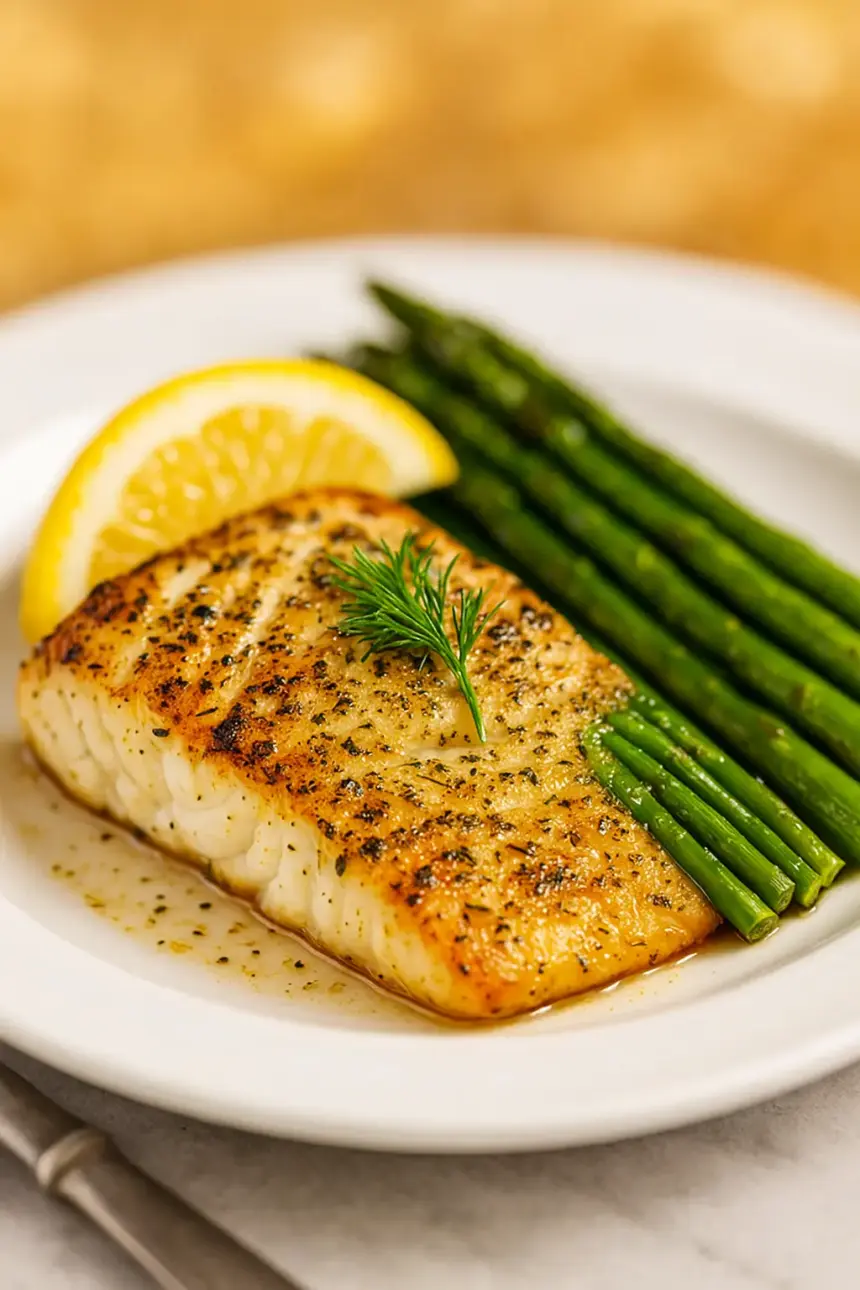
Most people who avoid cooking fish at home aren’t bad cooks. They’re just missing a reliable method. Knowing how to pan sear fish properly is the difference between a fillet that falls apart in the pan and one that comes out with a golden, crackling crust and a tender, flaky center. The whole process takes about 25 minutes from start to finish, and once you understand what to look for at each stage, it becomes one of the most satisfying weeknight techniques you’ll have in your kitchen.
Why This Works Before You Start
Pan searing creates a high-heat crust that locks in moisture. The fish cooks quickly, which means there’s very little margin for error, but also very little time wasted. The key is understanding that fish tells you exactly when it’s ready. You can watch the color change from translucent to opaque as it cooks, which makes it far more forgiving than it looks on paper.
The seasoning blend used here, a combination of dill, lemon pepper, basil, oregano, onion powder, and garlic powder, is designed to complement the natural flavor of the fish without masking it. The lemon juice at the end isn’t decoration. It brightens every other flavor in the dish and cuts through the richness of the olive oil.
What to Avoid Before You Even Turn on the Stove
The biggest reason pan-seared fish fails at home has nothing to do with technique. It starts at the store. When purchasing fresh or thawed fish, smell it before you buy it. Fresh fish should smell mild and clean, like the ocean on a good day, not sharp or sour. A strong fishy odor means the fish is past its prime, and no amount of seasoning will fix that.
If you’re using frozen fish, thaw it overnight in the refrigerator or submerged in cold water. Once thawed, use it immediately. Don’t let it sit.
One more thing to avoid: skipping the pat-dry step. Wet fish steams instead of sears. That golden crust you’re after requires a dry surface and a hot pan.
Ingredients for Pan Seared Fish
- 4 (6-ounce) fish fillets: halibut, sea bass, cod, tilapia, or sole
- 1/2 teaspoon dried dill
- 1/2 teaspoon lemon pepper
- 1/4 teaspoon dried basil
- 1/4 teaspoon dried oregano
- 1/4 teaspoon onion powder
- 1/4 teaspoon garlic powder
- 2 tablespoons olive oil
- 1 lemon, juiced (about 1/4 cup)
On choosing your fish: Thicker fillets like halibut, sea bass, and cod hold together better during flipping and are a strong choice if you’re newer to cooking fish. Thinner fillets like tilapia or sole cook faster but are more delicate, so handle them with care. If you want a baked alternative that’s just as straightforward, Dijon Baked Salmon uses the oven instead of the stovetop and produces a completely different texture with a similar level of effort.
Substitution note: If you don’t have lemon pepper on hand, a pinch of black pepper and a little extra lemon zest at the end will get you close.
Step-by-Step: How to Pan Sear Fish
Step 1: Decide on Skin and Prep Your Fillets
Use a sharp Chef Knife and a stable Cutting Board to remove the skin from your 4 (6-ounce) fish fillets if desired. Most fish can be cooked with the skin on, and this is entirely personal preference. If you’re leaving the skin on, plan to sear the skin side first so it crisps up rather than steaming against the pan.
Personally, I prefer cooking with the skin on when the fish is thick enough to support it. The skin crisps up beautifully and adds a layer of flavor you don’t get otherwise.
Step 2: Build Your Seasoning Blend
In a small bowl, combine 1/2 teaspoon dried dill, 1/2 teaspoon lemon pepper, 1/4 teaspoon dried basil, 1/4 teaspoon dried oregano, 1/4 teaspoon onion powder, and 1/4 teaspoon garlic powder. Stir until evenly mixed. The blend should look uniform with no clumps. This combination is built to work with any white fish without overpowering it.
Step 3: Dry and Season Every Surface
Pat the fish dry with paper towels. This step matters more than most people realize. Season both sides of each fillet evenly with the spice mixture. Alternatively, you can marinate the fish for up to 15 minutes before cooking. Do not marinate longer than that. The acidity in a marinade begins to break down the delicate proteins in fish quickly, and you’ll end up with a mushy texture instead of a firm, flaky bite.
Step 4: Get the Pan Genuinely Hot
Heat a heavy Skillet over high heat. Once the pan is hot, add 2 tablespoons of olive oil and allow it to heat until shimmering, about 1 minute. You will know it is ready when the oil moves like water across the surface and thin wisps of vapor begin to rise. If the oil smokes heavily, the pan is too hot. Reduce heat slightly and wait 30 seconds before adding the fish.
Step 5: Place the Fish and Leave It Alone
Carefully lay the fish fillets into the hot oil. Cook undisturbed until the fish is cooked about two-thirds of the way through. You can see this happening from the side of the fillet: the color will shift from translucent to opaque, moving upward from the bottom. One thing to watch: if you try to move the fish too early, it will stick and tear. Wait until it releases naturally from the pan before flipping.
Step 6: Flip and Finish Cooking
Flip the fillets and continue cooking until done. Total cooking time will vary depending on thickness, usually 3 to 6 minutes per side. Thicker portions will need more time. If you think the fish needs additional cooking but the outside is browning too fast, reduce the heat to medium and cook for an additional 1 to 2 minutes. The fish is done when the edges look fully set and the center no longer has any glassy appearance.
Step 7: Confirm Doneness Before You Pull It
Check for doneness: the fish should be opaque all the way through, no longer translucent, and flake easily when pressed gently with a fork. If needed, reduce heat to medium and cook an additional 1 to 2 minutes. Do not guess on this step. A fork pressed into the thickest part of the fillet will tell you immediately whether it’s ready.
Step 8: Finish with Lemon and Serve
Remove the pan from heat and drizzle the juice of 1 lemon over the fillets just before serving. That squeeze of lemon at the end does more than add brightness. It lifts the seasoning and makes the whole dish taste fresher than it would without it.
What Separates a Good Pan-Seared Fish from a Great One
- Use a heavy pan. Cast iron or stainless steel holds heat evenly. A thin pan will create hot spots that cook the fish unevenly.
- Don’t crowd the pan. If the fillets are too close together, steam builds up between them and you lose the crust. Cook in batches if needed.
- Watch the color, not the clock. Cooking time varies with thickness. A thin tilapia fillet may only need 2 to 3 minutes per side. A thick halibut portion may need closer to 6.
- Room temperature fish sears more evenly. If your fillets have been in the refrigerator, let them sit out for 10 minutes before cooking. Cold fish dropped into a hot pan can seize up and cook unevenly from edge to center.
- Resist the urge to press down on the fish. Pressing forces moisture out and works against the crust you’re building.
Serving Suggestions
Pan-seared fish is versatile enough to anchor a full plate or be tucked into something else entirely. Serve it over a simple grain like rice or quinoa with a wedge of lemon on the side. For a vegetable pairing that holds up to the brightness of the lemon finish, Lemon Garlic Asparagus brings the same citrus thread through the whole meal in a way that feels intentional rather than accidental.
If you want to stretch the fish into something more substantial, pan-seared fillets work beautifully broken over greens for a warm salad, or flaked into a bowl build. For that direction, a Fish Taco Bowl gives you a complete meal format that makes the most of a well-seared fillet without starting from scratch.
Storage and Reheating
Store leftover pan-seared fish in an airtight container in the refrigerator. It keeps well for up to 2 days. Fish does not reheat as gracefully as other proteins, so the goal is to warm it gently rather than cook it again.
Reheat in a skillet over low heat with a small splash of water or a drizzle of olive oil, covered loosely with a lid. You will know it is warmed through when it begins to steam slightly and the flesh feels warm to the touch at the thickest point. Avoid the microwave if you can. It tends to make the texture rubbery and can dry out the edges before the center is warm.
Wrapping Up
Cooking fish at home stops feeling intimidating the moment you understand what you’re actually looking for. The color change, the natural release from the pan, the way the flesh flakes when it’s ready: these are all signals that are easy to read once you’ve seen them once.
Give this one a try on a weeknight when you want something fast and satisfying. The first time you pull a perfectly seared fillet out of the pan with a golden crust and a tender center, you’ll wonder why you ever hesitated.
FAQs
How do I know when pan-seared fish is fully cooked?
The fish should be completely opaque with no translucent or glassy areas remaining. When you press the thickest part gently with a fork and it flakes apart cleanly, it’s done. If it resists or looks shiny in the center, give it another 1 to 2 minutes over medium heat.
What is the best fish for pan searing?
Thicker, sturdier fillets like halibut, sea bass, and cod are the most forgiving for beginners because they hold together well during flipping. Thinner fillets like tilapia and sole work too, but they cook faster and require a gentler touch when you flip them.
Can I marinate the fish before pan searing?
Yes, marinating fish before cooking adds flavor, but keep it to 15 minutes maximum. The acidity in most marinades begins to break down the delicate proteins in fish fairly quickly, which leads to a soft, mushy texture rather than the firm, flaky result you want.
Why is my pan-seared fish sticking to the pan?
The most common reason is that the pan or oil wasn’t hot enough before the fish went in. The oil should be shimmering and moving freely before you add the fillets. Also, avoid moving the fish too soon. It will release naturally from the pan once the crust has formed, usually after 3 to 4 minutes depending on thickness.
How to tell if fish is done without a thermometer?
Watch the color change from the side of the fillet. As it cooks, the opaque color moves upward from the bottom. Once it reaches about two-thirds of the way up, it’s time to flip. After flipping, the fish is done when it’s fully opaque throughout and flakes easily when pressed with a fork.
Should I cook fish with the skin on or off?
Both work with this method. Skin-on fillets develop a crispy, flavorful exterior when seared skin side first, and the fat from the skin adds depth to the overall flavor. Skin-off fillets are slightly easier to handle and are more common in most grocery stores. The cooking method does not change either way.
Essential Kitchen Tools
Making How to Pan Sear Fish? Most failed attempts come from using the wrong pan or heat setup — not the recipe itself.

Want to save this recipe?
Want to save this recipe? Enter your email below, and we'll send it straight to your inbox. Plus, receive new recipes every week!

Beginner-Friendly Pan Seared Fish
- Total Time: 25 minutes
- Yield: 4 servings 1x
Ingredients
- 4 (6 ounce) fish filets (halibut, sea bass, cod, tilapia, sole)
- 1/2 teaspoon dried dill
- 1/2 teaspoon lemon pepper
- 1/4 teaspoon dried basil
- 1/4 teaspoon dried oregano
- 1/4 teaspoon onion powder
- 1/4 teaspoon garlic powder
- 2 tablespoons olive oil
- 1 lemon (juiced (about 1/4 cup))
Instructions
- To start, if you prefer, use a sharp knife to take the skin off the 4 (6 ounce) fish filets. Most types of fish can be cooked with the skin intact; this is a matter of personal choice. If you choose to keep the skin, sear the skin side first.
- In a small bowl, mix together 1/2 teaspoon dried dill, 1/2 teaspoon lemon pepper, 1/4 teaspoon dried basil, 1/4 teaspoon dried oregano, 1/4 teaspoon onion powder, and 1/4 teaspoon garlic powder.
- Using paper towels, pat the fish dry. Evenly season both sides of each fillet with the prepared seasoning mix. Alternatively, you can marinate the fish for up to 15 minutes.
- Heat a heavy skillet over high heat. Once it’s hot, pour in 2 tablespoons of olive oil and let it heat until it shimmers, which should take about 1 minute.
- Carefully add the fish fillets to the hot skillet. Cook them without moving until they are about two-thirds cooked through.
- Turn the fillets over and keep cooking until they are fully done. The total cooking time will depend on the thickness of the fillets, typically ranging from 3 to 6 minutes per side.
- To check for doneness, ensure the fish is opaque, no longer translucent, and flakes easily with a fork. If necessary, lower the heat to medium and cook for an additional 1 to 2 minutes.
- Remove the skillet from the heat and drizzle the juice of 1 lemon over the fish just before serving.
Notes
TECHNIQUE TIP: For a crispy texture, sear the fish skin-side down first if leaving the skin on.
STORAGE: Thaw frozen fish overnight in the fridge or in cold water, and use immediately after defrosting.
SUBSTITUTION: Swap lemon pepper for freshly cracked black pepper and lemon zest for a fresher taste.
- Prep Time: 15 minutes
- Cook Time: 10 minutes
- Category: Main Dish
- Cuisine: American
Nutrition
- Calories: 73 kcal
- Sugar: 1 g
- Sodium: 2 mg
- Fat: 7 g
- Saturated Fat: 1 g
- Unsaturated Fat: 6 g
- Carbohydrates: 3 g
- Fiber: 1 g
- Protein: 1 g
- Cholesterol: 0.4 mg


