



Getting fettuccine alfredo right at home is harder than it looks. The sauce seizes up, the cheese clumps, or the whole thing turns into a gluey mess before it even hits the table. The good news: those problems almost always come from a few small missteps, and this recipe from John Kanell sidesteps every one of them. With just butter, heavy cream, Parmesan, and pasta, you get a rich, silky fettuccine alfredo that tastes like it came out of a proper Italian kitchen, ready in about 25 minutes.
Why Most Homemade Fettuccine Alfredo Fails (and How to Fix It)
The sauce breaks. That is the number one complaint, and it almost always happens for the same reason: the Parmesan goes into a cold or overheated liquid. Cheese needs a warm, stable environment to melt smoothly. Too cold and it stays grainy. Too hot and the fat separates.
The second culprit is skipping the pasta water. That starchy liquid is what keeps the sauce loose and glossy as it sits. Without it, the sauce tightens into a thick paste within minutes of leaving the pan.
Keep these two things in mind and the rest of the recipe practically takes care of itself.
Ingredients for Fettuccine Alfredo
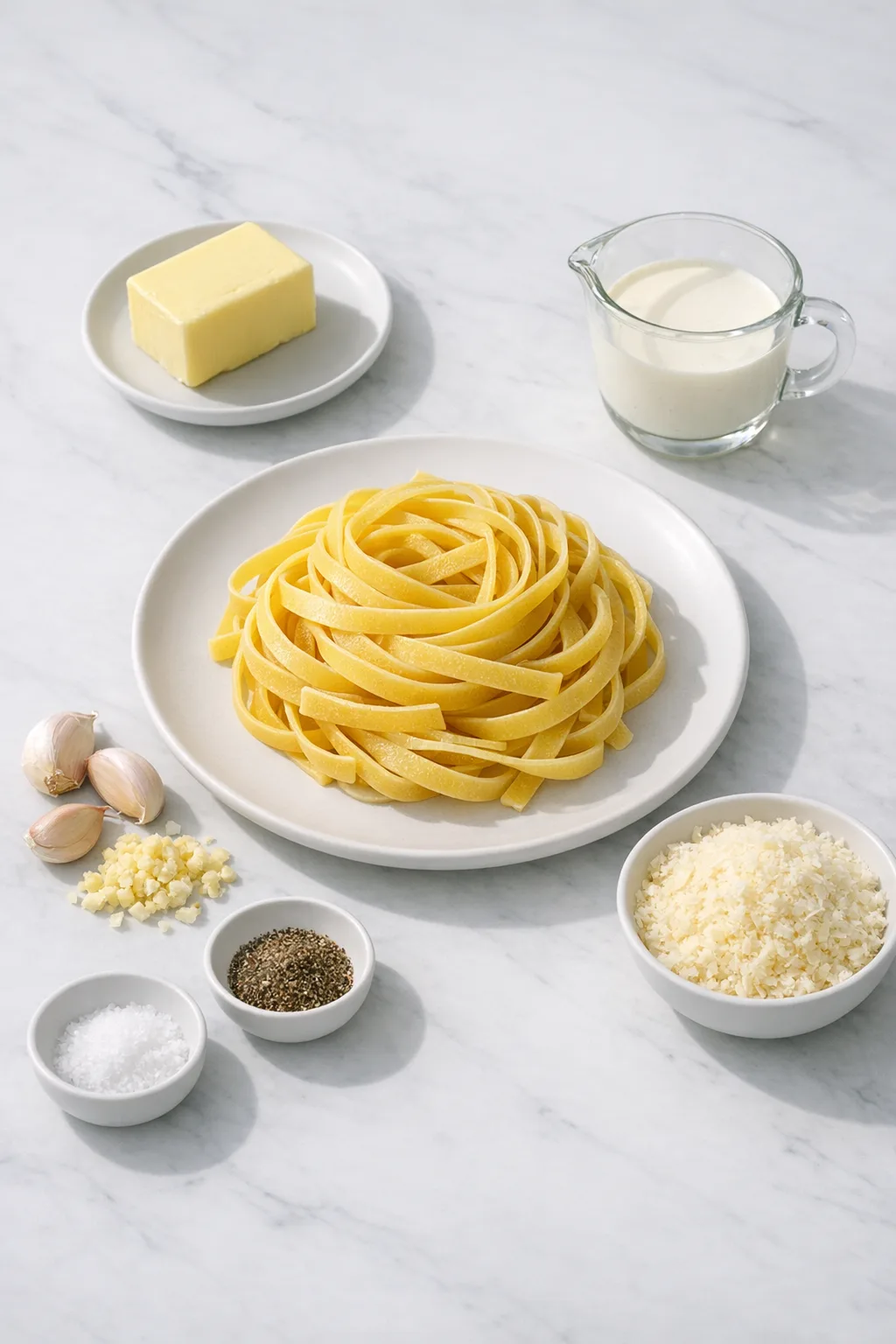
This recipe uses a short, honest list. Every ingredient pulls weight, so quality matters more than quantity here.
- 1 (16-ounce) package fettuccine pasta (454g)
- ½ cup unsalted butter (113g)
- 3 garlic cloves, minced (about 1 tablespoon)
- 1 cup heavy whipping cream (240mL) — the fat content is what gives the sauce its body; Homemade Classic Whipped Cream is another great use for this ingredient if you have leftovers
- 1 cup freshly grated Parmesan cheese (113g), plus more for serving
- ½ teaspoon ground black pepper
- ¼ teaspoon salt
A Note on Two Key Ingredients
Freshly grated Parmesan is non-negotiable here. Pre-shredded cheese contains anti-caking agents that prevent it from melting cleanly into the sauce. Grate it yourself and you will immediately see the difference in texture.
Unsalted butter gives you control over the final salt level. If you only have salted butter on hand, it will still work, but hold back on the added salt until you taste the finished sauce.
Before You Start: Two Things Worth Doing Now
Grate your Parmesan before the butter hits the pan. Once the sauce starts moving, it moves fast, and stopping to grate cheese mid-cook is how things go wrong.
Also, set a measuring cup next to your pasta pot as a reminder to scoop out that pasta water before you drain. It is easy to forget, and once the water is gone, it is gone.
Step-by-Step Instructions
Step 1: Salt the Water and Cook the Pasta to Al Dente
Bring a large pot of salted water to a boil over medium-high heat. Add the fettuccine and cook according to package directions. Before draining, reserve ¼ cup of pasta water, then drain the pasta well.
You want the pasta al dente, with a slight resistance when you bite through it. It will continue softening once it hits the warm sauce, so pulling it a touch early is better than waiting for it to go fully tender in the pot.
If the pasta finishes before the sauce is ready → toss it with a small drizzle of olive oil to prevent sticking while you finish the sauce.
Step 2: Build the Aromatic Base Without Burning the Garlic
While the pasta cooks, melt the butter in a large saucepan over medium heat. Add the minced garlic and cook, stirring often, until fragrant, about 30 seconds.
You will know it is ready when the kitchen smells nutty and sweet rather than sharp and raw. That is your cue to move immediately to the next step. Garlic goes from golden to bitter in seconds, and there is enough butter in the pan to make it happen faster than you expect.
If the garlic starts to brown at the edges → pull the pan off the heat for 10 seconds before adding the cream.
Step 3: Warm the Cream Until Bubbly Before Adding Cheese
Pour in the heavy whipping cream and stir to combine. Cook, stirring often, until the cream is warm and bubbly, about 1 minute. Small bubbles forming around the edges of the pan are the visual signal you are looking for.
This warming step is not optional. Cold cream added directly to butter can cause the sauce to look broken before the cheese even goes in. One thing to watch: do not let it reach a rolling boil at this stage, or the cream may reduce too quickly and the sauce will be too thick before the pasta arrives.
Step 4: Melt the Parmesan Into a Smooth, Glossy Sauce
Whisk in the Parmesan, black pepper, and salt until the cheese is fully melted and the sauce looks smooth. Continue cooking, whisking occasionally, until the sauce thickens slightly, 1 to 2 minutes. If the pasta is not ready yet, reduce the heat to low and keep the sauce warm, whisking occasionally to prevent a skin from forming.
The sauce is ready when it coats the back of a spoon and a line drawn through it holds its shape for a moment. If the sauce looks grainy or oily → remove from heat immediately and whisk in a tablespoon of cold butter to bring it back together.
Step 5: Toss the Pasta and Adjust the Consistency
Add the cooked fettuccine to the sauce and toss to coat every strand. Stir in the reserved pasta water, one tablespoon at a time, until the sauce reaches your preferred consistency. Serve immediately with extra Parmesan and black pepper if desired.
The sauce will continue to thicken as it sits, so err on the side of slightly looser than you think you want. By the time it reaches the table, it will be exactly right.
What Separates a Good Fettuccine Alfredo from a Great One
- Use a garlic press instead of mincing by hand. It produces finer pieces that dissolve into the sauce and releases more of the garlic’s natural oils. John Kanell swears by this approach, and after trying it, it is hard to go back.
- European-style butter reduces splattering. It has a lower water content than standard butter, which means less crackling in the pan and a slightly richer sauce overall.
- Grate generously. The recipe calls for 1 cup (113g) of Parmesan, but a little extra never hurt anyone. Measuring cheese with your heart, as John puts it, is entirely valid here.
- Serve the moment it is done. Alfredo sauce does not wait gracefully. The pasta absorbs liquid and the sauce tightens quickly. Have your plates warm and your guests seated before you toss.
- Taste before you add salt. Parmesan is already quite salty, and the pasta water adds more. Season at the end, not the beginning.
Serving Suggestions
Fettuccine alfredo works beautifully as a standalone dish, but it also pairs well with proteins. Sauteed shrimp tossed directly into the pasta at the end adds a sweet, briny contrast to the richness of the sauce. Grilled chicken sliced over the top keeps things simple and satisfying.
A crisp green salad alongside cuts through the richness in a way that feels intentional rather than obligatory. Roasted broccoli or asparagus also works well, with the slight char adding a smoky note against the creamy pasta.
For a completely different direction with the same pasta shape, Creamy Penne Pasta Primavera takes a lighter approach, leaning on vegetables and a less heavy sauce where this recipe leans into pure butter and cream richness. Or, if you want to move away from cream-based sauces entirely, Italian Tomato Sauce With Basil is the cleaner, brighter path with the same fettuccine.
Storage and Reheating
Store leftover fettuccine alfredo in an airtight container in the refrigerator. It keeps well for up to 3 days, though the sauce will thicken considerably as it chills.
To reheat, add the pasta to a saucepan over low heat with a splash of water or milk. Stir gently and continuously until the sauce loosens and becomes glossy again. You will know it is ready when the sauce looks smooth and coats the pasta the way it did when freshly made. Avoid the microwave if you can, as it tends to heat unevenly and can cause the sauce to separate.
This dish is not ideal for freezing. The cream-based sauce tends to break when thawed, resulting in a watery, grainy texture that is difficult to recover.
FAQs
Can I use half-and-half instead of heavy cream in fettuccine alfredo?
Yes, and it works reasonably well. The sauce will be slightly thinner and less rich, but still very good. One reviewer made this recipe with half-and-half and found it entirely satisfying. Just be aware the sauce may need a little longer to thicken slightly.
Why is my alfredo sauce clumping instead of melting smoothly?
The most common cause is adding Parmesan to liquid that is not warm enough. Make sure the cream is visibly bubbly before you whisk in the cheese. Also, pre-shredded cheese with anti-caking agents will clump no matter what you do. Freshly grated is the fix.
How do I keep fettuccine alfredo from getting too thick?
Save that pasta water. Add it one tablespoon at a time after tossing the pasta with the sauce. The starch in the water helps the sauce stay loose and silky rather than tightening into a paste.
Can I add protein to this recipe?
Absolutely. Sauteed shrimp, grilled chicken, or even crispy pancetta all work well. Cook the protein separately and add it when you toss the pasta with the sauce, or serve it on the side.
What is the history behind fettuccine alfredo?
The dish dates back to 1914, created by Alfredo Di Lilio at his restaurant in Rome. It gained international fame when silent film stars Mary Pickford and Douglas Fairbanks visited, fell in love with the dish, and brought the recipe back with them to the United States.
How many servings does this recipe make?
This recipe yields 6 servings, with each serving coming in at 634 kcal, 58g of carbohydrates, 17g of protein, and 38g of fat according to the recipe nutrition data.
Ready to Make It Tonight
Fettuccine alfredo has a reputation for being fussy, but this version proves that reputation wrong. The technique is straightforward, the ingredient list is short, and the result is a bowl of pasta that genuinely rivals what you would order at a restaurant.
Give this one a try on a weeknight when you want something that actually satisfies without a long list of steps. The first time I made it, I was genuinely surprised by how much flavor comes from so few ingredients when each one is treated with a little care. I think you will feel the same way.
Essential Kitchen Tools
Making Fettuccine Alfredo? Most failed attempts come from using the wrong pan or heat setup — not the recipe itself.

Want to save this recipe?
Want to save this recipe? Enter your email below, and we'll send it straight to your inbox. Plus, receive new recipes every week!

Creamy Fettuccine Alfredo Recipe
- Total Time: 25 minutes
- Yield: 6 servings 1x
Description
Silky fettuccine pasta enveloped in a luxurious, creamy Alfredo sauce, made rich with Parmesan cheese and a hint of garlic. This comforting Italian classic is perfect for a quick weeknight dinner or casual gathering, bringing warmth and satisfaction with every bite.
Ingredients
- 1 (16-ounce) package fettuccine pasta ((454g))
- ½ cup unsalted butter ((113g))
- 3 garlic cloves, minced ((1 tablespoon))
- 1 cup heavy whipping cream ((240mL))
- 1 cup freshly grated Parmesan cheese ((113g), plus more for serving)
- ½ teaspoon ground black pepper
- ¼ teaspoon salt
Instructions
- Fill a large pot with salted water and bring it to a boil over medium-high heat. Once boiling, add the fettuccine and cook according to the package instructions. Set aside ¼ cup of the pasta water before draining the pasta thoroughly.
- While the pasta is cooking, melt the butter in a large saucepan over medium heat. Add the minced garlic and sauté, stirring frequently, until it becomes fragrant, which should take about 30 seconds. Then, incorporate the cream and continue to cook, stirring often, until the cream is heated through and begins to bubble, approximately 1 minute.
- Mix in the Parmesan cheese, black pepper, and salt, whisking until the cheese has melted and the sauce is creamy. Keep cooking, whisking occasionally, until the sauce thickens a bit, which will take about 1 to 2 minutes. If the pasta isn’t ready yet, lower the heat to keep the sauce warm while whisking occasionally.
- Add the drained pasta to the sauce and toss to coat evenly. Gradually stir in the reserved pasta water, one tablespoon at a time, until the sauce reaches your preferred consistency. Serve right away, as the sauce will continue to thicken if left to sit. Optionally, garnish with extra Parmesan and black pepper.
Notes
TECHNIQUE TIP: Use freshly grated Parmesan cheese to ensure a smooth and creamy sauce texture.
STORAGE: Store leftovers in an airtight container in the refrigerator for up to 3 days. Reheat gently on the stovetop with a splash of cream to revive the sauce.
- Prep Time: 10 minutes
- Cook Time: 15 minutes
- Category: Main Course
- Cuisine: Italian
Nutrition
- Calories: 634 kcal
- Sugar: 3 g
- Sodium: 418 mg
- Fat: 38 g
- Saturated Fat: 22 g
- Unsaturated Fat: 12 g
- Trans Fat: 1 g
- Carbohydrates: 58 g
- Fiber: 3 g
- Protein: 17 g
- Cholesterol: 163 mg


