



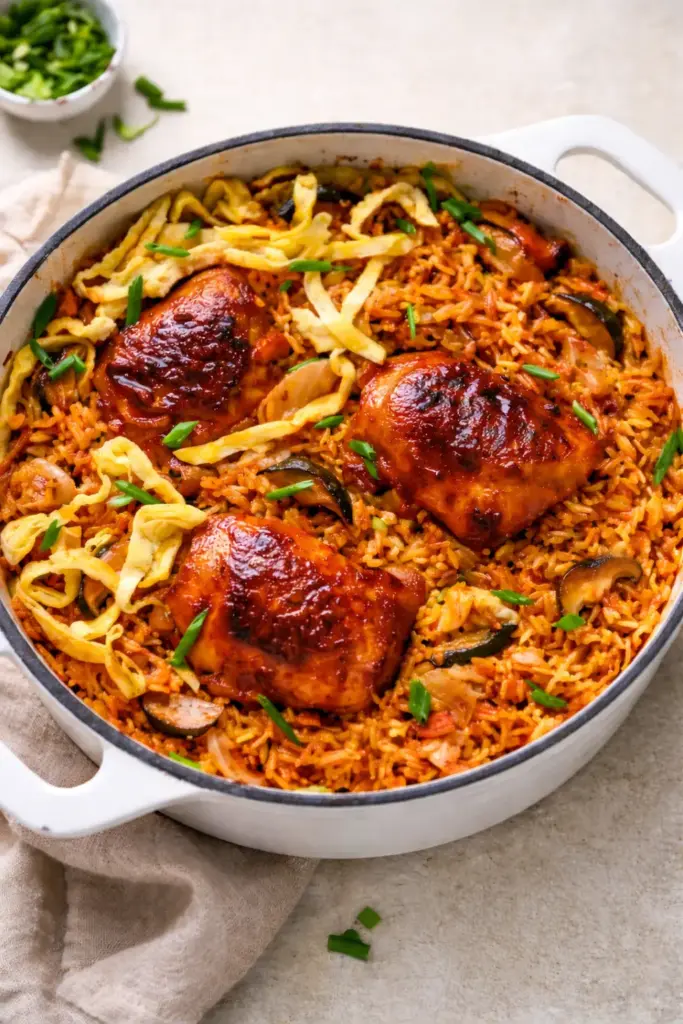
Weeknights have a way of draining every last bit of motivation to cook something interesting. You want flavor, you want comfort, and you absolutely do not want a pile of dishes at the end of it. That is exactly where this one pot gochujang chicken and rice earns its place. Built around gochujang, a Korean fermented chili paste with deep umami and a slow-building heat, this recipe layers bold flavor into every single grain of rice without asking much of you in return. The chicken comes out tender with charred, sticky skin, the rice is fluffy and fragrant, and the whole thing is done in one pan.
Why This Works Before You Touch a Single Ingredient
The real secret to a great chicken and rice dish is not the marinade alone. It is two things working together: how you build flavor in layers, and getting the rice-to-liquid ratio exactly right. Too much liquid and the rice turns soggy. Too little and it stays chalky in the center.
Here, the liquid is not just chicken stock. It is a combination of mushroom soaking water, kimchi juice, and stock, each adding a different dimension of savory depth. That layering is what makes this taste like it took hours when it genuinely did not.
Ingredients for One Pot Gochujang Chicken and Rice
Here is everything you need, organized so prep flows smoothly:
- 4 dried shiitake mushrooms
- 4 skin-on chicken thighs, bones removed (roughly 600g or 1 lb 5 oz)
- 3 eggs
- ⅛ tsp ground white pepper
- 2 tbsp vegetable oil
- ⅓ cup kimchi and its juice
- About 2 cups chicken stock
- 2 cups jasmine rice
- Finely sliced spring onion (scallions), to serve
For the marinade:
- 2 tbsp gochujang
- 2 tbsp soy sauce
- 1 tbsp mirin
- 3 cloves garlic, finely chopped
- 1 tbsp ginger, finely grated
- 2 tsp sweet dark soy sauce
A note on two key ingredients: the dried shiitake mushrooms are not just a texture element. Their soaking liquid becomes part of the cooking stock, adding an earthy, almost meaty undertone that fresh mushrooms simply cannot replicate. And the kimchi juice is doing double duty too, contributing both acidity and fermented funk that balances the richness of the gochujang marinade.
If you cannot find sweet dark soy sauce, a small drizzle of regular soy sauce mixed with a tiny pinch of brown sugar works as a reasonable substitute. Bone-in thighs work fine if that is what you have, just remove the bone before marinating.
What to Watch Out For Before You Start Cooking
Most one-pot rice failures come down to one moment: adding the liquid without checking that every rice grain is submerged. If even a portion of the rice sits above the liquid line, it will cook unevenly, leaving hard, chalky patches in an otherwise great dish. Keep a spatula nearby to gently press everything down before you put the lid on.
Also, resist the urge to lift the lid while the rice cooks. Every time you do, steam escapes and the timing shifts.
Step-by-Step Instructions
Step 1: Rehydrate the Mushrooms to Unlock Their Cooking Liquid
Place the 4 dried shiitake mushrooms in a bowl and cover with ½ cup of hot water. Let them soak for 15 minutes until they are fully softened and squishy to the touch. Remove the mushrooms and squeeze out any excess water gently, but keep every drop of that soaking liquid. Remove and discard the woody stems, then slice the mushrooms in half. Set both the mushrooms and the liquid aside.
One thing to watch: if you skip squeezing the mushrooms before slicing, excess water can dilute your carefully measured liquid ratio later.
Step 2: Coat the Chicken in a Marinade That Does the Heavy Lifting
In a large bowl, combine the gochujang, soy sauce, mirin, finely chopped garlic, finely grated ginger, and sweet dark soy sauce. Mix until the marinade is smooth and deeply colored, almost like a brick-red lacquer. Add the chicken thighs and turn them until every surface is evenly coated. Set aside while you prepare the omelette. The marinade works fast, so even 10 minutes is enough.
Step 3: Build the Egg Noodle Garnish in the Same Pan
Crack the 3 eggs into a bowl, add the white pepper, and whisk until combined. Heat a shallow, heavy-based pan (the same one you will use for the rice) over high heat with 1 tablespoon of vegetable oil. Pour in the egg and cook for 1 to 2 minutes until the bottom is golden and the surface is just set. Use a Chef Knife-friendly surface nearby: cut the omelette in half with your spatula, flip each half, and cook for one more minute. Transfer to a Cutting Board, roll each piece into a cylinder, and slice thinly to create egg noodle strips. Set aside.
Step 4: Measure Your Liquid Precisely So the Rice Cooks Perfectly
Squeeze the kimchi over a measuring jug to collect the juice. Add the reserved mushroom soaking liquid. Top up with chicken stock until the total liquid reaches exactly 2½ cups. This ratio, 2 cups of jasmine rice to 2½ cups of liquid, is the number that determines whether your rice is fluffy or waterlogged. Do not guess it.
Step 5: Sear the Chicken Until the Skin Chars at the Edges
Wipe out the pan with kitchen paper and return it to medium-high heat. Add the remaining 1 tablespoon of vegetable oil. Place the marinated chicken thighs skin-side down and cook for 2 to 3 minutes. You are looking for deep color and charred edges on the skin, not just pale gold. That char is where the flavor concentrates. If the skin is browning too fast, simply lower the heat slightly.
💡 Chef’s Pro-Tip for Ultimate Crispy Skin: If you want that perfect shatter-crisp texture, sear the chicken skin-side down for a full 4–5 minutes until deeply golden. Then, remove the chicken from the pan and set it aside while you prep the rice and liquid. When you are ready to simmer (Step 6), place the chicken on top of the rice, making sure the skin stays above the liquid level. This prevents the skin from boiling and becoming soggy, keeping it beautifully crisp while the rice cooks underneath.
Step 6: Layer Everything Into the Pan and Let the Rice Do Its Work
Flip the chicken so the skin faces up. Scatter the kimchi and sliced mushrooms around the chicken pieces. Pour the rice over everything and mix it gently through the pan. Add the measured liquid mixture, then use a spoon to make sure every grain of rice is sitting in the liquid, not resting on top of the chicken. Bring to a simmer, then reduce the heat to low, cover with a lid, and cook gently for 30 minutes.
You will know it is ready when the steam coming from the lid smells deeply savory and the liquid has been fully absorbed. Lift the lid and use a fork to fluff the rice. Scatter over the egg noodles and sliced spring onion, then serve straight from the pan.
What Separates a Good One Pot Chicken Rice from a Great One
- Use jasmine rice, not long-grain or basmati. Jasmine absorbs the liquid at the right rate for this cooking method and gives you that slightly sticky, fragrant texture.
- Do not skip the mushroom soaking liquid. It is free flavor that most people pour down the drain. Use it every time.
- Skin-on thighs are non-negotiable for texture. I prefer thighs over breasts here because they stay moist even after 30 minutes of covered cooking, and the skin crisps beautifully in the marinade.
- The kimchi juice is not optional. It adds a fermented brightness that cuts through the richness of the gochujang and makes the whole dish taste more alive.
- Let the rice rest with the lid on for 5 minutes after cooking. This allows any remaining steam to finish the job without overcooking the bottom layer.
Serving Suggestions
Serve straight from the pan at the table for maximum visual impact. The contrast of the deep red chicken, the white rice, the golden egg noodles, and the green spring onion is genuinely striking.
A small bowl of extra kimchi on the side adds crunch and a cooling fermented contrast to the spicy chicken. A drizzle of sesame oil over the finished dish adds a nutty, aromatic finish that pairs well with the gochujang heat.
Make It Once, Use It All Week
Leftovers keep well in an airtight container in the refrigerator for up to 3 days. The rice firms up overnight, which actually makes it ideal for reheating in a pan with a small splash of water or stock. Stir it over medium heat until the grains are separate and steaming again, about 3 to 4 minutes. You will hear a gentle sizzle and the gochujang aroma will bloom again as it warms through.
Avoid microwaving if you can. The rice tends to go rubbery in patches rather than heating evenly. The pan method takes two extra minutes and is worth it.
A Weeknight Dinner Worth Coming Home To
This one pot gochujang chicken and rice is the kind of recipe that solves a real problem: you want something genuinely flavorful on a busy night without the cleanup that usually comes with it. One pan, one wash-up, and a dinner that tastes like you put in far more effort than you did.
Give this one a try the next time the week feels long. You might find yourself making it on the weekend too, just because you want to.
Must Try Recipes
- One Pot Chicken Pasta — Perfect for those who love easy, hearty meals.
- How to Make Jambalaya: A Classic Louisiana One-Pot Meal — Ideal for fans of spicy, satisfying dishes.
- Instant Pot Chicken and Rice — A quick and easy alternative if you have an Instant Pot.
FAQs
Can I use boneless, skinless chicken thighs for this one pot gochujang chicken and rice?
You can, but you will lose the crispy charred skin that adds texture and flavor contrast. Boneless skinless thighs will still taste great from the marinade, but the skin-on version gives the dish a noticeably richer result. If you do use skinless, reduce the initial searing time to about 1 to 2 minutes per side.
What can I substitute for gochujang if I cannot find it?
Gochujang has a very specific fermented, slightly sweet heat that is hard to replicate exactly. In a pinch, a mix of sriracha and a small amount of white miso paste gets you closer than plain chili sauce. The flavor will be sharper and less complex, but the dish will still work.
Why is my rice coming out mushy?
The most common cause is too much liquid. Measure your combined kimchi juice, mushroom soaking water, and chicken stock carefully to hit exactly 2½ cups total. Also check that your lid fits tightly, as a loose lid lets steam escape and throws off the balance.
Can I make this easy one pot chicken recipe ahead of time?
The chicken can be marinated up to 24 hours in advance and kept covered in the refrigerator. The mushrooms can also be soaked and sliced ahead of time. The full dish is best cooked fresh, but leftovers reheat well in a pan with a splash of stock over medium heat.
How spicy is this gochujang chicken rice recipe?
At 2 tablespoons of gochujang for 4 servings, the heat level is moderate, warm and present but not overwhelming. The kimchi adds a little extra kick. If you are cooking for people sensitive to spice, start with 1 tablespoon of gochujang and taste the marinade before adding the chicken.
Can I add vegetables to this dish?
Yes, and it works well. Bok choy cut into quarters, thinly sliced cabbage, or even diced zucchini can be added alongside the kimchi and mushrooms in Step 6. Avoid dense root vegetables as they will not cook through in the 30-minute window without becoming mushy on the outside.
Tools That Make one pot gochujang chicken and rice Actually Work
Most failed attempts come down to the wrong equipment. These are the exact tools that get you the right texture, heat, and result every time.

Want to save this recipe?
Want to save this recipe? Enter your email below, and we'll send it straight to your inbox. Plus, receive new recipes every week!

Quick One Pot Gochujang Chicken and Rice Recipe
- Total Time: 55 minutes
- Yield: 4 1x
Description
Make the perfect one pot gochujang chicken and rice recipe with this step-by-step guide. Fluffy rice, crispy chicken, and bold flavor in one dish.
Ingredients
- 4 dried shiitake mushrooms
- 4 skin-on chicken thighs, bones removed (approximately 600g or 1 lb 5 oz)
- 3 eggs
- ⅛ tsp ground white pepper
- 2 tbsp vegetable oil
- ⅓ cup kimchi and its juice
- about 2 cups chicken stock
- 2 cups jasmine rice
- finely sliced spring onion (scallions), for serving
- Marinade:
- 2 tbsp gochujang
- 2 tbsp soy sauce
- 1 tbsp mirin
- 3 cloves garlic, finely chopped
- 1 tbsp ginger, finely grated
- 2 tsp sweet dark soy sauce
Instructions
- To begin, soak the dried shiitake mushrooms in ½ cup of hot water for 15 minutes to soften them. Afterward, gently squeeze the mushrooms to remove excess water, reserving the soaking liquid. Discard the stems, which can be tough, and slice the mushrooms in half. Set them aside for later use.
- In a large mixing bowl, combine the gochujang, soy sauce, mirin, garlic, ginger, and sweet dark soy sauce. Mix well to create a marinade, then add the chicken pieces, ensuring they are evenly coated. Allow the chicken to marinate for a while to let the flavors develop.
- For the omelette, crack the eggs into a medium bowl and whisk them together with the white pepper. Heat a shallow, heavy-based pan over high heat, making sure it’s large enough for the rice later. Once hot, add 1 tablespoon of vegetable oil. Pour in the egg mixture and cook for 1–2 minutes until the bottom is golden and just set. Cut the omelette in half and flip each half over, cooking for an additional minute before transferring to a chopping board. Roll the omelette into a cylinder and slice it thinly to create egg ‘noodles’. Set aside.
- Next, squeeze the kimchi juice into a measuring jug. Add the reserved mushroom soaking liquid and enough chicken stock to total 2½ cups. Set this mixture aside.
- Wipe the pan used for the omelette with paper towels and return it to medium-high heat. Add the remaining vegetable oil and cook the marinated chicken, skin-side down, for 2–3 minutes until the skin starts to color and char at the edges. Flip the chicken so the skin-side is facing up, then add the kimchi and mushrooms around the chicken pieces.
- Spread the rice over the top of the chicken and mix everything together. Pour the chicken stock mixture over the rice, ensuring all grains are submerged. Bring to a simmer, then reduce the heat to low, cover, and cook gently for 30 minutes or until the liquid is absorbed and the rice is tender.
- Once the rice is cooked, fluff it gently with a fork. Top with the egg ‘noodles’ and sliced spring onion before serving.
Notes
Use a Dutch oven for even cooking. Store leftovers in an airtight container for up to 3 days. For a vegetarian option, pan-fry firm tofu separately until golden and add before serving (do not simmer tofu with the rice).
How to Achieve Perfectly Crispy Chicken Skin:
For the best texture, sear the chicken thighs skin-side down for 4–5 minutes until deeply golden and crispy, then remove and set aside. Once you’ve added the rice and liquid to the pan, place the chicken back on top of the rice from the beginning of the 30-minute simmer. Ensure the skin stays above the liquid level to prevent it from boiling. This allows the chicken to cook through perfectly while the skin remains crisp. For an extra shatter-crisp finish, you can quickly broil the chicken pieces alone for 1 minute just before serving.
- Prep Time: 15 minutes
- Cook Time: 40 minutes
- Category: Dinner
- Method: One Pot, Stovetop
- Cuisine: Korean
Nutrition
- Serving Size: 1 serving (¼ of recipe)
- Calories: 731 kcal
- Sugar: 9 g
- Sodium: 1070 mg
- Fat: 32 g
- Saturated Fat: 7 g
- Unsaturated Fat: ~25 g (estimate)
- Carbohydrates: 66 g
- Fiber: 3 g
- Protein: 32 g
- Cholesterol: 164 mg


