



Weeknight dinners have a way of becoming repetitive, especially when you’re trying to eat more vegetables without sacrificing flavor. Pasta Primavera solves that problem in about 40 minutes, with a light lemon butter sauce, colorful seasonal vegetables, and enough substance to satisfy the whole table. Made famous by Le Cirque restaurant in New York City in the 1970s, this is a dish with real roots, not just a pasta afterthought. The result is bright, garlicky, and layered with texture from crisp-tender vegetables and al dente penne.
Why This Works Before You Start
The secret to pasta primavera that actually tastes like something is threefold: properly salted pasta water, vegetables cooked in stages so nothing turns to mush, and reserved pasta water to build a silky sauce without any cream. Most versions fail because the vegetables are either overcooked or the whole dish is under-seasoned. This recipe addresses both directly.
One more thing worth knowing upfront: the tomatoes go in raw at the end. They do not need heat. Their natural sweetness and acidity are exactly what balances the richness of the butter, and cooking them would only dull that brightness.
Ingredients for Pasta Primavera
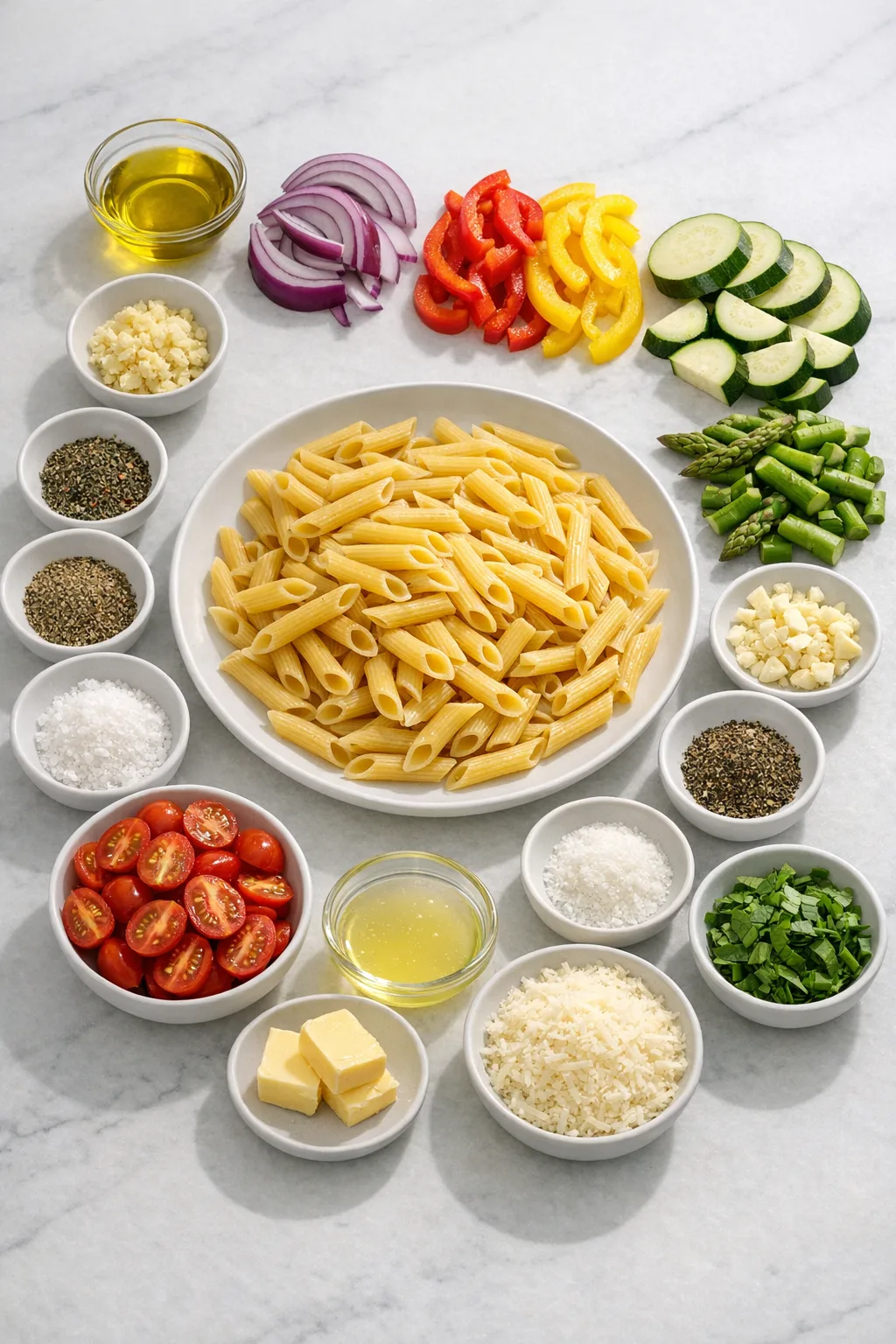
Everything here is fresh, simple, and flexible. Use what looks good at the market, or swap in what you have.
- 10 ounces penne pasta (284g)
- 2 tablespoons olive oil
- ½ small red onion, sliced (94g)
- 1 small red bell pepper, seeded and sliced (162g)
- 1 small yellow bell pepper, seeded and sliced (147g)
- 1 small yellow squash, halved and sliced (169g)
- 1 small zucchini, halved and sliced (185g)
- 12 stalks asparagus, chopped (131g)
- 4 cloves garlic, minced
- 2 teaspoons dried Italian herbs
- 1 teaspoon salt
- ½ teaspoon ground black pepper
- 1 cup grape tomatoes, halved (174g)
- 3 tablespoons fresh lemon juice
- 2 tablespoons unsalted butter
- ½ cup grated parmesan cheese, for serving (40g)
- ¼ cup chopped fresh basil leaves, for serving
Substitution notes: Any bell pepper color works here since the flavor difference is subtle. If you prefer a pesto-based sauce over the lemon butter, the technique in Foolproof Chicken Pesto Pasta explores that balance in depth and translates well to a vegetable-forward pasta. For the herbs, rosemary, oregano, or thyme all work beautifully in place of Italian seasoning. Use what you love.
Why the butter matters: Two tablespoons of unsalted butter might seem minor, but fat bonds flavor compounds to your taste buds. The sauce goes from thin and bright to something that genuinely coats each piece of pasta.
Why reserved pasta water matters: The starchy, lightly salted water left after cooking pasta is what creates a cohesive sauce without any cream or extra fat. Do not skip this step.
Why Most Homemade Pasta Primavera Falls Flat (and How to Fix It)
Before the instructions, it helps to know where things typically go wrong.
- Unsalted pasta water: Pasta absorbs water as it cooks. If that water has no salt, the pasta will taste bland no matter how well-seasoned the vegetables are. Add a generous tablespoon of salt to the boiling water before the pasta goes in.
- All vegetables added at once: Onions, asparagus, and peppers need more time than zucchini and squash. Adding everything together guarantees some vegetables are overcooked before others are done. Cook in stages.
- Skipping the pasta water reserve: This is the most common oversight. Once you drain the pasta, that water is gone. Set a measuring cup next to the colander before you drain so you remember.
- Overcooking the vegetables: The vegetables should be crisp-tender when they come off the heat, not soft. They will continue to cook slightly when combined with the hot pasta.
- Adding lemon juice too early: Lemon juice added during cooking loses its brightness. Stir it in at the very end with the butter so the citrus stays sharp and fresh.
Step-by-Step Instructions
Step 1: Salt the Water and Cook Pasta to Al Dente
Bring a large pot of water to a boil over medium-high heat. Add a generous tablespoon of salt. The water should taste pleasantly seasoned, not bland. Add 10 ounces of penne pasta and cook according to package directions until al dente.
Before draining, reserve ½ cup of the pasta water. You will know the pasta is ready when it has a slight resistance in the center when bitten. Drain using a colander and return the pasta to the pot.
If you struggle with timing pasta alongside stovetop vegetables and want a faster single-vessel approach, the method in 30 Minute One Pot Chicken Pasta handles both in the same pan and cuts down on cleanup significantly.
Step 2: Build Color and Texture by Cooking Vegetables in Stages
While the pasta cooks, heat 2 tablespoons of olive oil in a large skillet over medium-high heat. You will know the oil is ready when it shimmers and you can see faint ripples across the surface. Cold oil produces steamed, pale vegetables instead of ones with any color or flavor.
Add the sliced red onion and cook for 2 minutes, stirring frequently. Add the bell peppers and asparagus and cook for 2 minutes more. The onion should be translucent at the edges and the asparagus should turn a brighter shade of green.
Add the squash, zucchini, and garlic and cook just until they start to turn tender, about 2 to 3 minutes. One thing to watch: garlic burns fast at medium-high heat, so keep things moving in the pan. If the garlic starts to smell sharp or acrid rather than nutty and fragrant, lower the heat immediately and add a splash of water.
Stir in 2 teaspoons of dried Italian herbs, 1 teaspoon of salt, and ½ teaspoon of ground black pepper. Remove from heat.
Step 3: Combine Everything and Finish with Lemon Butter
To the pot with the drained cooked pasta, add the cooked vegetables, 1 cup of halved grape tomatoes, the reserved ½ cup pasta water, 3 tablespoons of fresh lemon juice, and 2 tablespoons of unsalted butter. Stir gently until the butter melts completely and the sauce looks glossy and cohesive rather than watery.
The tomatoes go in raw here intentionally. Their fresh acidity cuts through the richness of the butter and brightens the whole dish in a way that cooked tomatoes simply cannot replicate.
Serve immediately with ½ cup grated parmesan and ¼ cup chopped fresh basil scattered over the top.
What Separates a Good Pasta Primavera from a Great One
- Use a garlic press instead of mincing by hand. The press releases more of the garlic’s oils into the pan, which means more flavor in less time. Mincing works, but the press is faster and more consistent.
- Add spinach or arugula at the very end. If you have either on hand, toss a handful into the pot when you add the tomatoes. The residual heat wilts them gently without cooking out their flavor.
- Taste before serving. The lemon juice amount is flexible. Three tablespoons is the baseline, but if you want more brightness, add more. The dish should taste lively, not flat.
- Serve immediately. Pasta primavera does not hold well. The vegetables continue to soften as it sits, and the pasta absorbs the sauce. Plate it as soon as the butter melts.
- Grate the parmesan fresh. Pre-grated parmesan contains anti-caking agents that prevent it from melting smoothly. Freshly grated melts into the dish rather than sitting on top of it.
Letting the finished pasta sit for even five minutes before serving makes a noticeable difference in texture, and not in a good way. This is one dish where speed from pot to plate actually matters.
Serving Suggestions
Pasta primavera works well as a standalone vegetarian main course, but it also pairs naturally with a simple green salad dressed with lemon vinaigrette to echo the citrus in the pasta.
For anyone thinking about adding protein to the bowl, the flavor profile here is close to Creamy Lemon Chicken With Pasta, though that version uses a cream-based sauce where this one stays lighter with butter and pasta water. Both work, but they deliver a noticeably different richness level.
A glass of crisp white wine alongside, something dry and citrus-forward, complements the lemon butter sauce without competing with it.
Storage and Reheating
Store leftovers in an airtight container in the refrigerator for up to 3 days. The vegetables will soften further as they sit, which is worth knowing before you plan to make this ahead.
Reheat gently in a skillet over medium-low heat with a splash of water or broth to loosen the sauce. You will know it is properly reheated when the pasta looks glossy again and the sauce coats the noodles rather than clumping. Avoid the microwave if possible, as it tends to make the vegetables rubbery and the pasta gummy.
This dish is not ideal for freezing. The vegetables lose their texture entirely once frozen and thawed.
FAQs
Can I use a different pasta shape for Pasta Primavera?
Penne works well because the ridges hold the light sauce and the tube shape catches small pieces of vegetable. Farfalle, rigatoni, or fusilli are all solid alternatives. Avoid long thin pasta like angel hair, which tends to clump when tossed with chunky vegetables.
Can I use frozen vegetables instead of fresh?
Frozen vegetables work in this recipe. Thaw them first and pat them dry before adding to the skillet, otherwise excess moisture will steam rather than sauté them and you will lose any color or texture. Expect slightly softer results than fresh.
How do I keep the vegetables from getting soggy?
Cook them in stages as the recipe directs, and pull the skillet off heat while the vegetables still have a little firmness. They will soften slightly when combined with the hot pasta. Overcooking at the skillet stage is the main reason vegetables turn limp in this dish.
Is there a dairy-free version of this recipe?
Replace the butter with a good quality olive oil and skip the parmesan, or use a dairy-free parmesan alternative. The sauce will be slightly less rich but still cohesive, especially with the starchy pasta water doing its job. Nutritional yeast adds a mild savory note in place of parmesan.
Can I make this recipe ahead of time?
The vegetables can be prepped and stored separately up to a day in advance. Cook the pasta and combine everything fresh just before serving. Pre-assembled pasta primavera loses its texture quickly, so same-day cooking is strongly recommended for the best result.
What herbs work best if I do not have Italian seasoning?
Dried oregano, thyme, or rosemary all work well individually or in combination. Fresh herbs are even better if you have them. Add fresh herbs at the end rather than during cooking to preserve their flavor.
A Dish Worth Coming Back To
Pasta primavera earns its place in regular rotation not because it is trendy, but because it genuinely delivers on the promise of a vegetable-forward meal that does not taste like a compromise. The lemon butter sauce is light enough that the vegetables stay the main event, and the whole thing comes together in 40 minutes without any complicated technique.
Give this one a try on a night when you want something that feels fresh and satisfying. The combination of crisp-tender vegetables, al dente pasta, and that bright lemony finish is the kind of thing that makes you glad you cooked instead of ordered in.
Essential Kitchen Tools
Making Pasta Primavera? Most failed attempts come from using the wrong pan or heat setup — not the recipe itself.

Want to save this recipe?
Want to save this recipe? Enter your email below, and we'll send it straight to your inbox. Plus, receive new recipes every week!

Quick Pasta Primavera Recipe
- Total Time: 40 minutes
- Yield: 4 servings 1x
Description
Fresh, colorful, and bursting with seasonal veggies, this Pasta Primavera is the perfect quick and easy dinner. Tender pasta is tossed in a light garlic Parmesan sauce with vibrant vegetables for a meal that’s creamy, comforting, and full of fresh flavor. Perfect for busy weeknights or a simple family dinner everyone will love!
Ingredients
- 10 ounces penne pasta ((284g))
- 2 tablespoons olive oil
- ½ small red onion (sliced (94g))
- 1 small red bell pepper (seeded and sliced (162g))
- 1 small yellow bell pepper (seeded and sliced (147g))
- 1 small yellow squash (halved and sliced (169g))
- 1 small zucchini (halved and sliced (185g))
- 12 stalks asparagus (chopped (131g))
- 4 cloves garlic (minced)
- 2 teaspoons dried Italian herbs
- 1 teaspoon salt
- ½ teaspoon ground black pepper
- 1 cup grape tomatoes (halved (174g))
- 3 tablespoons fresh lemon juice
- 2 tablespoons unsalted butter
- ½ cup grated parmesan cheese (for serving (40g))
- ¼ cup chopped fresh basil leaves (for serving)
Instructions
- Start by bringing a large pot of salted water to a boil, then cook the pasta according to the instructions on the package. After cooking, drain the pasta, making sure to reserve ½ cup of the pasta water, and return the pasta to the pot.
- While the pasta cooks, heat the olive oil in a large skillet over medium-high heat. Add the sliced onion and sauté for 2 minutes. Next, incorporate the bell peppers and asparagus, cooking for an additional 2 minutes. Then, add the squash, zucchini, and minced garlic, cooking just until they begin to soften, which should take about 2 to 3 minutes. Stir in the Italian herbs, salt, and pepper, then remove the skillet from the heat.
- In the pot with the drained pasta, mix in the cooked vegetables, halved tomatoes, reserved pasta water, lemon juice, and butter. Gently stir until the butter has melted. Serve right away, topped with parmesan and basil.
Notes
TECHNIQUE TIP: Stir vegetables frequently to prevent uneven cooking and ensure a crisp-tender texture.
STORAGE: Store any leftovers in an airtight container in the refrigerator for up to 3 days.
SUBSTITUTION: If you don’t have Italian herbs, try using a mix of oregano and thyme for a similar flavor profile.
- Prep Time: 20 minutes
- Cook Time: 20 minutes
- Category: PASTA
- Cuisine: Italian
Nutrition
- Calories: 480 kcal
- Sugar: 7 g
- Sodium: 814 mg
- Fat: 18 g
- Saturated Fat: 7 g
- Unsaturated Fat: 10 g
- Trans Fat: 0.2 g
- Carbohydrates: 66 g
- Fiber: 6 g
- Protein: 16 g
- Cholesterol: 26 mg


