



Cooking an expensive cut of beef for a crowd is genuinely nerve-wracking. One wrong move with a beef tenderloin roast and you have overcooked, dry meat that cost a small fortune. The good news: this herbed garlic butter version is built around a foolproof method that takes the guesswork out of every stage, from searing to slicing. You get a golden-brown crust, a rosy medium-rare center, and a herb-packed butter that melts into every crevice. Forty-five minutes of active cooking time. Eight generous servings. Results that will make your holiday table look like it came from a restaurant kitchen.
Why This Method Works Before You Touch the Meat
Most home cooks go wrong with beef tenderloin before they even turn on the stove. The two biggest culprits: cooking cold meat straight from the fridge, and skipping the butcher’s twine. Cold meat seizes in a hot pan and cooks unevenly. An untrussed tenderloin, which is naturally oblong, will have thin ends that overcook while the center is still raw.
Letting the roast sit at room temperature for 1 to 2 hours before cooking solves the first problem. Tying it with kitchen twine solves the second. These two steps cost you nothing and protect a very expensive piece of meat.
Beef tenderloin is where filet mignon comes from. That context alone explains the price tag and why the technique matters so much here.
What You Need: Ingredients for Beef Tenderloin Roast with Garlic Butter
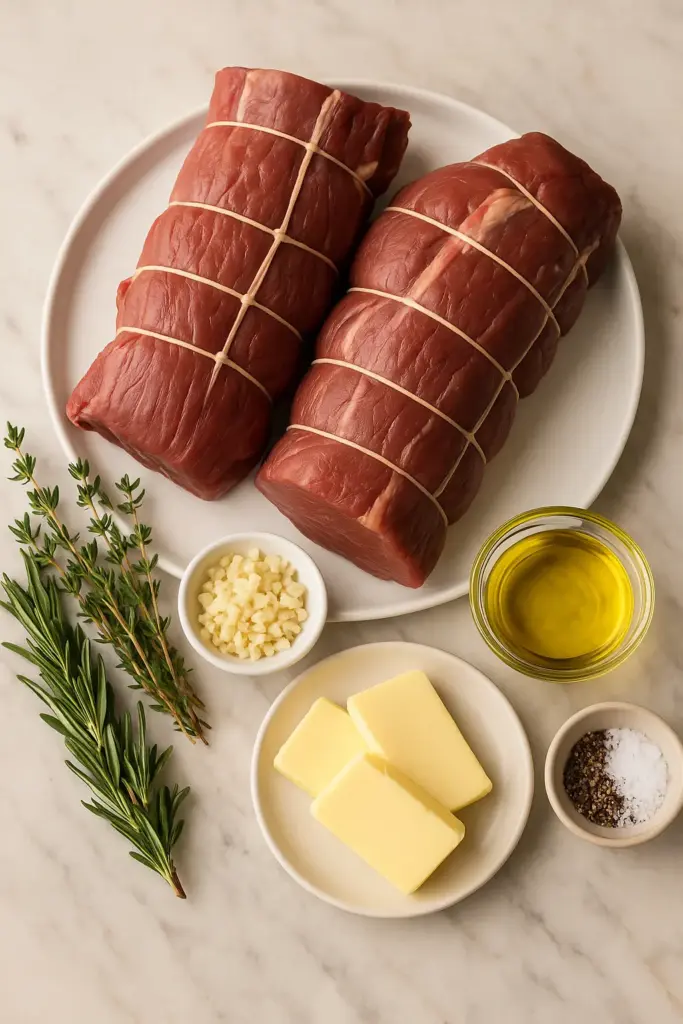
The ingredient list is short on purpose. A cut this tender does not need much help.
- 1 center-cut beef tenderloin roast (4 to 4½ pounds), trimmed and tied — ask your butcher to do this; it saves time and ensures a clean result
- 2 teaspoons kosher salt
- 1 teaspoon freshly ground black pepper
- 2 tablespoons avocado oil — chosen for its high smoke point, which handles the aggressive searing heat without burning
- 6 tablespoons softened butter — unsalted works best here since the meat is already seasoned; let it come fully to room temperature so it blends smoothly with the garlic and herbs
- 6 garlic cloves, minced — fresh only; pre-minced jarred garlic lacks the pungency that forms the crust
- 1 teaspoon finely chopped fresh rosemary leaves
- 1 teaspoon finely chopped fresh thyme leaves
If dairy is a concern, ghee works as a direct substitute for butter in the herb mixture. Olive oil can replace avocado oil, though watch the heat carefully as it has a lower smoke point.
Step-by-Step: How to Cook Beef Tenderloin Roast
Step 1: Give the Meat Time to Relax
Remove the beef tenderloin from the refrigerator and allow it to come to room temperature, about 1 to 2 hours before cooking. The roast should feel cool but not cold to the touch when it goes into the pan. If it still feels fridge-cold in the center, give it more time.
Step 2: Build the Herbed Garlic Butter
In a small bowl, combine the softened butter, minced garlic, rosemary, and thyme. Mix until fully incorporated. The butter should look flecked throughout with green herbs and pale garlic, with no streaks of plain butter remaining. Set aside at room temperature so it stays spreadable.
One thing to watch: if your butter is still too cold, the garlic and herbs will clump rather than distribute evenly. A quick 10-second microwave pulse fixes this without melting it.
Step 3: Prepare the Roast for Even Cooking
Preheat the oven to 425°F (220°C). Using a cutting board, slice the tenderloin in half so it fits in a standard 12-inch skillet. If one end tapers thin, fold it under before tying so both halves are uniform in thickness. Uniform thickness is what gives you an even cook edge to edge.
Step 4: Season for a Proper Crust
Pat the tenderloin pieces thoroughly dry with paper towels. This step matters more than most people realize: surface moisture creates steam in the pan, which prevents browning. Season both sides with the kosher salt and freshly ground black pepper, pressing the seasoning in with your hands so it adheres.
Step 5: Sear Until a Deep Golden Crust Forms
Heat the avocado oil in a large oven-safe cast iron skillet over medium-high heat. When the oil shimmers and a drop of water flicked into the pan evaporates immediately, add the beef tenderloin. Sear on all sides until a deep golden-brown crust forms, about 10 minutes total. You should hear a confident sizzle the moment the meat hits the pan. If it sounds weak and quiet, the pan is not hot enough.
If the meat is browning too fast on one side before the others have had a turn, lower the heat slightly and use tongs to rotate it more frequently.
Step 6: Roast to Your Preferred Temperature
Spread the herb butter mixture generously over the top of the seared tenderloin. It will begin melting immediately, which is fine. The garlic and herbs will anchor to the surface while the butter bastes the meat as it roasts. Transfer the entire pan to the preheated oven.
Roast for 15 to 20 minutes, depending on your preferred doneness. For medium-rare, pull the roast when an instant-read thermometer reads 120°F. The internal temperature will continue rising as it rests. If you have a probe thermometer, insert it before the pan goes into the oven so you never have to open the door to check.
Step 7: Rest, Slice, and Serve
Transfer the roast to a cutting board and let it rest for 10 to 15 minutes. Do not skip this. The first time I rushed past the resting step, the juices ran straight out onto the board and the slices looked pale and dry. After a proper rest, the meat holds its color and the slices stay moist all the way through.
Snip and remove the twine, then slice into 1-inch thick pieces. You will know the rest was sufficient when the knife meets almost no resistance and the interior is a consistent rosy pink from edge to edge.
What Separates a Good Tenderloin from a Great One
- Buy center-cut when possible. The center section, sometimes called a chateaubriand cut, is the most uniform part of the tenderloin. Two 2-pound center-cut pieces work just as well as a single 4-pound whole roast.
- Use a probe thermometer if you have one. It removes all uncertainty. You set it and walk away. No opening the oven, no heat loss, no guessing.
- Softened butter is non-negotiable. Cold butter will not adhere to the seared surface. Room temperature butter spreads into every crevice and stays put during roasting.
- Fresh herbs only. Dried rosemary and thyme turn dusty and bitter under high heat. Fresh herbs hold their character through the sear and the roast.
- Personally, I prefer the cast iron skillet over a roasting pan for this recipe. The retained heat from the sear carries into the oven and helps maintain the crust while the interior finishes cooking.
Serving Suggestions
A creamy horseradish sauce is the classic pairing here. The sharp, tangy bite cuts through the richness of the butter-basted beef in a way that makes each slice feel balanced rather than heavy.
For sides, roasted garlic herb potatoes, honey-glazed carrots, and green beans all complement the savory herb crust without competing with it. The tenderloin is the centerpiece; the sides should frame it, not crowd it.
Arrange slices on a serving platter with a few fresh rosemary sprigs tucked alongside. The visual contrast of the herb-crusted exterior against the pink interior is genuinely striking on a holiday table.
Storage and Reheating
Leftover beef tenderloin keeps well in an airtight container in the refrigerator. Reheat gently in a low oven (around 250°F) until just warmed through. You are looking for the meat to feel warm to the touch at the center without any gray creeping in from the edges.
Avoid the microwave for reheating if you can. It tends to push the internal temperature past medium-rare quickly, and the texture suffers. A low oven or a brief rest in warm beef broth preserves the tenderness far better. Slices also work beautifully cold, thinly sliced over a salad or tucked into a sandwich the next day.
Ready to Make the Best Beef Tenderloin Roast of Your Life
The intimidation factor around beef tenderloin is real, but it is mostly unearned. The technique here is straightforward: temper, season, sear, butter, roast, rest. Each step has a clear visual cue telling you when to move on.
Give this one a try when the holidays call for something truly memorable. Once you see how the garlic herb crust looks coming out of the oven and smell the butter and rosemary hitting the air, you will understand why this recipe tends to become a permanent fixture on the holiday table.
FAQs
What internal temperature should a beef tenderloin roast reach for medium-rare?
Pull the roast from the oven when the internal temperature reads 120°F. After resting for 10 to 15 minutes, the temperature will climb to approximately 130 to 135°F, which is a true medium-rare. The center should be a consistent rosy pink with no gray band near the edges.
Do I have to tie the beef tenderloin with twine?
Yes, and it is worth the extra few minutes. Beef tenderloin is naturally uneven in shape, with one end thicker than the other. Tying it into a uniform cylinder ensures the meat cooks evenly throughout. Without twine, the thin end will overcook before the thick center reaches temperature.
Can I prepare the herbed garlic butter ahead of time?
Absolutely. The butter mixture can be made up to two days in advance and stored in the refrigerator. Just bring it back to room temperature before using so it spreads easily over the seared meat. Cold butter will not coat the surface properly.
What is the best pan for this beef tenderloin roast recipe?
A 12-inch oven-safe cast iron skillet is the top choice. It holds heat exceptionally well during the sear and transitions directly into the oven without any transfer step. Stainless steel works too. Avoid non-stick pans, which are not designed for the high heat needed to build a proper crust.
How do I know when the sear is done before roasting?
The surface should be a deep mahogany brown with a visible crust that has pulled slightly away from the pan. The sizzle should sound steady and confident throughout. If the meat is sticking to the pan, it is not ready to flip yet. Give it another minute and it will release naturally.
Can I make this beef tenderloin roast without a probe thermometer?
Yes. An instant-read thermometer works perfectly well. Start checking the internal temperature at the 15-minute mark by inserting the probe into the thickest part of the roast. Pull it at 120°F for medium-rare. The only difference with a probe thermometer is that you can monitor the temperature without opening the oven door, which helps maintain consistent heat.
Essential Kitchen Tools
Making Beef Tenderloin Roast? Most failed attempts come from using the wrong pan or heat setup — not the recipe itself.
Must Try Recipes
- Delicious Parmesan Garlic Roasted Carrots: A Healthy, Vegetarian Side Dish — These carrots make a perfect side dish with their savory garlic flavor.
- Roasted Cauliflower With Za’atar — Pair it with your beef tenderloin for a flavorful and healthy side.
- The Best Slow-Cooked Pot Roast: Tender Beef Family Dinner Recipe — Discover more ways to enjoy tender beef dishes with this slow-cooked pot roast.

Want to save this recipe?
Want to save this recipe? Enter your email below, and we'll send it straight to your inbox. Plus, receive new recipes every week!

Foolproof Beef Tenderloin Roast Recipe
- Total Time: 45 minutes
- Yield: 8 servings 1x
Description
This Garlic Herb Butter Beef Tenderloin Roast recipe makes a delectable, melt-in-your-mouth cut of meat that is practically tender enough to cut with a butter knife. Impress your guests with this beautiful beef tenderloin!
Ingredients
- 1 center-cut beef tenderloin roast (4 to 4 ½ pounds) (trimmed and tied)
- 2 teaspoons kosher salt
- 1 teaspoon freshly ground black pepper
- 2 tablespoons avocado oil
- 6 tablespoons softened butter
- 6 garlic cloves (minced)
- 1 teaspoon finely chopped fresh rosemary leaves
- 1 teaspoon finely chopped fresh thyme leaves
Instructions
- Take the beef tenderloin out of the refrigerator and allow it to reach room temperature for about 1 to 2 hours before cooking.
- In a small bowl, combine the softened butter, minced garlic, chopped rosemary, and thyme. Set this mixture aside.
- Preheat your oven to 425°F (220°C). Cut the beef tenderloin in half, then trim and tie it if the butcher hasn’t done so already.
- Pat the beef tenderloin dry with paper towels to remove any excess moisture, then season both sides generously with salt and pepper.
- Heat the avocado oil in a large cast-iron skillet over medium-high heat. Once the oil is shimmering, add the beef tenderloin and sear it for a few minutes on each side, totaling about 10 minutes, to achieve a golden brown crust.
- Spread the butter and herb mixture over the top of the beef tenderloin, then place the entire skillet in the oven. If using a probe thermometer, insert it before roasting. Cook the beef tenderloin for 15 to 20 minutes, depending on your desired level of doneness.
- After roasting, take the beef tenderloin out of the oven and move it to a cutting board. Let it rest for 10 to 15 minutes to allow the juices to redistribute. Remove the twine and slice the meat into 1-inch thick pieces. Optionally, serve with horseradish sauce.
Notes
TECHNIQUE TIP: Use kitchen twine to tie the roast for even cooking.
STORAGE: Store leftovers in an airtight container for up to 3 days. Reheat gently for best results.
SUBSTITUTION: Prepare the garlic butter a day ahead to save time and enhance flavor.
- Prep Time: 15 minutes
- resting time: 15 minutes
- Cook Time: 30 minutes
- Category: Dinner
- Method: Baked
- Cuisine: American
Nutrition
- Serving Size: 8
- Calories: 732 kcal
- Sugar: 1 g
- Sodium: 768 mg
- Fat: 62 g
- Saturated Fat: 26 g
- Unsaturated Fat: 29 g
- Trans Fat: 1 g
- Carbohydrates: 1 g
- Fiber: 1 g
- Protein: 41 g
- Cholesterol: 181 mg


