



Summer fruit desserts should be the easiest thing you make all season, yet so many home bakers end up with a soggy bottom, a runny filling, or a batter that never quite rises. A great peach cobbler recipe fixes all of that in under an hour, with pantry staples and a method that practically does the work for you. Fresh, ripe peaches get a quick cook with brown sugar and granulated sugar to draw out their syrup, then they go over a cinnamon-scented batter that rises up golden and cakey around the fruit. The result is crisp at the buttery edges, soft underneath, and deeply peachy all the way through.
Why This Peach Cobbler Works (Before You Start)
The assembly order is the whole secret here. Melted butter goes into the dish first. The batter goes on top of the butter without stirring. The sugared peaches go on last. In the oven, the batter climbs up through the fruit, crisping where it meets the butter and staying tender in the center.
Most runny cobblers fail because the peaches go in raw and release too much liquid during baking. Cooking them briefly on the stovetop dissolves the sugar and gives you a controlled, syrupy filling instead of a watery one. That one extra step is what separates a cobbler that holds together from one that pools in the dish.
One thing to watch: if you skip adding the peach liquid to the dish, the cobbler bakes up dry and the fruit loses its glossy, jammy quality. Pour every drop of that syrup in.
Ingredients for Peach Cobbler
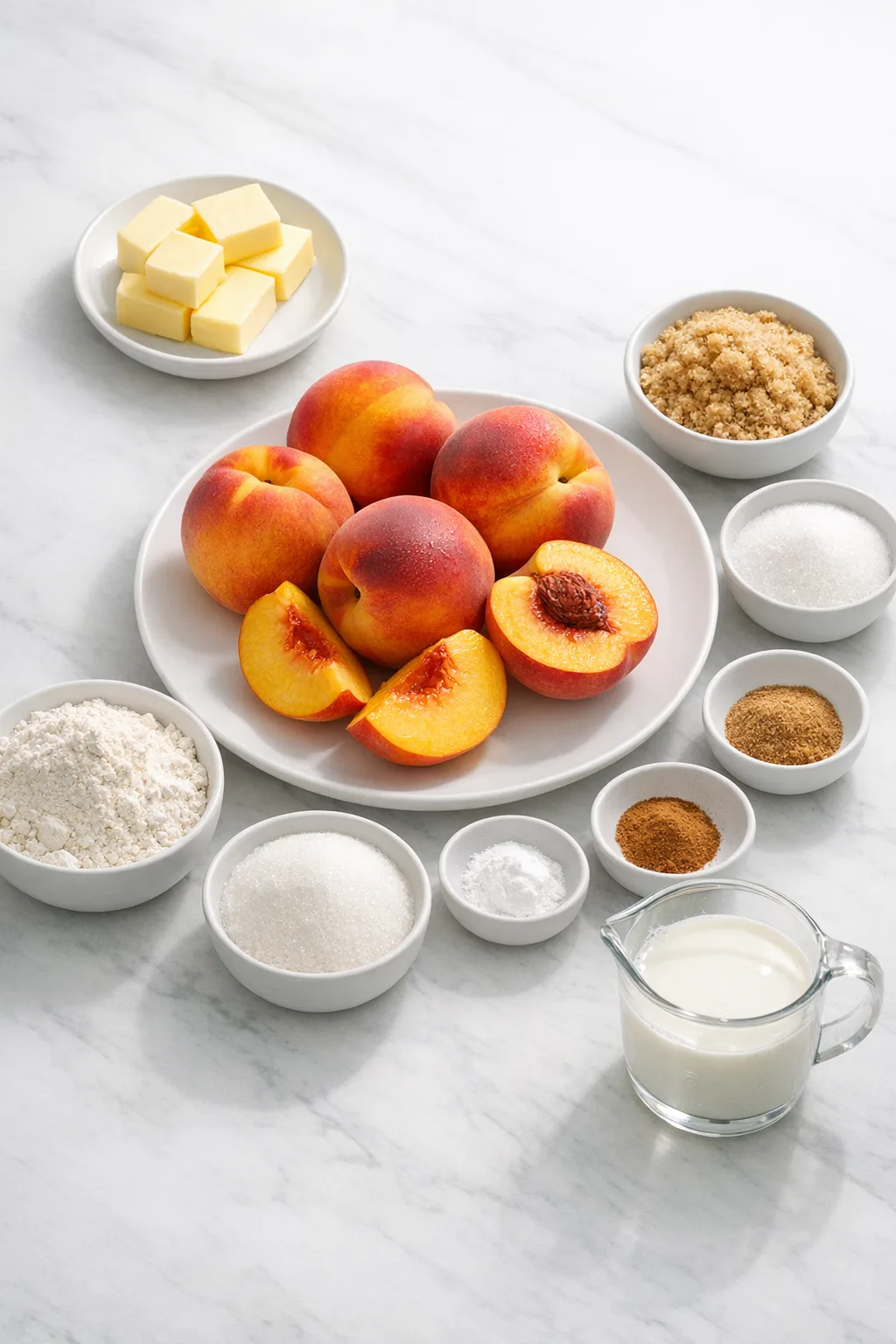
This recipe makes 8 servings and uses two simple components: a quick peach filling and a one-bowl batter.
For the Peach Filling
- 7 tablespoons unsalted butter (100g)
- 6 large ripe yellow peaches (about 900g)
- ¼ cup packed light brown sugar (55g)
- ¼ cup granulated sugar (50g)
For the Cobbler Batter
- 1 cup all-purpose flour (120g)
- ¾ cup granulated sugar (150g)
- 2 teaspoons baking powder
- ½ teaspoon cinnamon
- ¼ teaspoon salt
- ¾ cup whole milk (180mL)
Why two sugars in the filling? Granulated sugar brightens the peaches’ natural sweetness and keeps the syrup light. Brown sugar adds a subtle molasses depth that makes the filling taste more complex than it has any right to for this little effort. If you only have one kind, either works on its own.
On the butter: it melts directly in the baking dish, which means it coats the bottom and creates those irresistible crispy edges without any extra work. Unsalted gives you control over salt levels, but salted butter works in a pinch.
For the peaches, look for fruit that gives slightly near the stem but is not soft. Very soft peaches turn mushy in the oven; rock-hard ones stay crunchy. If yours smell fragrant and feel like a ripe avocado, you are in the right place.
How to Make Peach Cobbler: Step-by-Step
Step 1: Melt the Butter and Prep Your Peaches Simultaneously
Preheat the oven to 375°F. Cut the butter into a few pats and place them in a Baking Sheet style 9×13 baking dish, then set the dish in the oven for about 5 minutes until the butter is fully melted and just starting to bubble at the edges. Remove the dish and set it aside — the oven stays on.
While the butter melts, peel the peaches, halve them, remove the pits, and slice into roughly ¼-inch-thick pieces. You will know the thickness is right when the slices bend slightly without snapping. If peeling feels like a battle, score a shallow X at the bottom of each peach and drop it into boiling water for 30 to 60 seconds, then transfer straight to ice water. The skins slip off cleanly.
If the butter browns rather than just melts in those 5 minutes, your oven runs hot. Pull the dish at the melt stage and check your oven temperature with a thermometer before continuing.
Step 2: Build a Syrupy, Controlled Peach Filling
Transfer the peach slices to a large skillet. Sprinkle over the ¼ cup (55g) of brown sugar and ¼ cup (50g) of granulated sugar, stir to coat, then place the skillet over medium heat. Cook, stirring occasionally, for just a few minutes until the sugars dissolve and the peaches release some of their juice.
You will know it is ready when the liquid in the pan looks glossy and syrupy rather than grainy. Do not cook the peaches through here. They will finish in the oven, and overcooking at this stage turns them to mush by the time the cobbler is done. Pull from the heat and set aside.
Step 3: Combine the Dry Ingredients Into a Smooth Batter
In a large Mixing Bowl, whisk together the flour, ¾ cup (150g) granulated sugar, baking powder, cinnamon, and salt until evenly combined. Pour in the ¾ cup (180mL) of whole milk and stir until just combined. The batter should look like a thick, pourable cake batter.
Do not overmix. Overworked batter develops gluten and bakes up tough and dense rather than soft and cakey. Stir until the dry streaks disappear, then stop.
Step 4: Layer the Dish Without Disturbing the Butter
Pour the batter into the dish with the melted butter and spread it toward the edges. Do not stir the butter and batter together. It is fine if butter pools up over the batter in spots — that is exactly what creates the crispy, golden edges.
Spoon the peaches and all of their syrup evenly over the batter. Leave a few gaps across the surface so the batter has room to rise up through the fruit during baking. One thing to watch: if you spread the peaches into a completely solid layer, the batter underneath has nowhere to go and the cobbler bakes up dense instead of fluffy.
Step 5: Bake Until Golden, Springy, and Bubbling at the Edges
Bake at 375°F for 40 to 45 minutes. The cobbler is done when the top is deep golden brown and the batter portions spring back when pressed lightly with a fingertip. You should also see the peach juices bubbling up around the edges of the pan.
Allow the cobbler to rest for about 20 minutes before serving. The filling thickens as it cools, so it serves cleanly rather than running across the plate. I learned this the hard way the first time I made it: I served it straight from the oven and the filling pooled everywhere. The flavor was there, but the texture was soup. Patience here makes a real difference.
What Separates a Good Cobbler from a Great One
- Use glass or ceramic, not metal. Metal heats faster and scorches the edges before the center is set. Glass and ceramic keep the batter softer and the fruit juicier throughout baking.
- Taste a peach slice before you start. If it is not very sweet, add a little more sugar to the filling. If it is very sweet, you can reduce slightly. The cobbler is only as good as the fruit going in.
- Add a pinch of nutmeg. A small amount alongside the cinnamon in the batter adds a warm, spiced depth that is subtle but noticeable. Several people who have made this recipe swear by it, and after trying it, I do too.
- For a spiced crust: stir together 1 tablespoon granulated sugar and ½ teaspoon cinnamon and sprinkle over the assembled cobbler before baking. It bakes into a lightly crunchy, caramelized top.
- Make-ahead shortcut: cook the peaches and store them in the fridge, and whisk the dry batter ingredients and store separately. Both keep up to 24 hours. When you are ready, combine the batter with milk, assemble, and bake.
Serving Suggestions
Warm cobbler with a scoop of vanilla ice cream is the classic for a reason. The cold cream melts into the hot peach syrup and creates something that tastes like summer in a bowl. For a lighter option, Homemade Classic Whipped Cream gives you the same creamy contrast without the richness of ice cream, and it takes minutes to make.
For something more indulgent, a drizzle of 15-Minute Salted Caramel Sauce over the warm cobbler deepens the caramel notes already present from the brown sugar and makes the whole thing feel like a restaurant dessert with almost no extra effort.
This cobbler also works as a brunch dessert or a cookout centerpiece. It travels well in the baking dish and holds up at room temperature for a couple of hours without losing its texture. If you want a no-bake dessert option alongside it, Easy No-Bake Mini Cheesecakes require zero oven time, which makes them a practical pairing when oven space is limited.
Why Most Homemade Peach Cobbler Fails (and How to Fix It)
- Runny filling: Extra-juicy or frozen peaches release more liquid than the batter can absorb. If the cooked peaches look watery, mix 2 to 3 teaspoons of cornstarch with 2 tablespoons of water and stir it into the skillet. Cook until the juices turn clear and thicken, about one minute, before assembling.
- Dense, flat batter: Usually caused by overmixing. Once the milk goes in, stir only until the dry streaks disappear. The batter should look slightly lumpy, not perfectly smooth.
- Soggy bottom: This happens when the butter is not hot enough when the batter goes in, or when the dish is metal. Use glass or ceramic and make sure the butter is fully melted and warm before adding the batter.
- Mushy peaches: Overcooking on the stovetop is the culprit. The skillet step should take only a few minutes. If the peaches look soft before they go into the oven, they will be completely broken down by the time the cobbler is done.
Make It Once, Use It All Week
Leftover cobbler keeps covered in the refrigerator for up to 5 days. For longer storage, freeze it in an airtight container for up to 3 months and thaw overnight in the fridge before reheating.
To reheat, warm in a 350°F oven for 10 to 15 minutes. You will know it is ready when the edges are bubbling again and the top looks matte rather than wet. An air fryer at 325°F for 5 to 10 minutes also works and does a better job of restoring the crispy top than a microwave ever will.
FAQs
Can I make this easy peach cobbler recipe with frozen or canned peaches?
Both work well. For frozen peaches, skip thawing and cook them in the skillet a few extra minutes until heated through. For canned, use peach halves packed in juice, drain and pat them dry, then slice and cook with the sugar. If you can only find peaches packed in syrup, reduce the granulated sugar in the filling by 2 tablespoons to compensate for the added sweetness.
Why is my peach cobbler runny after baking?
The most common cause is very juicy fruit releasing more liquid than the batter absorbs. Stir 2 to 3 teaspoons of cornstarch mixed with 2 tablespoons of water into the cooked peaches before assembling. Also, let the finished cobbler rest for at least 20 minutes after baking. The juices thicken noticeably as they cool.
Do I have to peel the peaches?
No. The skins soften during baking and are completely edible. Peeling gives you a smoother, more uniform filling, but if you are short on time or simply do not mind a little texture, leave the skins on. The flavor difference is minimal.
What size baking dish should I use for peach cobbler?
A 9×13-inch baking dish or any 3-quart baking dish works. You can also divide the batter and filling between two 8×8-inch dishes or individual 8-ounce ramekins. Smaller dishes will bake faster, so start checking for a golden top and springy center around the 35-minute mark.
How do I know when the cobbler is done baking?
Two reliable cues: the top should be deep golden brown, and when you press a batter section lightly with your fingertip, it should spring back rather than leave an indent. The peach juices should also be visibly bubbling around the edges of the dish. If the top colors quickly but the center still feels soft and wet, tent the dish loosely with foil and continue baking.
Can I add other spices to the batter?
Absolutely. A small pinch of allspice or a tiny grating of nutmeg alongside the cinnamon adds warmth without overpowering the peaches. You can add these to the batter, the filling, or both. Start small, since both spices are stronger than cinnamon and can easily dominate if you add too much.
Worth Making All Summer Long
A peach cobbler recipe this straightforward has no reason to intimidate anyone. The stovetop step, the layering order, the resting time — each one solves a specific problem that turns a good cobbler into a great one.
Peach season is short.
Make this while the fruit is at its peak, serve it warm with ice cream or whipped cream, and do not be surprised when the dish is empty before you have even thought about leftovers. After making it a few times, the method becomes second nature, and you will find yourself reaching for this recipe every time a bag of ripe peaches lands on your counter.
Essential Kitchen Tools
Making ? Most failed attempts come from using the wrong pan or heat setup — not the recipe itself.

Want to save this recipe?
Want to save this recipe? Enter your email below, and we'll send it straight to your inbox. Plus, receive new recipes every week!

Beginner-Friendly Peach Cobbler Recipe
- Total Time: 1 hour
- Yield: 8 servings 1x
Description
Juicy ripe peaches nestled under a buttery, golden crust evoke the essence of summer in this peach cobbler recipe. Ideal for home bakers, this comforting dessert is deliciously easy to make and perfect for sharing with family and friends, whether you use fresh or frozen peaches.
Ingredients
Ingredients for the Peach Filling:
- 7 tablespoons unsalted butter (100g)
- 6 large yellow peaches, ripe (about 900g)
- ¼ cup packed light brown sugar (55g)
- ¼ cup granulated sugar (50g)
Ingredients for the Cobbler Batter:
- 1 cup all-purpose flour (120g)
- ¾ cup granulated sugar (150g)
- 2 teaspoons baking powder
- ½ teaspoon cinnamon
- ¼ teaspoon salt
- ¾ cup whole milk (180mL)
Instructions
Make the Filling:
- Begin by preheating the oven to 375°F. Cut the butter into several pieces and place them in a 9×13 baking dish. Put the dish in the oven until the butter has melted, which should take about 5 minutes. Remove and set aside.
- Peel the peaches, then cut them in half, discard the pit, and slice them into pieces approximately ¼-inch thick. Transfer the slices to a large skillet.
- Sprinkle both the brown and granulated sugars over the peaches, mixing them together. Heat the mixture over medium heat, stirring occasionally, until the sugars have dissolved, which will only take a few minutes. Remove from heat and set aside.
Make the Batter and Assemble:
- In a large bowl, combine the flour, baking powder, salt, sugar, and cinnamon. Pour in the milk and stir until just combined.
- Pour the batter into the prepared baking dish, spreading it towards the edges without mixing it with the melted butter.
- Carefully add the peaches along with any liquid into the dish, spreading them out evenly while leaving some gaps for the cobbler topping to rise through.
- Bake for approximately 40 to 45 minutes. The cobbler is ready when it turns golden brown and springs back when lightly pressed.
Notes
TECHNIQUE TIP: Avoid overcooking the peaches on the stovetop. They will continue cooking in the oven to prevent mushiness.
STORAGE: Store leftover cobbler in an airtight container in the refrigerator for up to three days. Reheat before serving.
SUBSTITUTION: If fresh peaches are unavailable, substitute with frozen peaches, ensuring they are thawed and drained.
- Prep Time: 15 minutes
- Cook Time: 45 minutes
- Category: Dessert
- Method: Baking
- Cuisine: American
Nutrition
- Serving Size: 8 people
- Calories: 329 kcal
- Sugar: 42 g
- Sodium: 206 mg
- Fat: 11 g
- Saturated Fat: 7 g
- Unsaturated Fat: 4 g
- Trans Fat: 0.4 g
- Carbohydrates: 56 g
- Fiber: 2 g
- Protein: 4 g
- Cholesterol: 29 mg


