



Weeknight dinners have a way of turning into a stressful decision when time is short and everyone is hungry. You want something satisfying, something that actually tastes like effort went into it, but you have maybe 30 minutes before the whole household starts raiding the snack cabinet. That is exactly the problem this asparagus-chicken-pesto-pasta solves. A creamy pesto-laced sauce, tender bites of chicken, and crisp-tender asparagus all come together in one skillet, coating every strand of fettuccine in something that genuinely tastes like a restaurant made it.
Why This Sauce Works Before You Even Start
The magic here is the combination of heavy whipping cream and pesto. The cream builds a rich, velvety Alfredo-style base, and the pesto cuts through that richness with bright basil, savory cheese, and the subtle nuttiness of pine nuts. Neither ingredient does the job alone. Together, they create a sauce that is complex without being complicated.
If you want to use these same ingredients in a completely different format, Cheesy Asparagus Stuffed Chicken Breast takes the asparagus-and-chicken pairing in a baked direction rather than a saucy one, which is worth knowing before you commit to a method.
Ingredients for Creamy Chicken Pesto Pasta
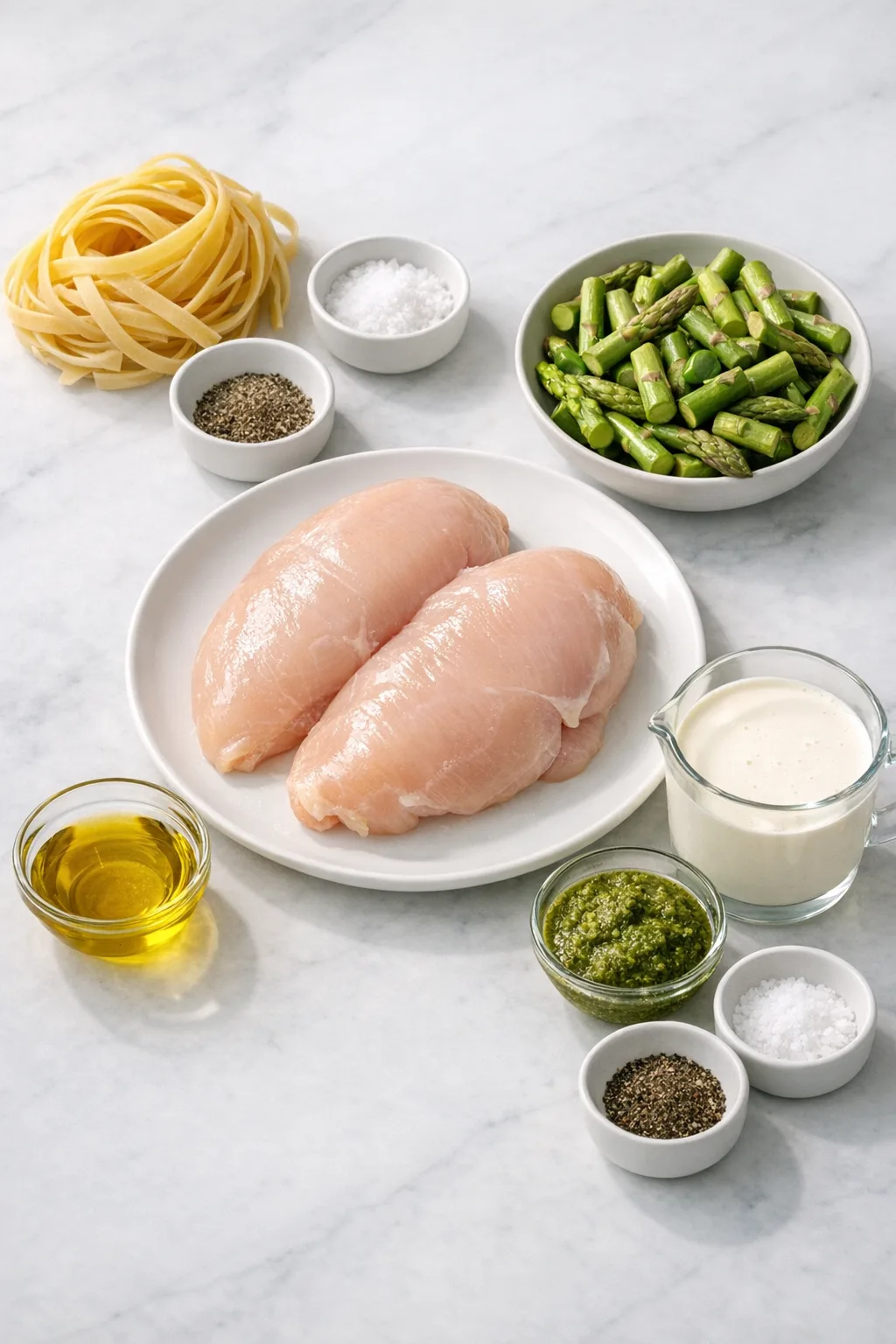
The ingredient list is short, which is part of what makes this recipe so reliable on a busy night. Here is everything you need for 8 servings:
- 1 lb chicken breasts, trimmed (chicken thighs work too and tend to stay juicier)
- 1 tsp salt, divided
- 1/4 tsp black pepper
- 1 lb asparagus, ends trimmed and cut into 2-inch pieces
- 2 cups heavy whipping cream (the backbone of the sauce, not negotiable for texture)
- 4 Tbsp pesto sauce (homemade is excellent, but a good store-bought pesto works fine)
- 4 Tbsp olive oil
- 12 oz fettuccini pasta (or linguine)
The heavy whipping cream is not just for richness. It reduces into a sauce that clings to the pasta rather than pooling at the bottom of the bowl. For a dairy-free version, canned coconut milk has been reported to work well as a substitute. For more creamy pasta inspiration using pantry staples, Creamy Penne Pasta Primavera explores a similar sauce-building approach with a vegetable-forward twist.
Why Most Homemade Cream Sauces Fail (and How to Fix It)
Before you get to the stove, it helps to know where this recipe can go sideways. Most cream sauce problems come down to one thing: heat that is too high for too long.
- Boiling the cream aggressively causes the fat to separate, leaving you with a greasy, broken sauce instead of a silky one. Keep it at a gentle simmer, not a rolling boil.
- Skipping the pasta rest time means the starchy water on the noodles has not had time to do its job. Do not rinse your pasta after draining. That surface starch helps the sauce cling.
- Overcooking the asparagus turns it from crisp-tender and bright green to limp and dull. Two to three minutes in the pan is all it needs.
- Slicing the chicken before it rests causes all the juices to run out immediately. Give it a full 5 minutes before cutting.
Step-by-Step Instructions for Quick Chicken Pesto Pasta
Step 1: Get the Pasta Going First to Save Time
Bring a large pot of water to a boil and salt it generously. The water should taste noticeably salty, like ocean water. Add your 12 oz of fettuccini and cook according to package instructions to your desired doneness. Starting the pasta first means it will be ready right when the sauce is finished. Do not drain it until you are about 2 minutes away from combining everything.
Step 2: Sear the Chicken for a Juicy, Sliceable Result
Cut the chicken breasts in half lengthwise to create thinner cutlets. Season all sides with 1/2 tsp salt and 1/4 tsp black pepper. Heat a large, deep skillet over medium heat with 2 Tbsp olive oil. Once the oil shimmers and moves easily across the pan, add the chicken in a single layer. Cook for 3 minutes per side. You will know it is ready to flip when the edges look opaque and the bottom releases cleanly from the pan without sticking. Remove from the pan and rest for 5 minutes, then slice into bite-sized strips using a chef knife. If the chicken is browning too fast, lower the heat to medium-low and add a splash of water to the pan.
Step 3: Coax the Asparagus to Crisp-Tender in Minutes
In the same pan (no need to wipe it out), add the remaining 2 Tbsp olive oil and the asparagus pieces. Saute, stirring occasionally, for 2 to 3 minutes. The asparagus is ready when it turns a vivid, deeper green and yields slightly when pressed with a spoon but still has a snap to it. One thing to watch: if your asparagus pieces are thick, add an extra 30 seconds. Thin stalks can overcook in under 2 minutes.
Step 4: Build the Pesto Cream Sauce Without Breaking It
Pour 2 cups of heavy whipping cream directly into the pan with the asparagus. Bring it to a gentle simmer and cook for 3 minutes, stirring occasionally. The cream will thicken slightly and take on a faint golden color at the edges. Stir in 4 Tbsp pesto sauce, then add the sliced chicken back to the pan and cook for 2 more minutes. Season with the remaining 1/2 tsp salt, or to taste. If the sauce looks oily or starts to separate, pull the pan off the heat immediately and stir in a small splash of cream to bring it back together.
Step 5: Combine Everything and Serve While the Sauce Is Alive
Drain the cooked pasta and add it directly to the pan with the sauce. Stir well to coat every noodle, then remove from heat. The sauce should look glossy and thick enough to cling to the fettuccine without pooling. Serve immediately. Garnish with fresh basil or parsley if you have it on hand. Basil works especially well here since it echoes what is already in the pesto.
What Separates a Good Chicken Pesto Pasta from a Great One
A few small habits make a real difference in the final result.
- Salt your pasta water properly. The water should taste like the sea before the pasta goes in. Plan on about 1 1/2 Tbsp fine sea salt per 6 quarts of water. This seasons the pasta from the inside out, which no amount of sauce can replicate.
- Use room-temperature pesto. Cold pesto straight from the fridge can cause the cream to tighten up unevenly when you stir it in. Let it sit out for a few minutes while the chicken cooks.
- Do not skip the rest on the chicken. I made that mistake the first time and ended up with dry strips that had lost most of their moisture onto the cutting board. Five minutes of patience makes a real difference.
- Add pasta directly to the sauce pan. Tossing in the pan over low heat for 30 seconds after combining helps the noodles absorb the sauce rather than just being coated by it.
Personally, I find that fettuccine holds this sauce better than any other pasta shape. The wide, flat surface area catches the cream and pesto in a way that penne or spaghetti simply does not.
Serving Suggestions
This pasta is a complete meal on its own, with protein, vegetables, and carbs all in one pan. That said, a thick slice of crusty garlic bread alongside it is genuinely hard to beat for soaking up the extra sauce at the bottom of the bowl.
For a lighter side, a simple Caesar salad or a cucumber and tomato salad cuts through the richness of the cream sauce nicely. The acidity in either salad balances the fat in the pesto cream in a way that makes the whole meal feel less heavy.
If you want another way to use chicken and pesto together, Pesto Chicken Roll-ups take a baked, stuffed approach rather than a saucy skillet one, which makes them a better option when you want something that holds its shape for serving at a table rather than being scooped from a pan.
Easy Chicken Pesto Pasta Variations
The base recipe is flexible enough to work with whatever you have on hand.
- Protein swaps: Rotisserie chicken works well here and cuts the cook time significantly. Shrimp, pork, or even pan-seared tofu are all solid options.
- Vegetable swaps: Broccoli, frozen peas, snap peas, or mushrooms all work in place of asparagus. Halved cherry tomatoes stirred in at the very end add a bright, acidic note.
- Pasta swaps: Rigatoni, pappardelle, or penne all hold the sauce well. For a lower-carb version, spaghetti squash or zucchini noodles are both workable substitutes.
- Dairy-free: Full-fat canned coconut milk can replace the heavy cream. The flavor shifts slightly, but the sauce still comes together.
Make It Once, Use It All Week
This pasta is at its best served fresh, right off the stove. The sauce is silkiest and the asparagus has the most texture in those first few minutes.
Leftovers store well in an airtight container in the refrigerator for 3 to 4 days. For freezing, cook the pasta al dente so it does not turn mushy after thawing. Freeze for up to 1 month and thaw overnight in the fridge.
To reheat, warm on low heat and stir frequently. You will know it is reheating correctly when the sauce loosens and becomes glossy again rather than clumping. If the cream has separated and looks oily, add a small splash of cream, broth, or milk and stir over low heat until it comes back together. Avoid high heat at all costs during reheating.
FAQs
Can I use store-bought pesto for this asparagus chicken pesto pasta recipe?
Absolutely. Store-bought pesto works well here. A good-quality jarred pesto, like Kirkland Signature from Costco, produces a sauce that is bright and flavorful. Homemade pesto will give you a fresher, more vibrant result, but the recipe does not require it.
Do I add the heavy cream to the same pan as the asparagus?
Yes, the cream goes directly into the pan where the asparagus was sauteed. That pan already has flavor from the chicken and the asparagus, which adds depth to the sauce without any extra steps.
Can I make this with chicken thighs instead of chicken breasts?
Chicken thighs work well and tend to stay more moist under the heat of the skillet. Trim any excess fat and slice them the same way as the breasts. The cook time remains roughly the same at about 3 minutes per side over medium heat.
How do I know when the cream sauce is thick enough?
After simmering for 3 minutes, the sauce should coat the back of a spoon and hold a line when you drag your finger through it. It will thicken further once the pasta is added and the heat is removed, so do not over-reduce it in the pan.
Can I use gluten-free pasta in this recipe?
Gluten-free pasta works well in this dish. Cook it according to the package directions and add it to the sauce immediately after draining. Gluten-free noodles can become sticky if they sit too long after cooking, so timing matters more here.
What is the best way to trim asparagus for this recipe?
Snap the woody end off each stalk where it naturally breaks, or cut where the green begins to turn white. Then cut the stalks into 2-inch pieces so they cook evenly in 2 to 3 minutes and are easy to eat alongside the pasta.
A Dinner Worth Coming Back To
When 30 minutes stands between you and a meal that actually satisfies, this creamy chicken pesto pasta delivers without asking much in return. One pan, a short ingredient list, and a sauce that tastes like it took far longer than it did.
Give this one a try on a night when the fridge looks uninspiring and the clock is not on your side. The kitchen will smell incredible by the time the pasta hits the pan, and that alone makes it worth making again.
Essential Kitchen Tools
Making asparagus-chicken-pesto-pasta? Most failed attempts come from using the wrong pan or heat setup — not the recipe itself.

Want to save this recipe?
Want to save this recipe? Enter your email below, and we'll send it straight to your inbox. Plus, receive new recipes every week!

Quick Asparagus-Chicken Pesto Pasta Recipe
- Total Time: 30 minutes
- Yield: 8 1x
Description
Tender chicken and crisp asparagus tossed in a rich, creamy pesto sauce enveloping fettuccine pasta. This asparagus-chicken pesto pasta delivers a comforting meal with vibrant flavors and a satisfying texture, ideal for busy evenings.
Ingredients
- 1 lb chicken breasts (trimmed)
- 1 tsp salt (divided)
- 1/4 tsp black pepper
- 1 lb asparagus (ends trimmed and cut into 2″ pieces)
- 2 cups heavy whipping cream
- 4 Tbsp pesto sauce
- 4 Tbsp olive oil
- 12 oz fettuccini pasta (or linguine)
Instructions
- In a large pot, boil salted water and cook the pasta according to the package directions until it reaches your preferred doneness. While the pasta cooks, continue with the recipe and combine the drained pasta with the sauce in the fifth step.
- Prepare the chicken by slicing the breasts in half lengthwise and seasoning all sides with 1/2 tsp of salt and 1/4 tsp of black pepper. Heat 2 Tbsp of olive oil in a large, deep skillet over medium heat. Once the oil is hot, place the chicken in a single layer and sauté until fully cooked, about 3 minutes on each side. Remove from the pan and let rest for 5 minutes before cutting into bite-sized strips.
- In the same pan, add 2 Tbsp of olive oil and toss in the asparagus pieces. Sauté while stirring occasionally for 2-3 minutes until they are crisp-tender.
- To create the sauce, pour in 2 cups of heavy whipping cream, allowing it to come to a simmer. Cook for 3 minutes while stirring occasionally. Mix in 4 Tbsp of pesto, then add the sliced chicken and cook for an additional 2 minutes. Adjust the seasoning of the sauce with 1/2 tsp of salt or to your taste.
- Incorporate the cooked pasta into the sauce, stirring well to coat the noodles. Remove from heat and serve immediately. If desired, garnish with basil or parsley.
Notes
TECHNIQUE TIP: Add salt to the pasta water for better seasoning, creating a taste similar to ocean water.
STORAGE: Store leftover pasta in an airtight container in the refrigerator for up to 3 days.
SUBSTITUTION: Use broccoli instead of asparagus for a different flavor and texture.
- Prep Time: 10 minutes
- Cook Time: 20 minutes
- Category: Main Course
- Cuisine: American
Nutrition
- Calories: 535 kcal
- Sugar: 2 g
- Sodium: 459 mg
- Fat: 35 g
- Saturated Fat: 15 g
- Carbohydrates: 34 g
- Fiber: 2 g
- Protein: 20 g
- Cholesterol: 154 mg


