



Ceviche has a reputation for being complicated, but the truth is most people overcomplicate it. The real problem is timing: either the shrimp ends up rubbery from over-marinating, or the whole bowl turns watery because nobody dried the shrimp properly. Get those two things right, and you have a bright, citrus-forward bowl loaded with creamy avocado, crisp cucumber, juicy tomatoes, and tender shrimp that tastes like it came from a restaurant. This recipe serves 8 people and comes together in as little as 15 minutes of active prep when you use cooked shrimp.
Why This Ceviche Works Before You Touch a Single Ingredient
Most homemade ceviche fails at one invisible step: moisture management. Wet shrimp dilutes the lime marinade, flattens the flavor, and turns the whole bowl into a watery mess within minutes of serving. Drying the shrimp thoroughly before marinating is the single most underrated move in this recipe.
The second reason this version works so well is the secret ingredient: Clamato juice. It is a tomato cocktail juice that melds all the individual flavors into something cohesive and slightly savory. Without it, ceviche can taste like a pile of good ingredients sitting next to each other. With it, everything tastes like it belongs together. This tip came from a reader named Blanca, who shared her authentic Mexican family recipe, and it has been a staple ever since.
If you love bold, fresh seafood flavors, the 30-Minute Seafood Laksa is worth bookmarking for your next weeknight craving.
Ceviche Ingredients: What You Need and Why It Matters
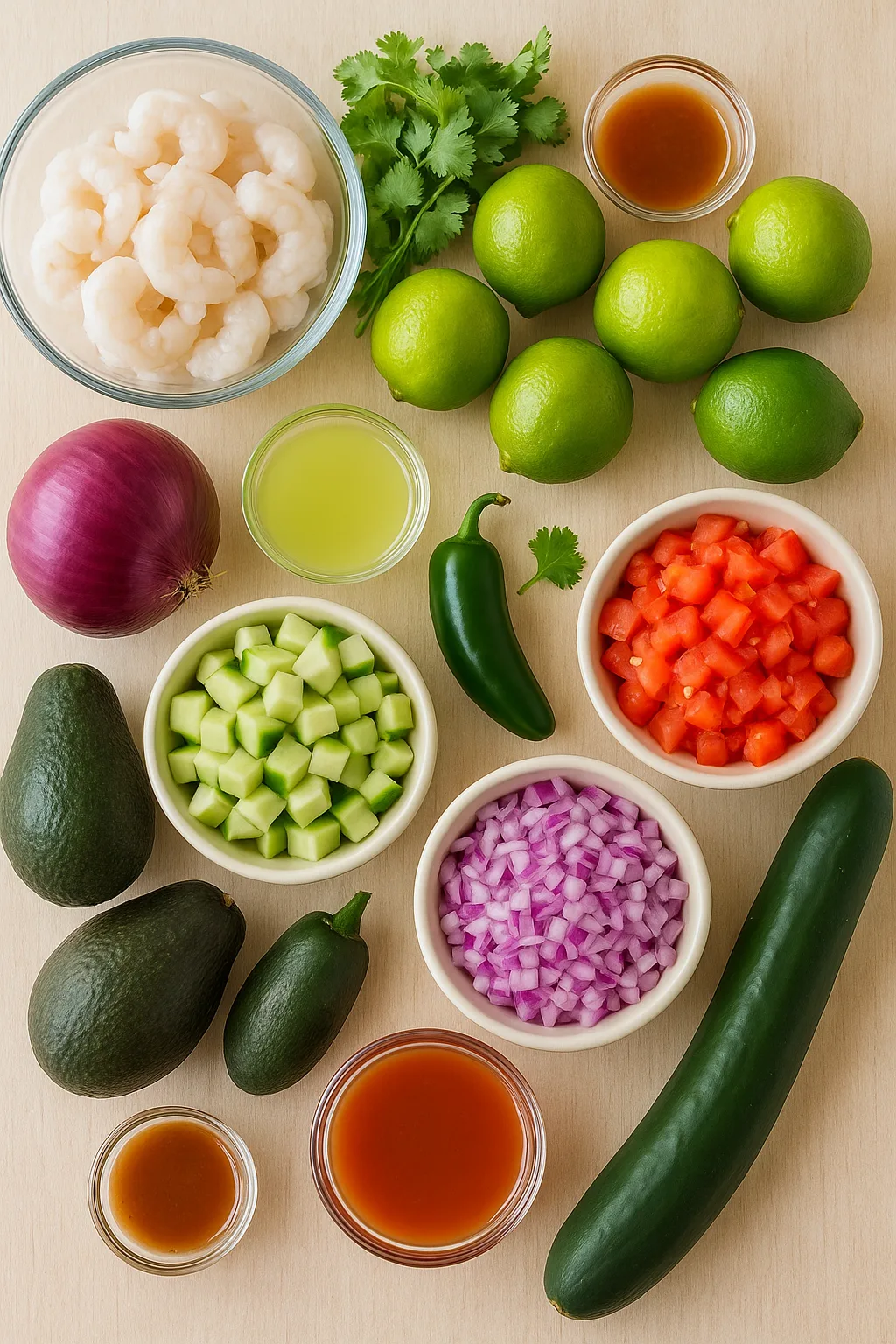
Every ingredient in this bowl pulls its weight. Here is the full list from the recipe, plus a few notes on what each one actually does.
- 1 lb medium shrimp (raw or cooked, thawed, peeled, deveined, and diced): Cooked shrimp cuts marinating time to just 15 minutes and is far more forgiving for beginners.
- 1 cup lime juice (from 6 limes): Fresh only. Bottled lime juice has a flat, slightly bitter edge that dulls the whole bowl. Look for limes with smooth, round skin as they tend to yield more juice.
- 1 cucumber, peeled and diced: Adds crunch and a cooling freshness that balances the acidity of the lime.
- 2 avocados: Adds a light creaminess that softens the sharpness of the onion and jalapeno. Check ripeness by removing the stem: it should look bright green underneath and give slightly when pressed.
- 3 Roma tomatoes, diced
- 1 red onion, diced (or white onion)
- 1/4 bunch cilantro, chopped
- 1 jalapeno, seeded and minced
- 1/2 cup Clamato juice (optional, use “picante” version for more heat)
To serve: 16 tostadas or tortilla chips, plus hot sauce (Tabasco or Cholula).
Substitution note: If you skip the Clamato, stir in 2 to 4 tablespoons of hot sauce to add depth. If you are sensitive to heat, use half the jalapeno or leave it out entirely and rely on hot sauce at the table.
Why Most Homemade Ceviche Fails (and How to Fix It)
Before you start chopping, these are the four most common places this recipe goes sideways.
- Skipping the pat-dry step: Wet shrimp releases water into the marinade and dilutes the lime flavor within minutes. Squeeze or pat the shrimp completely dry before it ever touches the bowl.
- Using bottled lime juice: The citrus flavor is noticeably flatter and less vibrant. Fresh juice is non-negotiable here.
- Mixing avocado too aggressively: Fold it in gently at the end, or slice it into pieces and place it on top when serving. Stirring it hard turns it into green mush that disappears into the liquid.
- Using an overly ripe onion or too much of it: A medium red onion can be sharp and overpowering. If yours is large, use half. The onion should add bite, not dominate every mouthful.
- Marinating raw shrimp in a metal bowl: Acidic lime juice reacts with metal and can give the shrimp a slightly metallic taste. Always use a glass or ceramic bowl.
Step-by-Step Instructions
Step 1: Remove Every Drop of Moisture Before Marinating
Rinse the thawed shrimp under cold running water, then squeeze or pat them completely dry with paper towels. This applies whether you are using raw or cooked shrimp. The bowl should look dry, not damp, before you add the lime juice.
One thing to watch: if you rush this step and leave the shrimp wet, the marinade will be visibly diluted and the finished ceviche will taste thin rather than bright and punchy.
Step 2: Build the Lime Marinade and Let It Work
Dice the shrimp if the pieces are large, then place them into a large glass mixing bowl. Squeeze 6 limes to get 1 to 1 1/4 cups of fresh lime juice directly over the shrimp. Stir to coat, cover the bowl, and refrigerate.
For raw shrimp, marinate 1 1/2 to 2 hours, stirring halfway through, until the shrimp are fully opaque and no longer translucent. For cooked shrimp, 15 minutes is enough. You will know the raw shrimp is ready when it has turned from grey and glassy to a firm, pale pink with no translucent center remaining.
If the shrimp still looks translucent after 2 hours, give it another 20 to 30 minutes and check again.
Step 3: Chop the Vegetables with Precision (Not Speed)
While the shrimp marinates, dice the cucumber, avocado, Roma tomatoes, red onion, jalapeno, and cilantro on a sturdy cutting board. A food chopper speeds this up considerably, especially for the jalapeno, which can be tricky to mince finely by hand.
For the tomatoes, use a sharp or serrated knife: they are slippery and a dull blade is a safety hazard. Keep all the vegetable pieces roughly the same size so every spoonful has a balanced mix of textures.
If your avocado is slightly overripe and very soft, slice it into wedges rather than dicing it. Soft avocado crumbles under a knife and is better placed on top at serving time.
Step 4: Combine Everything and Taste Before Serving
Once the shrimp has finished marinating, add all the chopped vegetables to the bowl. Pour in the Clamato juice and stir gently to combine. You can drain off some of the liquid if you prefer a drier ceviche, but leaving it in gives the whole batch a richer, more cohesive flavor.
Drizzle with hot sauce if desired, then serve immediately with tostadas or tortilla chips. When serving on tostadas, use a slotted spoon and let the extra juice drain off so the tostada stays crisp rather than going soggy within seconds.
What Separates a Good Ceviche from a Great One
- Roll your limes before squeezing. Rolling them firmly on the countertop breaks down the internal membranes and releases noticeably more juice from each lime.
- Keep everything cold. Ceviche should stay refrigerated right up until serving. Warm ceviche loses its fresh, vibrant edge quickly.
- Go for the picante Clamato. The spicier version adds depth without requiring extra jalapeno. You can always add heat at the table, but the base flavor benefits from that extra kick built in.
- Cilantro is generous, not shy. A full quarter bunch adds a herbal vibrancy that makes the lime pop. If you are cilantro-averse, flat-leaf parsley works as a mild substitute.
- Add avocado last. Personally, I fold the avocado in right before serving rather than during the marinating step. It holds its shape better and you actually get to taste it as a distinct element rather than a green smear.
You will know the ceviche is ready to serve when the lime juice has turned slightly cloudy from the shrimp proteins and the whole bowl smells sharply citrusy with a herbal undertone from the cilantro.
Serving Suggestions
The most classic way to serve ceviche is piled onto crunchy tostadas with a drizzle of hot sauce. The contrast between the cold, acidic ceviche and the dry crunch of the tostada is one of those combinations that just works.
For a lighter option, spoon it into individual lettuce cups or serve it over avocado halves for a low-carb presentation that looks genuinely impressive at a gathering. Tortilla chips work well for a more casual, snackable version where guests can serve themselves.
If you enjoy fresh, protein-forward salads in the same flavor family, the Healthy Shrimp Avocado Salad is a great companion recipe for summer menus.
For a heartier meal built around similar bold, fresh flavors, the Healthy Chipotle Chicken Burrito Bowls pair well as a main course when ceviche is the starter.
Make It Once, Use It All Week
Ceviche stores better than most people expect, with one important condition: it depends entirely on whether you used raw or cooked shrimp.
- Cooked shrimp ceviche: Transfer to a non-reactive, airtight container and refrigerate for up to 2 days. The flavors actually deepen overnight as the lime continues to work through the vegetables.
- Raw shrimp ceviche: Eat it the same day it is made. Raw seafood that has been acid-marinated does not store safely beyond a few hours.
- Do not freeze ceviche. The texture of both the shrimp and the avocado will be completely ruined after freezing and thawing.
When pulling leftovers from the fridge, give the bowl a gentle stir and taste for seasoning. The lime flavor intensifies overnight, so a small drizzle of fresh lime juice can brighten it back up if it tastes flat. Serve cold, straight from the refrigerator. There is no reheating involved and no need for it.
A Fresh Bowl Worth Making on a Weeknight
Ceviche does not need to be a weekend project. With cooked shrimp and 15 minutes of marinating time, this is genuinely achievable on a Tuesday evening after work. The prep is mostly chopping, the technique is forgiving, and the result is a bowl that tastes far more impressive than the effort involved.
The first time I made this, I skipped drying the shrimp and wondered why the whole bowl tasted diluted. That one adjustment made every subsequent batch noticeably better.
Give this one a try the next time you want something fresh and satisfying without spending an hour in the kitchen. If you enjoy pasta with a similarly bold, seafood-forward profile, the Delightful Shrimp Linguine is worth trying on the nights when you want something warm and hearty instead.
FAQs
Can I use raw shrimp instead of cooked shrimp?
Yes. Raw shrimp requires 1 1/2 to 2 hours of marinating in the refrigerator until it is fully opaque and no longer translucent. Use the freshest shrimp available, as the acid in the lime juice changes the texture but is not the same as cooking with heat. Cooked shrimp is faster and more reliable for most home cooks.
Should I drain the lime juice after marinating the shrimp?
You do not have to. Leaving the juice in gives the whole batch a more cohesive, citrus-forward flavor. If the bowl looks very liquid-heavy, use a slotted spoon when serving rather than draining the bowl. If you are serving on tostadas, let the extra juice drip off each spoonful so the tostada stays crisp.
What can I use instead of Clamato juice?
If you prefer to skip Clamato, stir in 2 to 4 tablespoons of your favorite hot sauce to add a similar depth and savory quality. The Clamato is optional but it does noticeably round out the flavor in a way that plain lime juice alone does not achieve.
Can I make ceviche with fish instead of shrimp?
Yes. Sushi-grade halibut, sea bass, snapper, or mahi mahi all work well. Dice the fish into small, even pieces and marinate similarly to raw shrimp. Always use the freshest fish possible, keep it on ice in the refrigerator, and make fish ceviche the same day you purchase it.
How do I keep the avocado from turning brown?
The lime juice in the marinade helps slow oxidation, but the most reliable approach is to add the avocado right before serving rather than mixing it in during prep. If you are making this ahead, store the diced avocado separately and fold it in at the last minute.
How many people does this ceviche recipe serve?
The recipe yields 8 servings at 310 calories per serving, based on the ceviche alone without tostadas, chips, or extra hot sauce. Each serving contains 15 grams of protein and 6 grams of fiber, making it a genuinely filling appetizer or light meal.
Essential Kitchen Tools
Making Ceviche? Most failed attempts come from using the wrong pan or heat setup — not the recipe itself.

Want to save this recipe?
Want to save this recipe? Enter your email below, and we'll send it straight to your inbox. Plus, receive new recipes every week!

Quick Ceviche Recipe
- Total Time: 2 hours 15 minutes
- Yield: 8 1x
Ingredients
- 1 lb medium shrimp ((raw or cooked*), thawed, peeled, deveined, and diced)
- 1 cup lime juice (from 6 limes)
- 1 cucumber (peeled and diced)
- 2 avocados
- 3 roma tomatoes (diced)
- 1 red onion (diced, or white onion)
- 1/4 bunch cilantro (chopped)
- 1 jalapeno (seeded and minced)
- 1/2 cup Clamato juice (*optional, (use "picante" version for spicier salsa))
- 16 Tostadas ((or tortilla chips))
- Hot Sauce ((Tabasco or Cholula))
Instructions
- Begin by rinsing the thawed shrimp under cold running water, then use paper towels to pat them dry thoroughly to eliminate excess moisture, preventing a diluted cocktail. This applies to both raw and cooked shrimp.
- If the shrimp are large, dice them and transfer to a sizable glass bowl that won’t react with the acid. Squeeze 1 to 1 1/4 cups of lime juice from 6 limes over the shrimp, mixing well. Cover and let marinate in the refrigerator for 1 1/2 to 2 hours for raw shrimp (until they are no longer translucent) or for 15 minutes if using cooked shrimp, stirring halfway through.
- Chop the cucumber, avocado, tomatoes, red onion, jalapeno, and cilantro. Using a food chopper can expedite this task.
- Once the shrimp have finished marinating, incorporate the chopped vegetables into the bowl along with the clamato juice and mix everything together. If you prefer, you can drain some of the juice, but it’s not necessary; serve with a slotted spoon. Optionally, drizzle with hot sauce and enjoy with tortilla chips or on tostadas.
Notes
TECHNIQUE TIP: Using pre-cooked shrimp can save time by reducing the lime juice soaking period.
STORAGE: Store the ceviche in an airtight container in the refrigerator for up to 2 days.
SUBSTITUTION: If Clamato is unavailable, replace it with 2-4 tablespoons of hot sauce for a spicy kick.
- Prep Time: 15 minutes
- marinating time: 2 hours
- Category: Appetizer
- Cuisine: Mexican
Nutrition
- Calories: 310 kcal
- Sugar: 3 g
- Sodium: 292 mg
- Fat: 16 g
- Saturated Fat: 3 g
- Unsaturated Fat: 11 g
- Trans Fat: 0.1 g
- Carbohydrates: 32 g
- Fiber: 6 g
- Protein: 15 g
- Cholesterol: 91 mg


