



Most beginner bakers assume a loaf cake this bright and tender must require a stand mixer, special techniques, or hours of effort. It does not. This Lemon Poppy Seed Loaf Cake comes together with a bowl, a whisk, and about ten minutes of hands-on work. The result is a buttery, moist crumb packed with real lemon flavor from both the zest and the juice, a subtle crunch from poppy seeds, and a sweet lemon glaze that sets into a glossy finish. No mixer needed, no complicated steps, and it serves 10 people from a single loaf.
Why This Recipe Works Before You Even Start
There are a few things happening in this batter that make the difference between a dry, crumbly loaf and one that genuinely melts in your mouth. Understanding them upfront means fewer surprises at the oven.
The sour cream is not just for tang. It adds fat and moisture that keeps the crumb soft for days, and its acidity works alongside the lemon juice to tenderize the gluten structure. Speaking of lemon juice, the acid in it actively inhibits gluten from forming tight bonds, which is exactly why this cake feels delicate rather than bready.
Warming the milk before adding the lemon zest is the step most people skip. Heat pulls the aromatic oils out of the zest and dissolves them into the milk, which distributes that lemon flavor throughout every bite rather than leaving it concentrated in pockets. If you want a floral background note, half a teaspoon of culinary lavender steeped in the same warm milk adds something genuinely lovely, though the cake is equally good without it.
Ingredients for Lemon Poppy Seed Loaf Cake
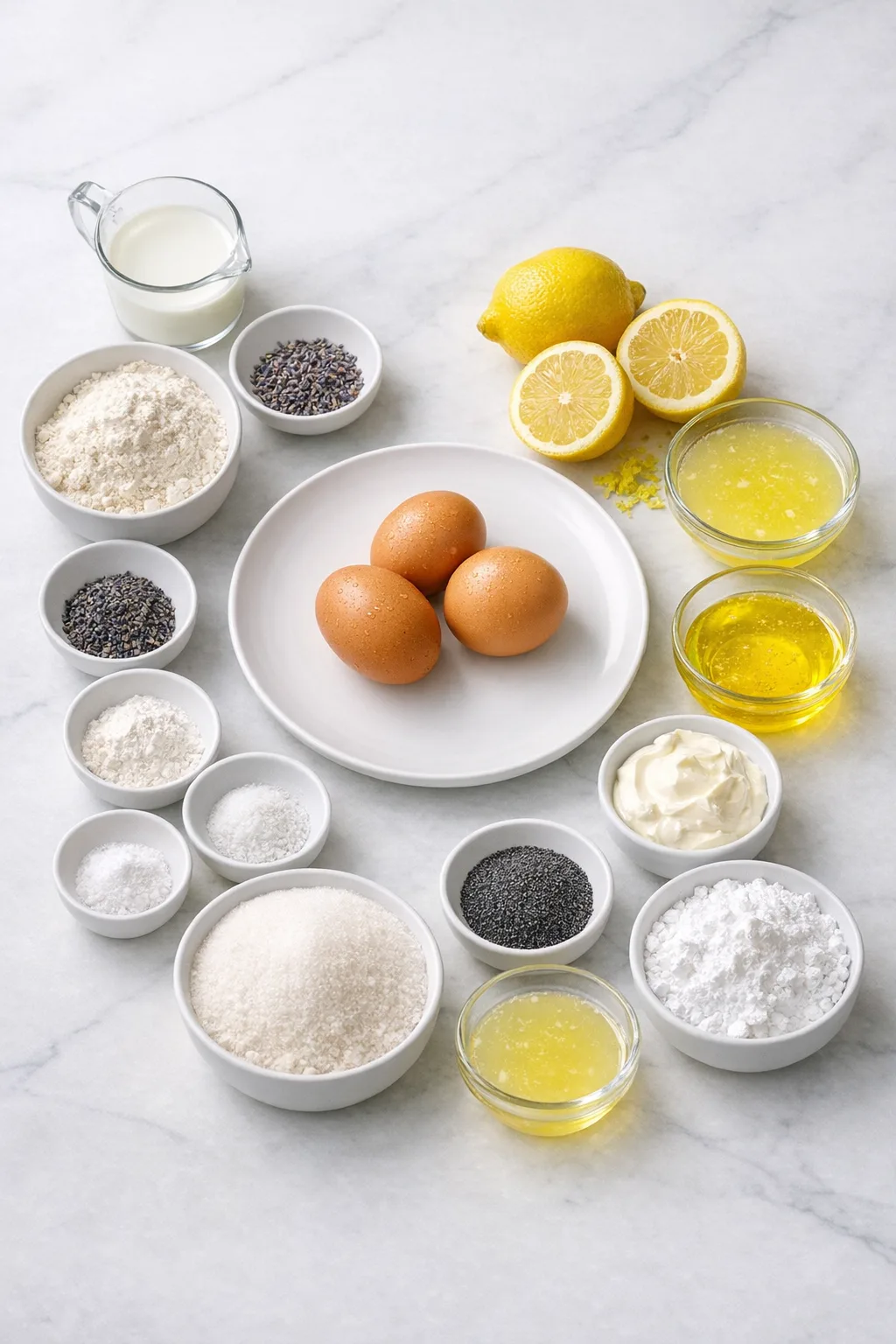
For the Loaf
- 2 cups all-purpose flour (240g)
- 1¾ cups granulated sugar (350g)
- 1½ teaspoons baking powder
- 1 tablespoon poppy seeds
- ¼ teaspoon salt
- ½ cup whole milk (120ml)
- 1 tablespoon lemon zest (about 2 lemons)
- ½ teaspoon culinary lavender (optional)
- ⅓ cup fresh lemon juice (2-3 lemons, 80ml)
- ½ cup sour cream, room temperature (120g)
- ¾ cup unsalted butter, melted (170g)
- 3 large eggs, room temperature
For the Lemon Glaze
- 1 cup powdered sugar (120g)
- 1-2 tablespoons fresh lemon juice (about 1 lemon)
Substitution notes: If you only have salted butter, use it and simply leave out the added salt. For the sour cream, full-fat plain Greek yogurt works as a direct swap with a very similar result. If you want a more dramatic finish on top, the technique used in Mirror Cake Glaze is a different path entirely, one that trades the rustic drizzle for a polished, glossy coating.
A note on measuring flour: Scooping directly from the bag packs the flour and can add significantly more than the recipe intends, which produces a dense, dry loaf. Use a kitchen scale, or fluff the flour first, spoon it into the measuring cup, and level it off.
Why Most Homemade Loaf Cakes Fail (and How to Fix It)
Overmixing is the single most common reason a loaf cake comes out dense and gummy despite looking perfect in the pan. Once the wet and dry ingredients meet, gluten development accelerates with every stir. Mix only until the last dry streaks of flour disappear, then stop.
The second issue is underbaking. Because this loaf is thick and moist, the outside can look deeply golden while the center is still raw. A toothpick inserted into the very center must come out completely clean, not just slightly moist. Start checking at 60 minutes, but expect the cake to need anywhere from 60 to 80 minutes depending on your oven.
A third mistake is skipping the parchment sling. Greasing alone is not enough for a cake this moist. Lining the pan with a parchment paper overhang means you can lift the loaf out cleanly after cooling, without tearing the edges.
Finally, using cold eggs or cold sour cream can cause the melted butter to seize and clump when everything is combined. Room temperature dairy and eggs blend into a smooth, cohesive batter that bakes evenly.
Step-by-Step Instructions
Step 1: Prepare Your Pan and Infuse the Milk with Lemon
Preheat the oven to 350°F. Lightly grease an Loaf Pan (8½ x 4½ inches) with butter or baking spray, then line it with a parchment paper sling that overhangs both long sides. Warm the half cup of whole milk in a small bowl or liquid measuring cup in the microwave for 20 to 40 seconds, until it feels warm to the touch but not hot. Stir in the tablespoon of lemon zest and the optional half teaspoon of culinary lavender. Set aside for 5 minutes to infuse. You will know it is ready when the milk smells noticeably lemony and slightly floral.
Step 2: Build the Dry Base for Even Rise and Texture
In a large Mixing Bowl, whisk together the 2 cups of flour, 1¾ cups of granulated sugar, 1½ teaspoons of baking powder, 1 tablespoon of poppy seeds, and ¼ teaspoon of salt. Whisk until the mixture looks uniform and the poppy seeds are evenly distributed. One thing to watch: if the sugar has clumped from humidity, break up any lumps now so they do not create dense pockets in the finished cake.
Step 3: Combine the Wet Ingredients Into a Smooth, Cohesive Mixture
In a separate bowl, combine the ¾ cup of melted butter, ½ cup of sour cream, ⅓ cup of fresh lemon juice, 3 large eggs, and the infused milk. Use a Whisk to bring everything together until the mixture looks smooth and slightly pale. If the butter starts to solidify in streaks when it hits the cold eggs, your eggs were too cold. Warm them briefly in a bowl of warm water for five minutes before trying again.
Step 4: Fold Wet Into Dry Without Overworking the Batter
Pour the wet ingredients into the dry ingredients. Using a spatula, fold everything together with slow, deliberate strokes just until the last dry streaks of flour disappear. The batter will be thick and pourable. Stop mixing the moment it looks uniform. Overmixing at this stage activates the gluten and causes the cake to contract as it cools, leaving you with a dense, gummy interior.
Step 5: Fill the Pan and Bake to a Clean Toothpick
Pour the batter into the prepared loaf pan. Give the pan a gentle shimmy on the counter to level the surface, or smooth the top with your spatula. Bake at 350°F for 60 to 80 minutes, or until a toothpick inserted into the center comes out clean. If the top is turning deep brown before the 60-minute mark, loosely tent it with foil after the 50-minute point. The top should look golden and set, with the edges just beginning to pull away from the pan. Let the cake cool in the pan for 20 minutes, then use the parchment overhang to lift it out. Transfer to a wire rack to finish cooling completely before glazing.
Step 6: Whisk the Glaze to a Drizzleable Consistency
In a bowl, combine 1 cup of powdered sugar with 1 tablespoon of fresh lemon juice. Whisk firmly until smooth. The glaze will look lumpy and strange at first, then suddenly come together into a thick, glossy paste. Add more lemon juice a few drops at a time until the glaze drizzles off the whisk in a slow, steady ribbon. Drizzle it over the fully cooled cake. You can serve immediately or let the glaze set for about an hour before slicing for cleaner cuts.
What Separates a Good Lemon Loaf from a Great One
- Use a microplane for zesting. It removes only the fragrant yellow layer of the peel and leaves the bitter white pith behind. A box grater takes too much with it.
- Always use fresh lemon juice. Bottled juice lacks the brightness that makes this cake taste genuinely lemony rather than artificially flavored.
- Do not reduce the sugar without expecting a trade-off. Sugar does more than sweeten here. It softens the crumb and keeps the texture cakey rather than bread-like. A slightly reduced amount is fine, but the texture will be noticeably firmer.
- Scatter a little fresh lemon zest over the glazed top right before serving. The zest dehydrates quickly once applied, so add it at the last moment for the best color and aroma.
- Check for doneness at 60 minutes, but plan for longer. This loaf often needs closer to 80 minutes. Trust the toothpick over the clock.
Serving Suggestions
This loaf is substantial enough to serve as a dessert or a mid-morning treat with coffee. The lemon glaze gives it a sweet, tangy finish that pairs naturally with something creamy on the side. A spoonful of Lemon Curd alongside each slice deepens the citrus flavor in a way the glaze alone cannot, since the curd adds richness and a more concentrated tartness.
For a drink pairing, the bright acidity of the cake calls for something refreshing rather than heavy. A cold glass of Healthy Homemade Lemonade echoes the citrus notes without competing with the buttery crumb, unlike a richer drink that might overwhelm the delicate flavor.
At room temperature, the crumb is soft and slightly dense in the best way. Straight from the fridge, it firms up considerably, so if you are serving it cold, let it sit out for 15 to 20 minutes first.
Storage and Make-Ahead
Store the cooled loaf at room temperature, wrapped tightly in plastic wrap or in an airtight container, for up to three days. The texture actually improves slightly on day two as the moisture redistributes through the crumb.
For longer storage, wrap individual slices in plastic wrap and freeze for up to two months. Thaw at room temperature for about an hour. The glaze may look slightly matte after freezing, but the flavor holds well.
If you are making this ahead for an event, bake and cool the loaf without the glaze, wrap it tightly, and store it. Add the glaze on the day of serving for the freshest finish.
FAQs
Can I make this Lemon Poppy Seed Loaf Cake without a mixer?
Yes, that is the point of this recipe. A whisk for the wet ingredients and a spatula for folding everything together is all you need. No stand mixer or hand mixer required.
My loaf is golden on top but still wet inside. What went wrong?
This is a thick, moist loaf and the outside browns faster than the center cooks through. Tent the top loosely with foil after 50 minutes and continue baking until a toothpick inserted into the very center comes out completely clean. The total bake time can reach 80 minutes.
Can I use a standard 9×5-inch loaf pan instead?
Yes. A slightly larger pan means a shallower batter, which will bake faster. Start checking for doneness around the 50-minute mark rather than 60.
Can I substitute chia seeds for the poppy seeds?
Chia seeds can work as a swap. They have a slightly different texture and will absorb more moisture from the batter, so the crumb may be marginally denser. Let the batter rest for about 10 minutes before baking to allow the chia seeds to hydrate.
Why did my cake turn out gummy even though it was fully baked?
Overmixing is almost always the cause. Once the wet and dry ingredients are combined, the gluten develops quickly with each additional stir. Mix only until the flour streaks disappear, then stop immediately.
How do I get a thicker glaze that does not run off the sides?
Start with just one tablespoon of lemon juice and whisk thoroughly before adding more. Add additional juice a few drops at a time until the glaze drizzles slowly off the whisk in a thick ribbon. If it runs too fast, it will pool at the base rather than sitting on top of the cake.
A Loaf Worth Making Twice
Baking a loaf cake from scratch can feel intimidating when you are newer to it, but this one is genuinely forgiving. The batter comes together fast, the technique is straightforward, and the result looks far more impressive than the effort involved.
I will be honest: the first time I made a loaf like this, I pulled it out too early because the top looked done. The center was still raw. Now I always trust the toothpick over the color, and it has never let me down since.
Give this one a try on a weekend morning when you have an hour to spare. The smell alone, that warm lemon and butter filling the kitchen as it bakes, makes the whole thing worthwhile before you even take a slice.
Essential Kitchen Tools
Making Lemon Poppy Seed Loaf Cake? Most failed attempts come from using the wrong pan or heat setup — not the recipe itself.

Want to save this recipe?
Want to save this recipe? Enter your email below, and we'll send it straight to your inbox. Plus, receive new recipes every week!

Beginner-Friendly Lemon Poppy Seed Loaf Cake Recipe
- Total Time: 2 hours 10 minutes
- Yield: 10 servings 1x
Description
A tender Lemon Poppy Seed Loaf Cake infused with zesty lemon and a hint of culinary lavender, creating a fragrant and moist crumb. Perfectly speckled with poppy seeds, it’s a delightful treat for any occasion.
Ingredients
- ½ cup whole milk ((120ml))
- 1 tablespoon lemon zest ((about 2 lemons))
- ½ teaspoon culinary lavender ((optional))
- 2 cups all-purpose flour ((240g))
- 1¾ cups granulated sugar ((350g))
- 1½ teaspoons baking powder
- 1 tablespoon poppy seeds
- ¼ teaspoon salt
- ⅓ cup lemon juice ((2–3 lemons) (80ml))
- ½ cup sour cream (room temperature (120g))
- ¾ cup unsalted butter (melted (170g))
- 3 large eggs (room temperature)
- 1 cup powdered sugar ((120g))
- 1–2 tablespoons fresh lemon juice ((about 1 lemon))
Instructions
- Begin by preheating your oven to 350°F. Prepare an 8½ x 4½-inch loaf pan by greasing it lightly with butter or baking spray and lining it with a sling of parchment paper.
- In a small bowl or a liquid measuring cup, gently warm the milk in the microwave for 20 to 40 seconds until it feels warm to the touch. Incorporate the lemon zest and lavender, allowing it to steep for 5 minutes.
- In a large mixing bowl, combine the flour, sugar, baking powder, poppy seeds, and salt, whisking them together thoroughly.
- In a separate bowl, blend the sour cream, melted butter, lemon juice, eggs, and the infused milk. Mix well, then combine the wet ingredients with the dry ingredients, stirring with a spatula until no dry flour remains.
- Transfer the batter into the prepared loaf pan and bake for approximately 1 hour to 1 hour and 20 minutes, or until a toothpick inserted in the center comes out clean. If the top begins to brown too much after 50 minutes, loosely cover it with foil. Once baked, allow the cake to cool in the pan for 20 minutes, then use the parchment paper to lift it out and let it cool completely on a wire rack.
Notes
TECHNIQUE TIP: Ensure your butter is fully melted and cooled slightly before mixing to achieve a smooth batter consistency.
STORAGE: Store the loaf in an airtight container at room temperature for up to 3 days or refrigerate for up to a week. Serve at room temperature or lightly toasted.
- Prep Time: 10 minutes
- Cook Time: 1 hour
- Category: cake
- Method: Baked
- Cuisine: American
Nutrition
- Calories: 451 kcal
- Sugar: 48 g
- Sodium: 152 mg
- Fat: 18 g
- Saturated Fat: 11 g
- Unsaturated Fat: 6 g
- Trans Fat: 1 g
- Carbohydrates: 68 g
- Fiber: 1 g
- Protein: 5 g
- Cholesterol: 94 mg


