



Most fruit salads fall flat for one simple reason: the fruit sits in its own watery juice, turns dull, and tastes like nothing in particular. A fruit salad should be bright, refreshing, and genuinely worth eating on its own, not just a colorful afterthought on the table. This recipe fixes that problem with a three-ingredient honey-lime dressing that wakes up every piece of fruit in the bowl. Ready in 20 minutes, it serves 8 people, and the dressing works with whatever seasonal fruit you have on hand. The result is zingy, lightly sweet, and colorful enough to stop people mid-conversation.
Why This Dressing Changes Everything
The honey in this dressing does more than sweeten. It acts as a light coating that helps the lime juice cling to each piece of fruit rather than pooling at the bottom of the bowl. The lime zest adds a sharper citrus note that the juice alone cannot deliver, because the oils in the zest carry a more concentrated, aromatic punch.
Fresh mint is optional, but it earns its place here. It adds a cool, herbal contrast that makes the whole bowl taste more complex without any extra effort. Serve it on the side if your crowd is divided.
That balance between honey and citrus is exactly what Strawberry Salad explores in depth, using a similar principle to let the fruit carry the flavor rather than masking it with heavy dressing.
What You Need for This Easy Fruit Salad Recipe
For the Fruit
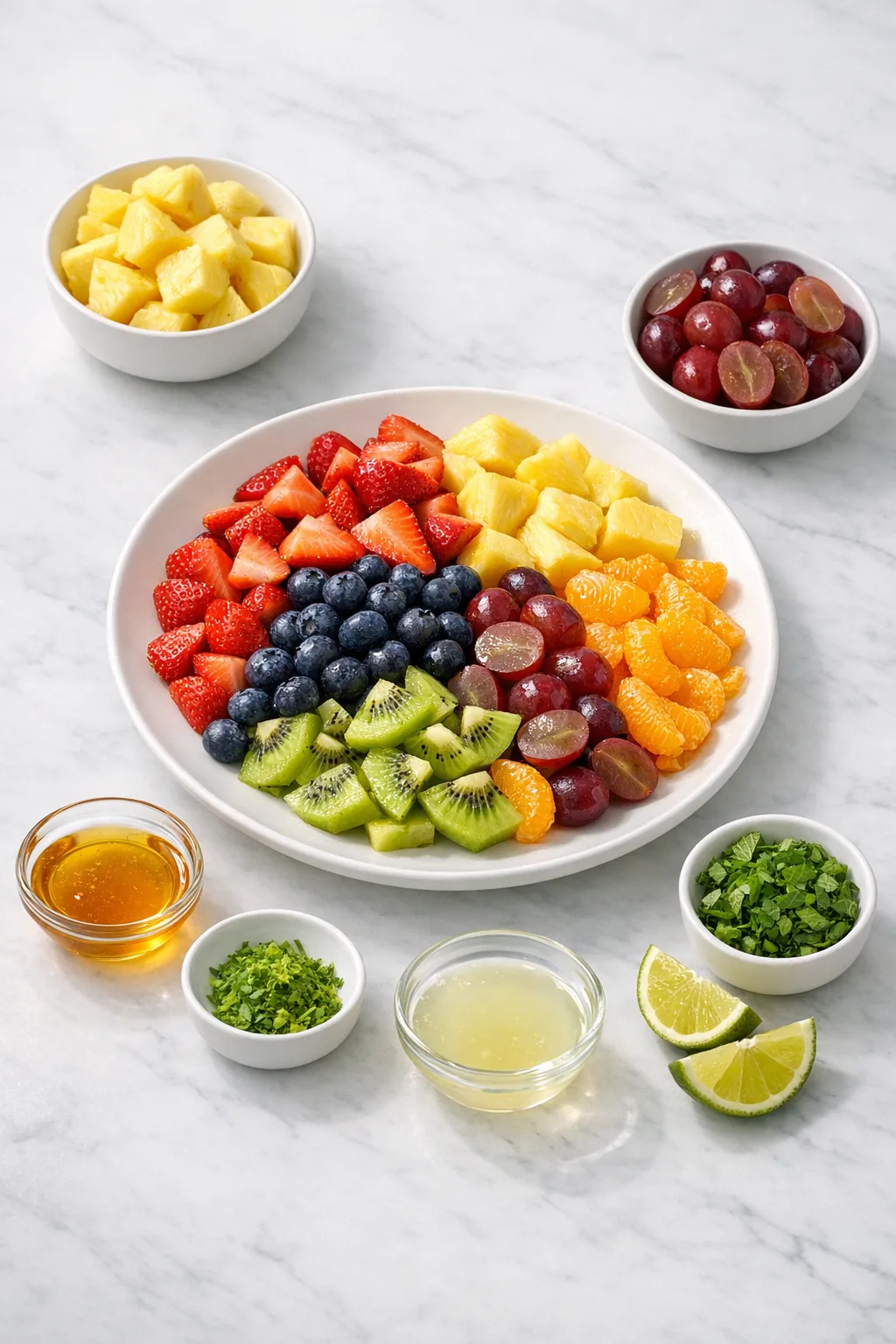
- 2 cups strawberries, hulled and quartered. Look for deep red berries with no soft spots. Pale or mushy strawberries will make the whole salad taste flat.
- 2 cups pineapple, cut into bite-sized pieces. A ripe pineapple smells sweet at the base and yields slightly when pressed.
- 1 1/2 cups blueberries. Choose plump, deep blue berries and discard any that are shriveled.
- 1 1/2 cups red grapes, halved if large. Red grapes bring sweetness and a satisfying pop of texture.
- 1 1/2 cups kiwi, peeled and sliced. Kiwi adds a vivid green color and a tart edge that balances the sweeter fruits.
- 1 1/2 cups mandarin oranges or clementines, peeled and segmented. Fresh is strongly preferred over canned here. Canned mandarins release excess liquid that dilutes the dressing and makes the salad watery within minutes.
For the Honey-Lime Dressing
- 2 to 3 tablespoons honey, or added to taste. If your fruit is at peak ripeness mid-summer, start with 2 tablespoons.
- 2 tablespoons fresh lime juice
- 1 teaspoon lime zest
- 2 tablespoons finely chopped fresh mint, optional
Substitution note: Maple syrup or agave work in equal amounts if you need a honey-free version. The flavor shifts slightly but the dressing still holds together well.
Before You Start: The One Mistake That Ruins Fruit Salad
Adding the dressing too early is the most common reason a fruit salad turns into a soggy, watery mess. The salt-free acid in the lime juice draws moisture out of the fruit quickly, especially from strawberries and watermelon.
Prep the fruit up to a few hours ahead and refrigerate it covered. Mix the dressing separately. Combine them only when you are within 30 minutes of serving. That window gives the flavors time to meld without sacrificing texture.
One thing to watch: if you are using watermelon as a substitute for pineapple or grapes, add it at the very last moment. It releases more liquid than any other fruit in this recipe and will flood the bowl if it sits in dressing for more than 10 minutes.
How to Make Fruit Salad: Step-by-Step
Step 1: Prepare the Fruit for Even, Satisfying Bites
Wash and dry all the fruit thoroughly before cutting. Drying matters: excess water on the surface dilutes the dressing before it even reaches the fruit. Use a Cutting Board and peel, hull, and cut everything into similar bite-sized pieces.
For kiwi, slice off both ends, then slide a spoon just under the skin and rotate it all the way around. The skin peels away cleanly in seconds. This trick only works on ripe kiwi. If your kiwi is still firm, use a paring knife instead or the spoon will tear the flesh.
For grapes, place them between two flat lids and run a serrated knife across the top to halve them all at once. It is faster than cutting them one by one and the halves stay uniform.
Step 2: Arrange the Fruit So the Bowl Does the Work
Transfer the prepared fruit into a large Mixing Bowl. For a visually striking presentation, arrange the fruit in sections by color before tossing. The contrast of red strawberries, green kiwi, purple blueberries, and orange mandarin segments makes the bowl look like it took twice the effort it actually did.
You will know the arrangement is working when the bowl looks almost too good to toss. Keep the sections separate until the moment you add the dressing.
Step 3: Build the Dressing in Under Two Minutes
In a small bowl, stir together 2 tablespoons of honey, 2 tablespoons of fresh lime juice, and 1 teaspoon of lime zest. Stir in the chopped mint if using. The dressing should look slightly syrupy and smell bright and floral, not sharp or one-dimensional.
If your fruit is exceptionally sweet, taste the dressing before adding it and consider starting with 2 tablespoons of honey rather than 3. The dressing should complement the fruit, not compete with it.
Step 4: Dress the Salad Right Before Serving
Drizzle the dressing over the fruit just before serving and toss gently to coat. Every piece should look lightly glossy. Serve immediately, or cover and refrigerate for up to 30 minutes before serving.
If the salad has been sitting for a while and looks a little dull, a small extra squeeze of lime juice over the top refreshes the color and lifts the flavor back up. Garnish with a little extra zest or a few fresh mint leaves if you want a clean, finished look.
What Separates a Good Fruit Salad from a Great One
- Use fruit at its actual peak. Mid-summer strawberries and pineapple need almost no help from the dressing. Out-of-season fruit benefits from a slightly more generous pour of honey.
- Cut everything to a similar size. Uneven pieces mean some bites are all pineapple and some are all blueberry. Uniform cuts give you a little of everything in every spoonful.
- Zest before you juice. Once you cut the lime and squeeze it, zesting becomes awkward and you lose most of the aromatic oils. Always zest first.
- Keep the mint on the side if serving a crowd. Not everyone loves mint in fruit salad. Setting it aside lets people add their own without the whole bowl being divided.
- Chill the bowl before serving. A cold bowl keeps the salad fresher longer at outdoor gatherings, especially in summer heat.
Health Benefits Worth Knowing
Each serving of this fruit salad contains 136 calories, 5 grams of fiber, and 94 mg of Vitamin C. The combination of fruits here tends to provide a wide range of antioxidants and natural plant compounds that support overall health without any refined ingredients in the dressing.
The honey-lime dressing adds sweetness with significantly fewer additives than commercial fruit salad dressings or syrups. For a broader look at how individual fruits contribute to digestive and overall health, 10 Amazing Fruits breaks down the specific benefits of many of the fruits used in this recipe.
This salad is naturally gluten-free, dairy-free, and vegan, which makes it one of the easiest dishes to bring to a gathering where dietary needs vary.
Serving Suggestions
This fruit salad works as a side dish, a light dessert, or a brunch centerpiece. It pairs especially well with savory, smoky foods because the citrus dressing cuts through richness cleanly. Think pulled pork sandwiches, grilled chicken, or corn on the cob.
For a slightly more indulgent presentation, spoon it over sorbet. The cold fruit against the frozen base is a genuinely satisfying combination on a hot day.
Leftovers the next morning are worth saving. The fruit softens slightly overnight and the juices deepen in flavor. Spooned over Greek yogurt or layered into a parfait, it tastes almost like dessert.
For a completely different take on fruit-forward salads that uses seasonal produce in a more unexpected way, Persimmon Salad skips the citrus dressing entirely and builds its flavor from a different base, making it a genuinely distinct option rather than a variation of the same idea.
Make It Once, Use It All Week
Make-ahead: Prep and cut all the fruit up to a few hours in advance. Store it covered in the refrigerator. Mix the dressing separately and keep it in a small jar. Combine them no more than 30 minutes before serving.
Leftovers: Store in an airtight container in the refrigerator for up to 3 days. The texture softens as it sits, but the flavor actually improves as the fruits absorb the dressing. The accumulated juices at the bottom of the container are worth saving for yogurt or overnight oats.
Letting the dressed salad rest in the fridge for even 20 minutes makes a noticeable difference in how cohesive the flavors become. I personally prefer it at the 15-to-20-minute mark over eating it immediately.
FAQs
Can I make this fruit salad ahead of time?
Yes, with one condition. Prep and refrigerate the cut fruit separately from the dressing. Add the dressing no more than 30 minutes before serving. If you dress it too far in advance, the lime juice draws moisture from the fruit and the salad becomes watery and loses its bright color.
What fruits work best in a seasonal fruit salad?
The honey-lime dressing works with almost any fruit. In summer, watermelon, peaches, and cherries are excellent additions or substitutes. In fall, crisp apples and pears hold their shape well. Add raspberries and blackberries at the very last moment since they are fragile and crush easily when tossed.
How do I keep the fruit salad from getting watery?
Dry the fruit thoroughly after washing, use fresh mandarins instead of canned, and add the dressing just before serving. Watermelon and very ripe strawberries release the most liquid, so add them last and serve quickly after tossing.
Can I substitute the honey in the dressing?
Maple syrup or agave work in equal amounts and keep the dressing vegan. The flavor is slightly different but the texture and coating ability of the dressing remain the same.
How long does fruit salad last in the refrigerator?
Up to 3 days in an airtight container. The fruit softens over time and releases more juice, but the flavor stays good. The accumulated juices are excellent spooned over yogurt or mixed into a smoothie.
How do I easily peel a kiwi?
Slice off both ends, then slide a spoon just between the skin and the flesh. Rotate the spoon all the way around and the skin slips off in one piece. This works best on ripe kiwi. If the kiwi is still firm, the spoon will not glide smoothly, so use a paring knife instead.
Worth Making Again
A fruit salad that actually holds up at a gathering, stays bright and fresh, and gets requested again is not a given. Most fall apart before the second serving. This one does not, because the dressing is built to complement rather than overwhelm, and the prep approach keeps the fruit from turning on you before the meal even starts.
Bring it to your next brunch or cookout and watch how quickly the bowl empties. Then make a second batch for yourself, because the leftovers over morning yogurt are genuinely worth planning for.
Essential Kitchen Tools
Making Fruit Salad? Most failed attempts come from using the wrong pan or heat setup — not the recipe itself.

Want to save this recipe?
Want to save this recipe? Enter your email below, and we'll send it straight to your inbox. Plus, receive new recipes every week!

Light Fruit Salad Recipe
- Total Time: 20 minutes
- Yield: 8 servings 1x
Ingredients
- 2 cups strawberries (hulled and quartered)
- 2 cups pineapple (cut into bite-sized pieces)
- 1 1/2 cups blueberries
- 1 1/2 cups red grapes (halved if large)
- 1 1/2 cups kiwi (peeled and sliced)
- 1 1/2 cups mandarin oranges or clementines (peeled and segmented)
- 2–3 Tbsp honey (or added to taste)
- 2 Tbsp fresh lime juice
- 1 tsp lime zest
- 2 Tbsp finely chopped mint (optional, or more to taste)
Instructions
- Begin by washing and drying the fruit thoroughly. Peel, hull, and chop the fruit into pieces that are roughly the same size.
- Transfer the prepared fruit to a large mixing bowl. For an attractive presentation, arrange the fruits by color before mixing.
- In a small bowl, combine the 2 Tbsp honey, 2 Tbsp lime juice, and 1 tsp lime zest. If desired, mix in the mint.
- Just before serving, drizzle the dressing over the fruit and gently toss to coat. Serve immediately, or cover and chill for up to 30 minutes.
Notes
TECHNIQUE TIP: For added flavor, gently toss the fruit with the lime juice to ensure even coating.
STORAGE: Store the fruit salad in an airtight container in the refrigerator for up to two days for optimal freshness.
SUBSTITUTION: Replace kiwi with mango for a tropical twist, or use chopped apples instead of mandarin oranges.
- Prep Time: 20 minutes
- Category: Salad
- Cuisine: American
Nutrition
- Calories: 136 kcal
- Sugar: 26 g
- Sodium: 5 mg
- Fat: 1 g
- Saturated Fat: 0.05 g
- Unsaturated Fat: 0.4 g
- Carbohydrates: 35 g
- Fiber: 5 g
- Protein: 2 g


