



Hosting a dinner party sounds exciting until you realize most impressive desserts demand hours of active cooking. Panna cotta solves that problem completely. This classic Italian dessert, which literally translates to “cooked cream,” sets in the refrigerator while you do everything else. With only 15 minutes of hands-on time and a handful of pantry ingredients, it delivers a silky, wobbly, melt-on-your-tongue texture that looks far more complicated than it actually is. Each serving comes in at 293 kcal, making it a satisfying but not overwhelming finish to any meal.
Why This Panna Cotta Works (Before You Touch a Single Ingredient)
The magic here comes down to one technique: proper gelatin blooming. Gelatin is what gives panna cotta its signature texture, that delicate wobble that is firm enough to unmold but soft enough to collapse the moment it hits your tongue. Skip the blooming step or rush it, and you risk a grainy, uneven set.
Unlike egg-based custards, panna cotta contains no eggs at all. The gelatin does all the structural work, which means there is no tempering, no water bath, and no risk of curdling. That is the real reason this dessert is so beginner-friendly.
The ratio of whole milk to heavy cream also matters. The milk keeps the texture light and pourable before setting, while the cream delivers that rich, velvety finish. Both are doing a specific job here, not just adding fat.
What to Avoid Before You Start
Most panna cotta failures happen at two moments: overheating the milk mixture and under-blooming the gelatin. Overheating (going well above 140°F) can weaken the gelatin’s setting power, leaving you with a dessert that never fully firms up. Under-blooming means the gelatin granules do not fully hydrate, which creates a lumpy, uneven texture.
One more thing to watch: do not skip the fine mesh sieve strain at the end. The vanilla pod leaves fibrous bits in the cream that will disrupt that smooth, silky mouthfeel you are working toward. Straining takes 30 seconds and makes a real difference.
If you are planning an Italian-themed dinner, note that panna cotta pairs beautifully as a course finale. Unlike a Lasagna Recipe with Ricotta, which demands active oven time and layering, this dessert requires almost no attention once it is in the refrigerator, making it the ideal make-ahead companion to a heavier main course.
Ingredients for Panna Cotta
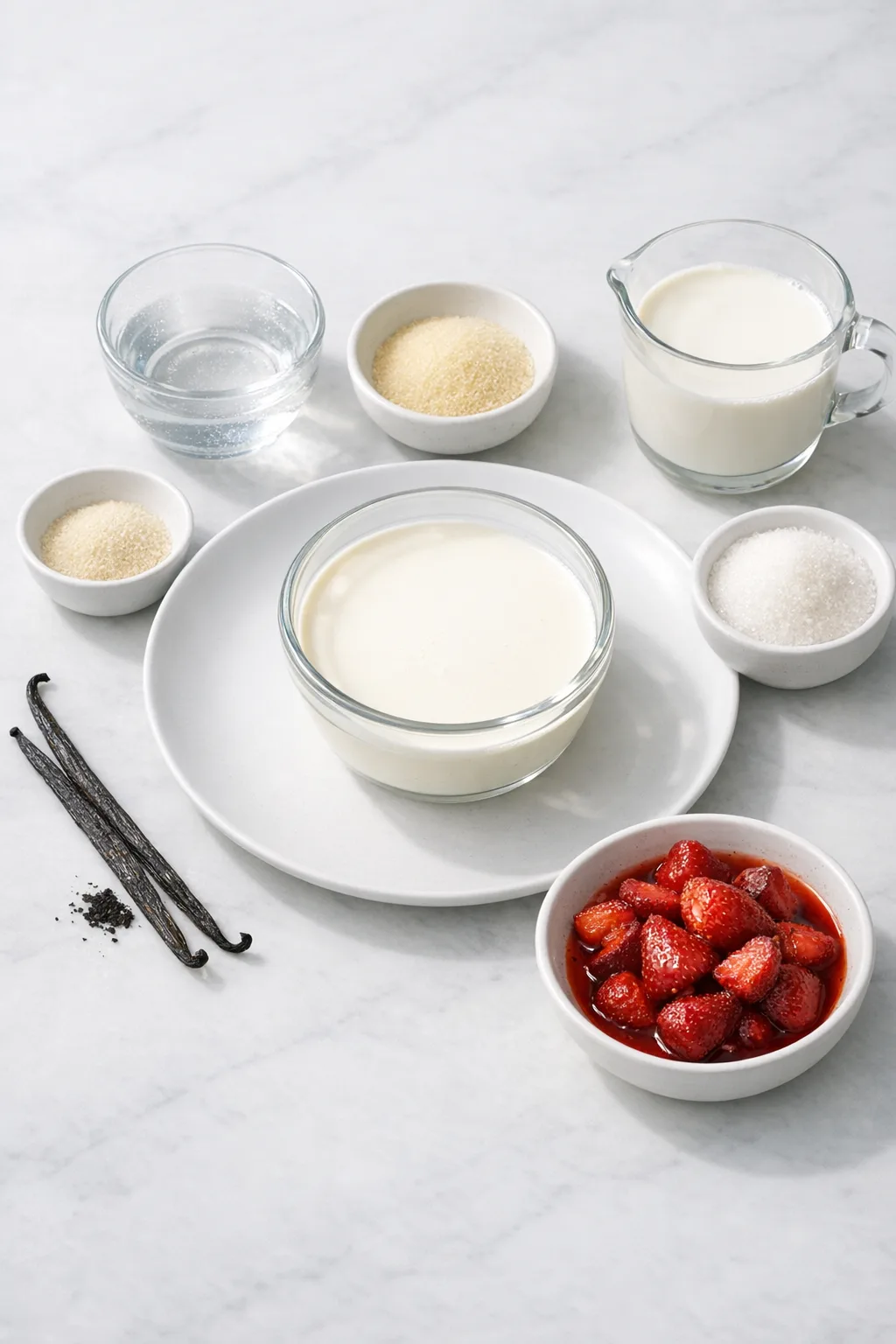
This recipe makes 6 servings. Every quantity below comes directly from the recipe, so do not estimate.
- ¼ cup (60mL) cold water — used to bloom the gelatin; it must be cold, not room temperature
- 1 envelope (¼ ounce / 7g) unflavored powdered gelatin — the structural backbone of the dessert
- 1 cup (240mL) whole milk — whole milk is non-negotiable here; lower-fat milk produces a thinner, less stable set
- ½ cup (100g) granulated sugar
- 1 vanilla bean (seeds scraped) or 2 teaspoons vanilla extract — the vanilla bean delivers those beautiful flecks and a deeper, more complex flavor; extract works well if that is what you have
- 1½ cups (360mL) heavy cream — have this ready before you start heating the milk mixture
- For serving: roasted strawberries or fresh berries
Substitution note: If you use gelatin leaves instead of powdered, the general conversion is roughly 3 to 4 gold-strength leaves for one standard envelope, though always check the manufacturer’s guidance for your specific brand.
Step-by-Step Instructions
Step 1: Hydrate the Gelatin So It Dissolves Cleanly
Pour the ¼ cup of cold water into a small Mixing Bowl. Sprinkle the gelatin evenly over the surface of the water, covering as much area as possible rather than dumping it in one spot.
Set it aside and do not stir. Within a few minutes, the gelatin will absorb the water and transform from a fine powder into a thick, almost rubbery mass. You will know it is ready when the surface looks fully hydrated with no dry white patches remaining.
If the gelatin clumps in one area rather than spreading, it may not dissolve evenly later. Sprinkle more carefully next time, covering the full water surface.
Step 2: Build the Flavored Cream Base Without Overheating
Combine the whole milk, granulated sugar, and vanilla bean seeds plus the pod (or vanilla extract) in a medium Saucepan. Place over medium-low heat, stirring frequently with a spatula or wooden spoon.
Heat the mixture until it reaches approximately 140°F, which feels hot to the touch but is not steaming aggressively. This is the critical temperature window: hot enough to dissolve the gelatin, cool enough not to damage it.
If the mixture starts steaming heavily before you have added the gelatin, pull it off the heat immediately and let it cool for 60 seconds before proceeding.
Step 3: Incorporate the Gelatin and Cream for a Smooth, Unified Mixture
Once the milk mixture hits 140°F, add the bloomed gelatin and whisk gently until it is fully dissolved with no visible granules. Use a Whisk for this rather than a spoon — it distributes the gelatin more evenly through the warm liquid.
Pour in the 1½ cups of heavy cream and stir to combine. Remove the pan from heat, then strain the entire mixture through a fine mesh sieve into a large measuring cup or pitcher. The strainer will catch the vanilla pod and any fibrous bits.
One thing to watch: do not discard the vanilla pod. Let it dry on a paper towel, then bury it in a jar of granulated sugar. In a week, you will have vanilla sugar that works beautifully in coffee or baked goods.
Step 4: Set the Panna Cotta for the Right Texture
Divide the strained mixture evenly among six 6-ounce ramekins or small glasses, about 4 ounces per dish. Allow the panna cotta to cool at room temperature for approximately 1 hour before covering.
Cover each ramekin with plastic wrap, then transfer to the refrigerator. Chill for at least 6 hours, though overnight produces the cleanest set and the most defined wobble. You will know it is ready when the surface looks completely matte and the center jiggles as one cohesive unit rather than rippling like liquid.
Step 5: Unmold and Serve with Confidence
Serve directly in the ramekin with fresh berries on top, or unmold for a more dramatic presentation. To unmold, dip the ramekin in a bowl of hot water for about 3 seconds. Run a thin, sharp knife around the inner edge to break the seal. Place a small plate on top, flip both over together, then wiggle the ramekin gently until the panna cotta releases.
If it does not release on the first attempt, dip in hot water again for another 2 to 3 seconds. Serve with roasted strawberries, fresh berries, or any fruit topping you prefer.
What Separates a Good Panna Cotta from a Great One
- Use a real vanilla bean when you have one. The flavor difference is noticeable, and those tiny flecks throughout the cream signal quality before anyone takes a bite.
- Do not rush the bloom. Give the gelatin a full 5 minutes in the cold water. Rushing this step is the most common reason panna cotta sets unevenly.
- Have your cream measured and ready before you start heating. The milk mixture heats up faster than expected, and fumbling for the cream while the gelatin waits is a recipe for overheating.
- Chill overnight when possible. Six hours works, but overnight gives the gelatin more time to set fully, which makes unmolding cleaner and the texture more consistent throughout.
- Try the tilted glass method. Pour the mixture into glasses set at an angle in a muffin tin before chilling. The diagonal set creates a striking visual effect with no extra effort.
Serving Suggestions
Roasted strawberries are the classic pairing and for good reason. Their concentrated, slightly jammy sweetness cuts through the richness of the cream in a way that fresh berries alone cannot quite match.
Fresh raspberries or blueberries work beautifully for a lighter option. Their natural tartness provides contrast without overpowering the vanilla. A small drizzle of honey or a spoonful of fruit compote also works well if you want something more substantial.
For a dinner party, serve unmolded panna cotta on individual plates with the fruit arranged alongside. The wobble when the plate is set down is genuinely satisfying to watch.
Storage and Make-Ahead Notes
Panna cotta is one of the best make-ahead desserts in any cook’s repertoire. Once set, it keeps well in the refrigerator for up to 3 days, covered with plastic wrap.
Do not freeze panna cotta. Freezing breaks down the gelatin structure and produces a grainy, watery texture once thawed. The refrigerator is the only storage method that preserves that silky mouthfeel.
For entertaining, make the panna cotta the evening before your event. It will be fully set, perfectly cold, and ready to serve with no day-of effort beyond adding the topping.
FAQs
Can I make panna cotta without gelatin?
Agar agar powder is the most common substitute. It sets firmer than gelatin, so the texture will be slightly less wobbly and more sliceable. The process is similar: bloom the agar in cold liquid, then heat to dissolve. Start with a smaller amount than you think you need, as agar sets more firmly than gelatin gram for gram.
Why did my panna cotta not set?
The most likely cause is overheating the milk mixture before adding the gelatin. Temperatures significantly above 140°F can weaken gelatin’s setting ability. Another possibility is under-blooming: if the gelatin did not fully hydrate in the cold water, it may not have dissolved completely into the warm milk. Check for any undissolved granules before adding the cream.
Can I use low-fat milk instead of whole milk?
Whole milk is strongly recommended. The fat content contributes to both the texture and the stability of the set. Lower-fat milk produces a thinner result that may not hold its shape when unmolded.
How do I know when the panna cotta is fully set?
Gently shake the ramekin. A properly set panna cotta will jiggle as one unified piece, like a very soft gelatin. If the center ripples or looks liquid, it needs more time. Return it to the refrigerator and check again after another hour.
Can I use vanilla extract instead of a vanilla bean?
Yes. Use 2 teaspoons of vanilla extract in place of one vanilla bean. Add it along with the milk and sugar. The flavor will be slightly less complex without the pod, but the texture and set will be identical.
How far in advance can I make panna cotta?
Up to 3 days ahead, stored covered in the refrigerator. This makes it one of the most practical desserts for entertaining, since the entire recipe can be completed days before serving with no quality loss.
Ready to Make It
Panna cotta is the kind of dessert that quietly builds confidence in the kitchen. You learn one technique, gelatin blooming, and suddenly you have a restaurant-quality dessert that requires almost no active effort.
The first time I made this, I was convinced I had overheated the milk and ruined the gelatin. I chilled it anyway. Eight hours later, it had set perfectly with that signature wobble. The lesson: trust the process and resist the urge to keep checking.
Give this one a try the next time you want to end a meal on a genuinely impressive note. You might find yourself making it on a Tuesday just because you can.
Essential Kitchen Tools
Making Panna Cotta? Most failed attempts come from using the wrong pan or heat setup — not the recipe itself.

Want to save this recipe?
Want to save this recipe? Enter your email below, and we'll send it straight to your inbox. Plus, receive new recipes every week!

Beginner-Friendly Panna Cotta Recipe
- Total Time: 7 hours 15 minutes
- Yield: 6 servings 1x
Description
Silky panna cotta infused with aromatic vanilla bean, offering a smooth and creamy texture. Perfectly paired with roasted strawberries, this dessert is a delightful balance of sweetness and freshness, making it a gourmet treat for any occasion.
Ingredients
- ¼ cup cold water ((60mL))
- 1 (¼-ounce/7g) envelope unflavored powdered gelatin
- 1 cup whole milk ((240mL))
- ½ cup granulated sugar ((100g))
- 1 vanilla bean (seeds scraped or 2 teaspoons vanilla extract)
- 1½ cups heavy cream ((360mL))
Instructions
- In a small bowl, pour the cold water and evenly sprinkle the gelatin on top. Allow it to sit and hydrate.
- In a medium saucepan, mix the milk, sugar, and either the vanilla bean with its seeds or the vanilla extract. Heat over medium-low while stirring often. Once the milk is warm enough to touch (around 140°F), gently whisk in the hydrated gelatin until it is completely dissolved. Incorporate the cream, then take it off the heat and strain the mixture through a fine mesh sieve.
- Evenly distribute the mixture into six 6-ounce ramekins or small glasses, aiming for about 4 ounces in each. Let the panna cotta sit at room temperature for approximately 1 hour to cool. Cover each ramekin with plastic wrap and refrigerate for a minimum of 6 hours or overnight.
- To serve, you can either present the panna cotta in the ramekin or invert it onto a plate. To release it from the ramekin, briefly dip it in hot water for around 3 seconds. Carefully run a thin, sharp knife around the edge of the panna cotta. Place a small plate on top, flip the ramekin and plate over, and gently shake to release the panna cotta. If it remains stuck, dip it in hot water again. Enjoy with roasted strawberries, fresh berries, or your choice of toppings.
Notes
TECHNIQUE TIP: Ensure the gelatin is fully dissolved in the milk mixture to avoid lumps in your panna cotta.
STORAGE: Store panna cotta in the refrigerator covered for up to 3 days. Serve chilled with fresh berries for best flavor.
- Prep Time: 10 minutes
- chilling time: 6 hours
- Cook Time: 5 minutes
- Category: Dessert
- Cuisine: Italian
Nutrition
- Calories: 293 kcal
- Sugar: 20 g
- Sodium: 33 mg
- Fat: 23 g
- Saturated Fat: 14 g
- Unsaturated Fat: 7 g
- Carbohydrates: 20 g
- Protein: 3 g
- Cholesterol: 72 mg


