



Sourdough discard piles up fast. If you keep a starter, you know the guilt of watching a jar of perfectly good discard sit in the fridge with nowhere to go. Store-bought crackers are an easy reach, but flip that box over and the ingredient list reads like a chemistry textbook. These Sourdough Discard Crackers solve both problems at once: three ingredients, 25 minutes, and a crunch so satisfying you will hear it across the room.
Why This Works Before You Even Start
The magic here is in what sourdough discard already contains. It carries all the flour, wild yeast, and tangy bacteria needed to build flavor and structure. You are not adding flour separately because it is already fermented inside the discard, which also makes it easier to digest than crackers made with raw flour.
Butter does two jobs: it binds the thin batter together and drives the crispiness during baking. Salt balances the natural tang of the starter so the flavor stays bright rather than sour. That is the whole recipe, and that is genuinely all it needs.
What to Avoid Before You Bake
Most homemade cracker attempts fail at one of two moments: spreading too thick, or waiting too long before baking. Both are easy to avoid once you know they are coming.
- Spreading too thick: The batter needs to be almost transparent on the pan. If you can see the parchment through it, you are in the right zone. A thick layer will stay soft in the center no matter how long it bakes.
- Waiting after spreading: Get the pan into the oven immediately after spreading. Leaving the batter to sit on parchment causes it to bond to the paper, and peeling crackers off in pieces is frustrating. Preheat first, spread second, bake third.
- Cold discard meeting hot butter: If your discard comes straight from the fridge, let the melted butter cool to lukewarm before combining. Cold discard hitting warm butter can cause the fat to seize and clump, making the batter uneven.
- Over-salting the top: These crackers are thin, which means toppings hit hard. A light hand with flaky salt goes a long way. If you add everything bagel seasoning, skip the extra salt entirely.
Ingredients for Sourdough Discard Crackers
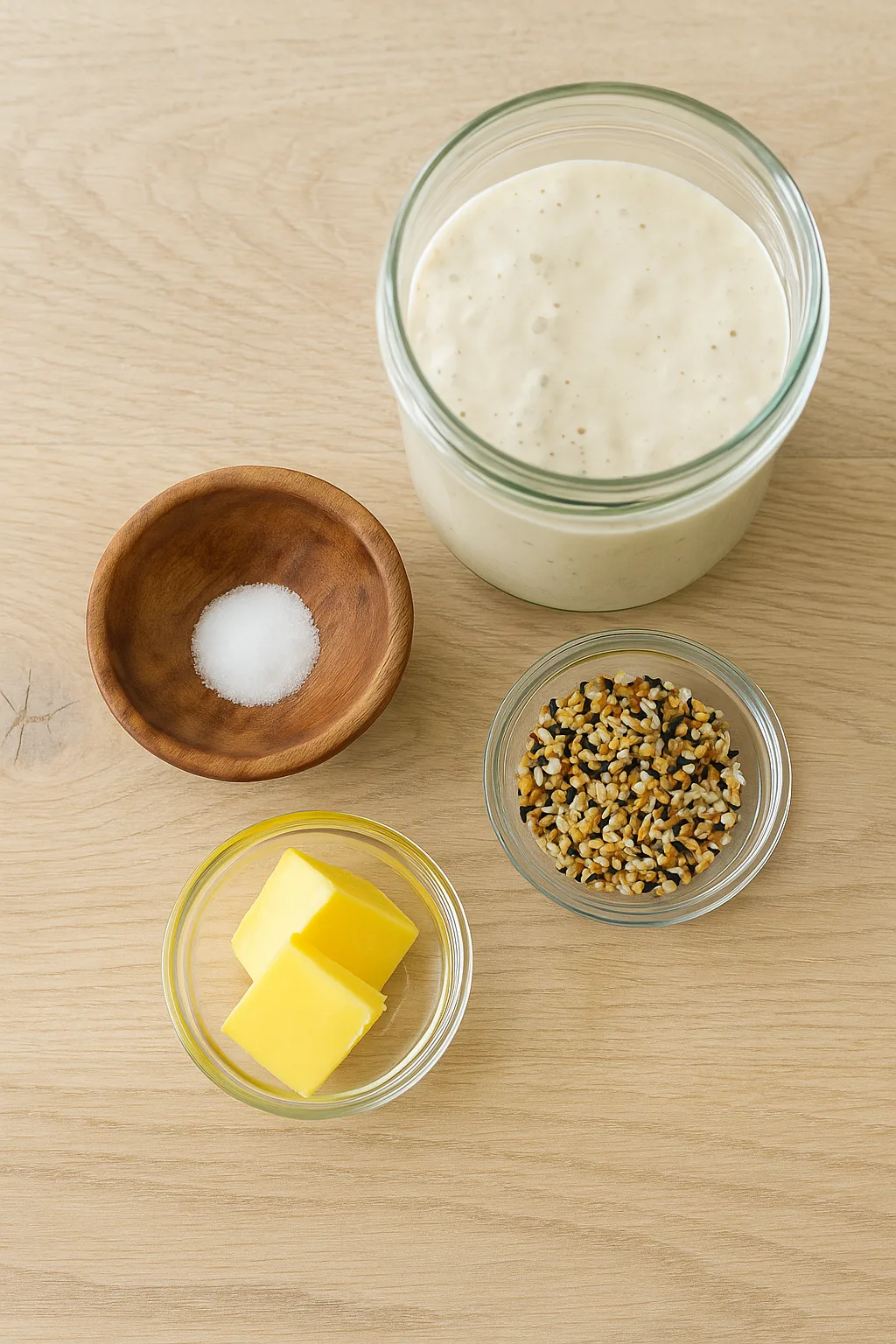
The ingredient list is short by design. Every item earns its place.
- 200 grams sourdough discard (1 cup stirred, unfed starter): This is the base, the flavor, and the structure all in one. Unfed or stirred starter works perfectly here.
- 2 tablespoons unsalted butter, melted: Unsalted gives you control over the final salt level. If you only have salted butter, skip the fine sea salt in the batter and go very light on any topping salt.
- 1/4 teaspoon fine sea salt: Mixed into the batter, not just sprinkled on top. This seasons from within.
- Seasonings to taste: Flaky sea salt, everything bagel seasoning, sesame seeds, dried herbs, finely grated parmesan, or poppy seeds. Everything bagel seasoning is my personal favorite here, the combination of sesame, garlic, and onion pairs beautifully with the tang of the starter.
One substitution worth knowing: olive oil works in place of butter if needed. The texture will be slightly different and the flavor more savory, but the crackers will still crisp up well.
Step-by-Step Instructions
Step 1: Set Up Your Station for a Smooth Bake
Preheat your oven to 350°F and line a baking sheet with parchment paper. Having everything ready before you mix is not optional here. The batter needs to go onto the pan and straight into the oven, so a cold oven at this stage will cost you.
Step 2: Build a Smooth, Cohesive Batter
Melt the butter in a large measuring cup or mixing bowl and let it cool until just lukewarm. Add the 200 grams of sourdough discard and the 1/4 teaspoon of fine sea salt. Stir with a spatula until fully combined. The batter should look smooth and pourable, with no streaks of butter visible. If the butter clumps, your discard was too cold. Warm both to room temperature and stir again.
Step 3: Spread Thin Enough to See Through
Pour the batter onto your prepared baking sheet and use an offset spatula to spread it into an even layer. Aim for a rectangle roughly 13×11 inches. You want the layer almost transparent, where the parchment is just barely visible beneath it. This thinness is what creates the crunch. If you see thick patches, keep spreading. One thing to watch: uneven spreading creates soft spots that will not firm up in the oven, no matter how long you bake.
Step 4: Season with a Light Touch
Sprinkle your toppings over the surface immediately. Go lighter than you think you need to, especially with any salt-forward seasonings. Because the crackers are so thin, flavors concentrate as they bake. A small pinch of flaky salt over the whole sheet is enough.
Step 5: First Bake to Set the Structure
Transfer the pan to the oven right away and bake for 10 minutes. The batter will look set and slightly matte at the edges when it is ready to come out. Do not wait for it to color yet. This first bake firms the surface just enough to cut cleanly without tearing.
Step 6: Score into Crackers While Warm
Remove the pan from the oven and use a pizza cutter to score the partially baked sheet into bite-sized squares. Work quickly while the surface is still warm and pliable. You can also use a ravioli cutter for a scalloped edge that looks impressive on a board. You will know the scoring is working when the cuts hold their shape without the dough pulling back together.
Step 7: Final Bake Until Golden and Firm
Return the pan to the oven and bake for another 15 to 20 minutes, until the crackers are golden and hardened. Tap the tops with your fingernail. They should sound and feel firm, not soft or springy. If some crackers at the edges are done before the center ones, pull the done ones off and return the rest. Remove from the oven and let the crackers cool completely on the baking sheet. The residual heat from the pan continues to dry them out, and they crisp up further as they cool.
What Separates a Good Batch from a Great One
- Use a kitchen scale: 200 grams is more reliable than a cup measurement for discard, which varies in density depending on hydration. Weighing directly into the measuring cup with the butter already in it saves a dish.
- A silicone baking mat is a strong alternative to parchment: Several bakers have found it prevents sticking entirely and makes the crackers easier to cut and lift.
- Cool on the pan, not a rack: The pan holds warmth that continues drying the crackers from the bottom. Moving them to a rack too early can leave the undersides slightly soft.
- Crackers crisp up as they cool: If they feel slightly soft when you first pull them from the oven, give them five more minutes, then let them cool fully before judging the texture. They will firm up noticeably.
- Trim pieces make excellent salad toppers: The uneven bits around the edges of the rectangle are often the crispiest. Crumble them over a salad instead of croutons.
Serving Suggestions
These crackers work anywhere a store-bought cracker would, but they shine on a charcuterie board. The tang of the sourdough pairs naturally with aged cheeses, briny olives, and creamy spreads.
- Hummus: The earthy creaminess of hummus against the crisp, tangy cracker is a combination worth making on repeat.
- Whipped feta or cream cheese: Smooth, rich spreads balance the cracker’s light crunch without overwhelming it.
- Fig jam and sharp cheddar: Sweet and savory on a cracker with real sourdough flavor is genuinely hard to beat.
- Tzatziki or spinach artichoke dip: Both hold up well as dips without making the crackers soggy quickly.
Make It Once, Use It All Week
Allow the crackers to cool completely before storing. Any residual warmth trapped in a container will create condensation and soften them.
Store in an airtight container, glass jar, or rigid box at room temperature. For the best texture, enjoy within a few days. They may still taste good after that, but they will gradually lose their crispness.
A zip bag works in a pinch, but only if the crackers are fully dried out and completely cool before sealing. If they go in even slightly warm, they will go soft within hours. A rigid container with a loose-fitting lid tends to keep them crisper longer than a sealed bag.
These crackers do not need reheating, but if they have softened slightly, spread them on a baking sheet and bake at 300°F for 5 to 8 minutes. You will hear them tap firm again once they cool.
A Simple Fix for a Real Problem
Sourdough discard does not have to be a chore or a guilt trip. This recipe turns what would otherwise get thrown away into something your whole household will reach for. The ingredient list is shorter and cleaner than most commercial crackers, and the flavor, that real sourdough tang backed by butter, is genuinely better.
Give this one a try the next time your discard jar is full. You might find yourself feeding your starter more often just to have an excuse to make another batch.
Must Try Recipes
- Sourdough Chocolate Chip Cookies: Easy Soft & Chewy Recipe — Perfect for a sweet treat alongside your savory crackers.
- Easy Sourdough Dinner Rolls That Are Soft and Fluffy — Ideal for a comforting meal with your favorite soup.
- Sourdough Cinnamon Rolls Made Easy: Soft, Fluffy & Buttery — Enjoy a sweet indulgence after your savory snack.
FAQs
Can I use sourdough discard straight from the fridge?
Yes, but let it come closer to room temperature before mixing, and make sure your melted butter has cooled to lukewarm. Cold discard meeting warm butter can cause the fat to clump, which makes the batter harder to spread evenly. Room temperature discard blends smoothly and spreads much more easily.
Why are my sourdough discard crackers sticking to the parchment paper?
The most common cause is waiting too long after spreading before baking. The batter bonds to parchment as it sits. Always have your oven fully preheated, spread the batter, and get it into the oven immediately. Using a silicone baking mat instead of parchment is another reliable fix that many bakers prefer.
My crackers came out soft. What went wrong?
Soft crackers almost always mean the batter was spread too thick, or they were not baked long enough. The layer needs to be nearly transparent before baking. If they are still soft after the full bake time, continue baking in 5-minute increments until they tap firm. They also crisp up further as they cool on the pan, so give them time before deciding they need more oven.
How do I store homemade sourdough crackers to keep them crispy?
Cool them completely on the baking sheet first, then transfer to an airtight rigid container or glass jar. For the best taste and texture, enjoy within a few days. If they soften slightly, a short bake at 300°F for 5 to 8 minutes will restore most of the crunch.
Can I double the recipe for a bigger batch?
Absolutely. Use two baking sheets and work in batches if your oven cannot fit both at once. The batter spreads and bakes the same way at double the quantity. Just make sure each sheet is spread just as thin as a single batch, roughly 13×11 inches per sheet, to get the same crispness.
What are the best toppings for sourdough discard crackers?
Everything bagel seasoning is a crowd favorite and works especially well with the tangy base. Sesame seeds, flaky sea salt, dried rosemary, finely grated parmesan, and poppy seeds all work beautifully. Whatever you choose, apply it lightly. Because the crackers are thin, toppings concentrate in flavor as they bake, and a little goes a long way.
Essential Kitchen Tools
Making Sourdough Discard Crackers? Most failed attempts come from using the wrong pan or heat setup — not the recipe itself.

Want to save this recipe?
Want to save this recipe? Enter your email below, and we'll send it straight to your inbox. Plus, receive new recipes every week!

Quick Sourdough Discard Crackers Recipe
- Total Time: 25 minutes
- Yield: 25 crackers 1x
Ingredients
- 200 grams sourdough discard (1 cup stirred and unfed starter)
- 2 Tbsp unsalted butter, melted and cooled slightly
- 1/4 tsp fine sea salt
- Seasonings to taste – flaky sea salt (everything bagel seasoning, sesame seeds, etc.)
Instructions
- Preheat the oven to 350°F and line a baking sheet with parchment paper.
- Melt the butter in a large measuring cup or mixing bowl and allow it to cool until just lukewarm. Incorporate the sourdough discard and salt, stirring with a spatula until the mixture is well blended.
- Transfer the mixture onto the parchment-lined baking sheet, using an offset spatula to spread it into a thin, even layer that is nearly transparent.
- Sprinkle the top lightly with flaky salt and your preferred seasonings, being cautious not to add too much salt as the crackers are thin and can become overly salty.
- Immediately place the baking sheet in the oven to prevent sticking to the parchment, and bake for 10 minutes. Afterward, remove from the oven and use a pizza cutter to score the crackers into bite-sized squares.
- Return the baking sheet to the oven and bake for an additional 15-20 minutes, or until the crackers are golden and crisp. If they aren’t firm, continue baking until they feel solid when tapped.
- Once done, take the crackers out of the oven and allow them to cool on the baking sheet to ensure they dry out completely. After cooling, store them in an airtight container or zip bag.
Notes
TECHNIQUE TIP: Measure the discard directly into the cup for accuracy.
STORAGE: Store in an airtight container for up to 5 days; refresh in oven.
SUBSTITUTION: Use olive oil instead of butter for a dairy-free option.
- Prep Time: 5 minutes
- Cook Time: 20 minutes
- Category: Snack
- Method: Baked
- Cuisine: American
Nutrition
- Calories: 15 kcal
- Sugar: 0.001 g
- Sodium: 23 mg
- Fat: 1 g
- Saturated Fat: 1 g
- Unsaturated Fat: 0.23 g
- Trans Fat: 0.04 g
- Carbohydrates: 2 g
- Fiber: 0.1 g
- Protein: 0.2 g
- Cholesterol: 2 mg

