



Cold days have a way of demanding something warm and deeply satisfying, and a bowl of split pea soup delivers exactly that. Unlike Mom’s Chicken and Rice Soup, which builds its body from rice and a lighter broth, this version gets its richness from slow-dissolved split peas and savory ham, creating a texture that is almost creamy without any cream at all. When that soup is thin, watery, or bland, the whole meal falls flat. This recipe, rooted in a family tradition passed down through generations, solves that problem with yellow split peas, layered aromatics, and a garlic trick that most cooks skip entirely. The result is a golden, hearty bowl with tender ham, fork-soft vegetables, and a broth that smells like a home kitchen in the middle of winter.
Why Yellow Split Peas Change Everything
Most split pea soup recipes default to green split peas, and the result is a soup that looks murky and grey-green by the time it finishes cooking. Yellow split peas taste noticeably sweeter and produce a rich, golden color that makes the soup look as good as it tastes.
This is the secret at the heart of this recipe. It is a small swap with a big visual and flavor payoff, and it is especially useful when serving kids who might balk at a bowl of green soup.
Green split peas will work in a pinch, but once you cook with yellow, it is hard to go back.
What You Need: Split Pea Soup Ingredients
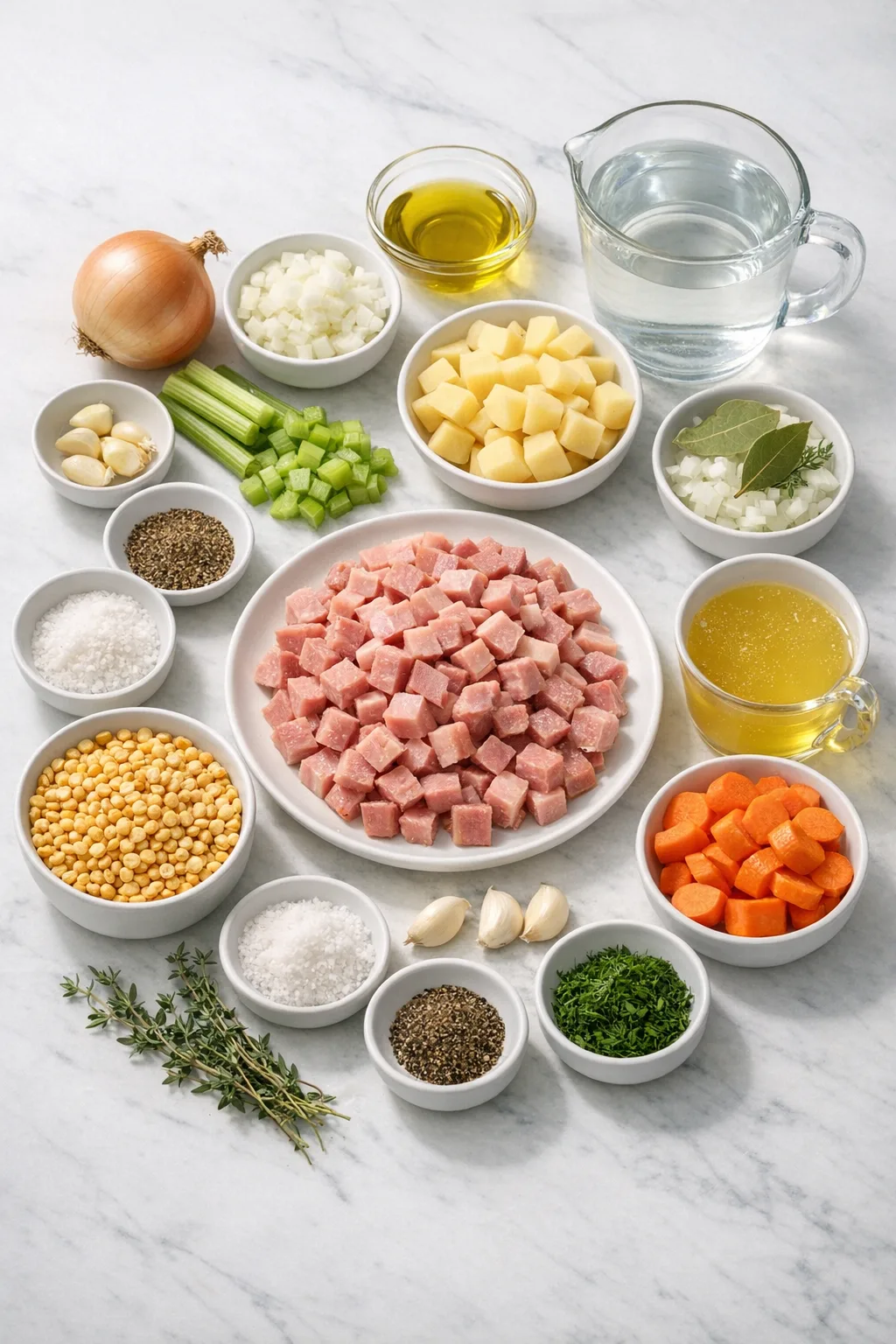
Every ingredient here serves a purpose. Here is what the recipe calls for, organized for easy shopping.
The Core Ingredients
- 2 Tbsp olive oil (divided)
- 2 cups diced ham or ham hock (10 oz) — deli ham works beautifully, but a leftover holiday ham hock adds even deeper flavor as the bone infuses the broth
- 1 medium yellow onion, chopped
- 2 celery stalks, finely chopped
- 4 cups chicken stock — homemade stock makes a noticeable difference here; the soup tastes richer and more rounded
- 8 cups water
- 1 1/2 cups yellow dry split peas (11-12 oz), rinsed and picked over
- 2 sprigs fresh thyme or 1/4 tsp dried thyme leaves
- 2 bay leaves
- 5 medium Yukon Gold or red potatoes, peeled and diced
- 2 medium carrots, peeled and sliced into half rings
- 1 1/2 tsp fine sea salt, divided, added to taste
- 1/4 tsp freshly ground black pepper
- 3 garlic cloves
- 2 Tbsp fresh dill or parsley, finely chopped
A Note on Two Key Ingredients
Celery: Do not skip it even if you are not a celery fan. After 90 minutes of simmering, it essentially disappears into the soup, but it contributes an aromatic depth that you would notice if it were missing.
Fresh garlic added at the end: This is the technique that separates a flat-tasting soup from one that has a bright, punchy finish. Pressing raw garlic in right before you turn off the heat gives you a clean garlic flavor without any bitterness from overcooking.
Why Most Homemade Split Pea Soup Falls Flat (and How to Fix It)
Before getting into the steps, here are the four mistakes that cause split pea soup to disappoint, and how to avoid each one.
- Skipping the ham sear: Sautéing the ham until golden brown before adding any liquid builds a caramelized base that flavors the entire pot. Dropping raw ham straight into water produces a pale, one-dimensional broth.
- Not skimming the foam: When the peas and ham first come to a boil, a grey foam rises to the surface. Skim it off and discard it. Leaving it in makes the broth look cloudy and slightly bitter.
- Boiling instead of simmering: A rolling boil breaks the peas down too aggressively and can make the soup gluey. A gentle, barely-there simmer with the lid partially on is what produces that smooth, creamy texture.
- Adding garlic too early: Garlic cooked for 90 minutes loses its brightness entirely. Adding it pressed and raw at the very end, then turning off the heat immediately, keeps that fresh punch intact without making it overpowering.
How to Make Split Pea Soup: Step-by-Step
Step 1: Build Deep Flavor Before the Liquid Enters
Set a large soup pot or 5 1/2 qt Dutch oven over medium-high heat and add 1 Tbsp olive oil. Add the diced ham (or ham hock) and sauté until golden brown, then transfer to a separate plate.
You are looking for a deep golden crust on the ham edges, not just a warm-through. That browning is where the flavor lives. If the ham is releasing a lot of liquid and steaming rather than searing, your heat is too low — raise it and give the pan a moment to recover before adding more.
Step 2: Coax the Aromatics Until They Soften and Sweeten
Add the remaining 1 Tbsp olive oil to the same pot. Add the chopped onion and celery and sauté for about 5 minutes, scraping up any browned bits from the ham as you go. Those bits dissolve into the vegetables and add flavor you would otherwise lose.
The onion should look translucent and slightly golden at the edges, and the whole pot should smell sweet and savory at the same time. Add the chicken stock, water, and rinsed split peas, then return the ham to the pot. Bring everything to a boil and skim off any foam that rises to the surface.
Step 3: Simmer Low and Long Until the Peas Nearly Dissolve
Add the thyme sprigs and bay leaves, then season with 1/2 tsp salt. Reduce the heat to a gentle simmer, partially cover the pot, and cook for 1 hour 30 minutes, or until the peas are almost fully dissolved.
One thing to watch: if the soup starts bubbling aggressively and spattering under the lid, your heat is too high. Lower it until you see only occasional lazy bubbles breaking the surface. Stir every 20 minutes or so to prevent anything from catching on the bottom.
If you used a ham hock, remove it now, shred the meat from the bone, and return the meat to the pot.
Step 4: Add the Vegetables and Cook Until Fork-Tender
Add the diced potatoes and sliced carrots to the pot. Bring the soup back to a low boil, partially cover, and cook for another 20 minutes, or until the vegetables yield easily when pierced with a fork.
Yukon Gold and red potatoes hold their shape better than starchy russets here, which tend to fall apart and make the soup grainy. If you cut the potatoes into roughly quarter-inch pieces, they will cook evenly without turning mushy.
Step 5: Season, Finish with Garlic, and Serve
Season with the remaining salt and pepper to taste — the right amount will depend on how salty your ham and stock were. Remove and discard the bay leaves and thyme stems.
Press in the 3 garlic cloves using a garlic press or chef knife, add the fresh dill or parsley, stir to combine, and immediately turn off the heat. Serve topped with crispy bacon and more fresh herbs if desired.
You will know the soup is ready when it coats the back of a spoon with a velvety, slightly thick consistency and the color is a rich, uniform golden yellow throughout.
What Separates a Good Split Pea Soup from a Great One
- Rinse and pick over the peas: Run them through a fine mesh strainer under cold water and look for any small stones or shriveled peas. It takes two minutes and prevents an unpleasant crunch.
- Add thyme sprigs whole: The leaves fall off the stems during cooking and you can simply lift the bare stems out at the end. No stripping required.
- Do not make the soup too thick on day one: The split peas continue to absorb liquid as the soup cools and sits overnight. A consistency that seems slightly thin when hot will be perfectly creamy the next day.
- Use black forest or smoked ham: The subtle smokiness adds a layer of complexity that plain deli ham does not quite match. That said, any ham you have on hand will produce a good result.
- Taste before adding salt at the end: Ham and chicken stock both carry significant sodium. Season gradually and taste as you go rather than adding a set amount all at once.
Variations Worth Trying
This recipe is genuinely flexible. Here are a few variations that work well without changing the core technique.
- Bacon instead of ham: Sauté bacon first, remove it, and cook the vegetables in the rendered fat. Use the crispy bacon as a topping. The smokiness runs deeper through the whole soup.
- Ham hock from a holiday dinner: Drop the bone directly into the pot with the split peas. The meat becomes fall-apart tender and the marrow enriches the broth considerably.
- Pork riblets: Cook them in the water with the split peas, skimming carefully and keeping the heat at a low simmer to avoid cloudiness.
- Vegetarian version: Skip the ham entirely and use vegetable bouillon instead of chicken stock. The peas and aromatics still produce a satisfying, flavorful soup.
- Crockpot method: Add all ingredients to a slow cooker, reducing the water by half since less evaporates during slow cooking. Cook on low for 7 hours.
For anyone who wants a comparably hearty winter bowl with a different flavor profile, The Best Beef and Barley Soup takes a similar slow-cooked approach but builds its body from beef and whole grains rather than legumes, giving it a chewier, more textured result.
Make It Once, Use It All Week
Split pea soup is genuinely one of those recipes that improves with time. The flavors meld overnight and the texture becomes creamier as the peas continue to hydrate.
Refrigerator: Store cooled soup in airtight containers for up to 4 days. The soup will thicken considerably in the fridge, which is normal.
Freezer: Use freezer-safe containers or heavy-duty zip bags. Leave space at the top for expansion. Lay bags flat for easier storage and quicker thawing.
Reheating: Thaw overnight in the refrigerator, then reheat on the stovetop over medium-low heat, stirring occasionally. Add a splash of water or broth to loosen it back to your preferred consistency. You will know it is ready when it returns to that smooth, pourable texture and steam rises steadily from the surface.
Personally, I think this soup tastes better on day two than day one. The garlic integrates, the herbs settle in, and the whole thing tastes more unified. Make a full pot and plan for leftovers.
A Soup Worth Coming Home To
There is something genuinely comforting about a pot of split pea soup simmering on the stove. The smell alone, that combination of thyme, ham, and sweet peas, fills a kitchen in a way that few other recipes do.
This is a humble soup. But humble does not mean simple in flavor.
Give this one a try on the next cold evening when you want something that actually fills you up and warms you through. The garlic trick at the end is worth doing exactly as written, and if you have a ham bone from a holiday dinner sitting in the freezer, this is exactly what it was meant for. Once you have made it, you will understand why it has been a family recipe worth repeating for years.
FAQs
Do I need to soak the split peas before cooking?
No soaking is needed. The peas soften fully during the 90-minute simmer and dissolve into the broth naturally. Rinsing and picking them over is all the prep required.
Can I use green split peas instead of yellow?
Yes, green split peas will work. The flavor is slightly earthier and less sweet, and the soup will have a grey-green color rather than the appealing golden hue that yellow peas produce. The cooking time stays the same.
How do I make this a vegetarian split pea soup recipe?
Omit the ham entirely and replace the chicken stock with vegetable stock or the equivalent in bouillon cubes. The aromatics, herbs, and split peas still produce a deeply flavorful, satisfying soup without any meat.
Why does my split pea soup get so thick after refrigerating?
Split peas continue absorbing liquid as they cool. This is expected and not a problem. When reheating, add water or broth a little at a time, stirring over medium-low heat, until the soup returns to a consistency you like.
Can I make this easy split pea soup recipe in an Instant Pot?
Yes. Cook the meat and peas on high pressure for 30 minutes, then add the potatoes and carrots and cook for an additional 7 minutes. Add the garlic and fresh herbs after pressure cooking, with the heat off, just as you would on the stovetop.
What is the best way to serve split pea soup with ham?
A thick slice of crusty bread is the classic pairing, and for good reason. The bread soaks up the broth and balances the richness of the ham. Sourdough, focaccia, or simple dinner rolls all work well alongside a bowl.
Essential Kitchen Tools
Making Split Pea Soup? Most failed attempts come from using the wrong pan or heat setup — not the recipe itself.

Want to save this recipe?
Want to save this recipe? Enter your email below, and we'll send it straight to your inbox. Plus, receive new recipes every week!

Comforting Split Pea Soup Recipe
- Total Time: 2 hours 20 minutes
- Yield: 8 servings 1x
Ingredients
- 2 Tbsp olive oil (divided)
- 2 cups diced ham or ham hock* (10 oz)
- 1 medium onion (chopped)
- 2 celery stalks (finely chopped)
- 4 cups chicken stock (*)
- 8 cups water
- 1 1/2 cups yellow dry split peas* (rinsed and picked over (11–12 oz))
- 2 sprigs of fresh thyme (or 1/4 tsp dried thyme leaves)
- 2 bay leaves
- 5 medium Yukon or red potatoes (peeled and diced)
- 2 medium carrots (peeled and sliced into half rings)
- 1 1/2 tsp fine sea salt (divided, added to taste)
- 1/4 tsp freshly ground black pepper
- 3 garlic cloves
- 2 Tbsp fresh dill or parsley (finely chopped)
Instructions
- Heat a large soup pot or 5 1/2 qt Dutch oven over medium-high heat and pour in 1 Tbsp of olive oil. Incorporate the ham (or ham hock) and sauté until it turns golden brown. Transfer the ham to a separate plate.
- Pour in another Tbsp of olive oil and sauté the onion and celery until they soften, which should take about 5 minutes. Then, add the stock, water, and drained peas back into the pot along with the ham. Bring the mixture to a boil and remove any foam that appears on the surface.
- Add the thyme and bay leaves, seasoning with 1/2 tsp of salt. Lower the heat to a simmer, partially cover the pot, and let it simmer for 1 hour and 30 minutes or until the peas are nearly dissolved. If a ham hock is used, take out the bone from the soup, shred the meat, and return it to the pot.
- Incorporate the carrots and potatoes, cooking for an additional 20 minutes or until the vegetables are tender enough to pierce with a fork.
- Adjust the seasoning with salt and pepper according to your taste. Remove and discard the bay leaves and thyme stems.
- Crush the garlic into the soup, add the dill or parsley, and then immediately turn off the heat. Serve the soup topped with crispy bacon and additional fresh herbs.
Notes
TECHNIQUE TIP: Add the bone from a leftover ham to the pot for extra flavor and tender meat that falls right into the soup.
STORAGE: Store leftover soup in an airtight container in the refrigerator for up to 3 days or freeze for up to 3 months.
SUBSTITUTION: If yellow split peas aren’t available, green split peas can be used as an alternative.
- Prep Time: 20 minutes
- Cook Time: 2 hours
- Category: Soup
- Method: Baked
- Cuisine: American
Nutrition
- Calories: 266 kcal
- Sugar: 4 g
- Sodium: 896 mg
- Fat: 6 g
- Saturated Fat: 1 g
- Unsaturated Fat: 4 g
- Carbohydrates: 40 g
- Fiber: 8 g
- Protein: 16 g
- Cholesterol: 15 mg


